
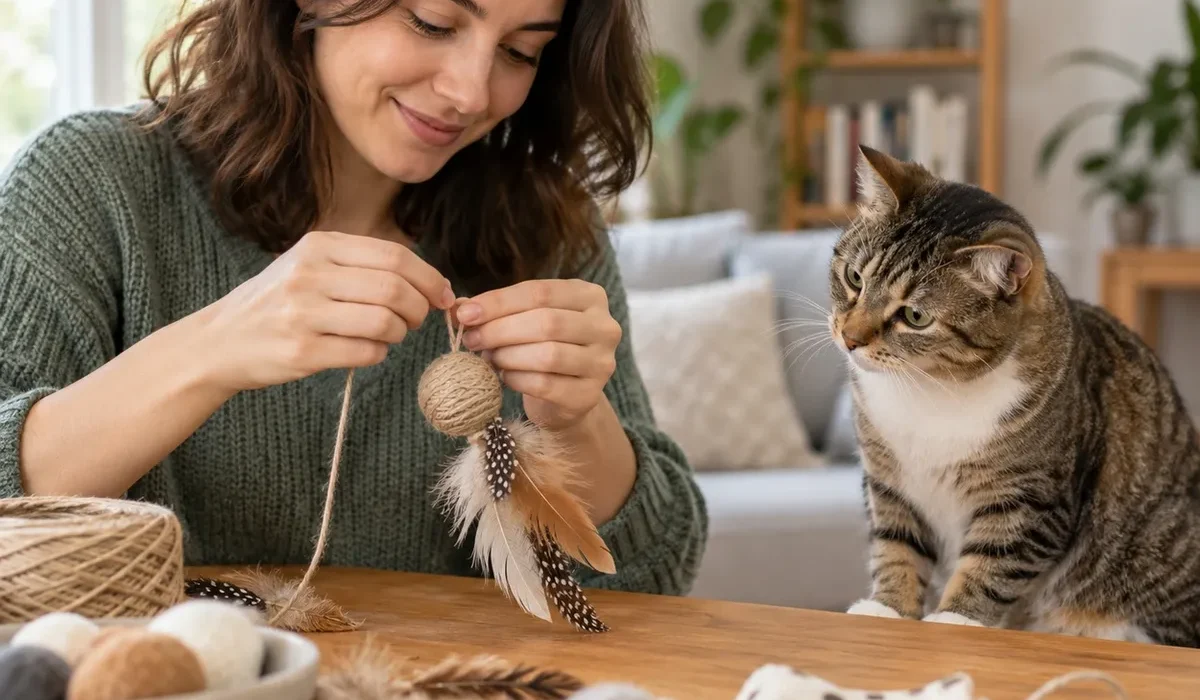
DIY Cat Toys: 15 Easy Homemade Toys Your Cat Will Love
DIY cat toys are simple homemade playthings made from safe household items like paper, cardboard, string, and old socks, and they satisfy a cat’s hunting instinct just as well as store-bought options. They matter most for indoor cats, which need daily play to burn energy, stay lean, and avoid boredom.
This post may contain affiliate links. As an Amazon Associate I earn from qualifying purchases.
Table of Contents
DIY cat toys at a glance:
- Short Answer: Most homemade cat toys cost almost nothing and take under 10 minutes to make.
- Best Materials: Cardboard, paper, cotton fabric, wand sticks, and plain cotton string.
- Main Safety Rule: Never leave a cat alone with string, yarn, ribbon, or small loose parts.
- Ideal Play Time: Two to three sessions of 10 to 15 minutes each per day.
- Rotation Tip: Swap toys weekly to keep each one feeling new.
Why DIY Cat Toys Work So Well
DIY cat toys work because cats respond to movement, sound, and texture rather than price tags. A crinkly paper ball skittering across the floor triggers the same stalk, chase, and pounce sequence as an expensive gadget.
When my cat ignored a pricey toy mouse but spent an hour attacking an empty cardboard box, I stopped assuming that spending more meant better play. Cats are natural predators, and simple items that move unpredictably tend to win.
Homemade toys also give you control over the materials. You can skip dyes, glues, and tiny glued-on eyes that cats sometimes chew off and swallow.
Here are the main benefits of making toys at home:
- Lower cost, since most items come from your recycling bin or sewing basket.
- Easy customization for your cat’s favorite textures, sounds, and sizes.
- Less waste, because worn-out toys can be replaced in minutes.
- More bonding time when you play with the toy together.
Safety Rules Before You Make Any DIY Cat Toys
Safe DIY cat toys avoid anything a cat can swallow, choke on, or tangle around its body. Cats can swallow string and cause a linear foreign body, an intestinal blockage that requires emergency surgery.
Follow these rules every time you make or use a homemade toy:
- Supervise all play with string, yarn, ribbon, and elastic, then store them out of reach afterward.
- Skip rubber bands, hair ties, and tinsel, which cats often swallow.
- Avoid small beads, bells, and buttons that can come loose and be swallowed.
- Use plain, unscented cotton fabric rather than treated or heavily dyed materials.
- Check toys before each session and throw out anything torn, chewed apart, or fraying.
- Never use toxic items like essential oils, which are dangerous to cats.
If your cat swallows string and starts vomiting, refuses food, or seems lethargic, call a veterinarian immediately. Never pull a string that is hanging from your cat’s mouth or rear end.
15 Easy DIY Cat Toys to Make at Home
The best DIY cat toys use items you already own and take minutes to assemble. These 15 ideas cover chasing, pouncing, foraging, and scratching, so you can match a toy to your cat’s play style.
Paper and Cardboard Toys
Paper and cardboard toys are the cheapest, safest place to start. They are lightweight, noisy, and fun to shred.
- Crumpled paper balls: Scrunch plain, unprinted paper into a tight ball. The crinkle sound drives many cats wild.
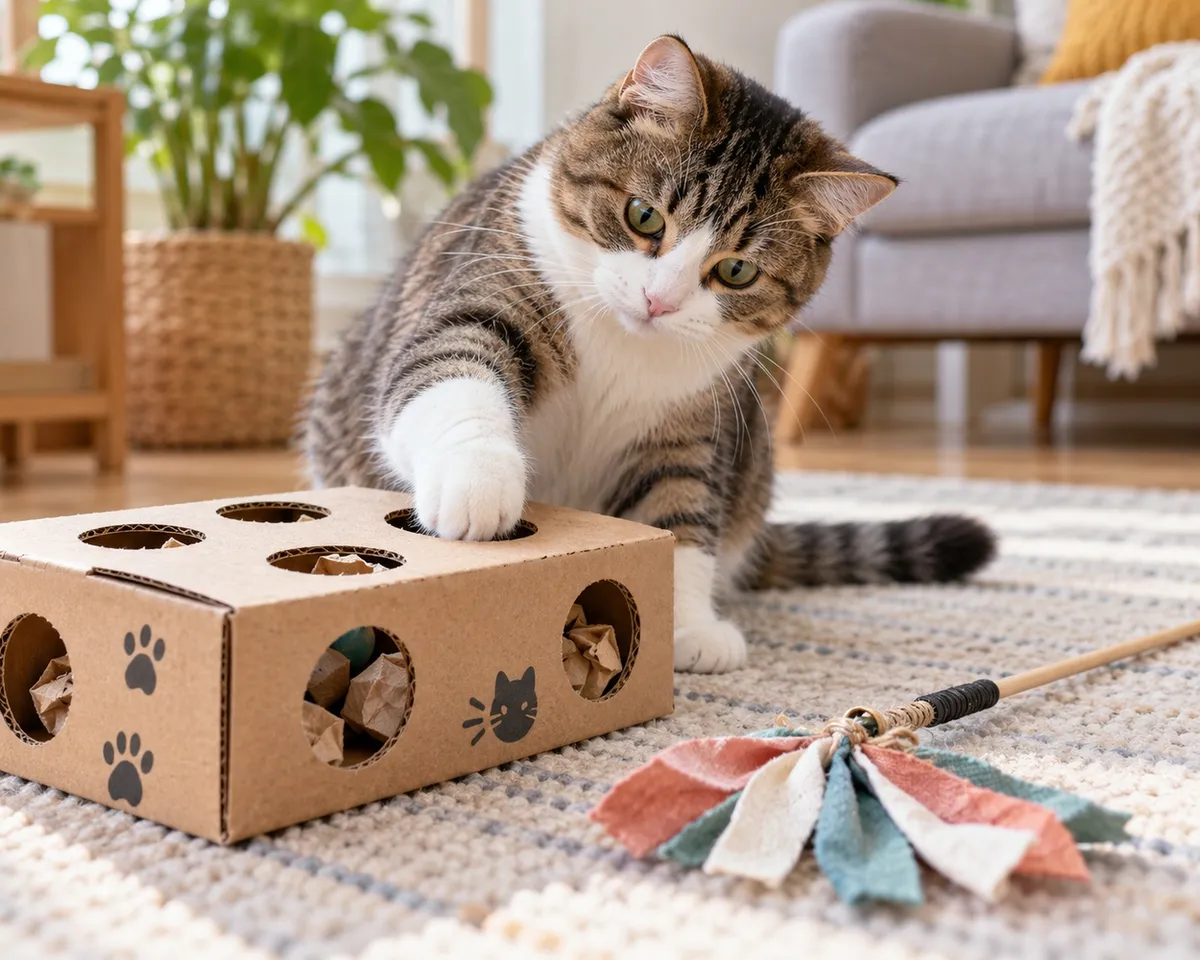
- Cardboard box hideout: Cut a few holes in a shipping box so your cat can hide and ambush. Cats feel safer in enclosed spaces.
- Toilet paper tube treat puzzle: Fold both ends of an empty tube and drop in a few kibbles. Your cat must bat it around to get the food out.
- Paper bag tunnel: Cut the handles off a plain paper bag and lay it on its side. Always remove handles, which can trap a cat’s head.
- Cardboard scratcher: Glue strips of corrugated cardboard together in a flat stack. Scratching also helps cats stretch and mark territory.
Fabric and Sock Toys
Fabric toys are soft, quiet, and easy to refill with scents cats enjoy. Always use clean, 100 percent cotton fabric.
- Sock kicker: Fill a clean sock with a handful of dried catnip and tie the open end shut tightly. Cats love to grab it and bunny-kick it.
- Felt mouse: Cut two mouse shapes from felt, sew them together, and stuff with polyfill and a pinch of catnip. Skip the glued-on eyes.
- Braided fabric rope: Cut three strips from an old cotton t-shirt and braid them. Tie knots at each end so it does not unravel.
- Stuffed fabric ball: Sew a small cotton pouch, stuff it, and close it firmly. Keep it larger than a golf ball so it cannot be swallowed.
Wand and Chase Toys
Wand toys are the most effective way to play with your cat because they mimic prey. Always put the wand away when playtime ends.
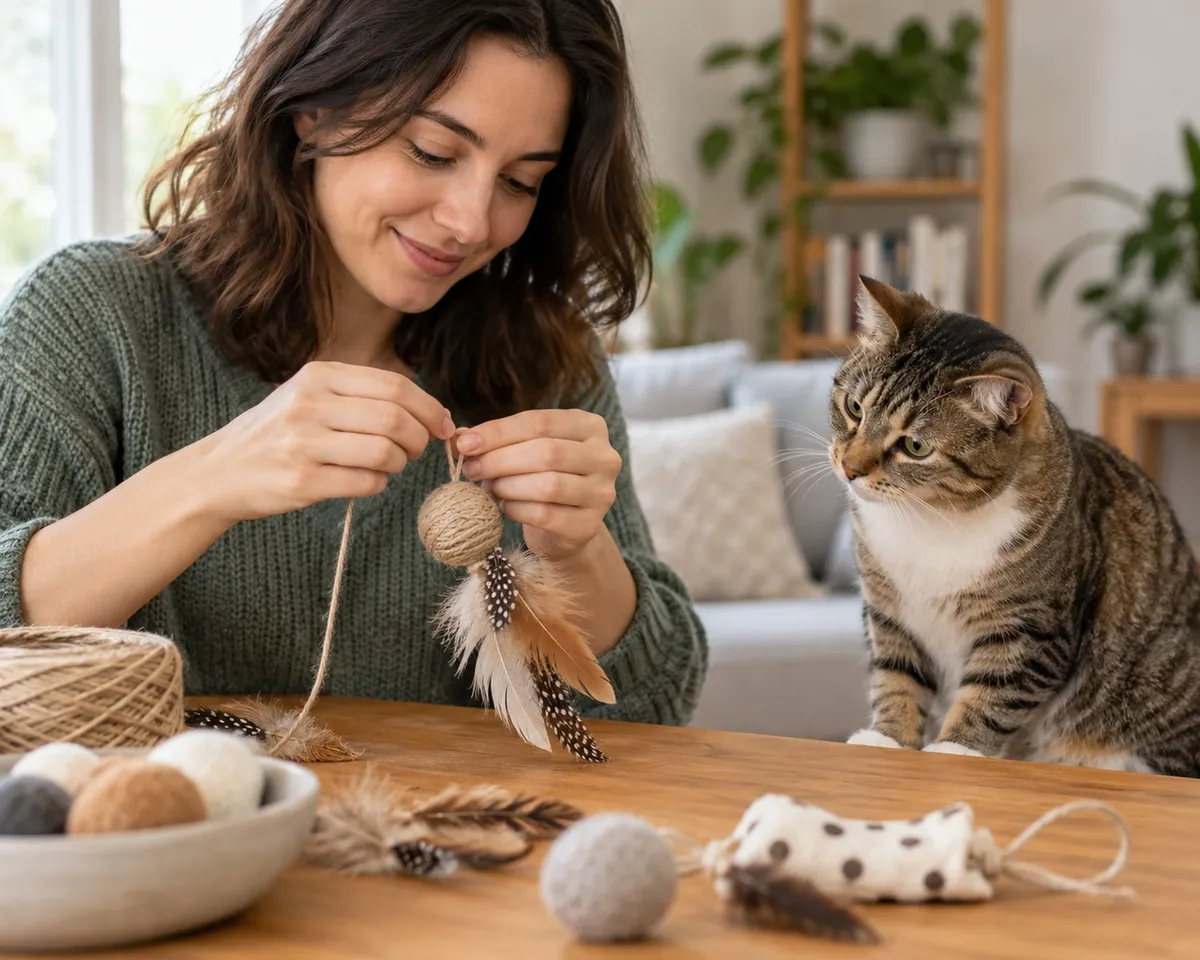
- Homemade wand toy: Tie a length of cotton string to a wooden dowel and attach a feather or fabric scrap to the end. Move it like a bird or insect darting away.
- Pom-pom chaser: Roll a ball of lightweight yarn into a pom-pom and tie it to a stick. Use it only during supervised play.
- Foil ball: Roll a small piece of aluminum foil into a tight ball. It is shiny, light, and bounces unpredictably across tile or wood floors.
Foraging and Puzzle Toys
Foraging toys give your cat mental work, which is especially useful for bored indoor cats. Pair them with a bit of dry food or a few treats.
- Muffin tin puzzle: Place a few treats in the cups of a muffin tin and cover some with ping pong balls. Your cat must paw the balls out to reach the food.
- Egg carton feeder: Drop kibble into each cup of a cardboard egg carton and close the lid. Your cat learns to flip it open.
- Treat-hiding box: Cut small holes in a shoebox and hide treats inside. It encourages sniffing, pawing, and problem-solving.
Best DIY Cat Toys by Play Style
The right DIY cat toys depend on whether your cat prefers chasing, pouncing, hiding, or solving puzzles. Matching the toy to the style makes play last longer and feel more rewarding.
| Cat Play Style | Best DIY Toys | Why It Works |
|---|---|---|
| Chaser | Wand toy, paper balls, foil ball | Fast, unpredictable movement triggers the chase instinct |
| Pouncer | Sock kicker, felt mouse, paper bag tunnel | Heavier toys give a satisfying grab and kick |
| Hider | Cardboard hideout, treat box | Enclosed spaces suit ambush hunters |
| Thinker | Muffin tin puzzle, egg carton feeder | Food rewards challenge problem-solving |
Watch which toys your cat returns to most, then make more in that style. Many cats mix styles, so keep a small variety on hand.
How to Make Homemade Cat Toys Last and Stay Fresh
DIY cat toys stay interesting longer when you rotate them and refresh their scent. Cats lose interest in toys that sit out all day, so shorter, more varied sessions work better than leaving everything on the floor.
Use these simple habits to keep homemade toys exciting:
- Rotate three or four toys each week and store the rest out of sight.
- Refresh fabric toys with a pinch of dried catnip or silver vine.
- Replace paper and cardboard toys as soon as they are shredded or soggy.
- Wash fabric toys occasionally in fragrance-free detergent.
- End each session with a small treat or meal to complete the hunt cycle.
A catnip refill pouch is a handy way to restock sock and felt toys without buying new ones. You can also keep a cat wand toy refill pack on hand so your homemade wand always has a fresh feather or attachment. If you want a broader plan, see our guide on how to keep an indoor cat entertained and our list of interactive toys for indoor cats.
How Much Playtime Do Cats Need With DIY Cat Toys?
Most adult cats need 20 to 30 minutes of active play per day, split into two or three short sessions. Kittens and young cats often need more, while senior cats may prefer gentler, shorter sessions.
Cats are sprinters, not marathoners, so quick bursts of play suit them best. Watch for signs that your cat is done, such as panting, walking away, or losing interest.
Here is a simple daily play routine to try:
- Start with a wand toy for 10 minutes, letting your cat catch the toy at least a few times.
- Offer a puzzle feeder or foraging toy for solo play while you are busy.
- End the evening with a calm session using a soft sock or felt toy.
Regular play can also reduce unwanted behavior. If your cat bites, scratches, or pounces on your feet, extra playtime often helps, and our guide on why your cat attacks your feet explains the causes. For tips on pacing sessions, read playing with your cat.
Common Mistakes With DIY Cat Toys
The biggest mistake with DIY cat toys is using materials that cats can swallow or choke on. Most injuries from homemade toys come from loose string, small parts, or unsupervised play.
Avoid these common mistakes:
- Leaving string or yarn toys out overnight, which risks a dangerous blockage.
- Using toys that are too small, since anything smaller than a golf ball can be swallowed.
- Choosing scented craft supplies or paints, which may contain chemicals unsafe for cats.
- Skipping toy inspections, so frayed or torn toys stay in use.
- Playing with hands or feet instead of toys, which teaches cats to bite people.
The ASPCA Animal Poison Control Center lists many common household materials that are unsafe for cats, so check an item before using it in a toy. If your cat suddenly seems less playful, hides more, or shows other changes, review our article on common cat behavior problems and consider a vet visit.
Turning DIY Cat Toys Into Enrichment
DIY cat toys become real enrichment when they combine movement, scent, sound, and problem-solving. Enrichment keeps indoor cats mentally sharp and can reduce stress, boredom, and destructive habits.
Try pairing toys with climbing, hiding, and scratching options around your home. Our ideas for indoor cat room setups show how to build a space where homemade toys fit right in. According to International Cat Care, cats thrive when they can hunt, stalk, and play in short bursts that copy natural behavior.
Frequently Asked Questions
What household items make good DIY cat toys?
Cardboard boxes, empty toilet paper tubes, plain paper, clean cotton socks, and aluminum foil balls all make good DIY cat toys. Choose items without small removable parts, and always supervise play with anything made of string.
Are homemade cat toys safe for cats?
Homemade cat toys are safe when made from non-toxic materials and used under supervision. Avoid string, ribbon, rubber bands, and small beads, which can cause choking or intestinal blockages.
How do you make a cat toy with a sock?
Fill a clean cotton sock with dried catnip or stuffing and tie the open end in a tight double knot. The finished sock should be larger than a golf ball so your cat cannot swallow it.
How often should you replace DIY cat toys?
Replace DIY cat toys as soon as they show tears, fraying, or loose stuffing, which for paper toys may be every few days. Fabric toys often last several weeks with weekly inspection and washing.
Why does my cat ignore DIY cat toys?
Cats often ignore toys that do not move, smell, or feel like prey. Try moving the toy on a wand, adding catnip, or rotating toys weekly so each one feels new.
DIY cat toys give your cat exercise, mental stimulation, and bonding time for pennies, and the best ones come from items already in your home. Start with two or three simple toys, supervise any string play, and rotate them weekly. Watch which styles your cat loves most, then build more of those.