
Stop Cats From Scratching Furniture: 7 Proven Fixes
To stop cats from scratching furniture, give them better places to scratch, make the couch less appealing, and meet their need for exercise and play. Scratching is a normal instinct, so the goal is redirection, not punishment. This matters most for cat owners with new sofas, young cats, or multi-cat homes.
This post may contain affiliate links. As an Amazon Associate I earn from qualifying purchases.
Table of Contents
Stop cats from scratching furniture at a glance:
- Short Answer: Offer sturdy scratchers beside the furniture your cat targets, then reward every use.
- Why Cats Do It: Scratching stretches muscles, sheds worn claw sheaths, leaves scent from paw glands, and relieves stress.
- Is It Normal: Yes. Cats scratch daily, and the behavior cannot be trained out, only redirected.
- How Long It Takes: Most cats switch surfaces within 2 to 6 weeks of consistent training.
- When to See a Vet: Sudden, excessive scratching with skin redness or hair loss.
Why Cats Scratch Furniture
Cats scratch furniture because it serves four jobs at once: claw maintenance, a full-body stretch, scent marking, and emotional release.
- Claw care: Scratching pulls off the outer layer of the nail, exposing a sharp new claw underneath.
- Stretching: A full vertical scratch works the shoulders, back, and legs.
- Communication: Glands in the paw pads leave a scent mark, plus a visible scratch, that tells other cats someone lives here.
- Stress relief: Cats often scratch more after a move, a new pet, or a change in routine.
Couches become targets because they are tall, sturdy, and sit where the family spends time. For more on how claws work, see what a cat’s claws are used for. Understanding this makes it easier to follow ASPCA guidance on scratching instead of scolding.
Give Cats Better Scratching Outlets
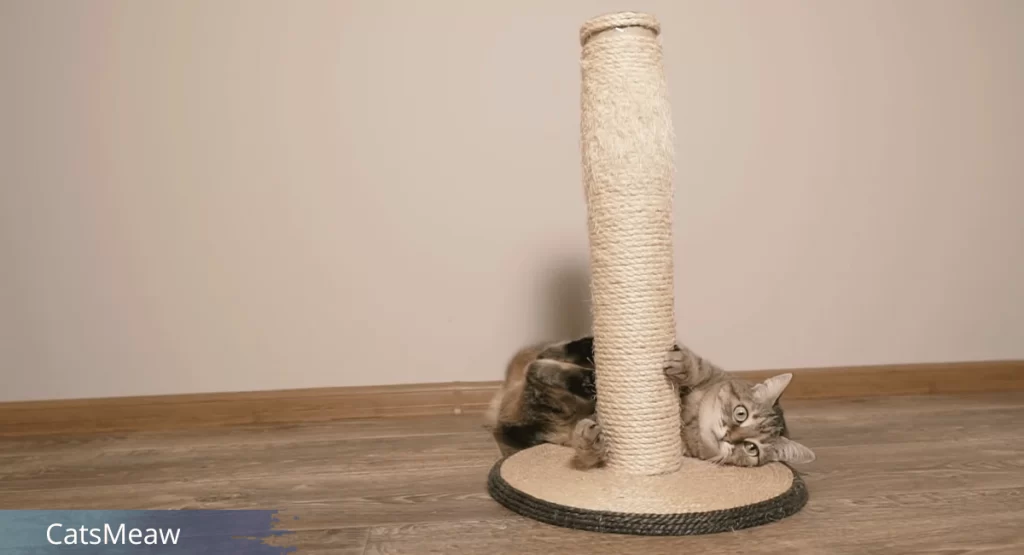
The most effective way to stop cats from scratching furniture is to offer a scratcher that beats the couch. Place it right beside the damaged spot, because cats scratch where they already feel the urge.
Choose scratching outlets that match your cat’s habits:
- Tall vertical posts: Pick one at least 30 inches tall and heavy enough not to wobble, so cats can stretch fully.
- Horizontal pads: Better for cats that scratch rugs or the floor.
- Angled cardboard scratchers: Cheap, replaceable, and popular with many cats.
- Sisal rope posts: Durable, with a texture most cats prefer.
Watch which surface your cat attacks, vertical or flat, rough or smooth, and copy it. Place a second scratcher near where your cat sleeps, since cats often scratch right after waking. Big cats need extra-sturdy designs, as covered in scratching posts for large cats.
Train With Rewards and Make Furniture Unappealing
Positive reinforcement works because cats repeat behaviors that pay off. Punishment only teaches cats to fear you and to scratch when you are not watching.
How to train in five steps:
- Rub catnip or dangle a toy on the new scratcher to draw interest.
- When your cat approaches the couch to scratch, calmly guide them to the scratcher.
- Reward every scratch on the post with a treat or praise within seconds.
- Cover the furniture spot with double-sided tape or a protective cover.
- Keep both measures in place for at least 4 to 6 weeks before removing them.
Cats dislike sticky paws, so tape is a cheap deterrent, though it loses grip and needs replacing every few days. A pet-safe cat repellent spray for furniture can add a scent barrier. Never use scents, sprays, or tapes that are unsafe if licked.
Trim Claws and Reduce Stress
Trimming nails every 2 to 3 weeks blunts the claw tips and noticeably reduces damage. Use a cat nail clipper and cut only the clear tip, staying well away from the pink quick. If you are unsure, ask your vet or groomer to demonstrate, or follow our guide to trimming your cat’s nails.
Stress-related scratching often follows a move, a new pet, or a disrupted routine. Cats that feel insecure scratch more to leave comforting scent marks. If scratching comes with hiding, see why a cat is suddenly hiding for common triggers.
Never declaw a cat. The surgery removes the last bone of each toe and can cause chronic pain and new behavior problems.
Enrich Your Cat’s Environment
A bored cat scratches more, so daily play and climbing space cut destructive scratching. Aim for two play sessions of 10 to 15 minutes, ideally before meals so the hunt, catch, and eat cycle feels natural.
- Interactive play: feather wands let cats stalk and pounce, which burns energy that might otherwise go into your sofa.
- Light chasing: laser lights give a quick sprint, but finish with a real toy so the cat can “catch” something.
- Vertical space: shelves or trees near a window give cats a perch, a view, and an extra place to stretch and scratch.
For more ideas, read how to keep an indoor cat entertained and our list of interactive toys for indoor cats. Small apartments can still fit a compact cat tree for small spaces.
Be Consistent and Know When to Get Help
Lasting results need consistency. Replace worn scratchers, refresh deterrents, and reward every correct scratch, especially in the first month.
See a veterinarian if scratching is sudden or excessive, or comes with red skin, hair loss, or constant licking, since allergies, skin infections, or pain can drive the behavior. A vet can also refer you to a certified behaviorist if stress seems to be the cause. Medical guidance from the VCA Animal Hospitals library can help you understand what to ask.
Frequently Asked Questions
Why does my cat scratch the couch instead of the scratching post?
Cats choose the couch when the post is the wrong height, wobbles, or sits far from their favorite spot. Move it next to the couch and use a post at least 30 inches tall.
How long does it take to stop a cat from scratching furniture?
Most cats redirect within 2 to 6 weeks of consistent training. Kittens often adapt faster, while long-standing habits in adult cats can take 2 to 3 months.
What smells keep cats from scratching furniture?
Many cats dislike citrus scents, and commercial pet-safe deterrent sprays use similar principles. Always test on a hidden patch first and avoid essential oils, which can be toxic to cats.
Should I declaw my cat to protect furniture?
No. Declawing amputates part of each toe and can cause lasting pain, so it is not a humane solution. Nail trims, scratchers, and nail caps protect furniture safely.
To stop cats from scratching furniture, combine well-placed scratchers, daily play, regular nail trims, and patient rewards. Start this week by placing one sturdy scratcher directly beside the couch and rewarding every use.