
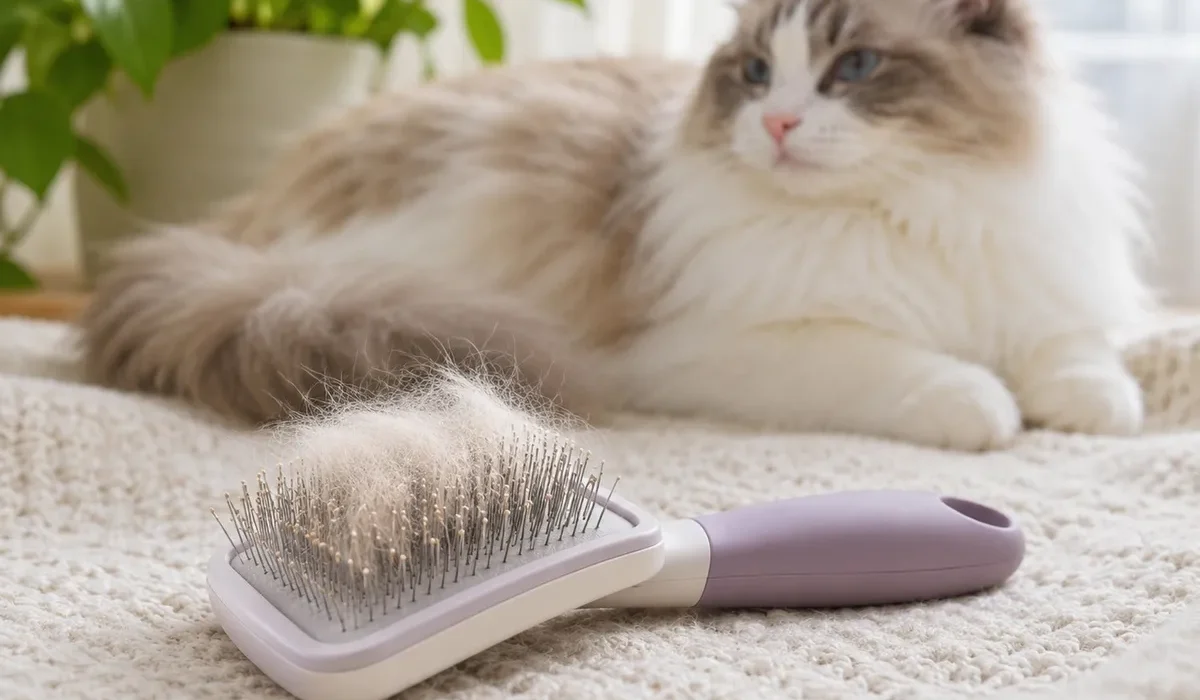
How to Help a Cat with Hairballs: 8 Easy Remedies That Work
How to help a cat with hairballs comes down to two goals: reducing the loose fur your cat swallows and helping swallowed fur pass through the gut. These steps matter most for long-haired breeds, heavy shedders, and cats vomiting hairballs more than twice a month.
This post may contain affiliate links. As an Amazon Associate I earn from qualifying purchases.
Table of Contents
How to help a cat with hairballs at a glance:
- Short Answer: Brush regularly, feed a fiber-rich diet, and boost moisture intake.
- Most Common Causes: Heavy shedding, long coats, and overgrooming from stress, fleas, or itchy skin.
- Urgency: One or two hairballs a month is common, while weekly hairballs need a vet check.
- What to Do at Home: Brush long-haired cats daily and short-haired cats 2-3 times a week.
- When to See a Vet: Unproductive retching, no appetite for 24 hours, or no stool for 48 hours.
Why Cats Get Hairballs
Cats get hairballs because backward-facing barbs on the tongue pull loose fur into the mouth during grooming. Most swallowed hair passes in the stool, but fur lingering in the stomach clumps into a wad that comes back up.
Hairballs look like tubes rather than balls because they squeeze through the narrow esophagus on the way out.
Cats most prone to hairballs:
- Long-haired breeds such as Persians and Maine Coons, featured in our list of fluffy long-haired cat breeds.
- Heavy shedders during spring and fall coat changes.
- Adult cats, since young kittens groom less thoroughly and rarely form hairballs.
- Overgroomers reacting to stress, fleas, or skin allergies.
How to Help a Cat with Hairballs: 8 Proven Remedies
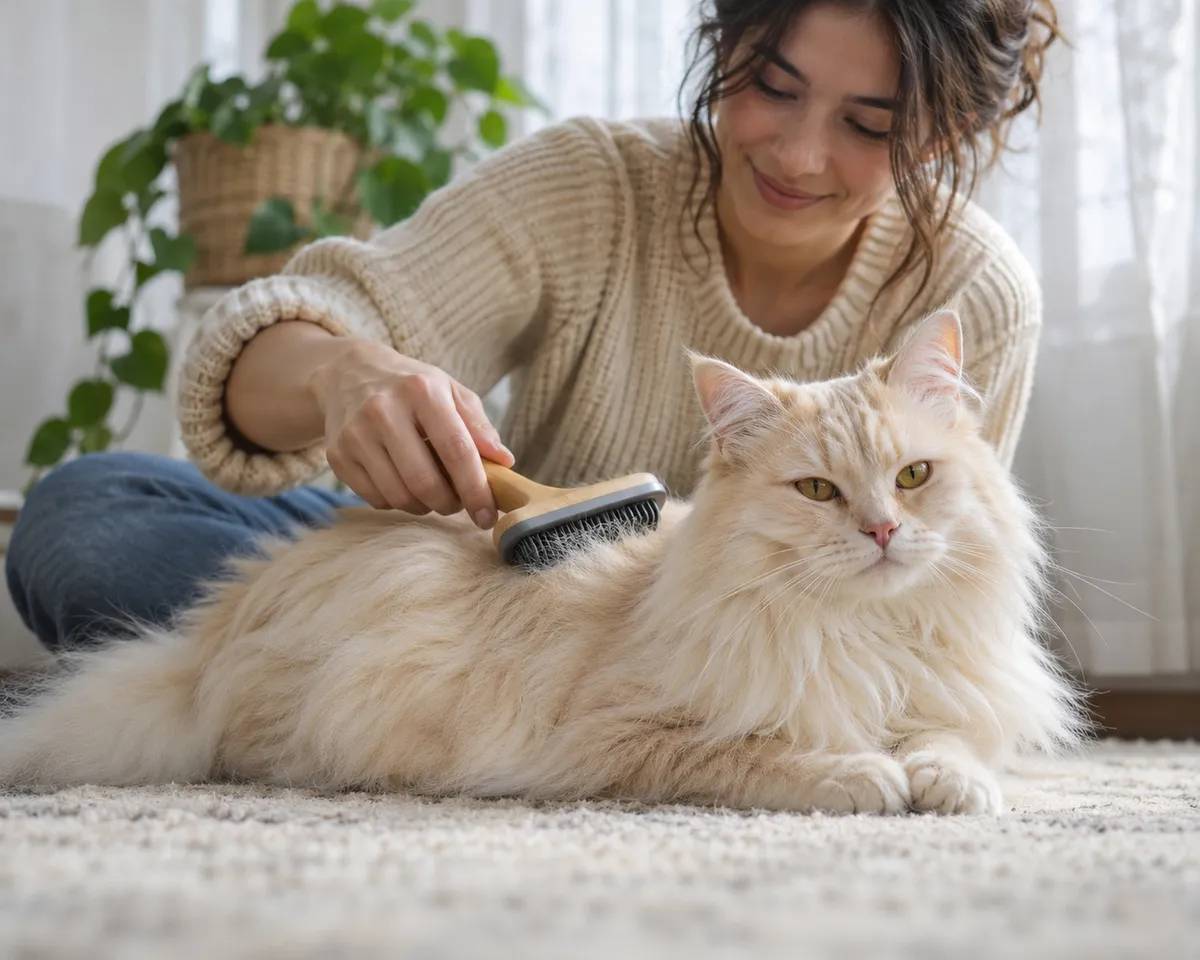
The best remedies remove loose fur before your cat swallows it and keep swallowed fur moving. When my long-haired cat started bringing up weekly hairballs, daily brushing alone cut them to about one a month.
- Brush on a schedule: Use a deshedding grooming brush that reaches the undercoat, daily for long coats and 2-3 times weekly for short coats. Our guide to the best cat brush for short hair shedding compares bristle types.
- Switch to a hairball formula: A hairball control cat food adds fiber that carries swallowed fur into the stool. Mix the new food in over 7-10 days to avoid stomach upset.
- Add moisture: Wet food meals raise daily water intake, keeping stool soft so hair passes easily.
- Ask before adding fiber: Your vet can suggest a safe fiber source, since too much fiber causes gas and loose stool.
- Treat itchy skin: Year-round flea prevention matters because flea bites and allergies make cats swallow far more fur.
- Play daily: Two 10-15 minute play sessions give stressed cats an outlet other than overgrooming.
- Book a coat trim: A groomer can shorten very long or matted coats every few months.
- Finish with a damp hand: Stroking the coat with a slightly damp hand after brushing collects stray hairs.
Hairball or Blockage? Signs to Watch For
A normal hairball episode involves a few retches and produces a damp, cylindrical clump within a minute or two.
| Sign | Likely Meaning | Urgency |
|---|---|---|
| Hairball every few weeks | Normal grooming | Monitor at home |
| Hairballs more than twice a month | Excess shedding or overgrooming | Vet check soon |
| Hacking with nothing produced | Asthma or possible blockage | Vet within 24 hours |
| No appetite for 24+ hours or no stool for 48 hours | Possible blockage | Same-day vet |
| Swollen, painful belly and lethargy | Intestinal obstruction | Emergency |
Feline asthma often mimics hairball hacking, so a cat coughing with its neck stretched low and producing nothing needs an exam. Our guide to coughing cat causes explains the difference.
Straining without passing stool can mean fur is stuck lower down, so review our cat constipation remedies and call your vet after 48 hours.
When to See a Vet About Cat Hairballs
Call your veterinarian if your cat vomits hairballs more than twice a month, because frequent hairballs often signal skin disease, allergies, or bowel problems. A hairball lodged in the intestines is an emergency that may need X-rays, ultrasound, or surgery.
Never give human laxatives or mineral oil at home, because cats can inhale mineral oil and develop pneumonia.
Vomiting without hair has other causes, covered in our guide to cat vomiting after eating. The Cornell Feline Health Center explains how vets investigate chronic vomiting in cats.
How to Help a Cat with Hairballs Long Term
Long-term hairball prevention relies on steady grooming, a consistent diet, and regular health checks.
- Add extra brushing sessions during spring and fall shedding peaks.
- Keep long-haired cats on the hairball formula year-round if your vet approves.
- Weigh your cat monthly, since weight loss alongside hairballs needs veterinary attention.
- Schedule yearly checkups, or every 6 months for cats over 10 years old.
Frequently Asked Questions
Is it normal for cats to throw up hairballs?
Yes, one or two hairballs a month is common in healthy adult cats, especially long-haired breeds. Weekly hairballs are not normal and deserve a vet visit.
How long does it take a cat to pass a hairball?
A hairball usually comes up within a few minutes of retching. Swallowed fur moving downward normally passes in the stool within 1-2 days.
How to help a cat with hairballs without medicine?
Daily brushing, extra dietary fiber, and more moisture from meals reduce hairballs in most cats within a few weeks.
Can hairballs kill a cat?
Hairballs rarely turn fatal, but a hairball blocking the intestines is a surgical emergency. Retching, appetite loss over 24 hours, and a painful belly need same-day care.
Do indoor cats get more hairballs?
Indoor cats often shed year-round because artificial lighting and heating blur natural shedding seasons, which means more swallowed fur and more frequent hairballs.
Learning how to help a cat with hairballs starts with regular brushing, a fiber-rich diet, and plenty of moisture. These simple habits keep most cats down to an occasional hairball. Start a brushing calendar this week, and book a vet visit if hairballs appear more than twice a month or your cat retches without results.