Cat Sleeping Positions Meaning: 10 Poses and What They Reveal
Cat sleeping positions meaning comes down to two things: how safe a cat feels and how warm it is. A curled ball conserves heat, while a sprawled belly-up pose shows deep trust. Reading these poses helps owners spot comfort, stress, and early signs of illness.
This post may contain affiliate links. As an Amazon Associate I earn from qualifying purchases.
Table of Contents
Cat sleeping positions meaning at a glance:
- Short Answer: Tight, tucked poses signal cold or caution, while open, stretched poses signal security and trust.
- Why Cats Do It: Cats choose poses to control body heat, protect vital organs, and stay ready to react.
- Is It Normal: Switching between several positions in one day is completely normal for healthy cats.
- How to Respond: Provide a warm, quiet bed and watch for sudden changes in posture or breathing.
- When to See a Vet: Persistent hunched sleeping, labored breathing, or reluctance to lie down needs a veterinary check.
Why Cat Sleeping Positions Meaning Matters
Cats communicate comfort through posture even when they are unconscious. Because cats are both predators and small prey animals, their sleep poses balance rest against readiness.
Adult cats sleep 12 to 16 hours a day, and kittens and seniors often sleep up to 20 hours. If you wonder about those long naps, our guide on why cats sleep so much covers the reasons in depth.
Understanding cat sleeping positions meaning starts with three factors that shape every pose:
- Temperature: Cats prefer an ambient temperature around 86 to 97°F, so they curl up in cool rooms and stretch out in warm ones.
- Safety: A cat protects its belly, throat, and chest when it feels uncertain.
- Sleep depth: Light dozing uses poses that allow a fast escape, while deep sleep allows full relaxation.
10 Cat Sleeping Positions and What They Mean
Each pose below carries its own message about comfort, temperature, and trust. Use this list as a decoder for the cat sleeping positions meaning in your own home.
1. The Curled Ball
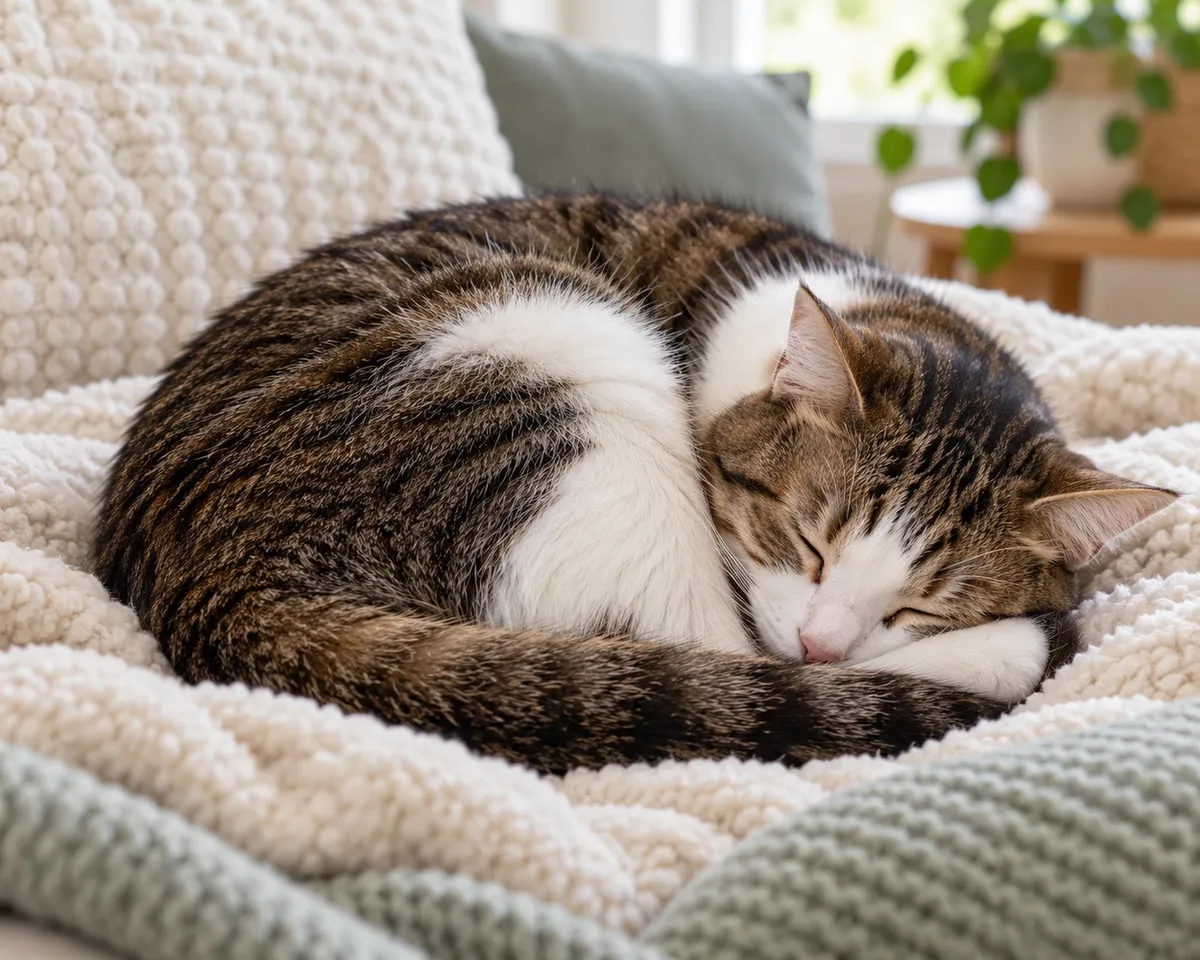
A cat curled tightly with its tail wrapped around its nose is conserving heat and protecting its organs. This is the most common pose in cool rooms and in cats that feel slightly cautious. It is usually light sleep, so the cat can wake quickly.
2. The Loaf
In the loaf, paws are tucked under the body and the head stays up or slightly lowered. Cats in this pose are resting but not fully asleep, and they stay ready to spring up within a second. It is a sign of relaxed alertness, not stress.
3. Belly Up
A cat sleeping on its back with the belly exposed feels completely safe in its environment. The belly holds vital organs, so cats only expose it where they trust everyone nearby. Do not read this as an invitation to rub, because many cats will grab a hand that touches the belly. Our post on cat rolling on back explains the difference between trust and a belly-rub request.
4. Side Sprawl
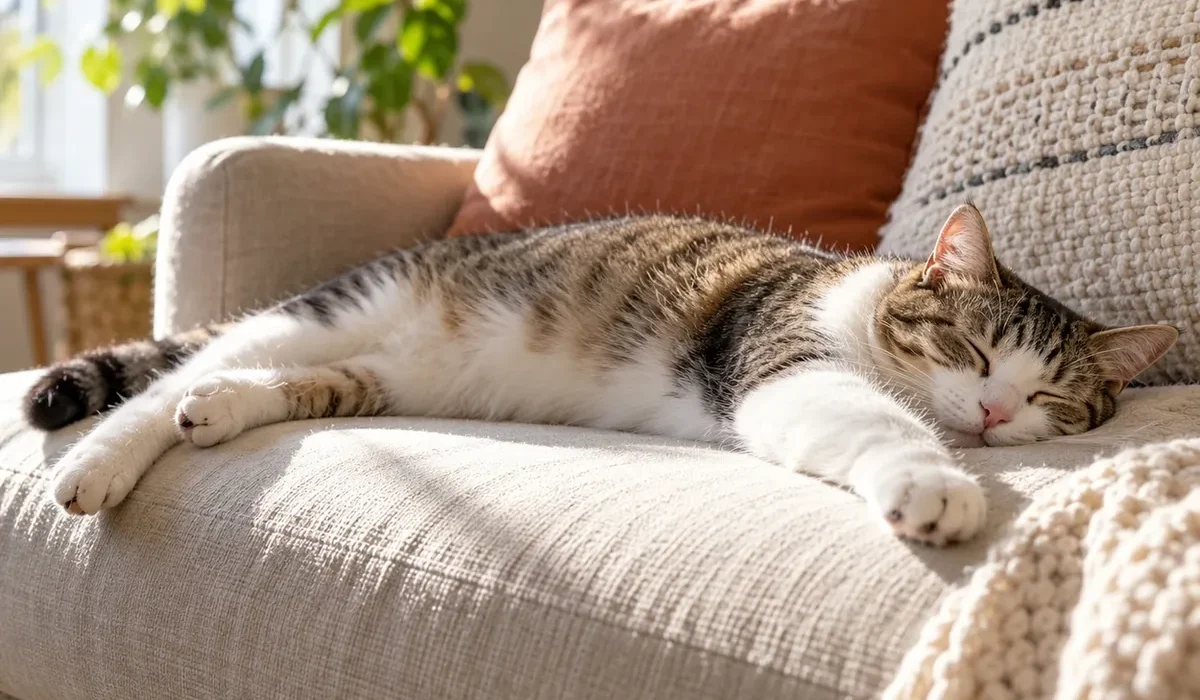
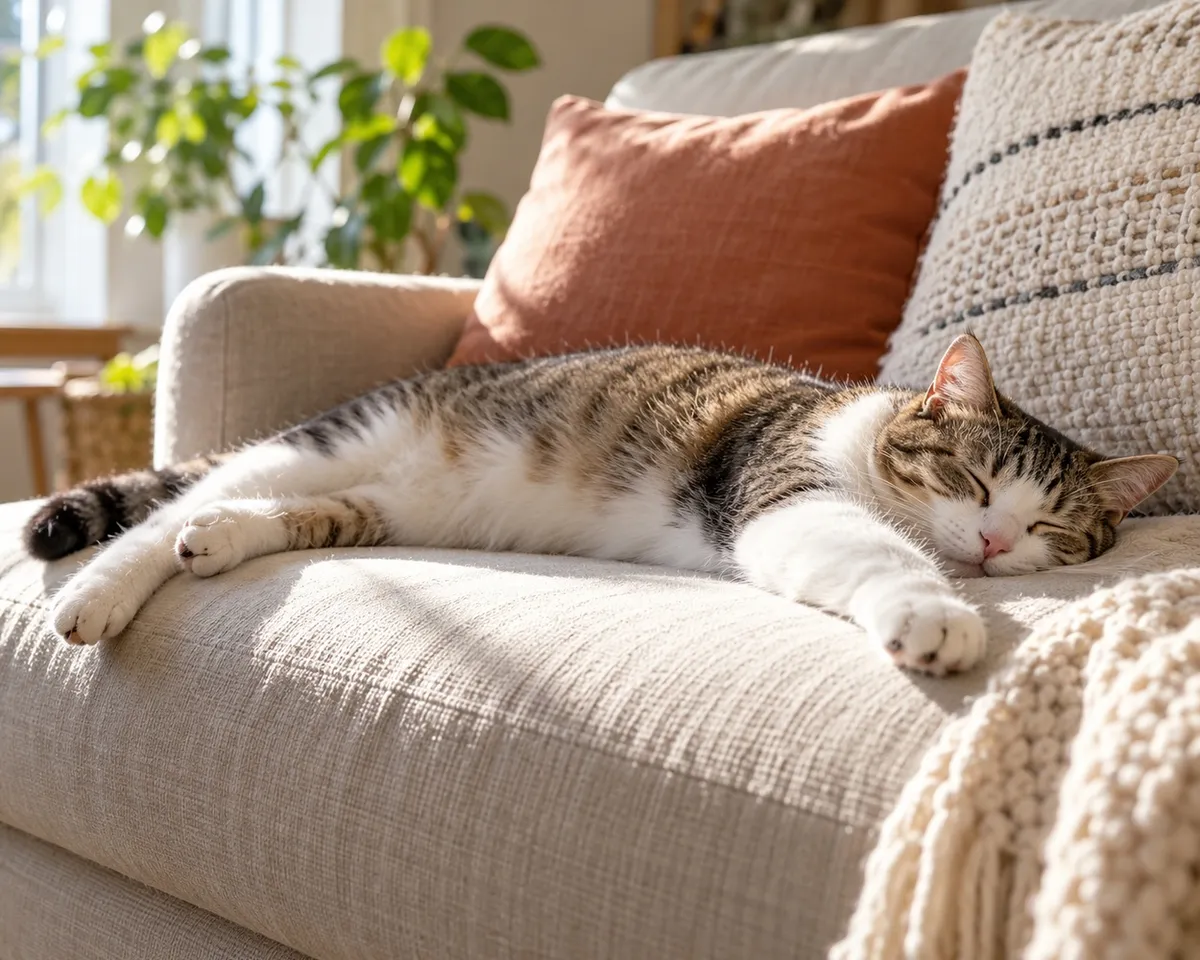
Lying flat on one side with legs extended signals deep relaxation and a comfortable room temperature. Cats in this pose often twitch their whiskers or paws during dreams. This is a strong sign that your cat feels secure in its sleeping spot.
5. The Sphinx
The sphinx has front paws stretched ahead, chest low, and head upright. Cats use it for resting with one eye on their surroundings, often near a window or doorway. It signals comfort mixed with curiosity.
6. Stacked or Crossed Paws
Cats that sleep with paws crossed or stacked neatly are usually relaxed and content. A paw draped over the face blocks light, which helps cats nap in bright rooms. Both habits are harmless and tend to be learned as kittens.
7. Head Tucked Under a Paw or Tail
Covering the nose and face with a tail or paw keeps the cat warm and blocks light. Cats do this most often in winter or in drafty homes. It is a comfort pose, not a warning sign.
8. The Superman
The Superman is a belly-down pose with all four legs stretched outward, often on a cool floor or tile. Cats use it to release body heat in warm weather. It also lets them launch into motion instantly, so it is a light-sleep pose.
9. Sleeping Upright or Sitting
Some cats doze sitting up with the head drooping slowly. This is common in cats that feel watchful, such as in a new home or around other pets. If the cat has just arrived, give it hiding spots and time to adjust.
10. Sleeping on You
A cat that sleeps on your lap, chest, or legs is seeking warmth and bonding. It is one of the strongest trust signals a cat can give. For the full story, read why your cat sleeps on you.
Quick Reference: Cat Sleeping Positions Meaning Chart
This chart summarizes the most common poses so you can check a pose at a glance.
| Position | Likely Meaning | Sleep Depth |
|---|---|---|
| Curled ball | Cold or cautious | Light |
| Loaf | Relaxed but alert | Light |
| Belly up | Total trust | Deep |
| Side sprawl | Deeply relaxed | Deep |
| Sphinx | Resting, watchful | Light |
| Superman | Hot, ready to move | Light |
| Head tucked | Warm and cozy | Medium to deep |
| Sitting upright | Alert, unsure | Very light |
What Cat Sleeping Positions Reveal About Mood and Trust
A cat that changes positions often and settles anywhere in your home is confident and secure. A cat that only sleeps curled in hidden spots may be nervous or recently stressed.
Watch for these patterns over several days:
- Open poses in shared spaces: Your cat trusts you and the household.
- Tight poses in hidden spots: Your cat may be cautious, cold, or unsettled.
- Sleeping near you: Your cat sees you as part of its safe group.
- Sleeping apart from you: This is not rejection, since many cats simply prefer cooler or quieter spots.
If your cat suddenly retreats and sleeps only in hiding, check our post on why a cat is suddenly hiding for common causes. The cat sleeping positions meaning shifts when behavior changes suddenly, so a new habit tells you more than any single pose.
Health Warning Signs in Cat Sleeping Positions
Most poses are harmless, but a few can point to pain or illness. A cat that sleeps in a stiff, hunched position with its head low and paws tucked tight for many hours may be in discomfort.
Warning signs to watch for:
- Hunched, tense posture: This can signal abdominal pain or nausea.
- Sleeping with the head raised to breathe: This can point to heart or lung trouble.
- Fast breathing at rest: A healthy sleeping cat breathes roughly 15 to 30 breaths per minute.
- Refusing to lie down: Cats in pain often cannot settle into any comfortable pose.
- Sleeping far more than usual: A sudden jump in sleep can signal illness or low mood.
Count your cat’s breaths for 30 seconds while it sleeps and double the number. If the rate stays above 30 per minute, contact your veterinarian. Open-mouth breathing, blue-tinged gums, or collapse are emergencies that need immediate veterinary care.
Pain is easy to miss because cats hide it. Our guide to the signs a cat is in pain lists other changes to watch, and the Cornell Feline Health Center offers reliable information on feline health conditions.
Twitching, Chirping, and Other Sleep Behaviors
Twitching whiskers, paddling paws, and soft chirps are usually signs of REM sleep. Cats enter REM after roughly 15 to 30 minutes of sleep and appear to dream, much like people.
Brief twitching is normal. Violent jerking, crying out, or twitching that continues after the cat wakes deserves a closer look, and our post on cat twitching in sleep explains when to worry.
Build a Sleeping Spot That Fits Cat Sleeping Positions Meaning
The right setup lets your cat choose its preferred pose and sleep deeply. Cats reward good bedding with longer, more relaxed rest.
- Offer at least two or three sleeping spots in different rooms, including one warm and one cool option.
- Place a heated cat bed or warm blanket where your cat likes to curl up, especially for seniors and short-haired cats.
- Choose a bed with raised edges for cats that like to curl, and a flat mat for cats that like to sprawl.
- Keep beds away from loud appliances, busy hallways, and the litter box.
- Add a high perch or a cat tree with a covered cubby so your cat can watch the room from a secure height.
- Wash bedding weekly to remove allergens and keep it fresh.
If space is tight, our guide to the best cat tree for small apartments offers space-saving options. Place the heated bed and the cubby in quiet corners and let your cat decide which it prefers.
Cat Sleeping Positions Meaning by Age
Age changes how cats sleep, and each stage has its own normal.
- Kittens: They sleep up to 20 hours a day, often in piles, and collapse into odd poses mid-play.
- Adults: They sleep 12 to 16 hours and switch poses with temperature and mood.
- Seniors: They sleep more, favor warm spots, and may avoid positions that strain stiff joints.
A senior cat that suddenly avoids curling or struggles to settle may have arthritis. Mention any change to your vet at the next checkup.
Frequently Asked Questions
Why does my cat sleep on its back with its belly showing?
A cat sleeping belly up feels completely safe because it is exposing its most vulnerable area. This pose usually means deep trust and a comfortable room temperature, not an invitation to pet the belly.
What does it mean when a cat sleeps curled in a ball?
A curled ball means the cat is conserving body heat and protecting its organs. It is the most common pose and is usually light sleep from which cats wake in seconds.
Is it normal for cats to change sleeping positions often?
Yes, healthy cats shift positions several times a day depending on temperature, mood, and sleep depth. Changing poses is normal, while a cat that holds one stiff pose for hours may be uncomfortable.
Why does my cat sleep with its paw over its face?
Cats cover their faces to block light and keep their noses warm. It is a harmless comfort habit seen in cats of all ages and breeds.
Does cat sleeping positions meaning include health clues?
Yes, cat sleeping positions meaning can include health clues, such as hunched posture, raised-head sleeping, or breathing above 30 breaths per minute at rest. If you notice these signs, contact your veterinarian promptly.
Cat sleeping positions meaning becomes clear once you pair each pose with the room temperature and your cat’s mood. Open, sprawled poses show trust, tight poses show caution or cold, and sudden changes deserve attention. Watch your cat’s sleep habits for a week, note any unusual posture, and book a vet visit if something looks off.