Can Cats Eat Salmon? 6 Healthy Facts About This Tasty Fish
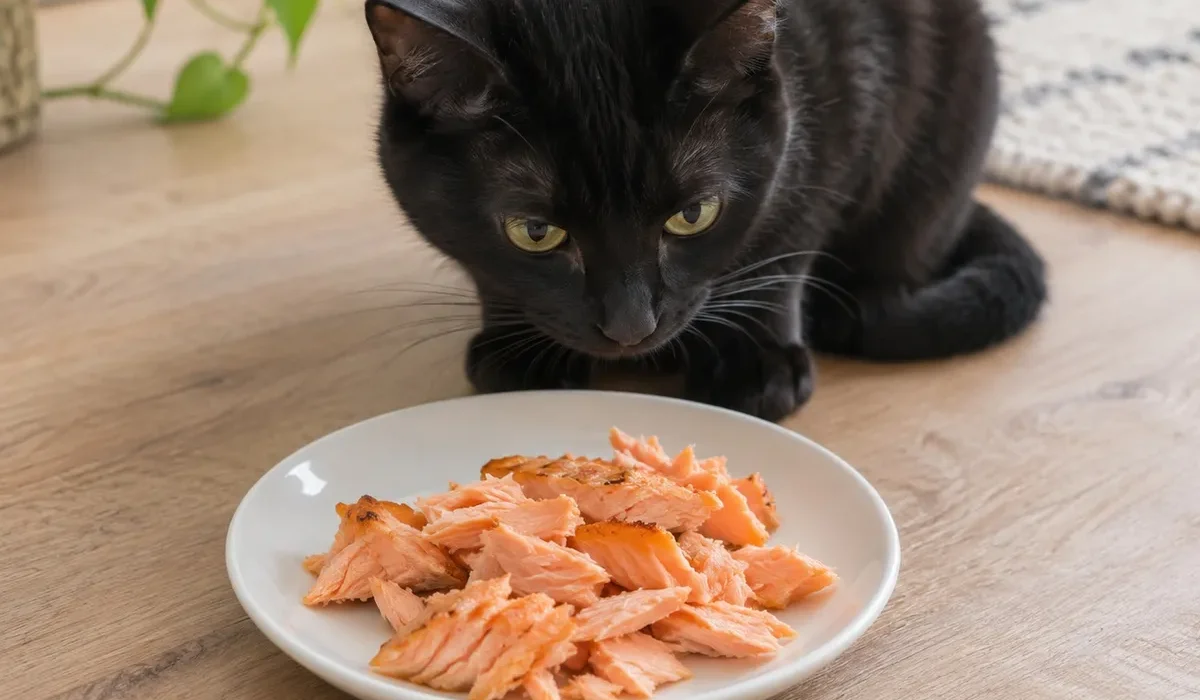
Owners asking can cats eat salmon get a clear yes: plain, fully cooked, boneless salmon is a safe occasional treat for most healthy adult cats. The details matter when you share leftovers, because seasoning, smoking and raw preparation turn salmon into a real risk.
This post may contain affiliate links. As an Amazon Associate I earn from qualifying purchases.
Table of Contents
Can cats eat salmon at a glance:
- Short Answer: Yes, cats can eat plain cooked salmon with bones, skin and seasoning removed.
- Safe Amount: About 2 teaspoons of flaked salmon, once or twice a week.
- Main Benefit: Salmon supplies quality protein plus omega-3 fatty acids for skin, coat and joints.
- Main Risk: Raw, smoked or seasoned salmon can cause food poisoning, salt overload or stomach upset.
Can Cats Eat Salmon Safely? The Nutrition Facts
Cats can eat salmon safely because salmon is a lean animal protein that fits a strictly carnivorous diet. When my tabby first smelled poached salmon on my plate, she sat beside my chair for twenty minutes.
- Protein: Cooked salmon provides roughly 20 to 25 grams of protein per 100 grams.
- Omega-3 fatty acids: EPA and DHA support healthy skin, a glossy coat and joint comfort.
- Taurine: Fish contains taurine, which cats need for heart function and eyesight.
- Lower mercury: Salmon holds far less mercury than tuna; see can cats eat tuna for tuna limits.
- Vitamins and minerals: Salmon adds vitamin B12, vitamin D and selenium.
Salmon cannot replace cat food, because salmon lacks the balanced calcium and vitamins cats need daily. The Cornell Feline Health Center recommends a complete, balanced diet as the foundation of cat nutrition.
Safe and Unsafe Types of Salmon for Cats
When owners ask can cats eat salmon, preparation decides the answer: plain cooked salmon is safe, while raw, smoked and seasoned salmon carry real risks.
| Type of Salmon | Safe for Cats? | Reason |
|---|---|---|
| Baked, poached or steamed plain | Yes | Cooking kills bacteria and parasites |
| Canned in water, no salt | Yes, in moderation | Drain liquid, remove bones |
| Plain cooked skin | Small amounts only | High fat upsets stomachs |
| Raw salmon or sushi | No | Salmonella, Listeria, parasites |
| Smoked salmon or lox | No | Very high sodium |
| Canned in oil or brine | No | Excess fat or salt |
| Seasoned or sauced salmon | No | Garlic, onion and butter |
| Salmon bones | No | Choking and gut injury |
Garlic and onion appear on every list of dangerous foods for cats, even when cooked. Smoked salmon often contains more than 600 milligrams of sodium per 100 grams.
How to Serve Salmon to Your Cat
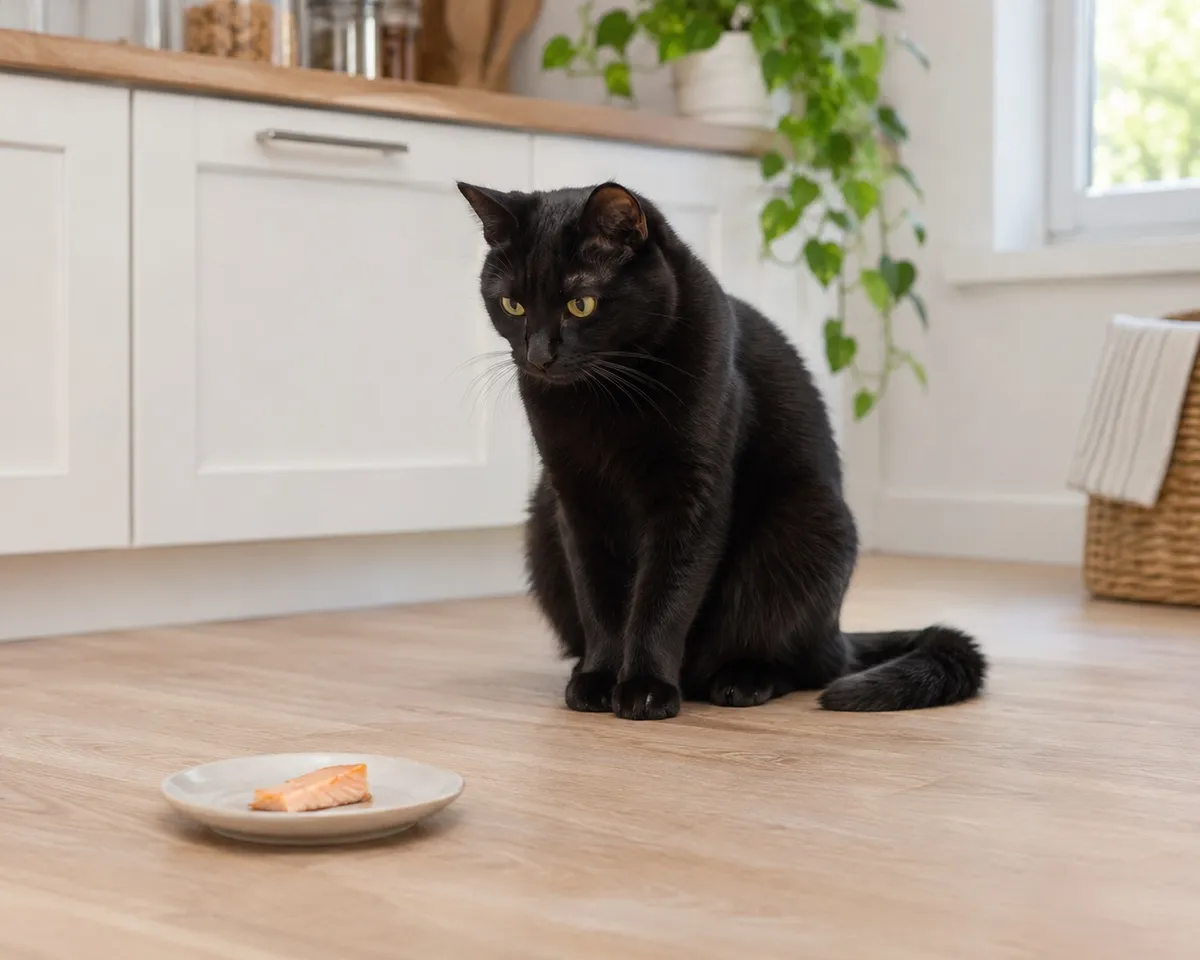
The safest way to serve salmon to cats is to cook it plain, cool it and offer tiny boneless flakes.
- Buy fresh or frozen salmon with no marinade, salt or seasoning.
- Bake, poach or steam the fillet to 145°F (63°C) inside.
- Remove the skin and every pin bone, checking with your fingers.
- Cool the salmon completely and flake it into pea-sized pieces.
- Offer one piece first and watch for vomiting or diarrhea over 24 hours.
Owners who wonder can cats eat salmon without home cooking can choose single-ingredient freeze-dried salmon cat treats. A vet-approved salmon oil supplement for cats provides omega-3s in a consistent form, and your vet can advise the right amount.
Can Cats Eat Salmon Every Day? Portion Limits
Cats should not eat salmon every day; one or two small servings per week is a sensible limit. Vets advise keeping treats under 10% of daily calories, so a 10-pound cat needing 200 to 250 calories gets only 20 to 25 treat calories.
- Adult cats: About 2 teaspoons, roughly 10 grams, once or twice weekly.
- Kittens over 12 weeks: A few tiny flakes only, since kittens need complete kitten food.
- Cats with kidney disease: Ask your vet first, because salmon adds phosphorus that diseased kidneys struggle to clear.
- Overweight cats: Swap part of the regular meal for salmon instead of adding calories.
Rotating salmon with other human foods cats can eat keeps treats varied. The cooked-only rule behind can cats eat salmon also applies when deciding whether cats can eat shrimp.
Health Risks of Salmon for Cats
Even when the answer to can cats eat salmon is yes, bacteria, bones, sodium and allergies deserve attention.
- Food poisoning: Raw salmon can carry Salmonella, Listeria and parasites that sicken cats and people.
- Choking: Pin bones can lodge in the throat or puncture the digestive tract.
- Sodium overload: Smoked and brined salmon cause thirst, vomiting and sometimes salt poisoning.
- Allergies: Fish allergy in cats causes itching, ear problems and loose stools.
- Steatitis: Fish-heavy diets low in vitamin E can trigger painful yellow fat disease.
Call your veterinarian if your cat vomits repeatedly, has bloody diarrhea or seems lethargic after eating salmon. Choking, pawing at the mouth or labored breathing is an emergency needing immediate veterinary care.
Frequently Asked Questions
Can cats eat salmon skin?
Yes, cats can eat a fingernail-sized piece of plain cooked salmon skin, but its high fat can cause vomiting or diarrhea. Never serve seasoned or fried salmon skin.
Can cats eat raw salmon?
No, raw salmon can carry Salmonella, Listeria and parasites. Cooking salmon to 145°F (63°C) kills these organisms.
Can cats eat salmon from a can?
Yes, cats can eat canned salmon packed in water with no salt added. Drain the liquid and remove the soft bones before offering 1 to 2 teaspoons.
Is salmon better than tuna for cats?
Salmon is generally a safer occasional treat than tuna because salmon contains much less mercury. Both fish should stay under 10% of a cat’s daily calories.
Can cats eat smoked salmon?
No, smoked salmon often exceeds 600 milligrams of sodium per 100 grams. That salt level can cause thirst, vomiting and salt poisoning in cats.
So, can cats eat salmon? Yes, as long as the salmon is plain, fully cooked, boneless and limited to small portions once or twice a week. Salmon adds protein and omega-3s, but complete cat food must remain the main diet. Start by cooking a plain fillet and offering your cat one pea-sized flake.