


Can Cats Eat Bread? 7 Safe Facts Every Owner Needs
This post may contain affiliate links. As an Amazon Associate I earn from qualifying purchases.
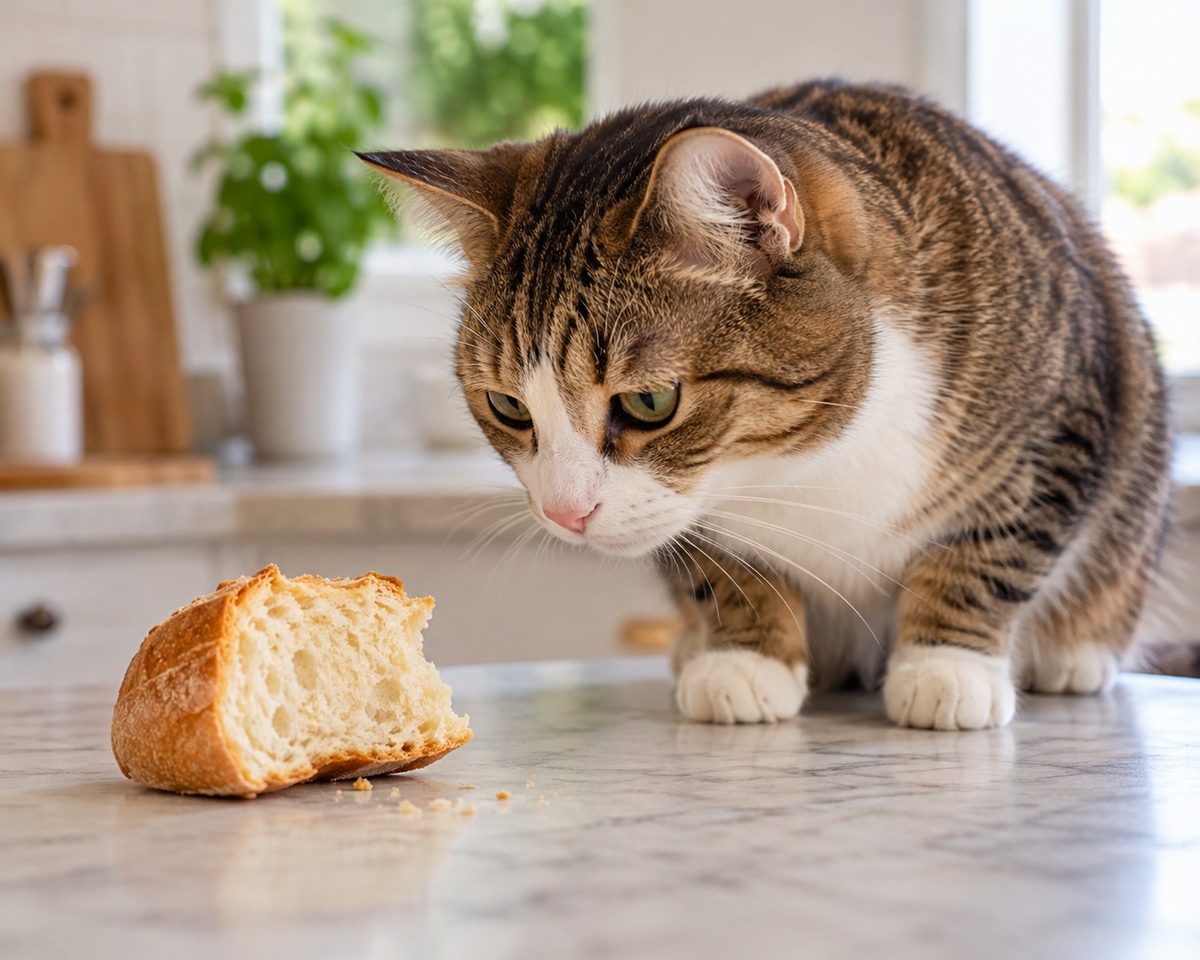
Can cats eat bread? Yes, in tiny amounts, plain baked bread is not toxic to cats, but it offers almost no nutritional value. Raw yeast dough and bread containing raisins, garlic, onion or xylitol are dangerous and need fast action.
Can cats eat bread at a glance:
- Short Answer: A small nibble of plain, fully baked bread will not poison a healthy cat, but it is an empty-calorie snack.
- Main Risk: Raw dough can expand in the stomach and produce alcohol, which can cause bloating, weakness and seizures.
- Safe Amount: No more than a pea-sized piece, once in a while, and always well under 10% of daily calories.
- Foods to Avoid: Garlic bread, raisin bread, onion bread and anything with xylitol or heavy butter.
- When to See a Vet: Any raw dough ingestion, repeated vomiting, a swollen belly or wobbliness.
Table of Contents
Can Cats Eat Bread Safely? The Short Answer
Plain white or wheat bread, fully baked and given in a crumb-sized piece, is generally safe for healthy adult cats. It contains no ingredient that is toxic to cats in small amounts.
Safe, however, does not mean useful. Cats are obligate carnivores, which means their bodies are built to get energy and nutrients from animal protein and fat, not from grains.
When my own cat once stole a corner of a sandwich, nothing happened except a very smug expression. That outcome is typical for plain bread, but the same cat would have needed a vet visit after eating raw dough.
Bread should be treated as an occasional curiosity, never as a food. A balanced complete cat diet already supplies everything your cat needs, as covered in our guide to feeding your cat.
Is Bread Nutritious for Cats?
Bread is mostly carbohydrate, and cats have no biological requirement for dietary carbohydrates. A slice of white bread contains roughly 70 to 80 calories, which is a large share of what a typical 10-pound cat needs in a day (about 200 to 250 calories).
That means one slice could cover around a third of daily energy while delivering almost no taurine, arachidonic acid or animal protein. Those nutrients are essential for heart health, vision and normal organ function.
Owners who ask can cats eat bread for its fiber or protein should know the answer is disappointing. Here is what bread does and does not provide:
- Calories: Plenty, mostly from starch, which cats digest less efficiently than meat.
- Protein quality: Low, and lacking the amino acids cats need.
- Fiber: Whole grain breads have some, but cats get little benefit from it in this form.
- Sodium: Many breads are salty, which adds up quickly for a small body.
Cats that eat starchy treats regularly can gain weight, and obesity raises the risk of diabetes and joint problems. If weight is already a concern, our cat feeding guidelines explain how much food a cat actually needs.
Can Cats Eat Bread Dough? Why Raw Dough Is Dangerous
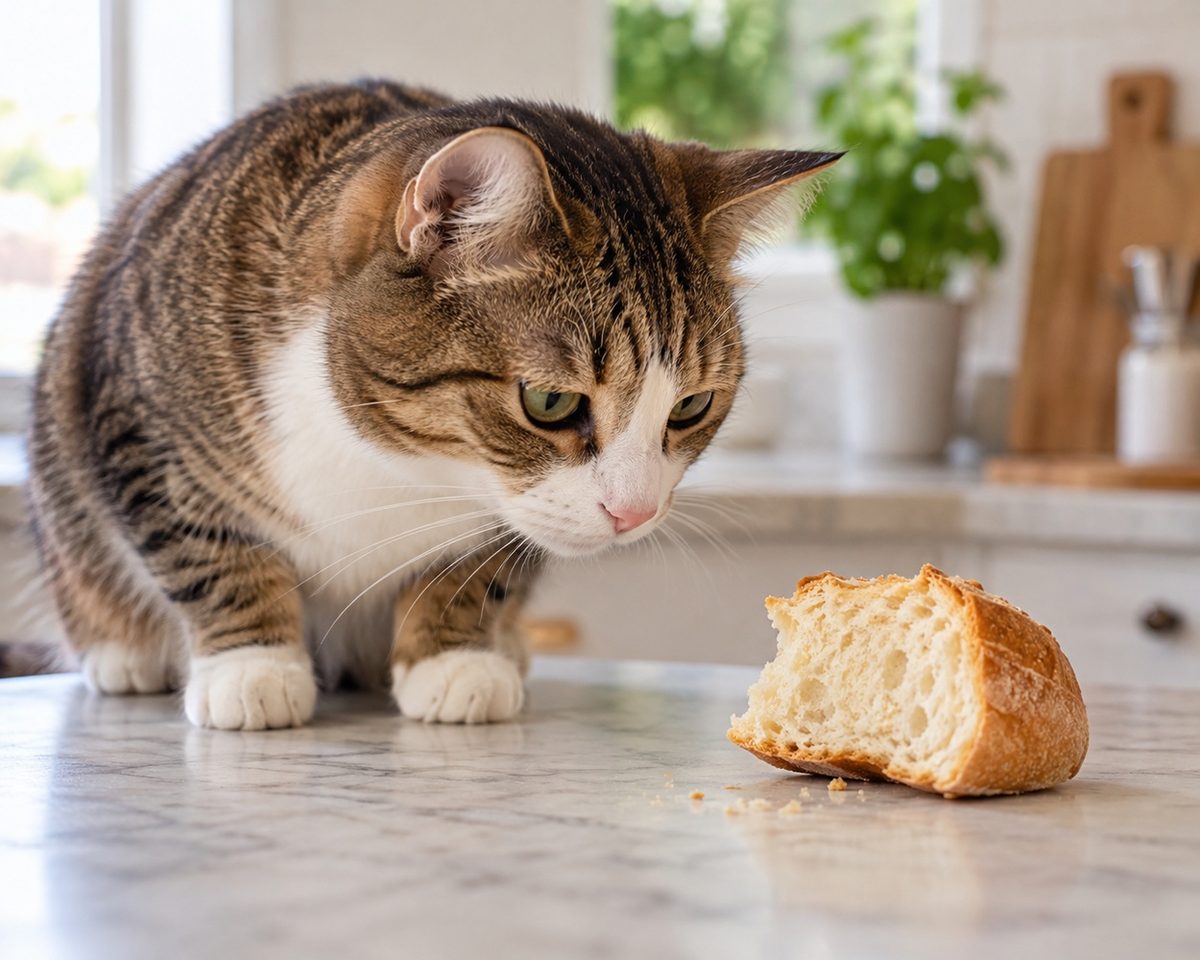
No, cats should never eat raw bread dough. It is the most serious bread-related risk for cats and counts as a veterinary emergency.
Warm stomach conditions let live yeast keep fermenting after the dough is swallowed. Two things then happen:
- Expansion: The dough rises inside the stomach, stretching it and causing pain, bloating and sometimes breathing difficulty.
- Alcohol production: Yeast fermentation releases ethanol, which is absorbed into the bloodstream and can cause drunken stumbling, low body temperature, seizures and, in severe cases, collapse.
Signs usually appear within one to three hours. Watch for these:
- A swollen, tight or painful belly
- Retching without producing vomit
- Wobbly walking, disorientation or unusual sleepiness
- Drooling, weakness or tremors
If you suspect your cat ate raw dough, call a veterinarian or an animal poison hotline immediately, even if your cat seems fine. Do not induce vomiting at home, and never give medication unless a vet instructs you to. The ASPCA Animal Poison Control Center lists yeast dough among common household hazards.
Which Types of Bread Are Unsafe When Cats Eat Bread?
Many popular breads contain ingredients that are harmful to cats even when fully baked. Check labels before sharing even a crumb.
| Bread type | Risk level | Why it matters |
|---|---|---|
| Plain white or wheat, baked | Low | Safe in a tiny piece, low nutritional value |
| Garlic bread | High | Garlic damages red blood cells and can cause anemia |
| Onion bread or onion topping | High | Onions are toxic to cats in all forms |
| Raisin or fruit bread | High | Raisins and grapes can cause kidney failure in some animals |
| Bread with xylitol | High | Sugar substitute linked to serious metabolic harm |
| Chocolate or sweet bread | High | Theobromine and sugar are both a problem |
| Buttery or seasoned bread | Moderate | Fat and salt can upset the stomach |
| Raw dough | Emergency | Expands and produces alcohol in the stomach |
Garlic and onion belong to the allium family, and cats are more sensitive to them than dogs. For more detail on risky human foods, read our list of dangerous foods for cats, and see why grapes and raisins are a worry in can cats eat grapes.
Can Cats Eat Bread Crusts, Toast or Sourdough?
Crusts, toast and sourdough follow the same rule as other bread: plain and baked is fine in a tiny amount, while seasoning and additives are the problem.
Toast: Plain toast is no more dangerous than bread, and it is slightly lower in moisture. Skip butter, jam and spreads, which add fat and sugar.
Crusts: Crusts are harder and can be tough for kittens or cats with dental disease to chew. Break any piece into crumbs.
Sourdough: Baked sourdough is safe in the same tiny amounts, but the live starter is raw and should be kept completely out of reach.
Garlic or herb toppings: Always avoid them, as even small amounts of garlic powder can add up.
Peanut butter on bread is a common combination, so check the label first. Some brands contain xylitol, which is covered in can cats eat peanut butter.
How Much Bread Is Too Much for a Cat?
As a rule, treats of any kind should stay under 10% of a cat’s daily calories, and bread is a poor use of that allowance. A pea-sized piece, offered rarely, is the practical upper limit for a healthy adult cat.
Some cats should avoid bread entirely, so the question of whether can cats eat bread has a firm no for them:
- Diabetic cats: Starch can push blood sugar up, as described in our overview of diabetes in cats.
- Overweight cats: Extra calories make weight loss harder.
- Cats with food allergies: Wheat and gluten can be triggers in a small number of cats, which is discussed in allergies in cats.
- Cats with sensitive stomachs: New foods often cause gas, soft stool or vomiting, so see cats with sensitive stomachs for safer choices.
- Kittens: Their tiny stomachs need nutrient-dense kitten food, not filler.
If your cat begs for bread, the real attraction is usually the smell, the texture or your attention. A small portion of plain cooked chicken or a quality cat treat made from freeze-dried meat gives the same excitement without the empty calories.
What to Do If Your Cat Ate Bread
The right response depends on what kind of bread your cat ate. Use this simple sequence:
- Identify the bread: Check whether it was baked or raw, and read the ingredient list for garlic, onion, raisins, chocolate or xylitol.
- Estimate the amount: A nibble of plain bread needs only observation, while a whole slice or more deserves a call to your vet.
- Remove leftovers: Pick up the rest of the loaf or dough so your cat cannot return for more.
- Watch for 24 hours: Look for vomiting, diarrhea, lethargy, a swollen belly or loss of appetite.
- Call a vet fast for risky items: Raw dough, garlic, onion, raisins or xylitol call for professional advice right away.
Mild stomach upset after plain bread usually settles within a day, and our guides to cat vomiting and diarrhea explain what to watch. Persistent symptoms, repeated vomiting or refusal to eat for more than 24 hours need veterinary attention. If you want a solid reference for emergencies, VCA Animal Hospitals offers a pet health library on toxic ingestions.
Vets hear the question can cats eat bread often, and their advice is consistent: tiny, plain and rare. Anything beyond that, especially raw dough, deserves a phone call before symptoms appear.
Frequently Asked Questions
Can cats eat bread without getting sick?
Yes, most healthy cats can eat a crumb of plain baked bread without getting sick, but raw dough, garlic bread, onion bread, raisin bread and anything with xylitol can be harmful or life-threatening.
Can kittens eat bread?
Kittens should not eat bread, because their small stomachs need nutrient-dense kitten food, and even a few crumbs can upset digestion or fill them up with empty calories.
Can cats eat bread with butter?
A lick of butter will not poison a cat, but buttered bread adds fat and salt that can cause vomiting, diarrhea or pancreatitis, so it is better skipped.
Can cats eat bread every day?
No, bread should not be a daily food for cats, since regular starchy snacks add calories without taurine or animal protein and can lead to weight gain.
Why does my cat love bread?
Many cats are drawn to the yeasty smell, the soft texture or the attention they get while begging, rather than to any nutritional need for bread.
So, can cats eat bread? A crumb of plain, baked bread is harmless for most healthy cats, but raw dough and flavored breads are real dangers, and bread never replaces a meat-based diet. Keep portions tiny, check every label, and call your vet right away if your cat swallows dough or a risky ingredient.
