

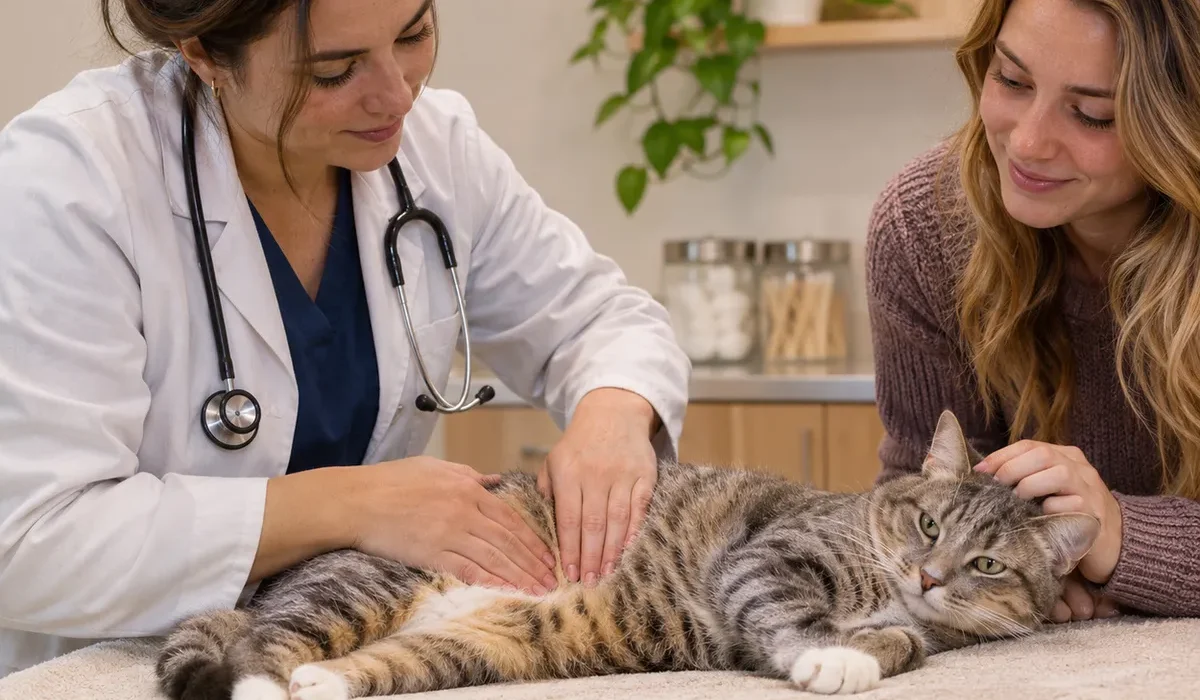
Feline Idiopathic Cystitis: 7 Signs and Proven Relief Tips
Feline idiopathic cystitis is a painful bladder inflammation with no identifiable infection, stone or tumor behind it, and it is the most common cause of lower urinary tract signs in young to middle-aged cats. It matters most for indoor cats aged 1 to 10 years, especially stressed, overweight or sedentary ones.
This post may contain affiliate links. As an Amazon Associate I earn from qualifying purchases.
Table of Contents
Feline idiopathic cystitis at a glance:
- Short Answer: A sterile, stress-linked bladder inflammation diagnosed only after a vet rules out infection, crystals, stones and tumors.
- Most Common Triggers: Stress, multi-cat conflict, litter box changes, low water intake and an indoor sedentary lifestyle.
- Urgency: A male cat straining with no urine output is an emergency; any other case needs a vet visit within 24 hours.
- What to Do at Home: Boost water intake, add wet food, reduce stress and keep litter boxes spotless.
- Outlook: Many episodes resolve in 5 to 7 days, but recurrence is common without environmental changes.
What Is Feline Idiopathic Cystitis?
Feline idiopathic cystitis (FIC) is inflammation of the bladder wall where “idiopathic” means the cause is unknown. Veterinarians reach the diagnosis by elimination: urine tests, imaging and sometimes cultures must show no bacteria, bladder stones or masses.
FIC accounts for roughly half of all cats presented with lower urinary tract disease, according to widely accepted veterinary guidance. Bacterial infection is actually uncommon in young cats with these signs, which surprises many owners.
Current research points to a link between the stress response and the bladder lining. Cats under chronic stress appear to have an overactive nervous system, and the protective layer of the bladder wall may become more permeable. Urine then irritates the tissue underneath and causes pain and urgency.
The condition is sometimes called Pandora syndrome, because affected cats often show other issues such as skin overgrooming or digestive upset. This shows how closely stress and body systems are connected in cats.
7 Signs of Feline Idiopathic Cystitis
The signs of feline idiopathic cystitis look the same as those of other urinary problems, so a vet exam is the only way to confirm the cause. Watch for these seven signs:
- Frequent trips to the litter box: Cats may visit 10 or more times a day, often passing only a few drops each time.
- Straining to urinate: Your cat may squat for a long time, cry out or look uncomfortable.
- Blood in the urine: Pink, red or rust-colored urine is one of the most recognized signs, and our guide on blood in cat urine explains the full list of causes.
- Peeing outside the litter box: Cats link the box with pain and start urinating on cool, smooth surfaces like tile, bathtubs or sinks.
- Excessive licking of the belly or genitals: Overgrooming around the lower abdomen signals discomfort.
- Vocalizing: Crying or yowling while urinating suggests pain.
- Hiding or behavior changes: A quiet, withdrawn cat may be in pain, much like in sudden hiding in cats.
Appetite loss, vomiting and lethargy can appear if the problem progresses to a blockage. These are never normal signs and need immediate care.
What Causes Feline Idiopathic Cystitis?
Feline idiopathic cystitis has no single cause, but several risk factors raise the odds of an episode. Researchers describe it as an interaction between the cat, the bladder and the environment.
Common risk factors:
- Stress: Moving house, new pets, new baby, loud construction or even a rearranged living room can trigger a flare-up.
- Multi-cat tension: Cats living with rivals they cannot avoid have higher rates of cystitis.
- Low water intake: Concentrated urine irritates the bladder wall more than dilute urine.
- Dry-food-only diets: Dry kibble contains only about 10 percent moisture, while wet food contains roughly 75 percent.
- Obesity and inactivity: Overweight indoor cats are at higher risk.
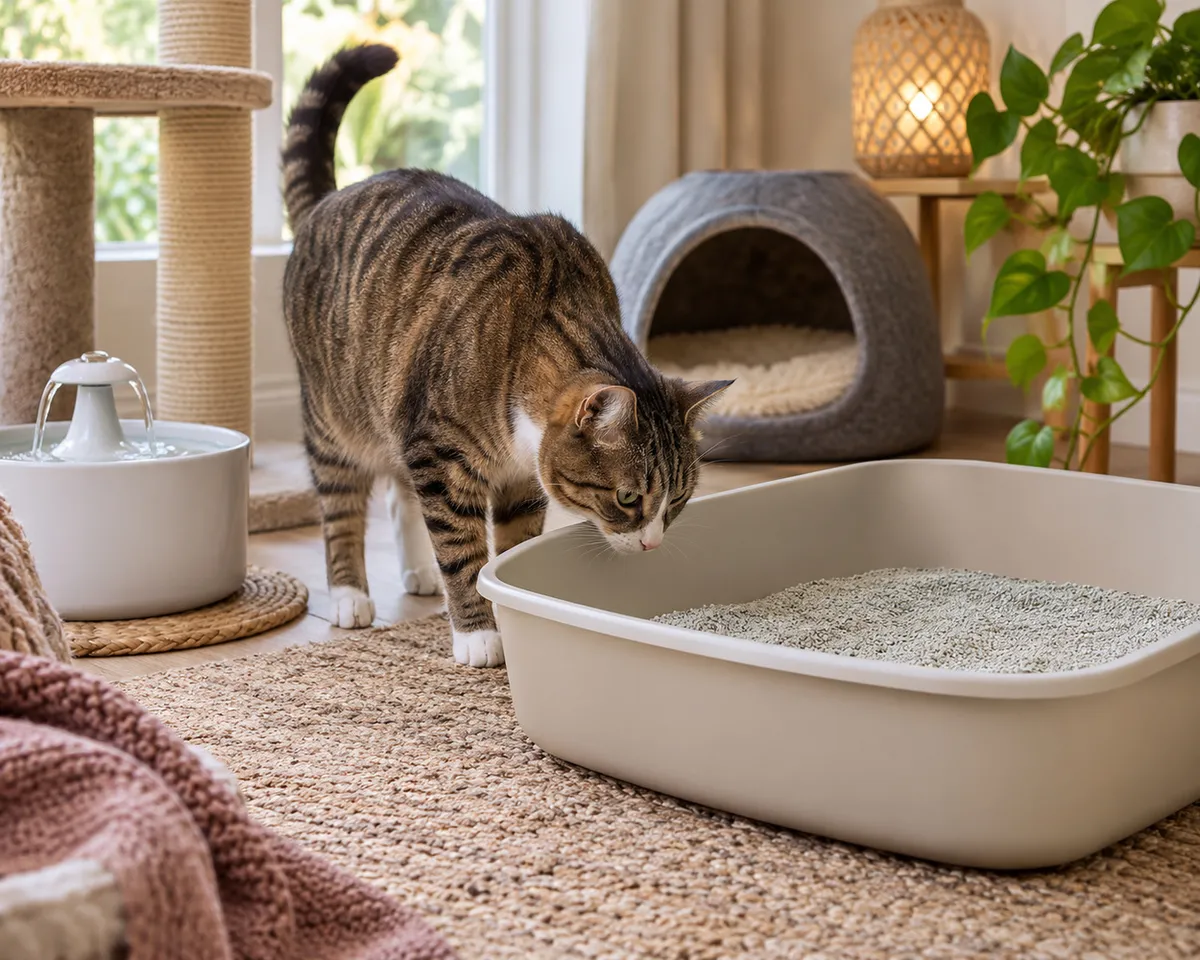
- Dirty or poorly placed litter boxes: Cats may hold urine for hours if the box is unpleasant, which adds irritation.
Young adult cats between 2 and 6 years old are most often affected. The condition is less common in cats over 10, where kidney disease, infections and tumors become more likely culprits.
How Vets Diagnose Feline Idiopathic Cystitis
A vet diagnoses feline idiopathic cystitis by excluding every other cause of urinary signs. This protects your cat, because treatments for infections, stones and tumors are completely different.
Typical diagnostic steps:
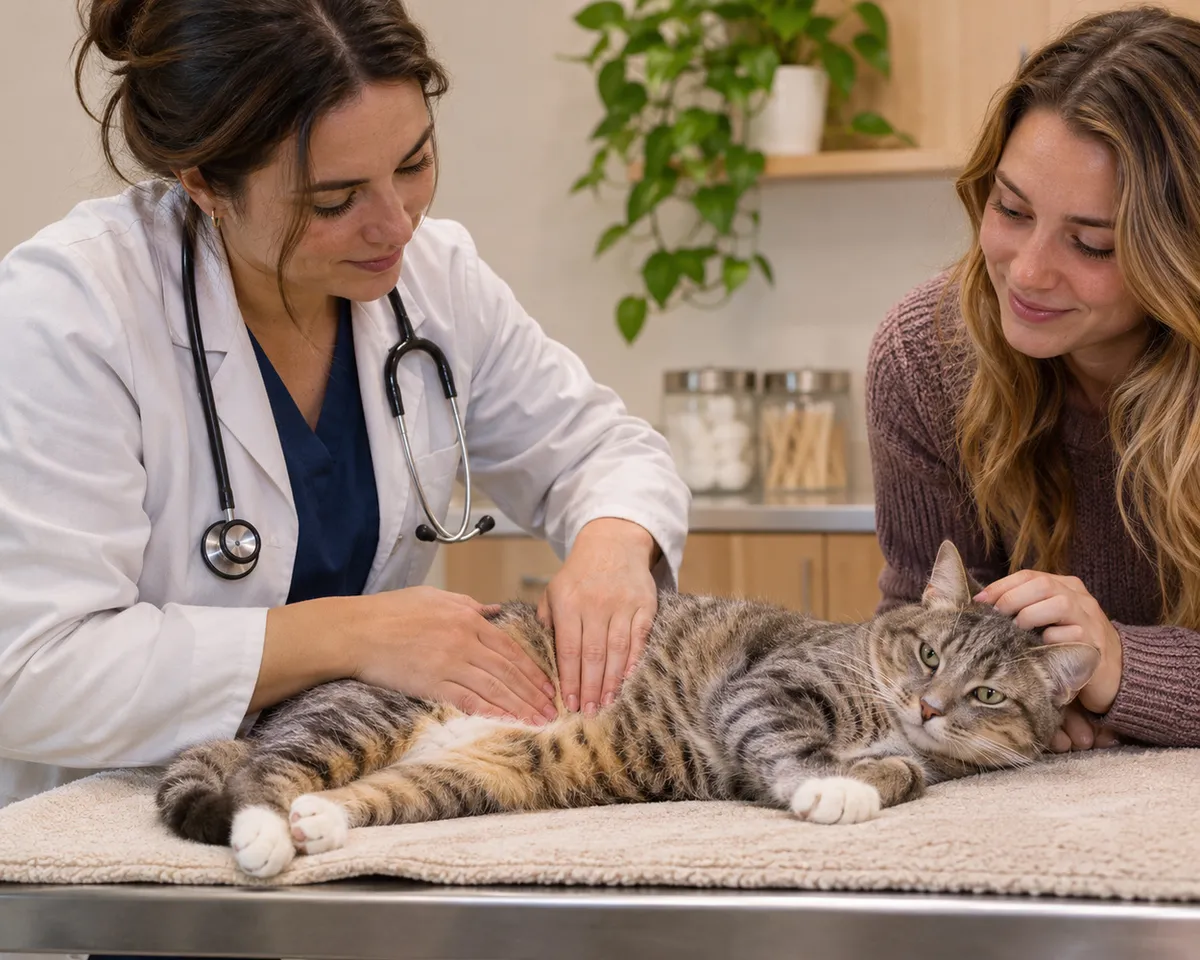
- Physical exam: The vet feels the bladder to check for pain, size and firmness.
- Urinalysis: This checks urine concentration, blood, crystals and pH.
- Urine culture: This confirms or rules out bacterial infection.
- X-rays or ultrasound: Imaging reveals bladder stones, masses or wall thickening.
- Bloodwork: This screens kidney function and other illness.
Never assume a cat with bloody urine has cystitis alone. The article on a cat urinating blood covers the emergency signs worth knowing before you call your vet.
Is Feline Idiopathic Cystitis an Emergency?
Feline idiopathic cystitis becomes an emergency when a male cat cannot pass urine at all. A urethral blockage can be fatal within 24 to 72 hours, because toxins build up in the blood and potassium levels can stop the heart.
Go to an emergency vet immediately if you see:
- Repeated straining with no urine produced
- Crying in the litter box
- Vomiting, weakness or collapse
- A hard, painful belly
- Hiding and refusing food for more than a day
Female cats rarely block because their urethra is wider, but they can still suffer intense pain. Any cat with suspected urinary signs should see a veterinarian promptly, and the Cornell Feline Health Center describes the emergency signs clearly.
Treatment and Home Care for Feline Idiopathic Cystitis
Treatment for feline idiopathic cystitis focuses on pain relief, hydration and stress reduction, since no cure exists. Most mild episodes improve within 5 to 7 days, but your vet may prescribe pain medication or anti-inflammatories. Never give your cat human painkillers, which can be deadly.
Proven home care steps:
- Switch to wet food: Canned food raises daily water intake and dilutes urine. Our guide on feeding your cat explains balanced portions.
- Encourage drinking: Offer fresh water in several spots, and try a cat water fountain to attract cats that prefer moving water.
- Add water to meals: A tablespoon or two of warm water mixed into wet food increases moisture.
- Keep litter boxes clean: Scoop daily and follow the advice on how often to clean a cat litter box.
- Follow the box rule: Provide one box per cat plus one extra, as described in the guide to the best place to put a litter box.
- Prescribe a urinary diet if advised: Your vet may recommend a veterinary therapeutic urinary food for long-term management.
Reducing Stress to Prevent Feline Idiopathic Cystitis Flare-Ups
Environmental enrichment is the most effective long-term strategy against feline idiopathic cystitis, and it has the strongest evidence behind it. The goal is to make your cat feel safe, in control and mentally stimulated.
Practical stress-reduction tips:
- Offer hiding and climbing spaces: Cat trees, shelves and covered beds give cats control over their space.
- Keep a predictable routine: Feed, play and clean at consistent times every day.
- Play daily: Two sessions of 10 to 15 minutes burn energy and lower stress, and keeping an indoor cat entertained offers more ideas.
- Use a pheromone diffuser: A feline pheromone diffuser may calm some cats during stressful periods.
- Separate resources: In multi-cat homes, place food, water and boxes in different rooms so rivals do not clash.
- Introduce changes slowly: Gradual changes cause far less stress than sudden ones.
A cat that feels secure is far less likely to relapse, so these small changes often matter more than any medication.
Feline Idiopathic Cystitis Compared With Other Urinary Problems
Knowing how feline idiopathic cystitis differs from other urinary conditions helps you describe your cat’s signs accurately to your vet. This table summarizes the most common causes.
| Condition | Typical Age | Key Feature |
|---|---|---|
| Feline idiopathic cystitis | 1 to 10 years | Sterile inflammation, stress-linked |
| Bladder stones | Any age | Visible on X-ray or ultrasound |
| Urethral blockage | Mostly male cats | Straining with no urine, emergency |
| Bacterial infection | Mostly over 10 years | Positive urine culture |
| Bladder tumor | Older cats | Persistent signs, mass on imaging |
Because the signs overlap, home guesswork is risky. If your senior cat shows these signs, our guide on senior cat care explains how age changes health needs.
Frequently Asked Questions
How long does feline idiopathic cystitis last?
Most episodes of feline idiopathic cystitis last 5 to 7 days, even without treatment, although pain relief makes your cat far more comfortable. Some cats have recurring episodes within months.
Can stress really cause cystitis in cats?
Yes, stress is considered the main trigger of feline idiopathic cystitis, because the stress response appears to affect the bladder lining. Changes in routine, new pets or conflict between cats commonly set off flare-ups.
Is feline idiopathic cystitis contagious to other cats or people?
No, feline idiopathic cystitis is not contagious because it is not caused by bacteria or a virus. Other pets in your home cannot catch it from your cat.
What is the best diet for a cat with cystitis?
Wet food is the best diet foundation because it contains about 75 percent moisture and dilutes urine. Your vet may also recommend a prescription urinary diet for long-term management.
Can feline idiopathic cystitis come back?
Yes, feline idiopathic cystitis often recurs, especially in cats living with ongoing stress or low water intake. Environmental enrichment and a wet-food diet significantly lower the chance of repeat episodes.
Feline idiopathic cystitis is painful but manageable when you spot the signs early, involve your vet quickly and support your cat with water, wet food and a calm home. Start this week by adding one more water source and one more hiding spot, then book a vet visit if any urinary sign appears.