
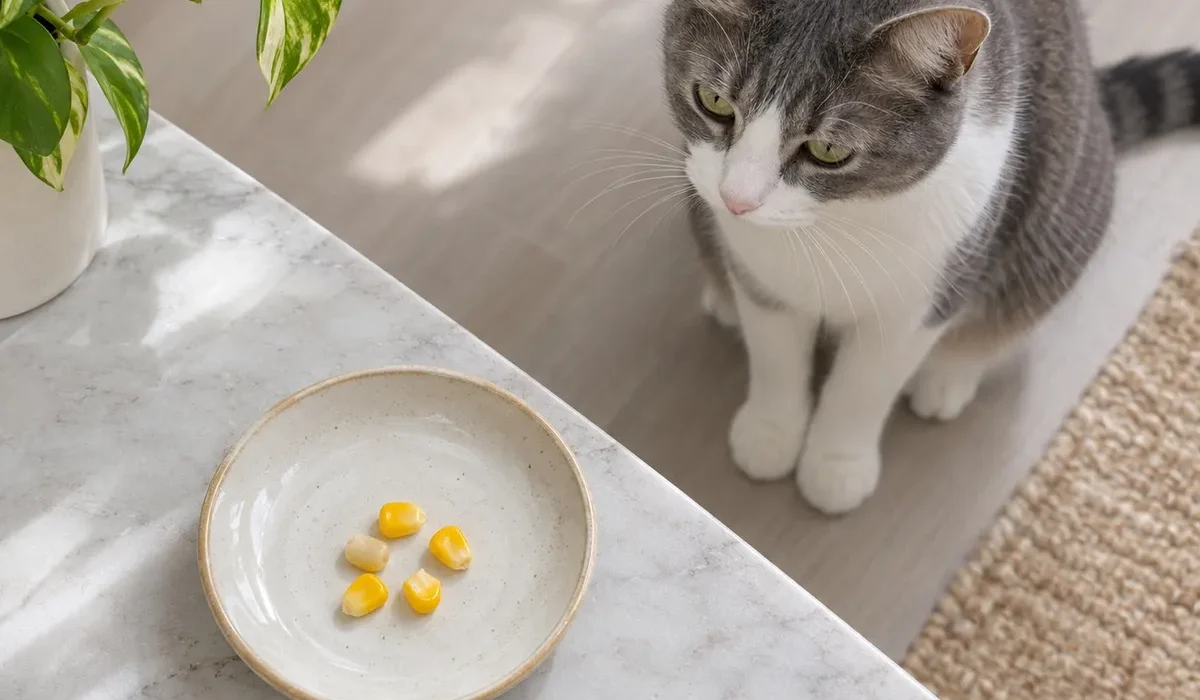
Can Cats Eat Corn? 5 Simple Facts About This Common Filler
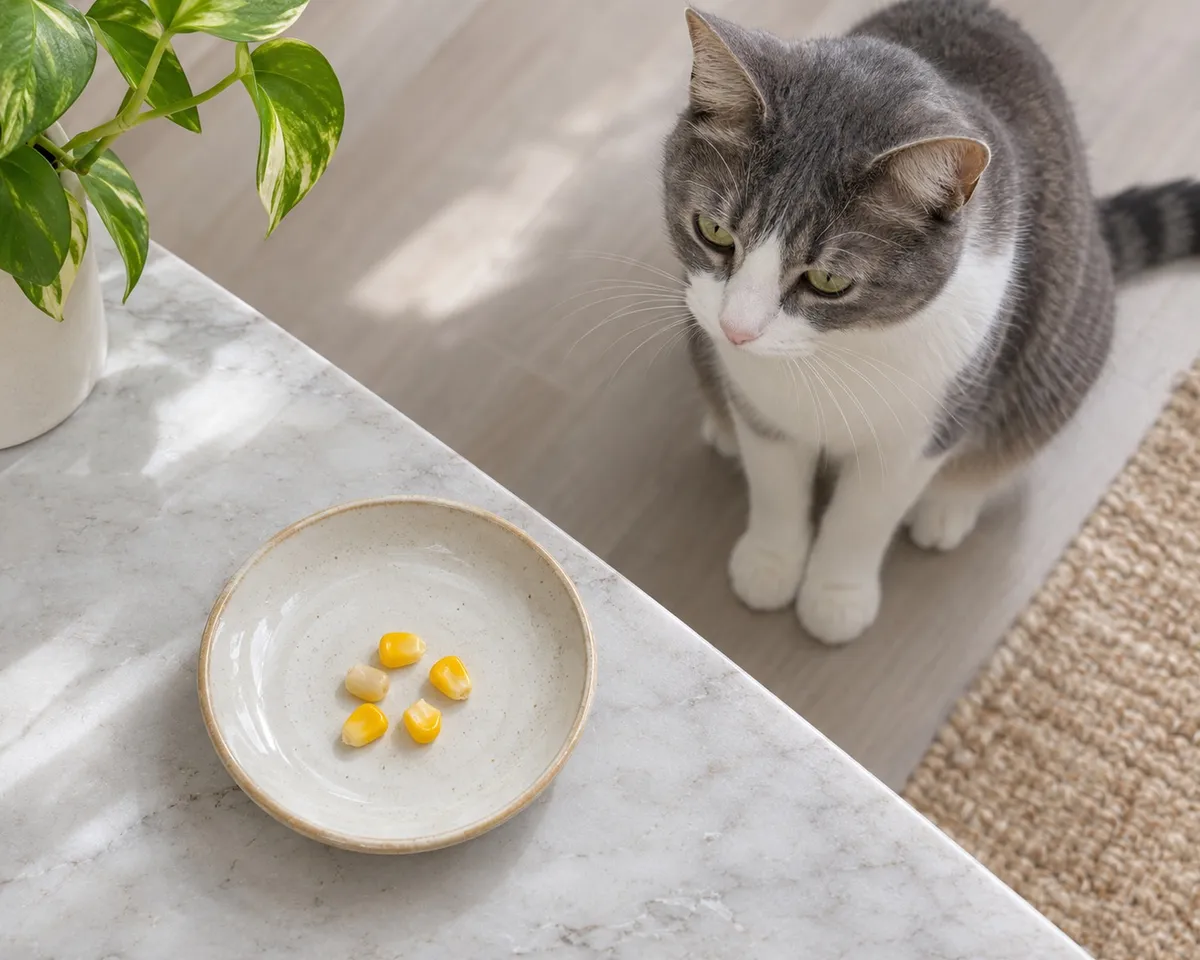
The answer to can cats eat corn is yes: plain cooked kernels are non-toxic to cats in small amounts, but they add little nutrition. This matters for owners who share table scraps or spot corn near the top of a cat food label. When my tabby stole a kernel off my plate, she chewed twice and walked away.
This post may contain affiliate links. As an Amazon Associate I earn from qualifying purchases.
Table of Contents
Can cats eat corn at a glance:
- Short Answer: Yes, plain cooked corn is safe for healthy adult cats as an occasional treat.
- Safe Amount: About 3-5 kernels, roughly 1 teaspoon, a few times a week at most.
- Main Benefit: Corn adds a little fiber and a novel texture for curious cats.
- Main Risk: Corn cobs can block the intestines, and butter or salt can upset a cat’s stomach.
Fact 1: Can Cats Eat Corn Without Being Poisoned?
Corn is not toxic to cats, so a few plain kernels will not poison a healthy adult cat. The ASPCA Animal Poison Control Center is the best place to check any food your cat swallows.
Signs a cat ate too much corn:
- Vomiting within a few hours of eating corn.
- Soft stool or diarrhea within 12-24 hours.
- Gas, bloating or a tense, sensitive belly.
- Whole undigested kernels in the litter box.
Mild stomach upset from corn usually settles within 24 hours. Call your veterinarian if your cat vomits more than twice, seems lethargic or refuses food, and read about cat vomiting after eating.
Fact 2: Cats Gain Little Nutrition From Corn
Cats are obligate carnivores, so their bodies run on animal protein and fat rather than plant starch. The honest answer to can cats eat corn is yes, but they do not need to, as the Cornell Feline Health Center feeding guide explains.
- Mostly starch: Corn is mainly carbohydrate, which cats use less efficiently than dogs or humans.
- No taurine: Plants lack taurine, an amino acid cats need from animal tissue for heart and eye health.
- Tough hulls: Kernel skins are cellulose and often pass through a cat’s gut undigested.
- Low enzymes: Cats lack salivary amylase, the enzyme that starts starch digestion in humans.
Fact 3: Corn on the Cob, Popcorn and Other Risky Corn Foods
For owners asking can cats eat corn dishes from the dinner table, the form of corn decides whether a bite is harmless or harmful.
| Corn form | Safe for cats? | Why |
|---|---|---|
| Plain cooked kernels | Yes, small amounts | No additives, easy to portion |
| Raw kernels | Limited | Harder to chew and digest |
| Canned corn | Only if rinsed | Often packed with salt |
| Creamed corn | No | Dairy, sugar and salt |
| Corn on the cob | No | Cob pieces block intestines |
| Buttered popcorn | No | Butter, salt, sharp hulls |
| Corn or tortilla chips | No | High salt and fat |
| Cornbread | Crumb only | Sugar and butter |
A swallowed corn cob piece is an emergency, so see a vet the same day for repeated vomiting, straining or refusing food. Popcorn has its own hazards, covered in our guide to cats eating popcorn dangers.
Fact 4: Can Cats Eat Corn in Commercial Cat Food?
Corn in commercial cat food is safe because manufacturers grind and cook it for better digestion. Many owners ask can cats eat corn after spotting it on a kibble bag, and ingredient position matters most.
- Ground corn or cornmeal: Supplies carbohydrate energy and binds dry kibble into shape.
- Corn gluten meal: Adds plant protein with a less complete amino acid profile than meat.
- Corn starch: Works as a thickener and filler with minimal value for cats.
Corn allergies are uncommon in cats, since beef, fish, chicken and dairy are the most reported feline food allergens. If corn sits in the first two ingredients, choose a high-protein wet cat food with a named meat first. Cats with itchy skin may need vet-guided cat food for allergies.
Fact 5: How to Serve Corn to Cats Safely
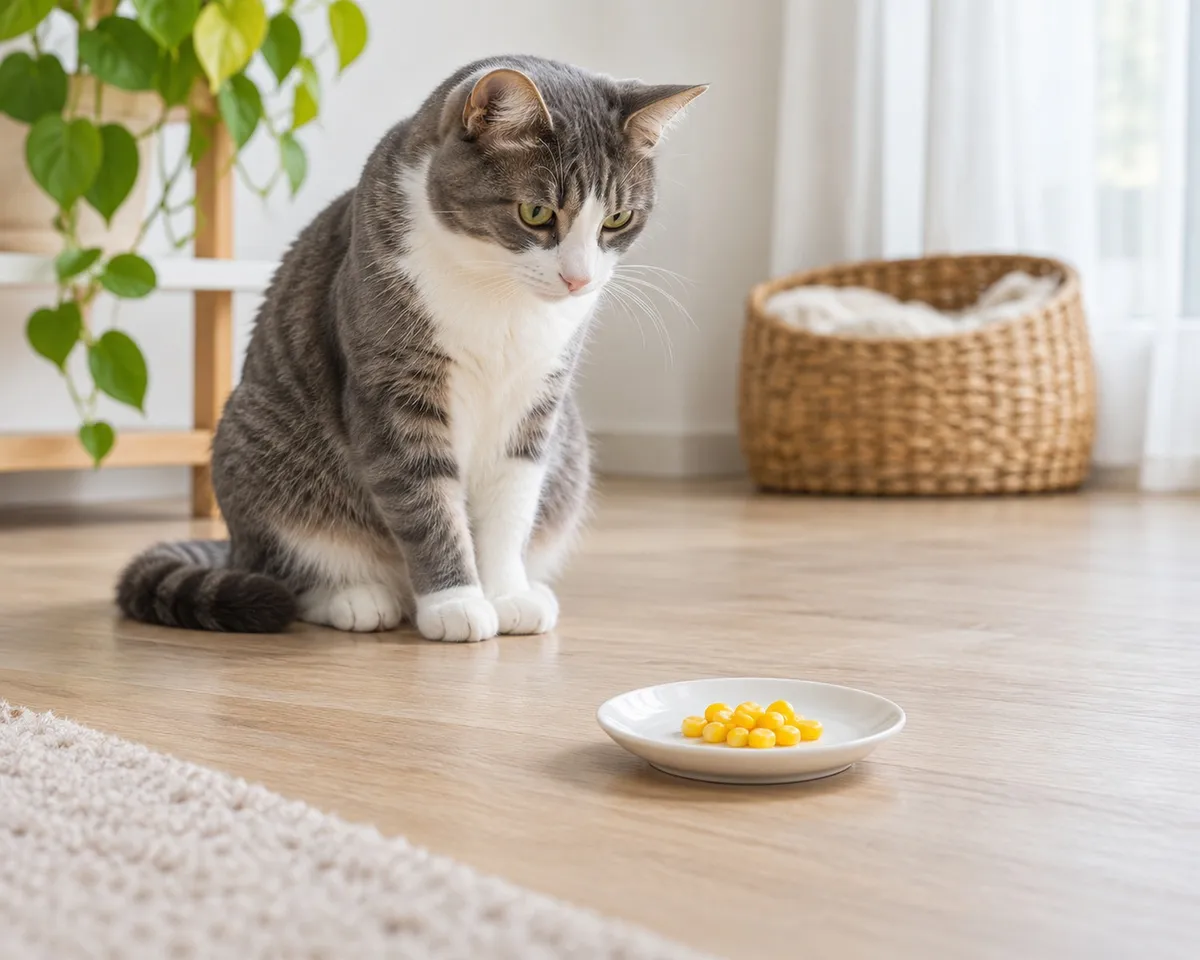
The safest way to answer can cats eat corn at home is to serve only plain, cooked and chopped kernels.
- Boil or steam corn plain, with no butter, salt, garlic or onion.
- Cut kernels off the cob and discard the cob in a sealed bin.
- Mash or chop kernels to lower choking risk.
- Offer 3-5 kernels first and watch your cat for 24 hours.
- Keep treats under 10% of daily calories, about 20-25 calories for a 10-pound cat.
Cats with digestive issues should skip corn, as our guide to cats with sensitive stomachs explains. For crunchy rewards, freeze-dried chicken cat treats offer far more protein than corn. Browse more human foods cats can eat for better snacks.
Frequently Asked Questions
Can cats eat corn every day?
No, cats should not eat corn daily because it adds starch without the animal protein cats need. Offer a few kernels no more than 2-3 times a week.
Is corn bad for kittens?
Kittens under 6 months should skip corn because they need protein-rich kitten food for growth. Young digestive systems also react to new foods with diarrhea more easily.
Can cats eat canned corn?
Cats can eat canned corn only after draining and rinsing it to remove excess sodium. Limit canned corn to about 1 teaspoon per serving.
Why is there corn in my cat’s food?
Corn is an affordable carbohydrate that binds kibble together and adds energy. Ground, cooked corn is safe when a named meat remains the first ingredient.
What happens if a cat eats a corn cob?
A swallowed corn cob piece can block a cat’s intestines, with signs often appearing within 24-72 hours. Vomiting, straining or refusing food after eating a cob requires an urgent vet visit.
So, can cats eat corn? Yes, plain cooked kernels are safe in small portions, but corn offers little nutrition, and cobs, butter and salt bring real risks. Treat corn as a rare snack, never a staple. Today, check your cat food label and confirm that a named meat sits first on the ingredient list.