What to Feed a Cat With an Upset Stomach: 9 Safe Foods
What to feed a cat with an upset stomach comes down to bland, low-fat, easily digested foods such as plain boiled chicken, plain white rice and canned pumpkin, fed in small portions after a short rest period. These foods give the gut a break while still supplying calories and fluid. This matters most when a cat has mild vomiting or loose stool but is still alert, drinking and moving normally.
This post may contain affiliate links. As an Amazon Associate I earn from qualifying purchases.
Table of Contents
What to feed a cat with an upset stomach at a glance:
- Short Answer: Plain boiled chicken, white rice, canned pumpkin and a prescription gastrointestinal diet are the safest options.
- Most Common Causes: Sudden diet changes, eating too fast, hairballs, dietary indiscretion, parasites and food sensitivities.
- Urgency: Mild cases often settle within 24 to 48 hours, but a cat that refuses food for 24 hours needs a vet.
- What to Do at Home: Offer small bland meals, keep fresh water available and avoid milk, fat and seasoning.
- When to See a Vet: Repeated vomiting, blood, lethargy, no eating for 24 hours or symptoms lasting over 48 hours.
What Causes an Upset Stomach in Cats?
Cats get upset stomachs when something irritates the digestive tract or moves through it too fast. Knowing the likely cause helps you choose the right food and decide how worried to be.
The most frequent triggers include:
- A sudden switch to a new food, especially without a gradual 7 to 10 day transition.
- Eating too quickly, which causes regurgitation within minutes of a meal.
- Hairballs, which irritate the stomach lining before being vomited up.
- Table scraps, spoiled food or rich, fatty treats.
- Intestinal parasites, which commonly cause soft stool in kittens.
- Food sensitivities to proteins such as beef, dairy or fish.
When my own cat once raided a bag of kibble and ate far too much, she vomited twice and then refused her next meal. A short rest followed by bland food fixed it within a day. Repeated episodes, though, point to a deeper problem worth reading about in our guide to cat vomiting after eating.
Signs Your Cat Has an Upset Stomach
An upset stomach shows up as changes in appetite, stool and energy. Spotting the signs early lets you adjust the diet before the problem worsens.
Watch for these common signs:
- Vomiting or gagging, sometimes with yellow bile or white foam.
- Loose, soft or watery stool.
- Reduced appetite or turning away from favorite food.
- Drooling, lip licking or swallowing repeatedly, which suggests nausea.
- Hiding, a hunched posture or a tense belly.
- Excess gas or loud stomach gurgling.
Foamy white vomit often appears when the stomach is empty, as explained in our post on why a cat throws up white foam. If vomiting and loose stool happen together, our article on cat vomiting and diarrhea covers the causes in more detail.
9 Safe Foods: What to Feed a Cat With an Upset Stomach
The safest foods for a sick cat are plain, low in fat and gentle on digestion. Offer only one or two of these at a time, in small amounts, so you can see how your cat responds.
1. Plain Boiled Chicken
Boiled, skinless, boneless chicken breast is a lean protein cats digest easily. Shred it finely, serve it warm to room temperature and never add salt, oil, garlic or onion.
2. Plain White Rice
Cooked white rice is low in fiber and helps firm up loose stool. It works best mixed with chicken in a ratio of about one part chicken to two parts rice. Our post on whether cats can eat rice explains why white rice beats brown rice for upset stomachs.
3. Plain Canned Pumpkin
Pure canned pumpkin puree contains soluble fiber that can ease both diarrhea and mild constipation. Give about one teaspoon per meal and check the label for pumpkin only, with no sugar or spices. You can read more in our guide on whether cats can eat pumpkin.
4. Plain Boiled Turkey
Skinless, unseasoned turkey is another lean, easy protein when chicken does not suit your cat. Always cook it fully and remove all skin and fat before serving.
5. Plain Boiled Egg
A fully cooked, plain egg offers digestible protein in a soft form. Serve a small spoonful of mashed egg, never raw and never fried in butter or oil.
6. Plain Boiled Sweet Potato
Cooked, mashed sweet potato supplies gentle fiber and is rarely irritating. Offer a teaspoon without butter, sugar or seasoning, and see our notes on cats and sweet potatoes for portion guidance.
7. Bone Broth Without Onion or Garlic
Plain, low-sodium bone broth helps tempt a nauseated cat to drink and adds a little fluid. Homemade or store-bought versions must contain no onion, garlic or added salt, since onion and garlic are toxic to cats.
8. Wet Food in Small Portions
Plain canned food has high moisture content, which helps prevent dehydration. Choose a simple, single-protein pate and serve small spoonfuls rather than a full bowl.
9. Veterinary Gastrointestinal Diet
A prescription veterinary gastrointestinal cat food is formulated to be highly digestible, moderate in fat and rich in prebiotics. Your vet can recommend one if your cat has recurring digestive upsets.
How to Decide What to Feed a Cat With an Upset Stomach Step by Step
The method matters as much as the menu. Feeding too much too soon can restart vomiting, so follow a gradual process.
- Remove food for 4 to 6 hours in an adult cat after vomiting, but keep fresh water available. Never fast kittens, seniors or diabetic cats without veterinary advice.
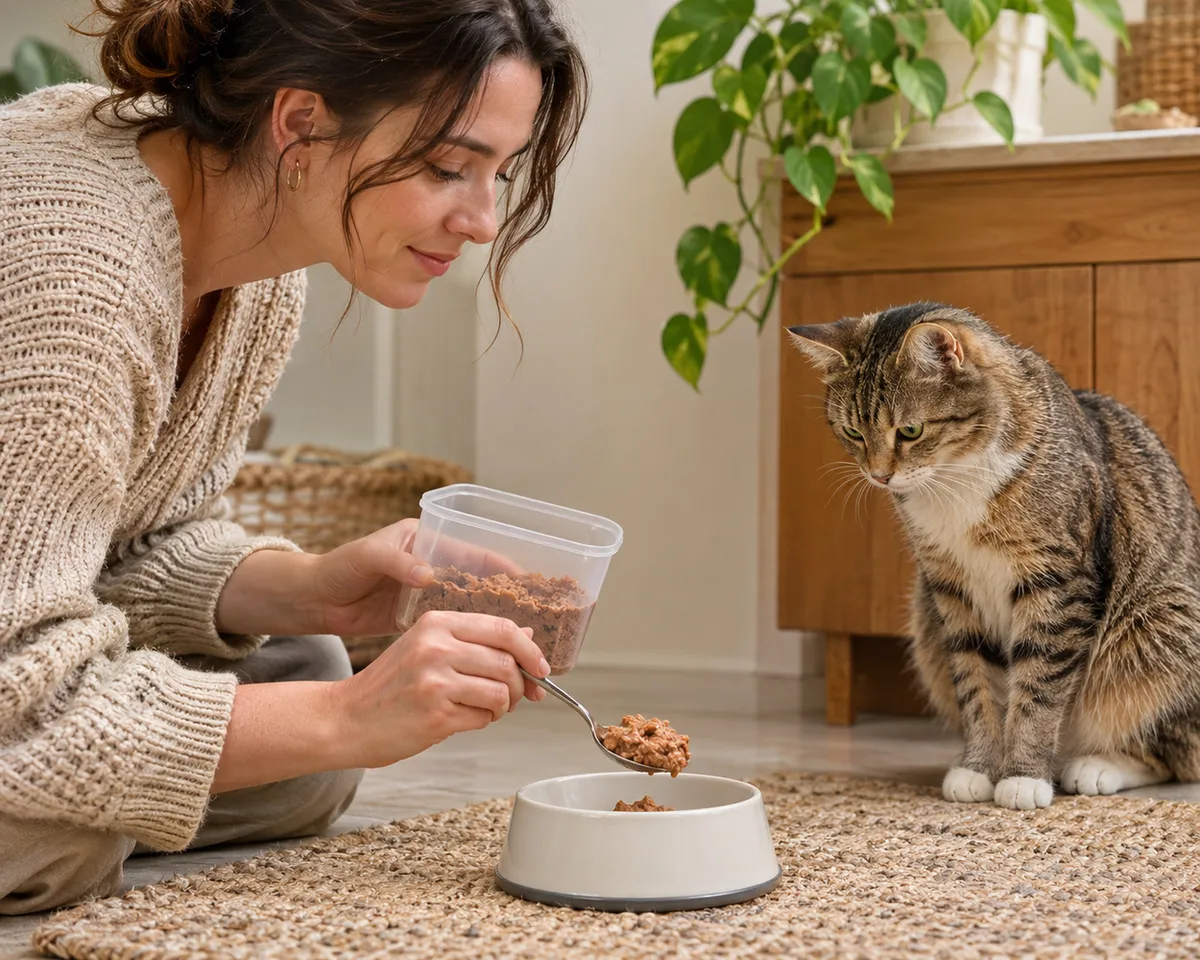
- Offer one teaspoon of a bland food such as boiled chicken or plain wet food.
- Wait 1 to 2 hours. If your cat keeps it down, offer another small portion.
- Gradually increase to 4 to 6 small meals per day over the next 24 hours.
- Continue the bland diet for 2 to 3 days after stool and appetite look normal.
- Mix in the regular food over 3 to 5 days, increasing the proportion slowly.
Warming food slightly to body temperature boosts aroma, which can tempt a nauseated cat. If you plan to cook for your cat regularly, our guide to homemade cat food recipes explains the rules for balanced meals.
Foods to Avoid When a Cat Has an Upset Stomach
Some foods make digestive trouble worse or are outright dangerous. Before you settle on what to feed a cat with an upset stomach, cross these items off the list until your cat has fully recovered.
| Food | Why to Avoid |
|---|---|
| Milk and dairy | Most adult cats are lactose intolerant, so dairy can trigger diarrhea |
| Fatty meats and fried food | High fat is hard to digest and can inflame the pancreas |
| Onion and garlic | Toxic to cats and can damage red blood cells |
| Seasoned or salted food | Salt and spices irritate the stomach |
| Raw meat and raw eggs | Risk of Salmonella and other bacteria |
| Chocolate, grapes and raisins | Poisonous to cats even in small amounts |
| New treats and new brands | Unfamiliar ingredients can prolong the upset |
Our posts on whether cats can drink milk and dangerous foods for cats go deeper on the riskiest items. The ASPCA Animal Poison Control Center also lists toxic foods and plants worth knowing.
Keeping Your Cat Hydrated During an Upset Stomach
Dehydration is the biggest risk with vomiting and diarrhea, especially in kittens and older cats. Fluids matter as much as food during recovery.
Try these hydration tips:
- Keep several bowls of fresh water in quiet spots around the home.
- Offer ice chips or a few teaspoons of water at a time if your cat gulps and vomits.
- Add a splash of warm water to wet food to increase moisture.
- Use a cat water fountain to encourage drinking, since many cats prefer moving water.
To check for dehydration, gently lift the skin at the scruff. It should snap back quickly, and slow return, dry gums or sunken eyes signal trouble. Our guide to dehydration in cats lists the key warning signs.
Preventing Future Stomach Upsets
Most digestive upsets are preventable with steady feeding habits. Small changes to routine protect your cat’s gut over the long term, so you rarely need to look up what to feed a cat with an upset stomach again.
- Switch foods gradually over 7 to 10 days, never overnight.
- Feed smaller meals more often if your cat eats too fast.
- Brush long-haired cats regularly to reduce swallowed hair.
- Keep table scraps, bones and trash out of reach.
- Keep up with deworming and annual checkups.
Cats with ongoing trouble may need a tailored diet, covered in our guide to cats with sensitive stomachs. Consistent portions also help, as explained in our post on how much to feed a cat.
When to See a Vet Instead of Choosing What to Feed a Cat With an Upset Stomach
A veterinarian should examine any cat whose symptoms are severe or do not improve. Cats hide illness well, so waiting too long can turn a minor problem into an emergency.
Call your vet promptly if your cat shows any of these signs:
- Vomiting more than twice in 24 hours.
- Blood in vomit or stool.
- Refusing all food for 24 hours or more.
- Extreme lethargy, weakness or hiding.
- A swollen or painful belly.
- Symptoms lasting longer than 48 hours.
Seek emergency care at once if your cat may have eaten a toxic plant, string, medication or human food such as grapes. Never give human medicine to a cat, because many common drugs are poisonous to them. For more on warning signs, see the Cornell Feline Health Center.
Frequently Asked Questions
How long should I wait to feed a cat after vomiting?
Wait about 4 to 6 hours after the last vomiting episode, then offer one teaspoon of bland food. Keep water available throughout, and never withhold food from kittens or diabetic cats without advice from your vet.
What is the best thing to feed a cat with an upset stomach and diarrhea?
Plain boiled chicken mixed with white rice, plus a teaspoon of plain canned pumpkin, is the most widely used combination. This bland mix is low in fat and fiber-balanced, and it usually firms up stool within 24 to 48 hours.
Can I give my cat chicken and rice every day?
Chicken and rice is safe for 2 to 3 days but is not nutritionally complete for long-term feeding. After that, transition back to a balanced cat food, since cats need taurine and other nutrients that plain chicken and rice lack.
Is canned pumpkin safe for a cat with an upset stomach?
Yes, plain canned pumpkin puree is safe in small amounts, about one teaspoon per meal. Avoid pumpkin pie filling, which contains sugar, spices and sometimes xylitol.
How do I know if my cat’s upset stomach is serious?
An upset stomach is serious if vomiting repeats more than twice in a day, blood appears, or your cat becomes lethargic. Any cat that refuses food for 24 hours should see a vet, since cats can develop liver problems when they stop eating.
Knowing what to feed a cat with an upset stomach means choosing bland, low-fat foods like boiled chicken, white rice and plain pumpkin, served in small portions with plenty of water. Most mild cases settle within two days. If your cat stops eating, keeps vomiting or seems weak, call your veterinarian rather than waiting it out.