Fluffy Cat Breeds: 12 Gorgeous Long-Haired Cats to Love
Fluffy cat breeds are cats with long or semi-long coats, such as the Persian, Maine Coon, Ragdoll, and Norwegian Forest Cat, and most need brushing several times a week. Choosing among them matters most for owners who want a cuddly companion but have limited time, allergies, or a small home.
This post may contain affiliate links. As an Amazon Associate I earn from qualifying purchases.
Table of Contents
Fluffy cat breeds at a glance:
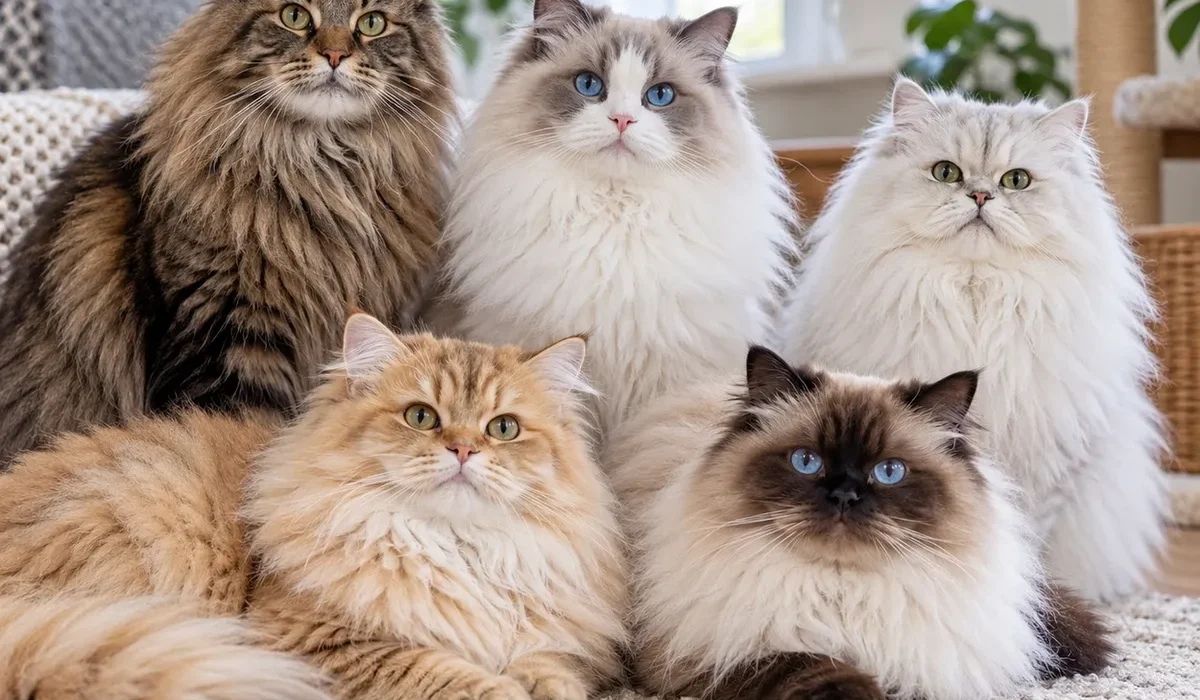
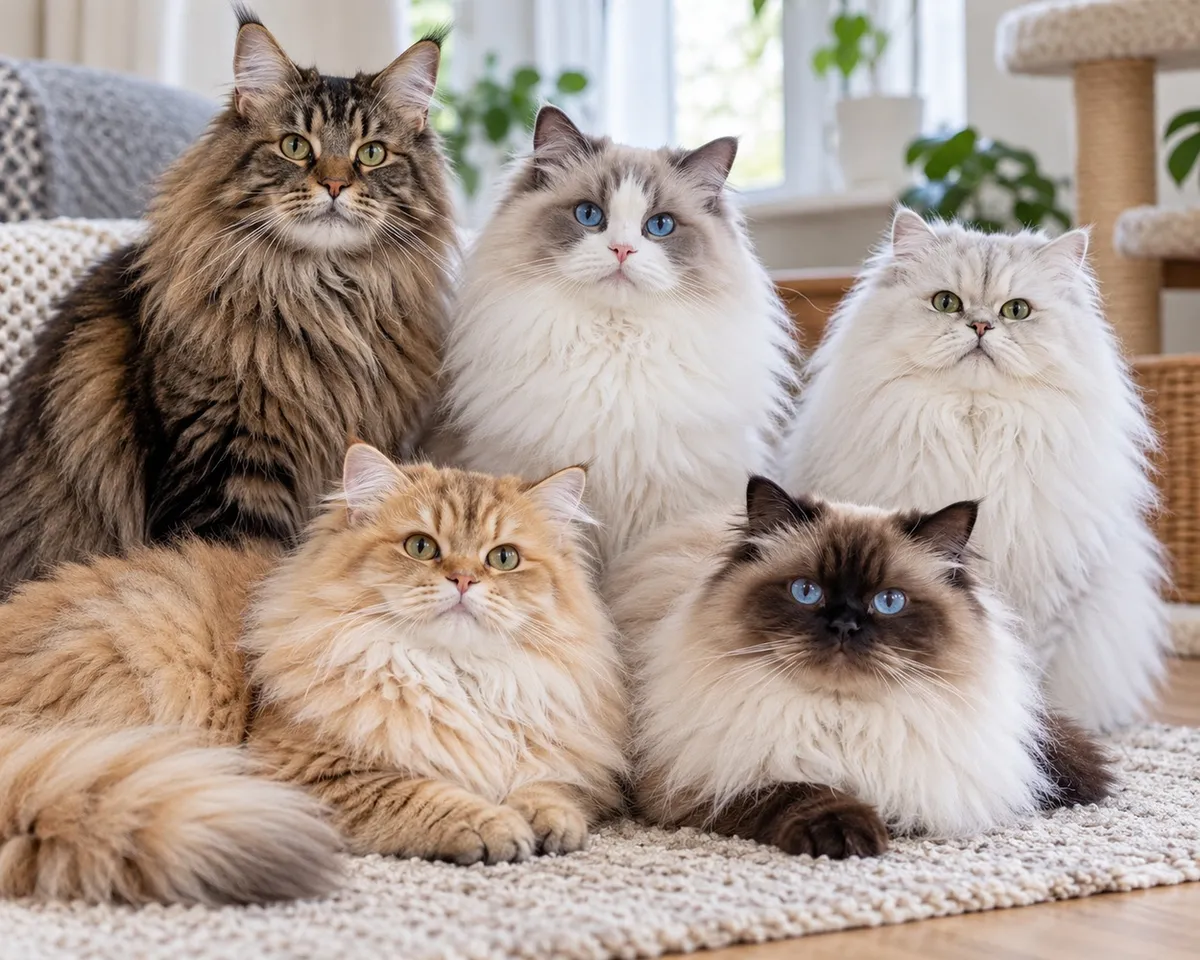
- Short Answer: The most popular fluffy breeds are the Persian, Maine Coon, Ragdoll, Norwegian Forest Cat, Siberian, and Birman.
- Size Range: Fluffy cats weigh from about 6 pounds (Somali) to 25 pounds (largest male Maine Coons).
- Grooming Needs: Persians need daily brushing, while Ragdolls and Birmans manage with 2 to 3 sessions a week.
- Lifespan: Most healthy long-haired breeds live 12 to 17 years indoors.
- Best For: Families who enjoy grooming time and want a calm, affectionate indoor cat.
What Makes Fluffy Cat Breeds So Special
Fluffy cat breeds carry a longer hair length, often with a thick undercoat, which gives them the plush look people love. The coat grew as an adaptation to cold climates, which is why Siberians and Norwegian Forest Cats have water-resistant outer hair.
A fluffy coat comes with trade-offs that every owner should know before adopting. Long hair tangles, sheds more visibly on furniture, and can trap litter around the hindquarters.
When my neighbor adopted her first long-haired cat, she was surprised that the fluff was as much a daily routine as a look. Planning for that routine from day one prevents most coat problems.
Common coat types among long-haired cats:
- Silky single coat: Found in Turkish Angoras and Birmans, this coat tangles less.
- Double coat: Maine Coons and Siberians have a dense undercoat that sheds heavily in spring.
- Ultra-long coat: Persians and Himalayans have hair that mats quickly without daily care.
12 Fluffy Cat Breeds Worth Knowing
1. Persian
The Persian is the classic fluffy cat, with a flat face, round eyes, and a very long coat. Persians are gentle and quiet, but they need daily brushing and regular eye cleaning.
2. Maine Coon
The Maine Coon is one of the largest domestic breeds, with males often reaching 13 to 18 pounds. Their shaggy coat is surprisingly easy to maintain with 2 to 3 weekly brushings.
3. Ragdoll
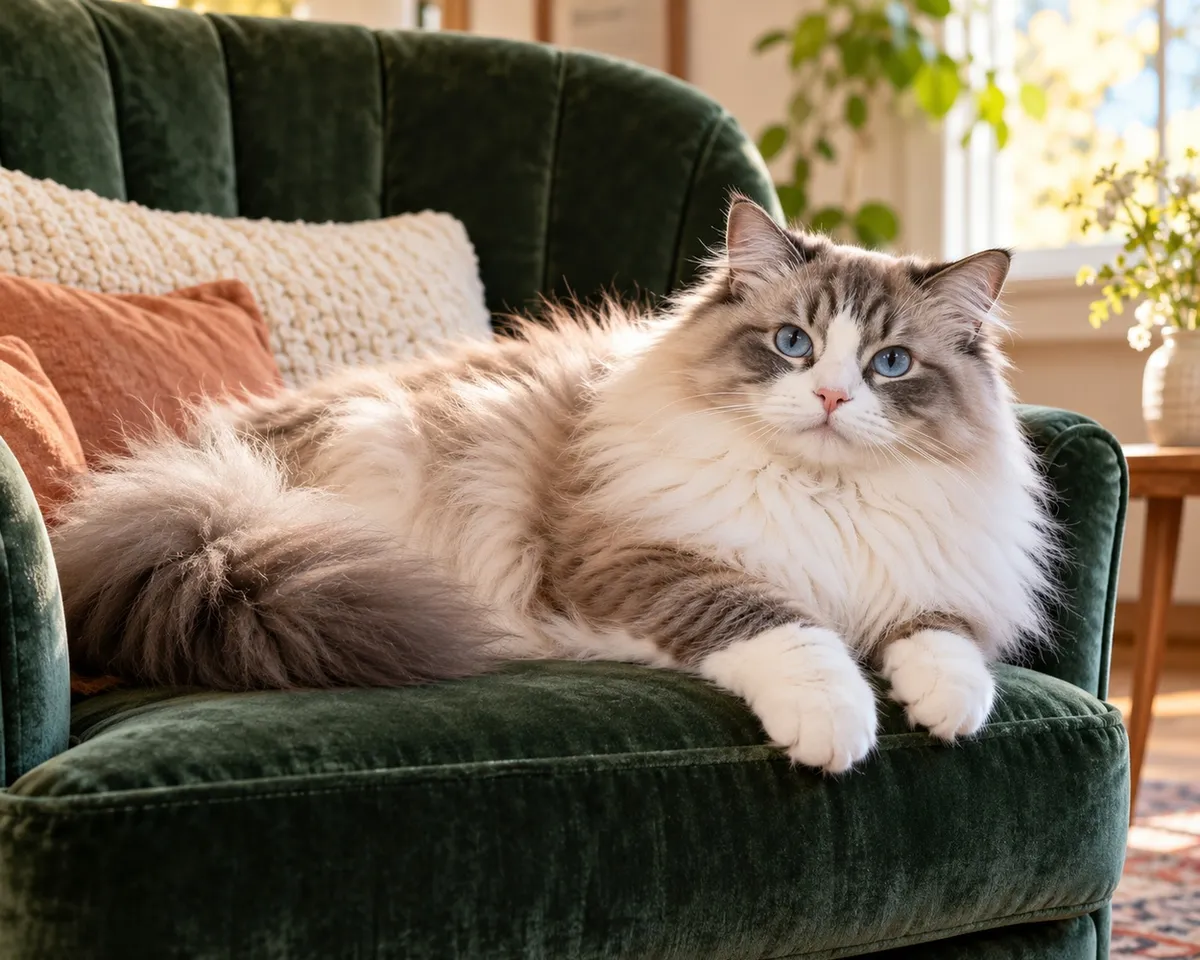
Ragdolls are known for going limp when picked up, and their semi-long coat has little undercoat. They are docile, dog-like followers that suit calm homes.
4. Norwegian Forest Cat
This breed has a waterproof double coat built for harsh winters. Norwegian Forest Cats are athletic climbers and need sturdy vertical space.
5. Siberian
Siberians have a triple-layered coat and are often described as a good choice for some allergy sufferers. No cat is truly allergen-free, so spend time with the breed before committing.
6. Birman
Birmans have silky, medium-long fur with white “gloves” on all four paws. They are social, gentle, and tolerate handling well.
7. Turkish Angora
The Turkish Angora has a fine, silky coat that rarely mats. These cats are energetic, intelligent, and love high perches.
8. Ragamuffin
Ragamuffins are close relatives of the Ragdoll with a plush, rabbit-soft coat. They are large, affectionate, and slow to mature, often not fully grown until age 4.
9. Himalayan
The Himalayan combines the Persian body with Siamese-style color points and blue eyes. Daily grooming is required to keep the long coat free of knots.
10. Somali
The Somali is essentially a long-haired Abyssinian with a bushy, fox-like tail. Somalis are active and playful, and they need more stimulation than most fluffy breeds.
11. American Curl
American Curls are known for ears that curl backward, and the long-haired variety has a silky coat with a plumed tail. They stay kitten-like and playful well into adulthood.
12. Balinese
The Balinese is a long-haired Siamese with a single, silky coat that sheds less than many fluffy cats. They are vocal, clever, and form strong bonds with their people.
Fluffy Cat Breeds Compared: Size, Coat, and Care
Comparing fluffy cat breeds side by side makes it easier to match a cat to your lifestyle. The table below shows typical adult weight and recommended brushing frequency.
| Breed | Typical Weight | Brushing Needed |
|---|---|---|
| Persian | 7-12 lb | Daily |
| Maine Coon | 10-18 lb | 2-3 times per week |
| Ragdoll | 10-20 lb | 2-3 times per week |
| Norwegian Forest Cat | 9-16 lb | 2-3 times per week |
| Siberian | 10-17 lb | 2-3 times per week |
| Birman | 6-14 lb | 2-3 times per week |
| Himalayan | 7-12 lb | Daily |
| Somali | 6-10 lb | 1-2 times per week |
| Balinese | 5-10 lb | 1-2 times per week |
How to Choose Among Fluffy Cat Breeds
Choosing from the many fluffy cat breeds starts with an honest look at your time, space, and household. A calm Ragdoll suits a quiet apartment, while an energetic Somali needs room and daily play.
Questions to ask before you choose:
- How much time can you groom? Persians and Himalayans need daily sessions of 10 to 15 minutes.
- Do you have allergies? Visit a breeder or shelter and spend an hour with the breed first.
- How much space do you have? Large breeds such as the Maine Coon need sturdy furniture and tall cat trees.
- What energy level suits you? Calm breeds like the Ragdoll differ greatly from active Somalis.
If you are still exploring options, our guide to choosing the best cat breed to adopt covers the wider picture. You can also look through rare cat breeds for unusual long-haired options.
Grooming Your Fluffy Cat Breeds the Right Way
Grooming is the most important daily task for owners of fluffy cat breeds. Regular brushing removes loose hair, prevents painful mats, and cuts down on hairballs.
A simple grooming routine:
- Start with a wide-toothed metal comb to find tangles gently.
- Work through the coat in small sections, from skin to tip.
- Pay extra attention to the armpits, belly, behind the ears, and the base of the tail.
- Finish with a soft slicker brush to lift loose undercoat.
- Reward your cat with a treat so grooming stays positive.
Most healthy cats tolerate sessions of 5 to 10 minutes, so keep them short. Our cat grooming guide walks through tools and techniques in more detail, and bathing a cat safely helps when a coat gets truly dirty.
Never shave a mat out with scissors, because cat skin is thin and tears easily. If a mat is tight against the skin, a groomer or veterinarian should remove it.
Shedding, Hairballs, and Health Concerns
Long-haired cats swallow more hair while grooming, which makes hairballs more common. An occasional hairball is normal, but frequent retching with no result can signal a blockage.
Common health issues in fluffy cat breeds:
- Matting and skin irritation: Untreated tangles pull on the skin and hide sores.
- Hairballs: Regular brushing and a hairball control cat food reduce how much hair cats swallow.
- Heart disease: Maine Coons and Ragdolls are prone to hypertrophic cardiomyopathy, so ask breeders about screening.
- Breathing and eye problems: Flat-faced Persians and Himalayans often have watery eyes and noisy breathing.
- Dandruff: Dense coats can trap dry skin, a problem covered in our cat dandruff guide.
Any cat that vomits repeatedly, stops eating, or strains to pass stool should see a veterinarian promptly. The Cornell Feline Health Center offers reliable information on breed-linked conditions.
Fluffy Cat Breeds and Allergies
No fluffy cat breed is truly hypoallergenic, because allergens come from a protein in saliva and skin rather than from hair length. Some people react less to certain breeds, but results vary from cat to cat.
Keeping allergen levels down is easier with a few habits:
- Brush your cat outdoors or in a well-ventilated room.
- Wash bedding weekly in hot water.
- Run a HEPA air purifier in the main living area.
- Keep your cat out of the bedroom.
Our post on natural remedies for cat allergies shares more ways to cope with a sensitive household.
Frequently Asked Questions
What are the fluffiest cat breeds?
The Persian, Himalayan, Maine Coon, and Norwegian Forest Cat are widely considered the fluffiest cat breeds. Persians have the longest hair, often 4 to 5 inches, while Maine Coons have the shaggiest build.
Do fluffy cat breeds need professional grooming?
Most owners can groom at home, but Persians and Himalayans benefit from a professional visit every 6 to 8 weeks. Groomers can also safely handle mats that are tight against the skin.
Which fluffy cat breeds are best for first-time owners?
Ragdolls and Birmans are excellent for first-time owners because they are calm, tolerant, and need only 2 to 3 brushings a week. Both breeds adapt well to quiet indoor homes.
Are fluffy cats harder to care for than short-haired cats?
Fluffy cats take more time, mainly for brushing, which can add 30 to 90 minutes of coat care each week. Their feeding, vet care, and play needs are otherwise similar to short-haired cats.
Do fluffy cat breeds shed more than other cats?
Not always, since shedding depends on coat type and season rather than length alone. Double-coated breeds like the Maine Coon shed heavily in spring, while silky-coated Balinese shed far less.
Fluffy cat breeds bring warmth, personality, and undeniable beauty to a home, as long as you plan for the grooming they require. Match the breed’s coat and energy level to your lifestyle, schedule a daily brushing habit, and book a vet check within the first week to start your new companion off healthy.