
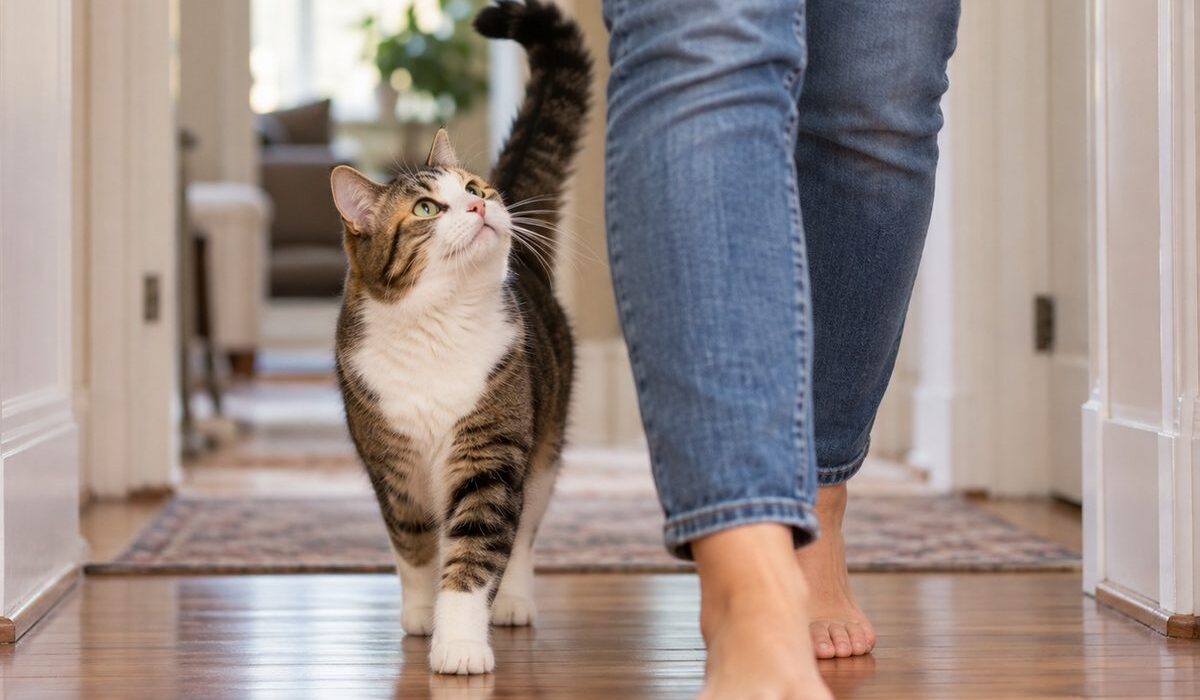
Why Does My Cat Follow Me Everywhere? 7 Proven Reasons
This post may contain affiliate links. As an Amazon Associate I earn from qualifying purchases.
Why does my cat follow me everywhere? Most cats trail their owners because of attachment, hunger, curiosity, or a need for security, and in healthy cats this is normal. It matters most when the following is new, constant, or paired with other changes in appetite, voice, or energy.
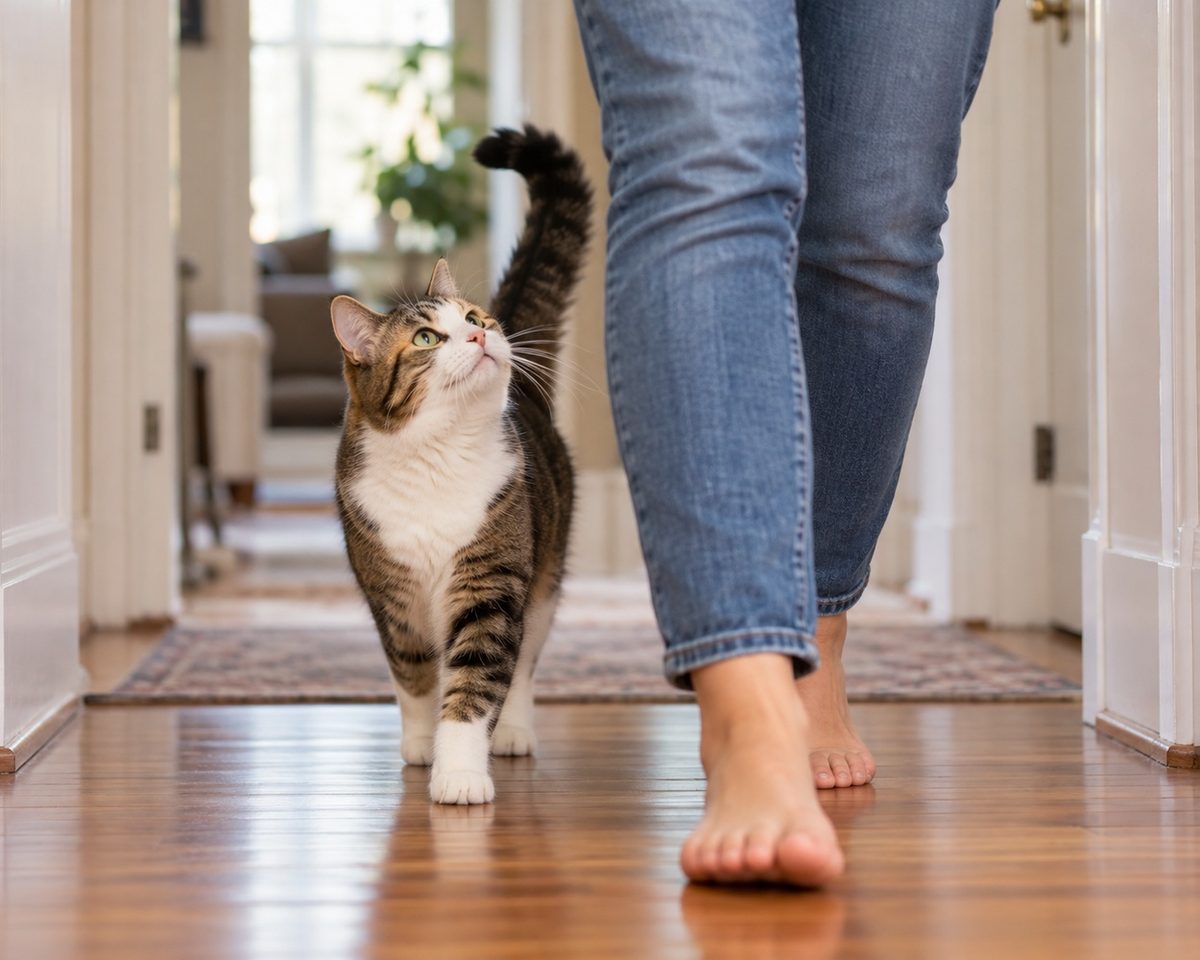
Why does my cat follow me everywhere at a glance:
- Short Answer: Cats follow people because they are bonded to them, expect food or play, or feel safer nearby.
- Why Cats Do It: Attachment, routine, curiosity, boredom, hunger, and early-life habits such as kitten imprinting.
- Is It Normal: Yes, in most cases. A sudden change in following behavior deserves attention.
- How to Respond: Meet the need behind it with scheduled play, fixed meals, and safe perches near you.
- When to See a Vet: If the clinginess starts suddenly alongside loud meowing, hiding, weight change, or litter box changes.
Table of Contents
Why Does My Cat Follow Me Everywhere? The Short Explanation
Cats follow their owners because humans fill several roles at once: food provider, source of safety, and social partner. Domestic cats keep many kitten-like habits into adulthood, and following a caregiver is one of the strongest.
Unlike their solitary wild ancestors, house cats live in a social setup where the owner is the center of the territory. Research on cat-human bonds shows many cats treat their owners as a secure base, much as young children treat parents.
When my own cat started shadowing me from the bedroom to the kettle to the bathroom, I asked myself, why does my cat follow me everywhere? I assumed she was being needy. In reality she was running a routine she had learned: certain rooms meant food, play, or a lap.
7 Common Reasons Your Cat Follows You Around
1. Bonding and Affection
A cat that follows you calmly, with an upright tail and soft eyes, is usually showing attachment. Cats choose where to spend time, so staying close is a compliment.
You may notice slow blinks, head bumps, and a gentle trill as the cat trots behind you. These are friendly signals, not demands.
2. Hunger and Feeding Routines
Cats learn schedules quickly, often within one to two weeks. If you walk toward the kitchen at a regular hour, your cat will pace alongside you, hoping the trip ends at the food bowl.
This food-driven following is most obvious in the morning and early evening. Your cat is reading your movements as a prediction of dinner.
3. Curiosity About What You Are Doing
Cats are natural observers, and a person moving around the house is the most interesting show available. Running water, opening drawers, and folding laundry all trigger investigation.
If your cat sits and watches rather than weaving around your legs, curiosity is likely the main driver. If you wonder about the staring side of this habit, see our guide on why your cat stares at you.
4. Boredom and Need for Play
Indoor cats with little stimulation often attach themselves to the one thing that moves: you. A bored cat follows in the hope that something fun will happen.
Signs of boredom include knocking items off shelves, evening zoomies, and pouncing on ankles. Our tips on keeping an indoor cat entertained cover practical ways to fill that gap.
5. Security and Comfort
Anxious cats stay close to the person who makes them feel safe. A move, a new pet, a visitor, or loud noises can all increase shadowing for days or weeks.
If a normally independent cat suddenly will not leave your side, look for a recent change in the home. A cat that is also suddenly hiding at other times may be stressed rather than affectionate.
6. Kitten Imprinting and Early Habits
Kittens follow their mother for warmth, food, and protection, and cats raised by hand often transfer that instinct to humans. Orphans and bottle-fed kittens are especially likely to become lifelong shadows.
Early socialization between 2 and 7 weeks of age shapes how people-oriented a cat becomes. A cat that was handled gently during that window tends to seek out company as an adult.
7. Territory and Scent Sharing
Cats mark people they like with scent glands on the cheeks, chin, and flanks. Following you and rubbing against your legs mixes your scents and makes the home smell familiar and safe.
This is also why cats often groom or lean on people they trust, much like they do with cat friends. Read more about cats grooming each other to see how social bonds show up in feline behavior.
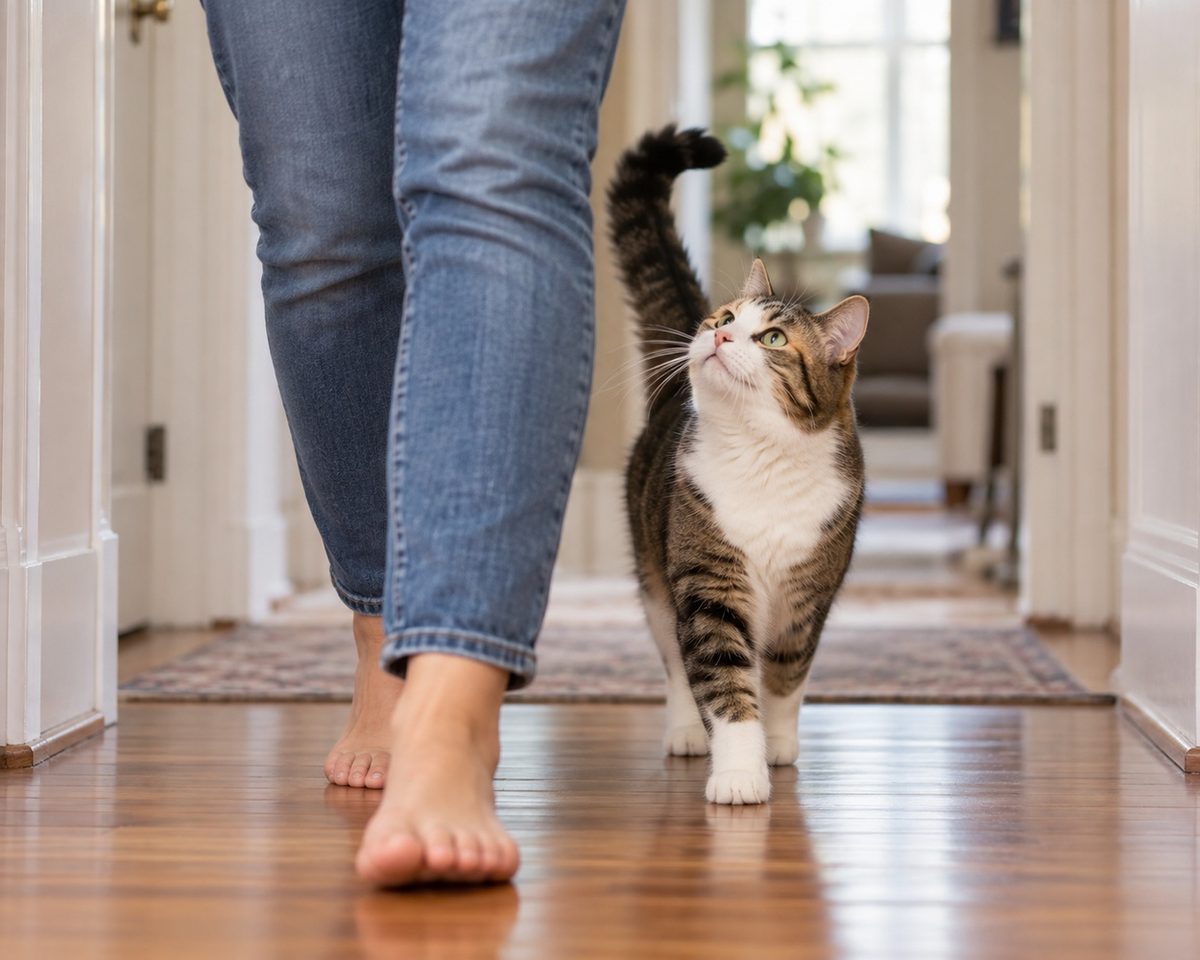
Is Following Normal or a Problem? Why Does My Cat Follow Me Everywhere Suddenly?
Following is normal when your cat eats well, plays, grooms, and uses the litter box as usual. It becomes a concern when the behavior appears suddenly or comes with other changes.
| Pattern | Likely Meaning | Action |
|---|---|---|
| Calm following, relaxed body | Bonding or curiosity | Enjoy it, add play |
| Following toward food areas | Hunger or routine | Set fixed meal times |
| Following with constant meowing | Attention seeking or stress | Schedule play, check health |
| Sudden clinginess in older cat | Possible illness or pain | Book a vet visit |
| Following plus hiding or aggression | Anxiety or pain | Vet check and calm space |
Older cats may become clingy because of reduced vision, hearing loss, or cognitive changes. Hyperthyroidism, which is common in cats over 10, can cause restlessness and increased following alongside weight loss.
Signs That Need a Vet Visit When Your Cat Follows You Everywhere
A veterinarian should check any cat whose following changes suddenly and comes with physical symptoms. Clinginess can be an early sign of pain or illness, since cats instinctively hide weakness and seek comfort from trusted people.
Watch for these warning signs:
- Loud, repeated meowing, especially at night
- Increased thirst or urination
- Weight loss despite a good appetite
- Reduced grooming or a greasy coat
- Hiding between bouts of clinginess
- Vomiting, diarrhea, or reduced appetite
If your cat shows several of these signs, schedule an appointment promptly, and seek emergency care for labored breathing, collapse, or inability to urinate. Our guide on signs a cat is in pain explains what subtle discomfort looks like. The Cornell Feline Health Center also offers reliable information on common feline conditions.
How to Respond When Your Cat Follows You Everywhere
The best response is to meet the need behind the behavior, not to push your cat away. Punishing a following cat damages trust and often increases anxiety.
Try this simple routine:
- Feed measured meals at the same times every day, so food is no longer a guessing game.
- Play for 10 to 15 minutes, twice a day, using a wand toy to mimic prey.
- Offer a window perch or cat tree where your cat can watch you from a distance.
- Give a quiet 5-minute attention session before leaving the house or going to bed.
- Keep a predictable schedule, since cats feel safest with routine.
A sturdy cat tree with a window perch gives your cat a spot to be near you without being underfoot. For energy that needs an outlet, an interactive wand toy works well because it gets you both moving. More ideas are in our list of interactive toys for indoor cats.
Safety Tips When Your Cat Follows You Underfoot
A cat weaving between your feet is a real tripping hazard, especially on stairs or while you carry hot food. Falls hurt both you and your cat.
- Walk slowly and shuffle your feet on stairs and in tight hallways.
- Close the door while cooking with hot pans or boiling water.
- Check behind you before sitting or stepping back.
- Toss a treat in the opposite direction to redirect your cat before you move.
For nighttime following, remember that a cat who wakes you is often hungry or bored. Our list of things cats love that wake you up shows how routine and attention cues drive those early starts.
Frequently Asked Questions
Why does my cat follow me to the bathroom?
Cats follow owners to the bathroom because it is a quiet, enclosed room where you stay in one place, and the sounds of water and the door closing spark curiosity. Many cats also simply want to stay close during the 3 to 10 minutes you are out of sight.
Is a cat following you a sign of love?
Yes, calm following with a raised tail, slow blinks, and soft body language is a widely recognized sign of attachment. Cats do not follow people they fear or dislike, so following usually signals trust.
Why does my cat follow me but not want to be held?
Many cats prefer to stay near their person without physical contact, since being close satisfies their need for security while holding limits their control. Respecting this preference builds trust faster than forcing cuddles.
Why does my cat follow me everywhere all of a sudden?
A sudden change in following can point to stress, a new routine, boredom, or an early health problem such as pain or an overactive thyroid. If the change lasts more than 2 to 3 days or comes with appetite or litter box changes, see your veterinarian.
Why does my cat meow while following me?
Meowing while following is usually a request for food, play, or attention, since adult cats mainly meow to communicate with humans. Frequent, loud, or nighttime meowing in an older cat should be checked by a vet to rule out illness.
So, why does my cat follow me everywhere? In most cases it is a healthy mix of bonding, routine, and curiosity that you can support with regular meals, daily play, and safe perches nearby. If the following changes suddenly or arrives with other symptoms, book a veterinary visit within a few days.