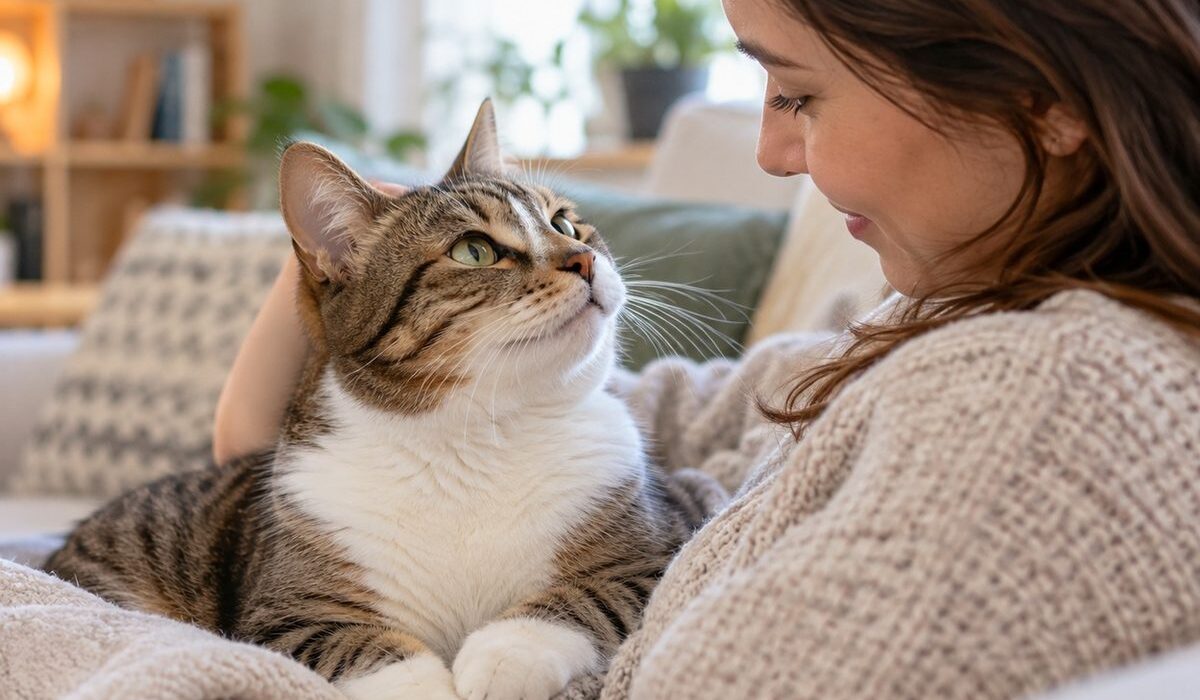
Why Does My Cat Stare at Me? 7 Proven Reasons
This post may contain affiliate links. As an Amazon Associate I earn from qualifying purchases.
Why does my cat stare at me? Most often, cats stare to ask for something, to show affection, or to study what you are doing. A calm, soft-eyed stare is normal communication, but a fixed, hard stare or sudden new staring can signal stress or illness. This guide helps owners read the difference.
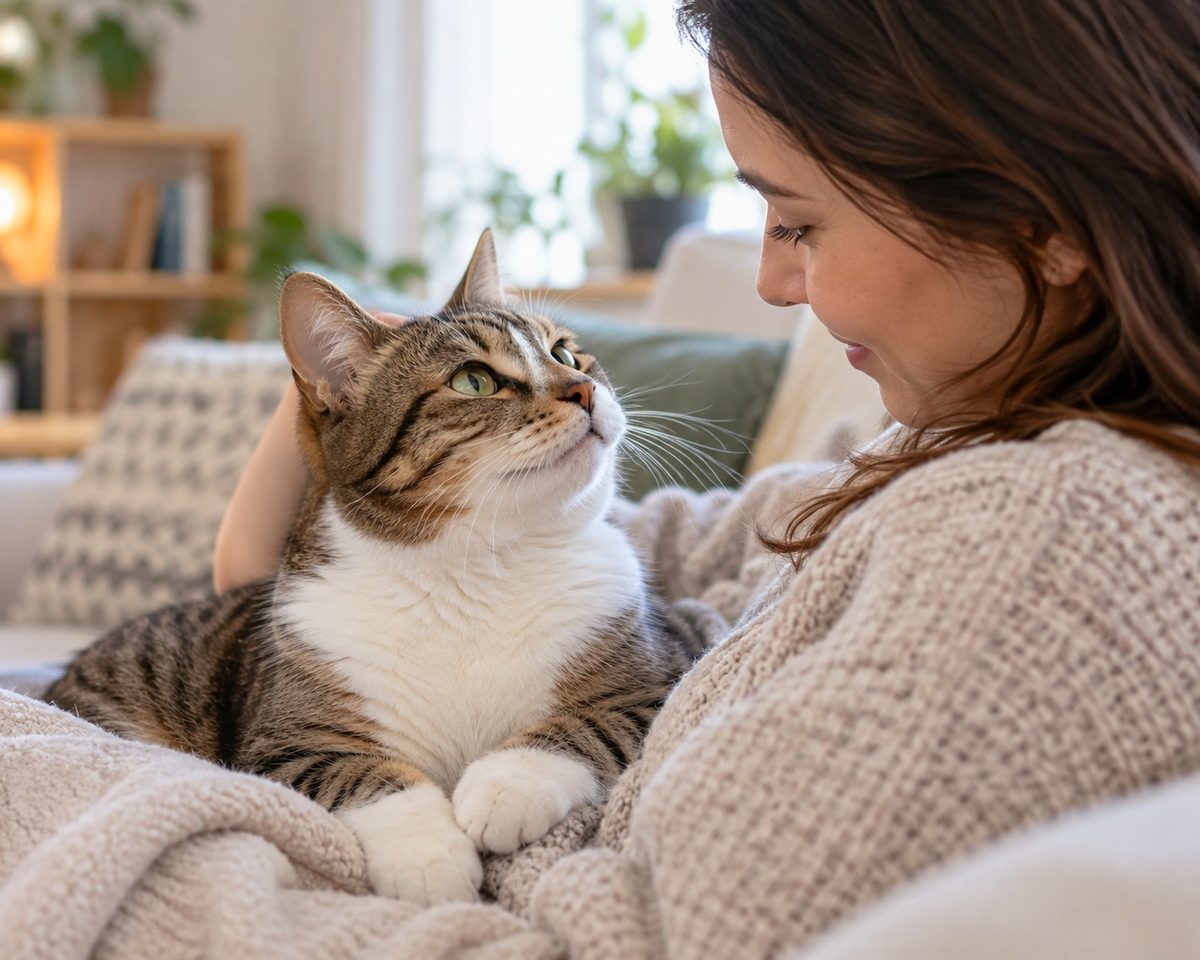
Why does my cat stare at me at a glance:
- Short Answer: Cats stare to communicate wants, show trust, or watch you, and context decides the meaning.
- Most Common Causes: Hunger, attention-seeking, affection, curiosity, and routine anticipation.
- Is It Normal: Yes, in nearly all cases, especially when the eyes are soft and the body is relaxed.
- How to Respond: Slow blink back, check the bowl and litter box, and offer play or a cuddle.
- When to See a Vet: If staring is sudden, new, and paired with confusion, pacing, night yowling, or vision changes.
Table of Contents
Why Does My Cat Stare at Me? The Main Reasons
Cats cannot speak, so they use their eyes as a tool. A stare is a message, and your cat has learned that you respond to it.
These are the most common reasons behind the behavior:
- They want something: Food, water, a clean litter box, or a door opened. Cats quickly learn that staring gets a human to act.
- They feel affection: A relaxed stare with half-closed eyes is a sign of trust. Staring at a person is a safe behavior only with someone a cat feels comfortable around.
- They are curious: Cats are visual hunters and track movement closely. Your hands, your phone, and your cooking all count as interesting events.
- They are bored: An under-stimulated indoor cat often fixes its gaze on its owner as the most interesting thing in the room.
- They expect a routine: Cats memorize schedules. A cat that stares at 6 a.m. or 5 p.m. is often reminding you of breakfast or dinner.
- They feel stressed or wary: A hard, unblinking stare with dilated pupils can signal fear or a challenge.
- They are unwell: Staring at nothing, or at walls, can point to pain, vision loss, or cognitive decline.
Why Does My Cat Stare at Me While I Eat or Cook?
A cat that stares during meals is usually hoping for food. Cats are opportunists, and one shared bite of chicken can create a habit that lasts for years.
Mealtime staring also comes from smell and routine. Cats can detect food odors from across a room, and they associate your kitchen time with their own feeding schedule.
To reduce begging without conflict, try these steps:
- Feed your cat a few minutes before you sit down to eat.
- Do not hand over food from your plate, even once.
- Offer a puzzle feeder or lick mat during your meal.
- Reward calm behavior with praise instead of snacks.
If your cat has recently started demanding food all day, check how much your cat eats against the guidelines in how much to feed a cat. Extra hunger can also be a sign of medical problems, so mention it to your vet.
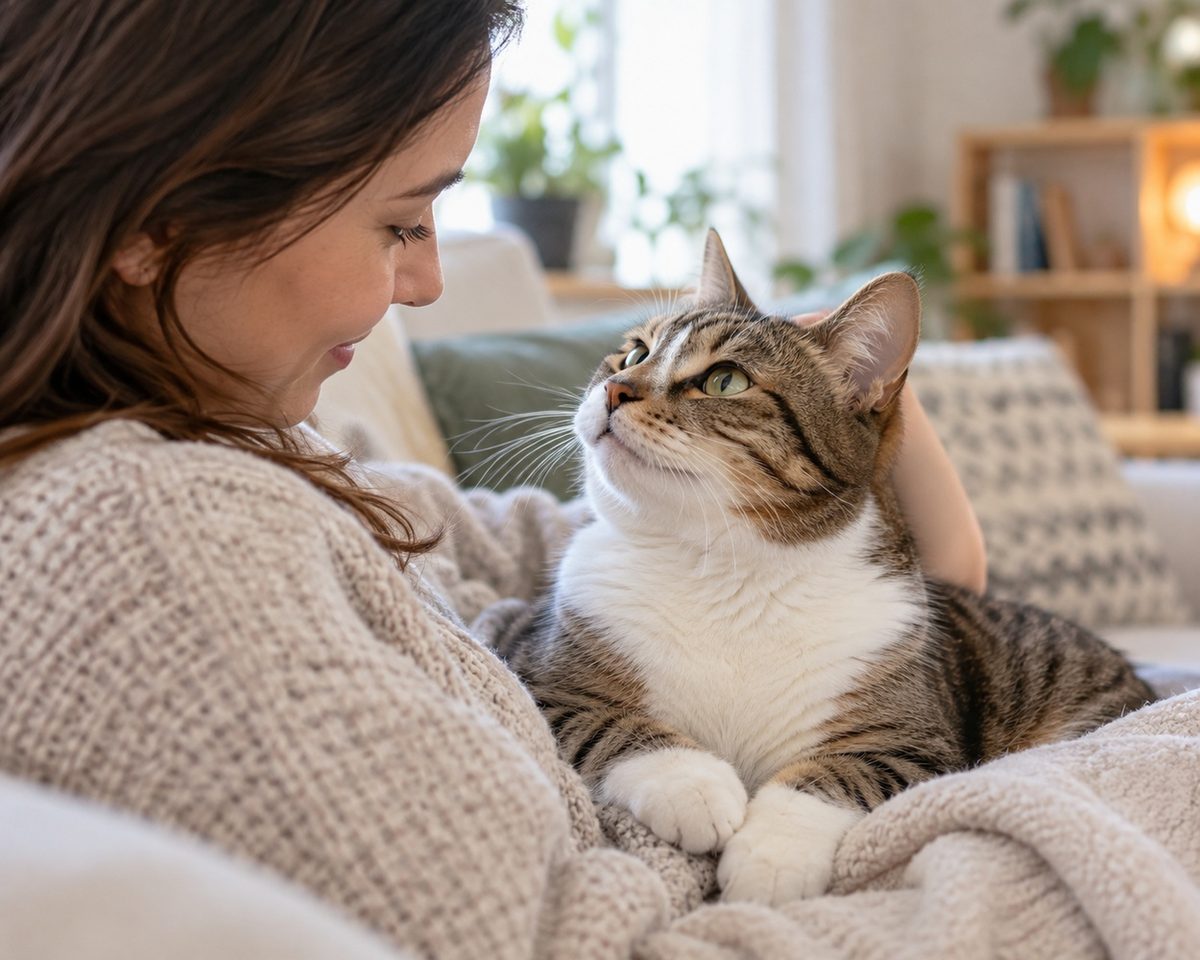
Cat Staring Body Language: Soft Eyes vs Hard Stare
The meaning of a stare depends on the rest of the body. Eyes alone rarely tell the whole story, so read the ears, tail, and posture together.
| Signal | Relaxed, Friendly Stare | Tense, Warning Stare |
|---|---|---|
| Eyes | Soft, half-closed, slow blinks | Wide, unblinking, fixed |
| Pupils | Normal for the light level | Large and dilated |
| Ears | Forward or neutral | Flattened or rotated back |
| Tail | Upright or loosely curved | Puffed, thrashing, or tucked |
| Body | Loose, may knead or purr | Stiff, crouched, or frozen |
A tense stare is a request for space. If you see it, look away, avoid reaching toward the cat, and let the cat leave. Pushing through that warning is how many bites and scratches start. For more on hostile body language, read about the causes of aggression in cats.
The Slow Blink: How to Answer a Loving Stare
A slow blink is often called a cat kiss. When a cat looks at you and slowly closes and opens its eyes, it is signaling that it feels safe with you.
You can return the message in three simple steps:
- Make soft eye contact from a relaxed position.
- Close your eyes slowly for about one to two seconds.
- Open them gently and look away or at the cat with a soft face.
Many owners report that their cats answer with a slow blink of their own. This simple exchange can build trust, especially with shy or newly adopted cats. Consistent, gentle contact like this also helps when introducing two cats or settling a new pet into the home.
When Your Cat Stares Because of Boredom or Attention Needs
An indoor cat with little to do often turns to its owner for entertainment. Cats are natural predators, and without outlets for hunting energy, they look for action from the person in the house.
Signs that staring comes from boredom include staring paired with pawing, meowing, or bringing toys. You may also notice destructive habits like scratching or knocking items off shelves.
Practical ways to meet that need:
- Schedule two play sessions of 10 to 15 minutes each day.
- Rotate toys weekly so they feel new.
- Add a window perch for bird watching.
- Use a wand toy with feathers to mimic prey movement.
- Offer a cat puzzle feeder so food takes effort to earn.
For more ideas, see how to keep an indoor cat entertained and the guide to playing with your cat.
Why Does My Cat Stare at Me at Night or Wake Me Up?
Cats are crepuscular, meaning they are most active at dawn and dusk. A cat that stands over your bed and stares at 4 a.m. is often hungry, bored, or ready to play.
Night staring becomes a concern when it is new or paired with other signs. In older cats, staring, disorientation, and loud night crying can point to feline cognitive dysfunction, which is similar to dementia. Pain, high blood pressure, and an overactive thyroid can also disturb sleep.
To keep nights quieter:
- Play hard with your cat in the evening, then feed a meal.
- Never reward night staring with food or attention.
- Use a timed feeder if early breakfast demands persist.
- Keep the bedroom door closed if the behavior continues.
If your cat also vocalizes, you may find useful context in why cats meow at night.
When Staring Signals a Health Problem
Most staring is harmless, but sudden changes deserve attention. A cat that stares blankly, seems lost in familiar rooms, or fixes its gaze on walls may be telling you something is wrong.
Contact a veterinarian if staring comes with any of these signs:
- Confusion, pacing, or getting stuck in corners
- Walking into furniture or misjudging jumps
- Cloudy, uneven, or very dilated pupils
- Head pressing against a wall or object
- Twitching, drooling, or sudden collapse
- Hiding, loss of appetite, or changes in litter box habits
Seizures, head pressing, and sudden blindness are emergencies, so seek veterinary care immediately. Only a vet can diagnose the cause, and you should never give your cat human medicine. For related warning signs, read about signs a cat is in pain and the guide to depression in cats. The Cornell Feline Health Center also offers reliable information on feline conditions.
Frequently Asked Questions
Is it bad if my cat stares at me?
No, staring is usually normal communication. A soft stare with slow blinks shows trust, while a hard stare with flattened ears signals discomfort.
Why does my cat stare at me and not blink?
An unblinking stare often means focus, curiosity, or tension. Cats blink slowly when relaxed, so a fixed stare with dilated pupils suggests alertness or a warning.
Why does my cat stare at me when I wake up?
Your cat is most likely hungry or expecting breakfast. Cats follow routines closely and often wake owners within an hour of their usual feeding time.
Do cats stare to show love?
Yes, a soft gaze with half-closed eyes is a sign of affection. Many cats pair it with purring, kneading, or a slow blink.
Why does my older cat stare at walls?
Wall staring in a senior cat can signal cognitive decline, vision problems, or pain. See a veterinarian if it is new, frequent, or paired with night yowling or confusion.
Why does my cat stare at me is a question with a mostly reassuring answer: your cat is communicating, whether hunger, love, or curiosity is behind it. Watch the body language, answer loving stares with a slow blink, and use play to meet boredom. If staring turns sudden, blank, or confused, book a vet visit this week.