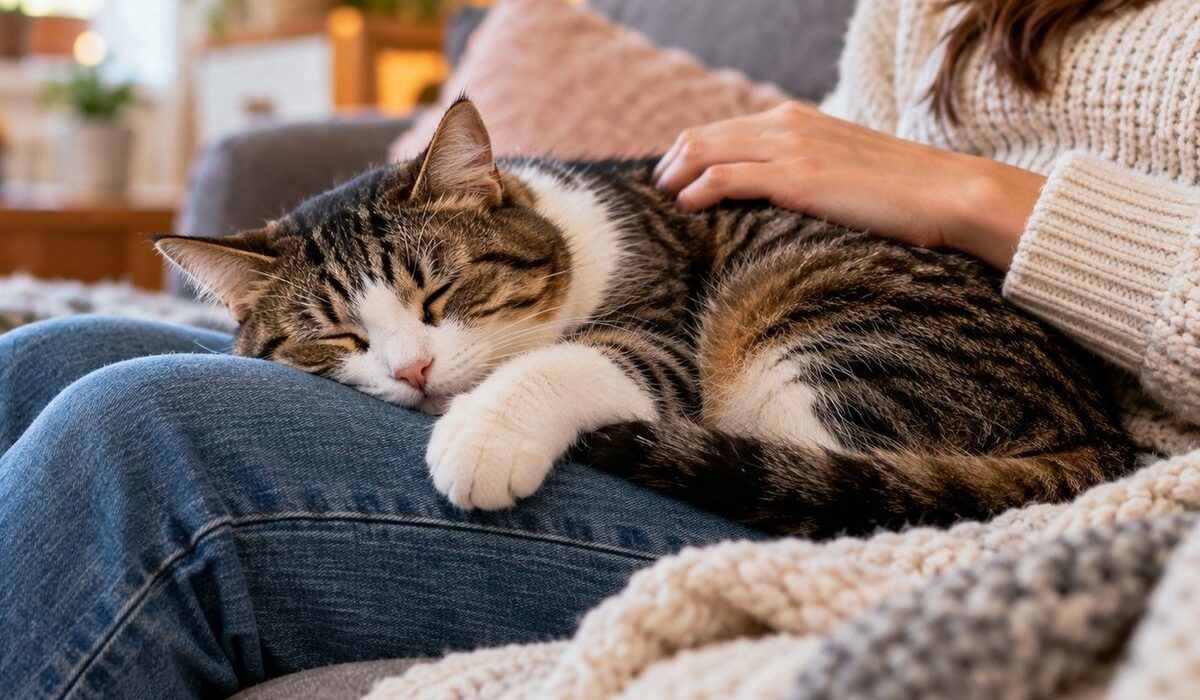
Why Does My Cat Sleep on Me? 7 Proven Reasons Behind It
This post may contain affiliate links. As an Amazon Associate I earn from qualifying purchases.
Why does my cat sleep on me? Cats sleep on their owners because of warmth, security, and a deep social bond, and it is one of the strongest signs of trust a cat can give. This matters for every owner who has woken up with a cat curled on their chest, legs, or head.
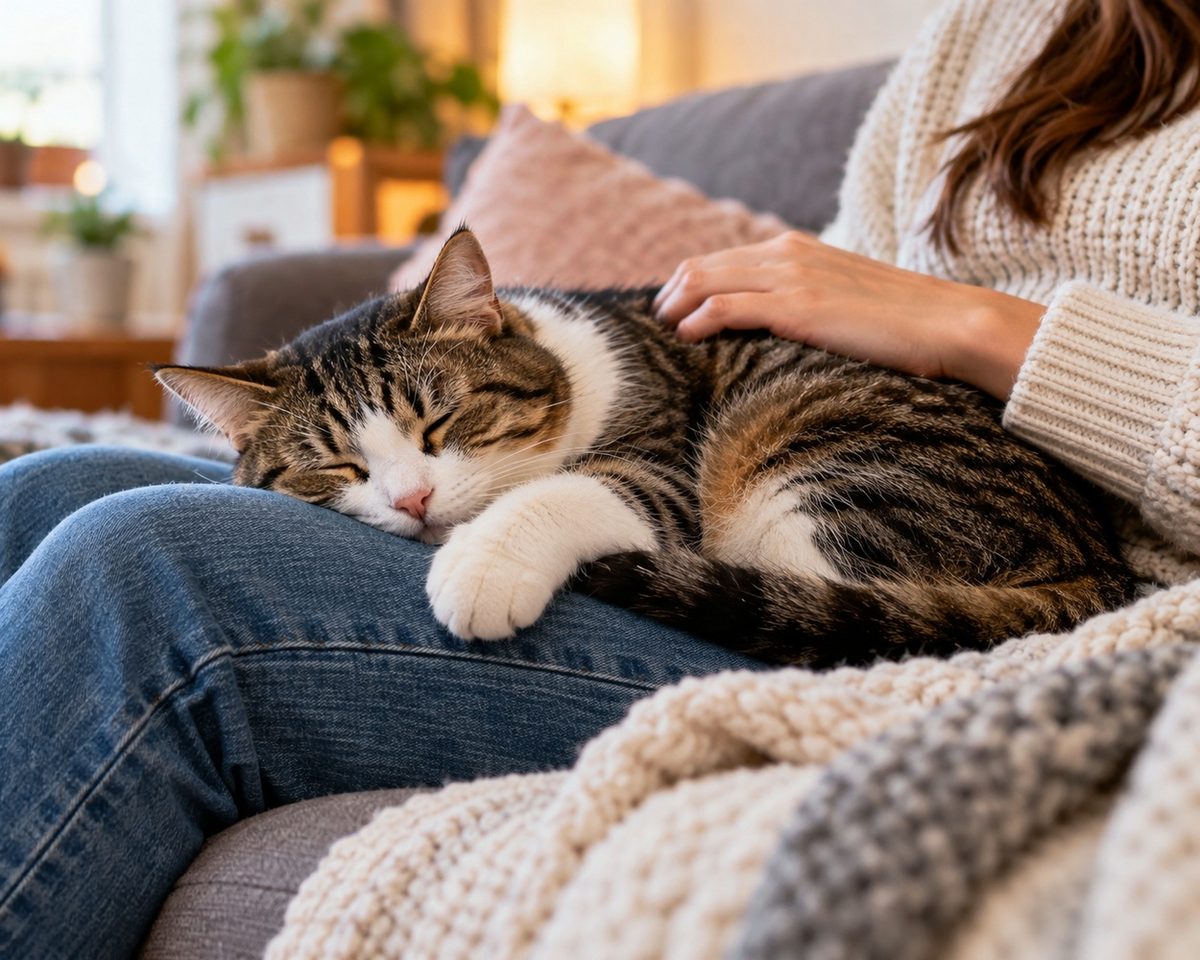
Why does my cat sleep on me at a glance:
- Short Answer: Cats choose your body for warmth, safety, and affection, because they treat you as a trusted member of their social group.
- Why Cats Do It: Body heat, your steady heartbeat, your familiar scent, and a strong bond all pull cats toward you.
- Is It Normal: Yes, it is normal and healthy, and it usually signals a relaxed, well-adjusted cat.
- How to Respond: Let your cat settle, keep the spot comfortable, and watch for sudden changes in clinginess.
- When to Worry: A sudden jump in clinginess together with hiding, appetite loss, or heavy breathing deserves a vet visit.
Table of Contents
Why Does My Cat Sleep on Me? The Main Reasons
Cats sleep on people for a mix of comfort, safety, and emotional connection. No single reason explains every cat, and most cats are driven by several at once.
Here are the seven most common reasons:
- You are warm, and cats prefer resting temperatures between 86 and 100°F.
- Your body feels safe because a large, calm companion can alert them to danger.
- Your scent is familiar and calming.
- Your heartbeat and breathing rhythm soothe them like a mother cat’s body once did.
- They are bonded to you and want to stay close.
- They are marking you with their scent as part of their group.
- They have learned that sleeping on you earns attention and comfort.
Most owners find that the habit builds over time. A kitten that sleeps on your chest at 10 weeks often becomes an adult cat that still does it at 10 years.
Warmth: The Biggest Reason Cats Sleep on You
Warmth is the most common answer when a cat chooses your lap or chest. Cats keep a body temperature of about 100.5 to 102.5°F, and they conserve energy by seeking out heat sources.
Your body is a living heating pad. Cats in cooler homes, or older cats with slower circulation, lean on this even more.
Signs that warmth is the main driver:
- Your cat sleeps on you more in winter than in summer.
- Your cat chooses your stomach, chest, or legs under a blanket.
- Your cat also sleeps on laptops, radiators, and sunny windowsills.
If your cat only cuddles when the room is cold, a heated cat bed can offer a second warm option without removing the bonding time you both enjoy.
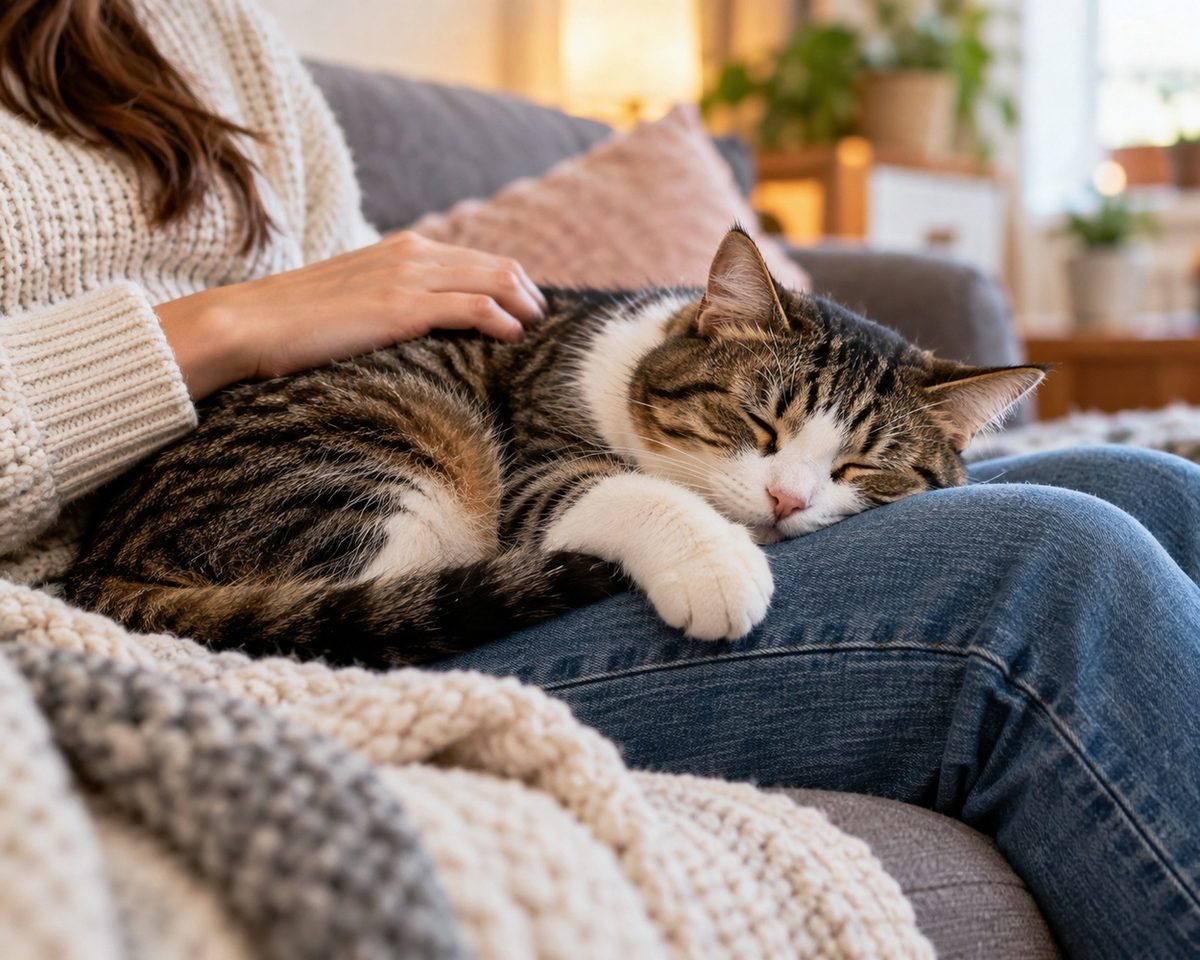
Security and Trust: Why Does My Cat Sleep on Me So Calmly?
Cats are both predators and prey, so they sleep only where they feel safe. Sleeping on you is a vulnerable act, and a cat does it only when it trusts you completely.
A sleeping cat spends 12 to 16 hours a day resting, and much of that is light sleep where the cat stays alert to sounds. On your body, your cat can relax more deeply because you act as a warm, mobile lookout.
Trust shows in other ways too. Cats that sleep on you often also expose their belly, slow blink at you, and follow you from room to room. If you want to understand more of these signals, read about why your cat stares at you and what a cat rolling on its back is telling you.
Your Scent, Your Heartbeat, and the Bond Behind It
Your smell is one of the strongest comfort signals your cat knows. Cats have around 200 million scent receptors, compared with about 5 million in humans, so your familiar scent is calming to them.
The sound of your heartbeat and slow breathing also matters. Kittens spend their first weeks pressed against their mother, listening to her pulse. A steady rhythm can bring back that early sense of safety.
Scent also works in the other direction. When your cat rubs its face on you or kneads before settling, it deposits its own scent. This mixes your smells together and builds a shared group scent.
Purring often goes hand in hand with this behavior, and why cats purr explains how this sound supports both comfort and bonding.
Why Does My Cat Sleep on Me and Not Anyone Else?
Many owners notice their cat picks one person in the household. Cats form the strongest attachment to the person who feeds them, plays with them, and responds to their signals most consistently.
Several factors make you the chosen one:
- You provide food and routine, which builds a sense of safety.
- You move calmly, speak softly, and respect your cat’s space.
- You spend long, quiet stretches sitting or lying down, which gives your cat a stable surface.
- Your cat chose you early in life, such as during kittenhood.
Cats that were raised with gentle handling before 7 weeks of age tend to seek out human contact more than cats that were not. A fostered kitten, for example, may attach strongly to the person who bottle-fed it, as described in the guide on bottle feeding a kitten.
Where Your Cat Sleeps on You and What It Means
The exact spot your cat picks says something about what it wants. Each position has a likely reason.
- On your chest: Your cat wants warmth, your heartbeat, and close face-to-face contact.
- On your stomach: This is the warmest, softest spot, and it signals deep comfort.
- On your legs or feet: Your cat wants closeness while keeping an easy exit and a clear view of the room.
- Near or on your head: Your cat is claiming your scent and warmth around your hair and neck.
- Curled against your side: Your cat wants contact without full commitment, which is common in newer or more independent cats.
A cat that sleeps on your neck or face is not trying to suffocate you. It is chasing warmth and your breath, which feels familiar and comforting.
Is It Safe to Let Your Cat Sleep on You?
For most healthy households, sharing sleep with your cat is safe and good for bonding. A few precautions keep it comfortable for both of you.
Points to consider:
- Keep your cat up to date on flea prevention, since fleas can move from cat to human bedding. See best practices to get rid of cat fleas if you spot any.
- People with cat allergies may react to dander in bed, and it can help to wash bedding weekly in hot water.
- Young children, newborns, and anyone with a weakened immune system should follow their doctor’s advice about sleeping near pets.
- Cats that wake you repeatedly at night may need a firmer routine, which is covered in why your cat meows at night.
If your sleep is regularly broken, you can give your cat a nearby perch and a warm blanket, then reward it with attention during the day.
When Sleeping on You Signals a Problem
Clinginess is usually healthy, but a sudden change in behavior can point to stress or illness. A cat that starts sleeping on you far more than usual, or that suddenly stops, may be telling you something.
Watch for these warning signs alongside the behavior:
- Hiding, loss of appetite, or reduced grooming.
- Fast or labored breathing while resting, which is an emergency.
- Crying or flinching when you touch a specific area.
- Excessive drinking or urination.
- Weight loss despite normal eating.
Cats that are in pain or feeling unwell often seek out warmth and closeness. If this extra clinginess comes with any sign above, call your veterinarian. You can learn to spot these signs in cat is in pain: 10 signs and depression in cats. The Cornell Feline Health Center also offers reliable guidance on feline health changes.
How to Encourage Healthy Sleep Habits With Your Cat
You can enjoy the closeness while keeping your own rest and your cat’s routine healthy. A few small steps help.
- Keep a consistent evening routine of play, then a meal, then rest, so your cat winds down naturally.
- Offer a warm, soft spot close to your bed so your cat has an easy alternative.
- Reward calm behavior with gentle petting instead of reacting to nighttime pawing.
- Provide daytime activity, using ideas from how to keep an indoor cat entertained.
- Check that your cat has fresh water, a clean litter box, and a quiet resting area elsewhere in the home.
A cat bed or blanket placed on your own bed can also give your cat a defined spot, which reduces tossing and turning for you while keeping the bond intact.
Frequently Asked Questions
Why does my cat sleep on my chest?
Cats choose the chest because it is warm and rises and falls with a steady heartbeat that feels soothing. This spot also keeps your cat close to your face and scent, which strengthens the bond.
Is it a sign of love when my cat sleeps on me?
Yes, a cat sleeping on you is a strong sign of trust and affection. Cats sleep up to 16 hours a day and only do so in places where they feel completely safe.
Why does my cat sleep on me at night but ignore me all day?
Many cats become more affectionate at night because the house is quiet and cooler. Cats are naturally most active at dawn and dusk, so the night hours often bring both cuddling and early wake-up calls.
Why does my cat sleep on my head or face?
Cats sleep near your head because it is warm, carries your strongest scent, and feels familiar. It is usually harmless, but you can gently move your cat to your side if it disturbs your breathing or sleep.
Should I be worried if my cat suddenly starts sleeping on me more?
A sudden increase in clinginess can signal stress, pain, or illness, especially if it comes with hiding or appetite changes. Call your veterinarian if the change lasts more than 2 to 3 days or comes with other symptoms.
Understanding why does my cat sleep on me comes down to warmth, trust, scent, and a close bond that grows over time. Enjoy the habit, keep an eye out for sudden changes, and book a vet visit if clinginess appears alongside any sign of illness.