


How to Stop a Cat From Scratching Furniture? 5 Proven Strategies
Cats scratch furniture because it’s a natural behavior that marks territory, stretches muscles, and maintains claw health. Redirecting this instinct to appropriate surfaces and enriching your cat’s environment stops destructive scratching while keeping your couch intact.
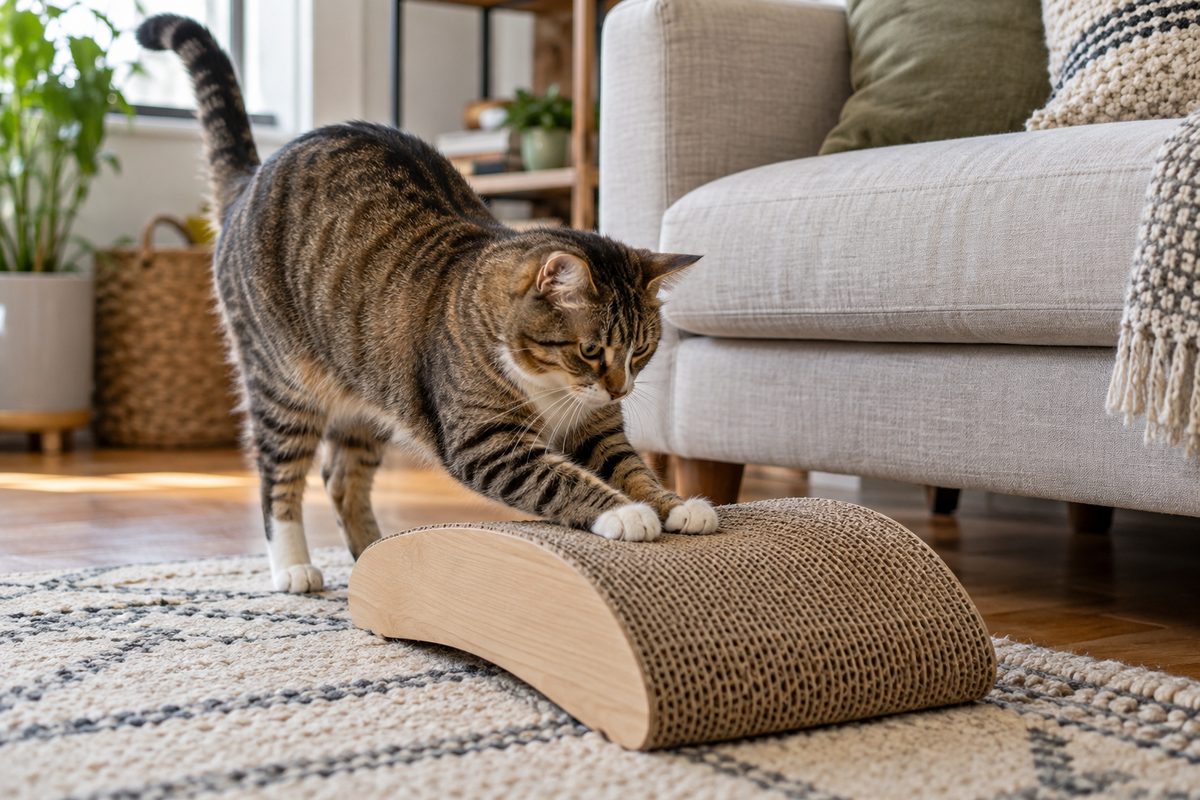
Table of Contents
Key Takeaways:
- Scratching is normal cat behavior; provide scratching posts and pads as outlets.
- Use deterrents and positive reinforcement to discourage furniture scratching.
- Environmental enrichment and regular nail trimming reduce destructive scratching.
- Consistency and patience are essential for lasting results.
Why Cats Scratch Furniture
Scratching serves multiple purposes for cats: it sharpens and maintains their claws, stretches their back and shoulder muscles, marks territory with scent glands in their paws, and relieves stress. Furniture often becomes the target because it’s accessible, sturdy, and near where your cat spends time. Understanding this behavior as healthy and necessary helps you address it constructively rather than punish it.
Provide Appropriate Scratching Surfaces
The most effective solution is offering better alternatives than your couch. Place scratching posts and pads in high-traffic areas, near windows, and close to where your cat currently scratches.
Best scratching surface types:
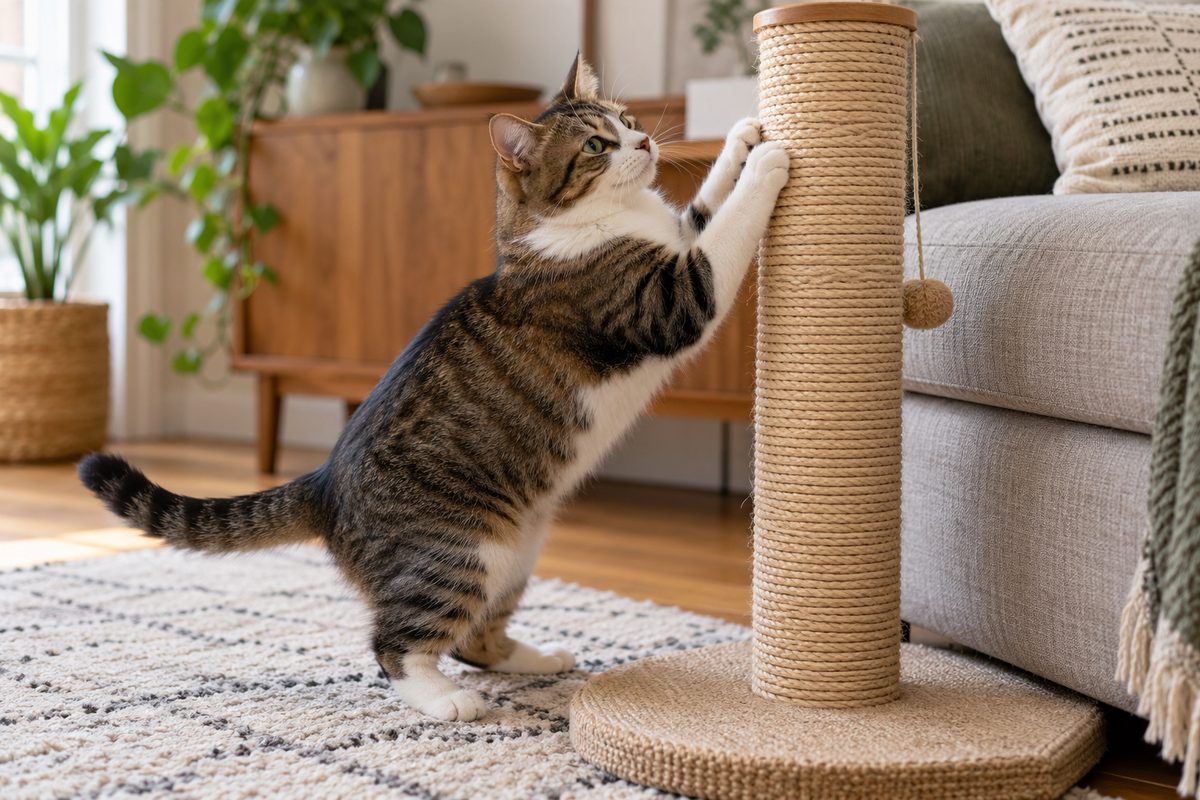
- Vertical scratching posts (6+ feet tall) for cats that prefer stretching upward.
- Horizontal scratching pads for cats that scratch flat surfaces.
- Angled scratchers that combine vertical and horizontal positions.
- Cardboard scratchers that are affordable and replaceable.
- Sisal rope-wrapped posts for durability and texture variety.
Rotate or rearrange scratchers periodically to keep them interesting. Keeping an indoor cat entertained with varied scratching stations prevents boredom-related destructive behavior. Some cats prefer rough textures while others like smoother surfaces, so experiment with different materials.
Use Deterrents and Positive Reinforcement
Discourage furniture scratching while encouraging use of appropriate surfaces. Never punish your cat after the fact; instead, intervene during the act and redirect them immediately to a scratching post.
Deterrent methods:
- Apply sticky furniture tape to vulnerable couch corners and armrests; cats dislike the texture.
- Spray cat repellent sprays for furniture on targeted areas (test hidden spots first).
- Use motion-activated deterrent devices that startle cats away from forbidden surfaces.
- Place aluminum foil or plastic sheeting temporarily to block access.
Reward your cat with treats, praise, and play immediately after using a scratching post. Positive association makes appropriate scratching more appealing than furniture damage. Scratching furniture prevention techniques work best when combined with consistent reinforcement.
Trim Nails and Manage Nail Care Regularly
Regular nail maintenance reduces the urge to scratch and the damage caused when scratching occurs. Trimming your cat’s nails properly keeps claws shorter, sharper, and healthier. Trim every 2-3 weeks or when tips become translucent.
Nail care steps:
- Use a quality cat nail clipper designed for feline claws.
- Hold the paw gently and clip only the clear portion of the nail.
- Avoid the pink quick, which contains blood vessels.
- File rough edges with a nail file if your cat tolerates it.
Some cats accept nail caps (soft plastic covers glued to claws) that reduce scratching damage. These require monthly replacement as nails grow.
Enrich Your Cat’s Environment and Reduce Stress
Boredom and stress trigger excessive scratching. Environmental enrichment keeps your cat mentally and physically stimulated, reducing destructive behaviors. Playing with your cat regularly with interactive toys provides outlets for hunting instincts and burns energy.
Enrichment strategies:
- Rotate toys weekly to maintain novelty and interest.
- Install window perches so your cat can watch outdoor activity.
- Provide climbing trees and vertical spaces for exercise.
- Use puzzle feeders or treat-dispensing toys for mental stimulation.
- Schedule 10-15 minutes of active play twice daily.
- Consider cat calming diffusers if stress seems elevated.
Multi-cat households may benefit from additional scratchers to prevent competition-related territorial scratching.
For more veterinary guidance, see the Cornell Feline Health Center.
Frequently Asked Questions
- How long does it take to stop a cat from scratching furniture? Most cats redirect to appropriate surfaces within 2-4 weeks with consistent training, though some take 6-8 weeks depending on age and habit strength.
- Should I declaw my cat to stop furniture scratching? Declawing is not recommended by veterinarians; it’s painful, can cause lasting physical and behavioral problems, and should only be considered in rare medical circumstances.
- Why does my cat ignore the scratching post I bought? Your cat may prefer a different material, height, or location; try multiple post types in various rooms and observe which surfaces your cat naturally chooses to target.
Stop furniture scratching by combining scratching posts, deterrents, nail care, and enrichment. Consistency, patience, and understanding that scratching is normal create a happier home for you and your cat.
