


Can Cats Eat Watermelon? 7 Safe Facts Every Owner Needs
This post may contain affiliate links. As an Amazon Associate I earn from qualifying purchases.
Can cats eat watermelon? Yes, in small amounts, as long as the rind and seeds are removed first. Cats are obligate carnivores, so watermelon is only an occasional treat, and it matters most for owners who want a low-calorie, hydrating snack on hot days.
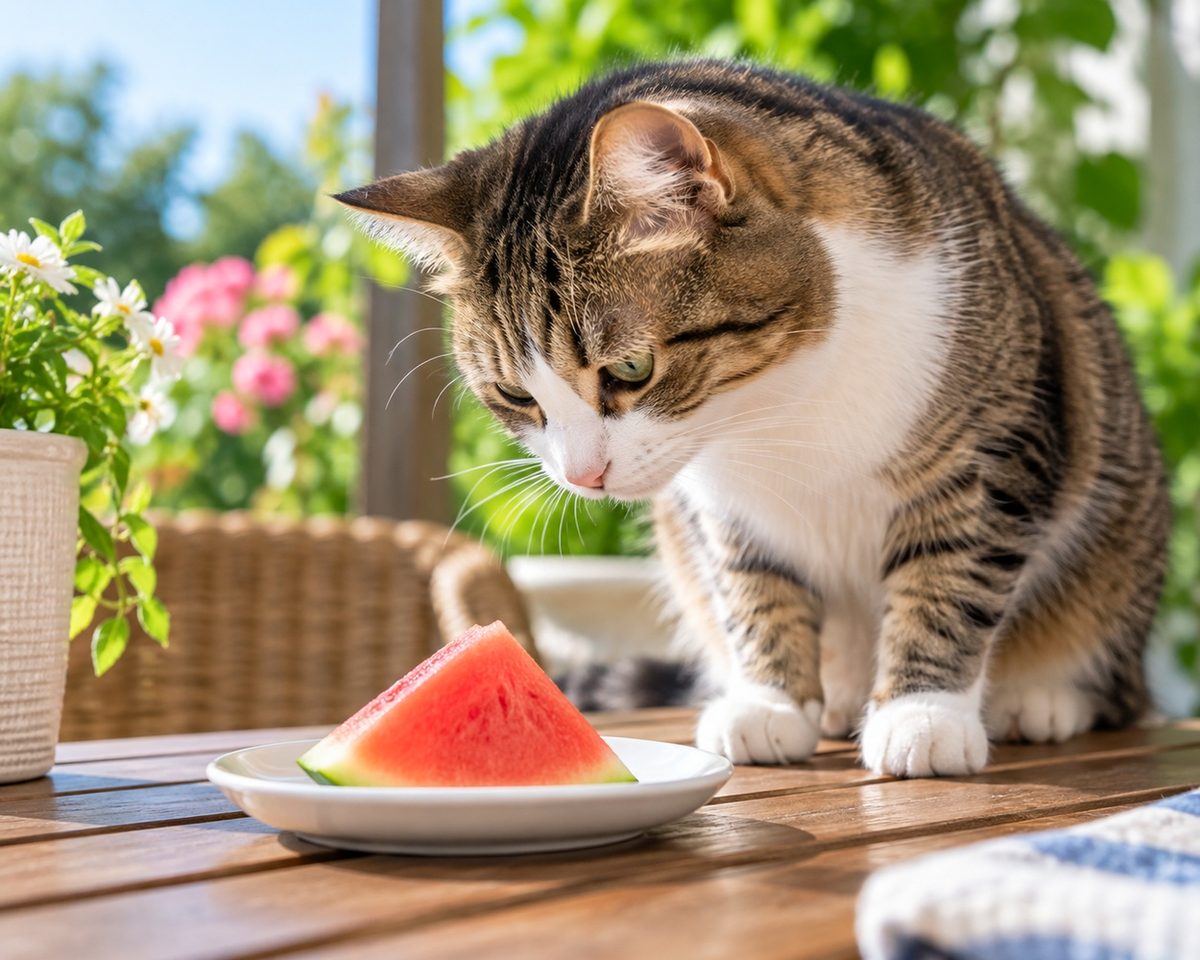
Can cats eat watermelon at a glance:
- Short Answer: Yes, seedless and rind-free flesh is non-toxic to cats in small portions.
- Safe Amount: One to two bite-sized cubes, about the size of a pea or small grape, no more than once or twice a week.
- Main Benefit: Watermelon is roughly 92% water, so it adds a little hydration with very few calories.
- Main Risk: Seeds and rind can cause choking, blockage or stomach upset, and too much sugar can cause diarrhea.
- When to See a Vet: Repeated vomiting, lethargy or no stool for 24 hours after eating watermelon.
Table of Contents
Can Cats Eat Watermelon Safely?
Watermelon flesh is not toxic to cats, and the ASPCA does not list the fruit as poisonous. The danger comes from the parts around the flesh and from portion size, not from the fruit itself.
A cat’s digestive system is built for meat. Cats lack a strong ability to digest large amounts of plant material, so fruit should stay a tiny extra rather than part of the diet.
When my cat first stole a cube off my plate, I checked three things before relaxing: no seeds, no rind, and no signs of stomach upset over the next day. That simple routine answers the question of whether cats can eat watermelon without worry, and it works for any new treat.
Veterinary nutrition guidance generally says treats, including fruit, should make up no more than 10% of a cat’s daily calories. For a typical 10-pound cat eating about 200 calories a day, that is a ceiling of roughly 20 treat calories. A couple of small watermelon cubes stay far under that limit, since watermelon has only about 30 calories per 100 grams. You can read more about safe feeding limits in the Cornell Feline Health Center feeding guide.
Is Watermelon Good for Cats? Benefits and Limits
Watermelon offers a few mild benefits, but none of them replace a complete cat food. It works as an extra, never as a nutritional need.
Possible benefits:
- Hydration: About 92% of watermelon is water, which can help cats that drink very little.
- Low calories: A small cube adds only a few calories, so it will not easily cause weight gain.
- Vitamins: The flesh contains small amounts of vitamin A, vitamin C and potassium, though healthy cats already get what they need from complete food.
- Texture and enrichment: A cold cube can be a fun, novel treat in summer.
Important limits:
- Cats make their own vitamin C, so they gain little from the fruit’s vitamin content.
- Watermelon contains natural sugar, and cats have no real need for sweet foods.
- Many cats cannot taste sweetness, so most will ignore watermelon completely. That is normal and not a problem.
If hydration is your real goal, better tools exist. A cat water fountain encourages many cats to drink more, and wet food adds far more moisture than fruit. See our guide to the best cat water fountain for easy cleaning for options.
Which Parts of Watermelon Are Dangerous for Cats?
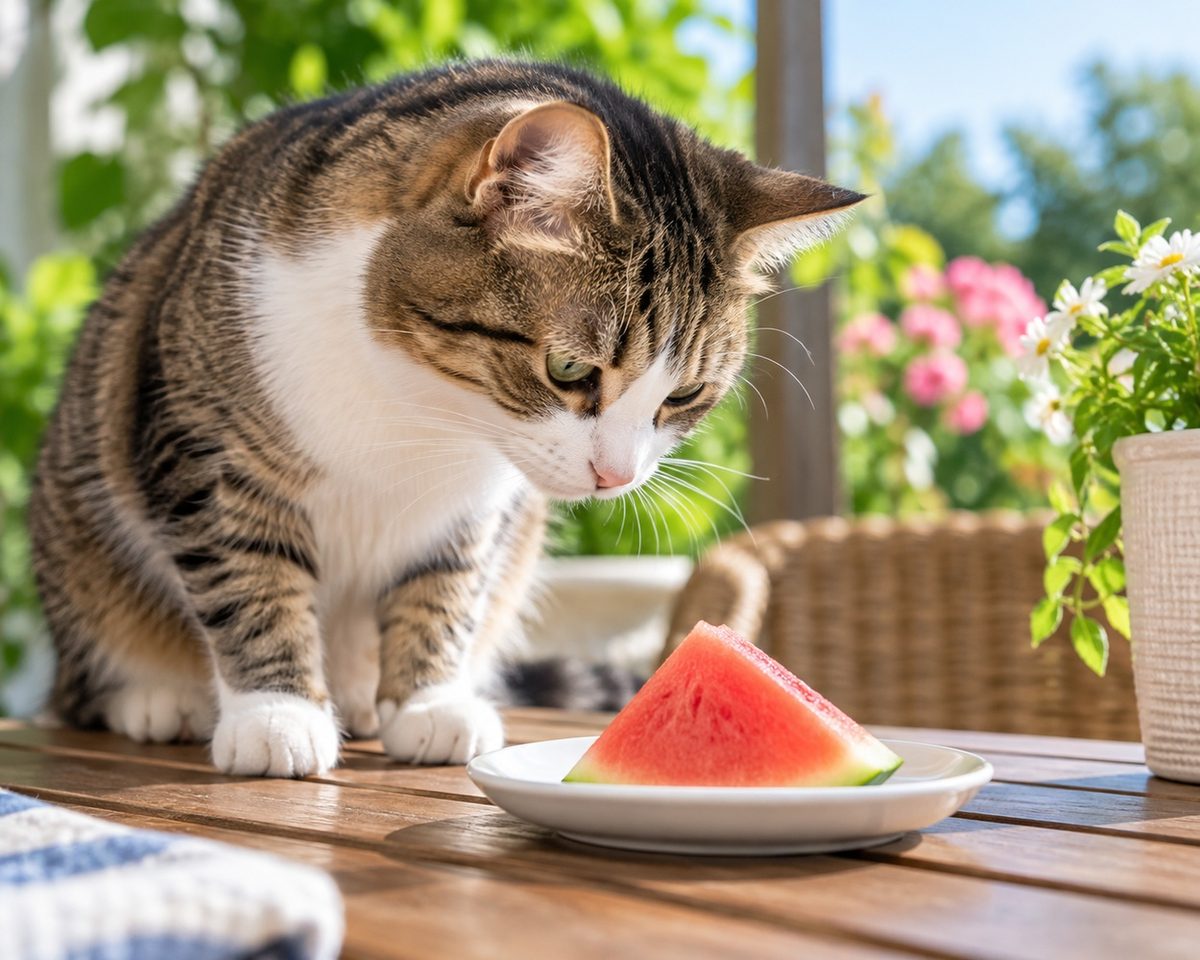
Only the red or pink flesh is appropriate for cats. Every other part of the melon should stay out of reach.
- Seeds: Black seeds can cause intestinal blockage, especially in small cats and kittens. Even seedless melons can contain soft white seed coats, so check each cube.
- Rind: The tough green skin is hard to digest and can cause vomiting, diarrhea or a blockage.
- Pesticide residue: Unwashed rinds may carry chemical residue, so wash the melon before cutting it.
- Watermelon-flavored products: Candy, drinks and sweets can contain xylitol or artificial additives that are harmful to cats.
If you suspect your cat swallowed seeds or a piece of rind and now vomits, strains or stops eating, call your veterinarian the same day. Blockages can become emergencies quickly, and only a vet can check for one safely. For a broader list of risky foods, see our guide to dangerous foods for cats.
How Much Watermelon Can Cats Eat?
The right amount is very small. Start with one pea-sized piece and watch your cat for 24 hours before offering more.
| Cat Type | Safe Serving | How Often |
|---|---|---|
| Adult cat (8-12 lb) | 1-2 small cubes | Once or twice a week |
| Small adult cat (under 7 lb) | 1 small cube | Once a week |
| Kitten under 6 months | Avoid or ask your vet | Not recommended |
| Senior cat | 1 small cube | Once a week, if the vet approves |
| Diabetic or overweight cat | Skip unless your vet agrees | Not routinely |
How to serve it:
- Wash the outside of the melon before cutting.
- Cut away all rind and the green-white layer beneath it.
- Remove every seed, including the soft white ones.
- Dice the flesh into pea-sized pieces.
- Offer one piece and wait 24 hours to check for stomach upset.
Chilled cubes are fine, but avoid ice-cold pieces straight from the freezer, which can upset a sensitive stomach. Keep treats from replacing meals. Our guide on how much to feed a cat explains daily calorie needs in detail.
Can Cats Eat Watermelon If They Have Health Problems?
Cats with certain conditions need extra caution, because even a small sugar load or digestive change can matter.
- Diabetic cats: Watermelon contains natural sugar and can affect blood glucose. Ask your vet first. Our guide to diabetes in cats covers diet and signs.
- Overweight cats: The calories are low, but treat habits matter more than any single food.
- Cats with sensitive stomachs: New foods can trigger vomiting or loose stool. See cats with sensitive stomachs for safer feeding habits.
- Kidney disease: Watermelon contains potassium, and cats with kidney problems often follow a controlled diet, so check with your vet.
- Food-allergic cats: Any new food can cause a reaction, though fruit allergies in cats are uncommon.
A vet knows your cat’s history, so ask before adding any human food to a cat with a medical condition.
Signs Your Cat Ate Too Much Watermelon
Too much watermelon usually causes mild digestive upset within 12 to 24 hours. Most cases pass on their own, but some signs need a vet.
Mild signs that often pass:
- Soft stool or mild diarrhea
- Gas or a gurgling belly
- One episode of vomiting
- Slightly reduced appetite for a meal
Signs that need a vet visit:
- Vomiting more than twice in a day
- Diarrhea lasting longer than 24 to 48 hours
- Lethargy, hiding or a painful, tense belly
- Straining without producing stool
- Refusing food for more than 24 hours
If your cat swallowed seeds or rind, treat these signs as more urgent. Our guides on cat vomiting and diarrhea and vomiting in cats explain causes and next steps. Contact a veterinarian right away if you are worried, since only a vet can diagnose a blockage.
Other Fruits Cats Can and Cannot Eat
Watermelon is one of several fruits cats can nibble in tiny portions. Others are risky, and a few are toxic.
- Generally safe in small amounts: Banana, blueberries, seedless cantaloupe and peeled apple slices without seeds. See can cats eat bananas for details.
- Toxic, never feed: Grapes and raisins, which can cause kidney failure in cats.
- Risky: Citrus fruits, whose oils often cause stomach upset, and any fruit with pits or seeds.
Vegetables can be a helpful alternative. For example, plain pumpkin is often used for digestive support, as covered in can cats eat pumpkin. When in doubt about a food, check the ASPCA Animal Poison Control Center list before offering it.
Plain canned pumpkin puree is a sensible fiber-rich option for many cats, and a freeze-dried meat treat fits a carnivore’s needs far better than any fruit. Both beat sugary produce as an occasional reward.
Frequently Asked Questions
Can cats eat watermelon as kittens?
Kittens under six months should generally avoid watermelon, because their digestive systems are still developing and seeds pose a higher choking risk. Stick to kitten food and ask your vet before adding any treat.
Can cats eat watermelon seeds?
No, cats should not eat watermelon seeds, because they can cause choking or an intestinal blockage. Remove every seed, including the soft white ones, before offering any flesh.
Is watermelon toxic to cats?
No, watermelon flesh is not toxic to cats and is not on the ASPCA’s list of poisonous foods. The rind, the seeds and large portions are the real concerns.
Can cats drink watermelon juice?
Plain watermelon juice in a teaspoon-sized amount is unlikely to harm a healthy cat, but it is high in sugar and offers no real benefit. Fresh water or wet food hydrates cats better, and sweetened juice products should never be given.
Why does my cat like watermelon?
Most cats cannot taste sweetness, so they are usually drawn to watermelon’s cool temperature, juicy texture or the smell of the water inside. Some cats simply enjoy playing with it, and that curiosity is normal.
Can cats eat watermelon? Yes, but only as a small, seedless, rind-free treat once or twice a week. Prioritize complete cat food and fresh water, introduce any new treat one piece at a time, and call your veterinarian if vomiting or diarrhea lasts beyond a day.
