
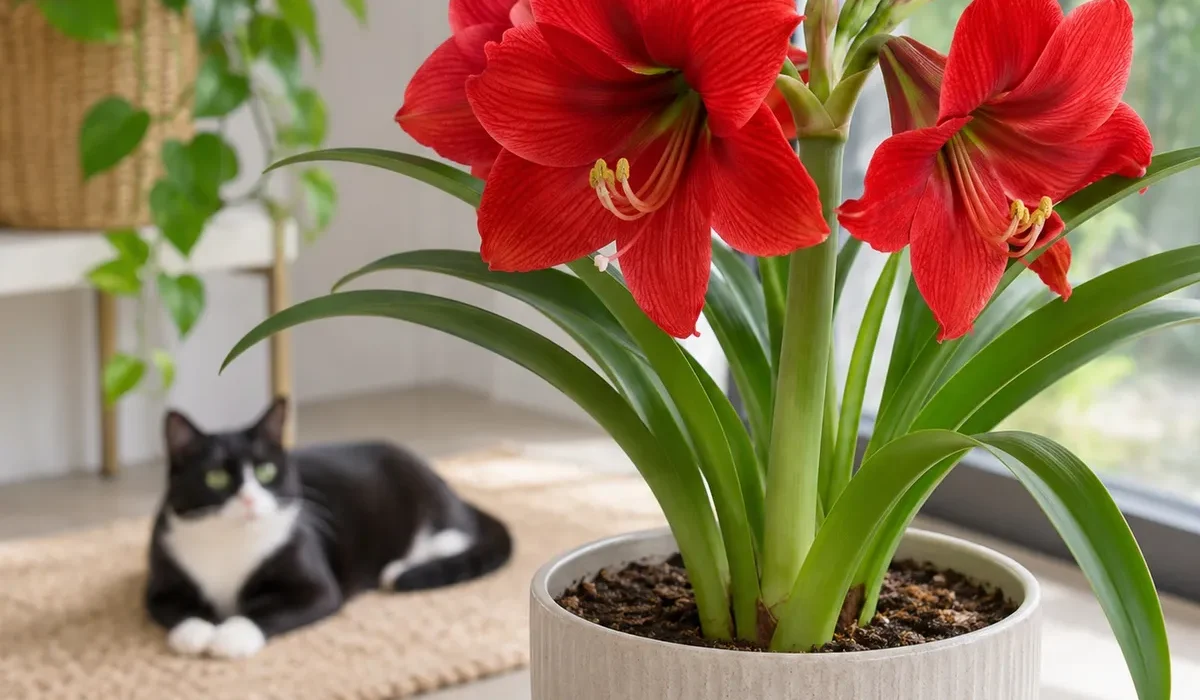
Are Amaryllis Poisonous to Cats? 5 Important Safety Facts
The answer to are amaryllis poisonous to cats is yes, because every part of the plant contains lycorine and related alkaloids that upset a cat’s stomach and nervous system. The risk peaks from November to January, when potted amaryllis bulbs arrive as holiday gifts in homes with curious cats.
This post may contain affiliate links. As an Amazon Associate I earn from qualifying purchases.
Table of Contents
Are amaryllis poisonous to cats at a glance:
- Short Answer: Yes, holiday Hippeastrum and Amaryllis belladonna are both toxic to cats in every plant part.
- Most Toxic Part: The amaryllis bulb holds the highest alkaloid concentration.
- Common Signs: Vomiting, drooling, diarrhea, belly pain and lethargy usually appear within a few hours.
- Urgency: Call a vet or poison hotline right away, even if your cat chewed only one leaf.
- Prevention: Keep real amaryllis out of the home or in a room your cat never enters.
Why Amaryllis Is Toxic to Cats
Amaryllis is toxic to cats because the plant produces lycorine, an alkaloid that triggers vomiting, plus compounds that irritate the gut. The ASPCA Animal Poison Control Center lists amaryllis as toxic to cats, dogs and horses.
Two plants share the amaryllis name: the potted holiday Hippeastrum and the outdoor Belladonna lily. Both belong to the Amaryllidaceae family, alongside daffodils, and carry the same poisoning risk for cats.
Are Amaryllis Poisonous to Cats in Every Part?
Every part of the amaryllis plant is poisonous to cats, but bulbs cause the most serious reactions because alkaloids concentrate there.
| Plant Part | Toxicity Level | Typical Effects in Cats |
|---|---|---|
| Bulb | Highest | Severe vomiting, diarrhea, dehydration, possible tremors |
| Stem | Moderate | Vomiting, drooling, belly pain |
| Leaves | Moderate | Vomiting, drooling, appetite loss |
| Flowers | Lower but present | Drooling and mild stomach upset |
When my cat Milo batted at a gifted amaryllis one December, I moved the pot into a locked spare room within minutes. Cats love chewing long, flexible leaves, so one unattended afternoon is enough for trouble.
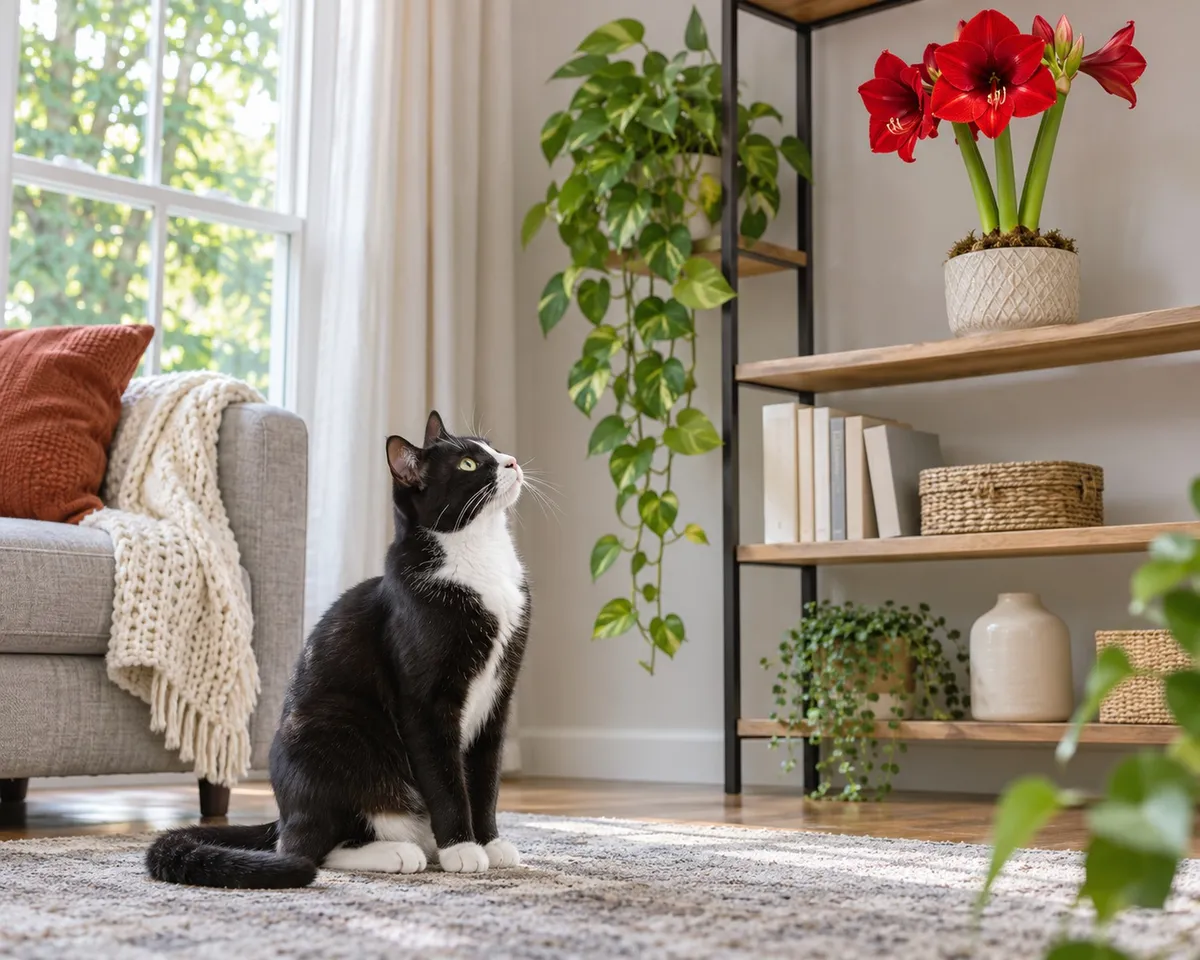
Signs of Amaryllis Poisoning in Cats
Signs of amaryllis poisoning in cats usually start within a few hours of chewing the plant:
- Repeated vomiting, sometimes with plant pieces visible
- Excessive drooling or pawing at the mouth
- Diarrhea, which raises the risk of dehydration in cats
- Abdominal pain, shown by hunching or crying when touched
- Lethargy, hiding or refusing food
- Tremors, mostly after eating bulb material
Emergency signs: Tremors, collapse, trouble breathing or nonstop vomiting mean your cat needs an emergency vet immediately.
What to Do If Your Cat Ate Amaryllis
The safest response is calling a veterinarian immediately, because early care keeps most amaryllis cases mild:
- Move your cat away and remove any plant pieces from its mouth.
- Note which part was eaten, roughly how much, and when.
- Call your vet, an emergency clinic or the ASPCA Animal Poison Control Center at (888) 426-4435.
- Never induce vomiting at home or give human medicine unless your vet instructs you.
- Bring a photo of the plant or a leaf in a sealed bag.
Vets often induce vomiting if ingestion was recent, then give activated charcoal, IV fluids and anti-nausea medication. Most cats that receive prompt supportive care recover within one to two days.
Are Amaryllis Poisonous to Cats Like Other Holiday Plants?
Amaryllis sits in the middle of the holiday risk scale: more dangerous than poinsettia, but far less deadly than true lilies. Lilies can cause kidney failure in cats, so bouquets mixing lilies with amaryllis need extra caution.
Poinsettia sap mostly causes mild drooling, as our guide on poinsettias poisonous to cats explains. Mistletoe can affect the heart in larger amounts, covered in mistletoe poisonous to cats.
How to Keep Cats Safe From Amaryllis
The only reliable protection is keeping real amaryllis out of your cat’s reach or out of the house:
- Display an artificial silk amaryllis for the same red look with zero plant alkaloids.
- Stop your cat from chewing the fake flower too, since swallowed fabric can block the gut.
- Offer a cat grass growing kit as a safe chewing outlet; learn more in why cats eat grass.
- Store spare bulbs in a sealed box, because loose bulbs roll like toys.
- Pick replacements from our list of flowers safe for cats.
Since adding fresh cat grass to our windowsill, Milo ignores most other greenery in the house.
Frequently Asked Questions
Are amaryllis poisonous to cats if they only eat the flower?
Yes, amaryllis petals hold fewer alkaloids than the bulb, but chewing even 1 or 2 petals can cause drooling and vomiting in cats.
How long after eating amaryllis will a cat get sick?
Most cats show vomiting, drooling or diarrhea within a few hours of eating amaryllis, so call a vet before symptoms start.
Can a cat die from eating amaryllis?
Death from amaryllis is rare in cats, but eating a large amount of bulb can cause tremors and severe dehydration requiring hospital care.
Is amaryllis poisonous to dogs too?
Yes, the ASPCA lists amaryllis as toxic to dogs and horses as well as cats, with the same vomiting and drooling signs.
What holiday plants are safe for cats?
Christmas cactus, moth orchids and African violets are listed as non-toxic to cats by the ASPCA, making them safer holiday choices.
The clear answer to are amaryllis poisonous to cats is yes, and the bulb carries the greatest danger of any plant part. Keep real amaryllis away from your cat, choose cat-safe holiday blooms instead, and save your vet’s emergency number in your phone today.