
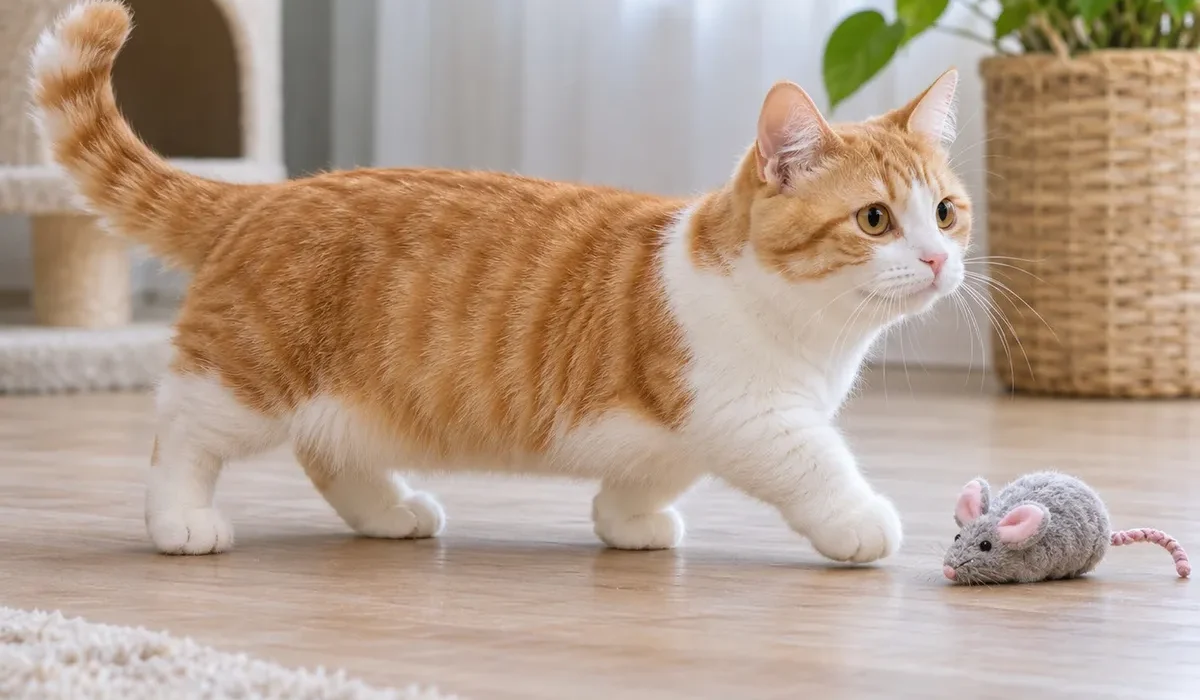
Munchkin Cat: 8 Honest Facts About This Short-Legged Breed
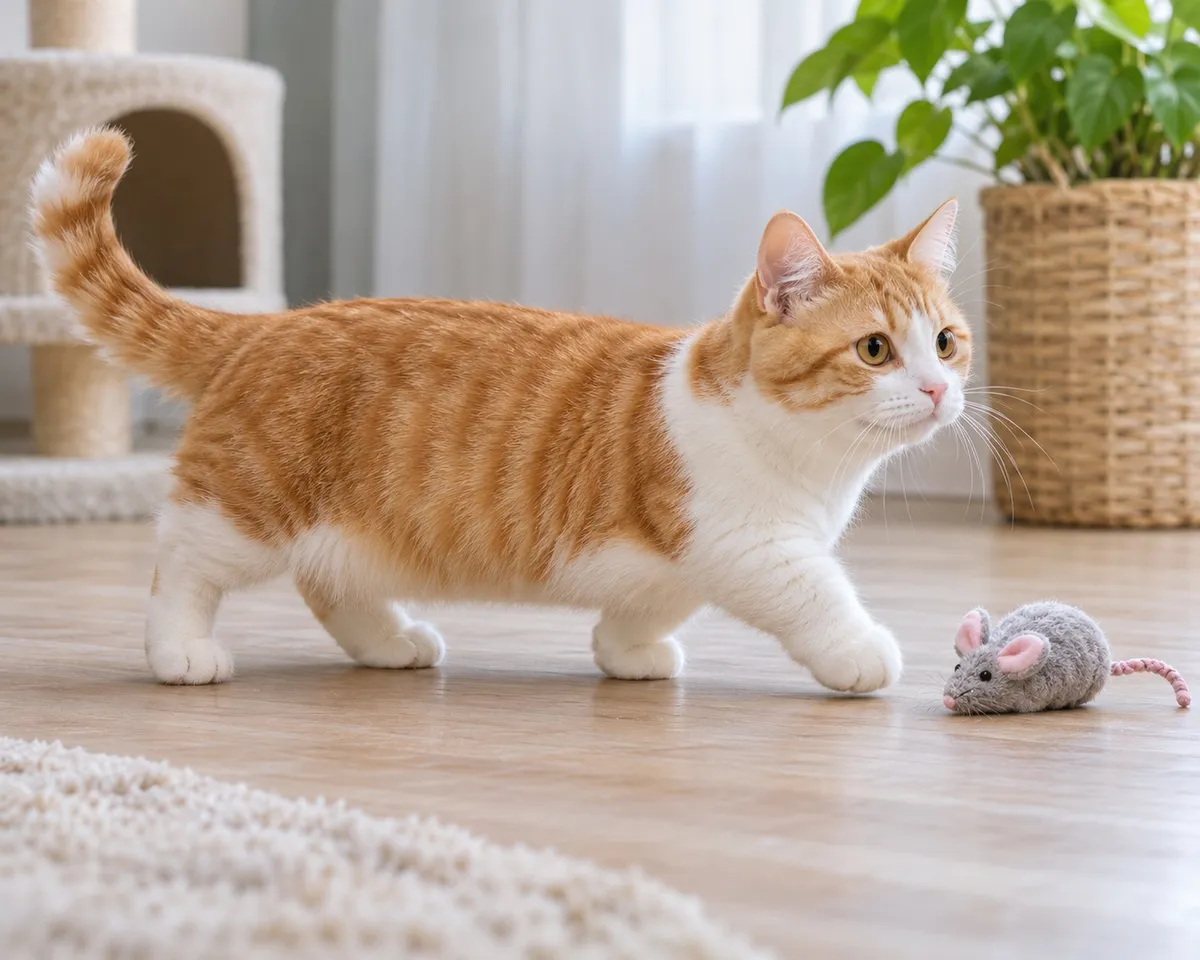
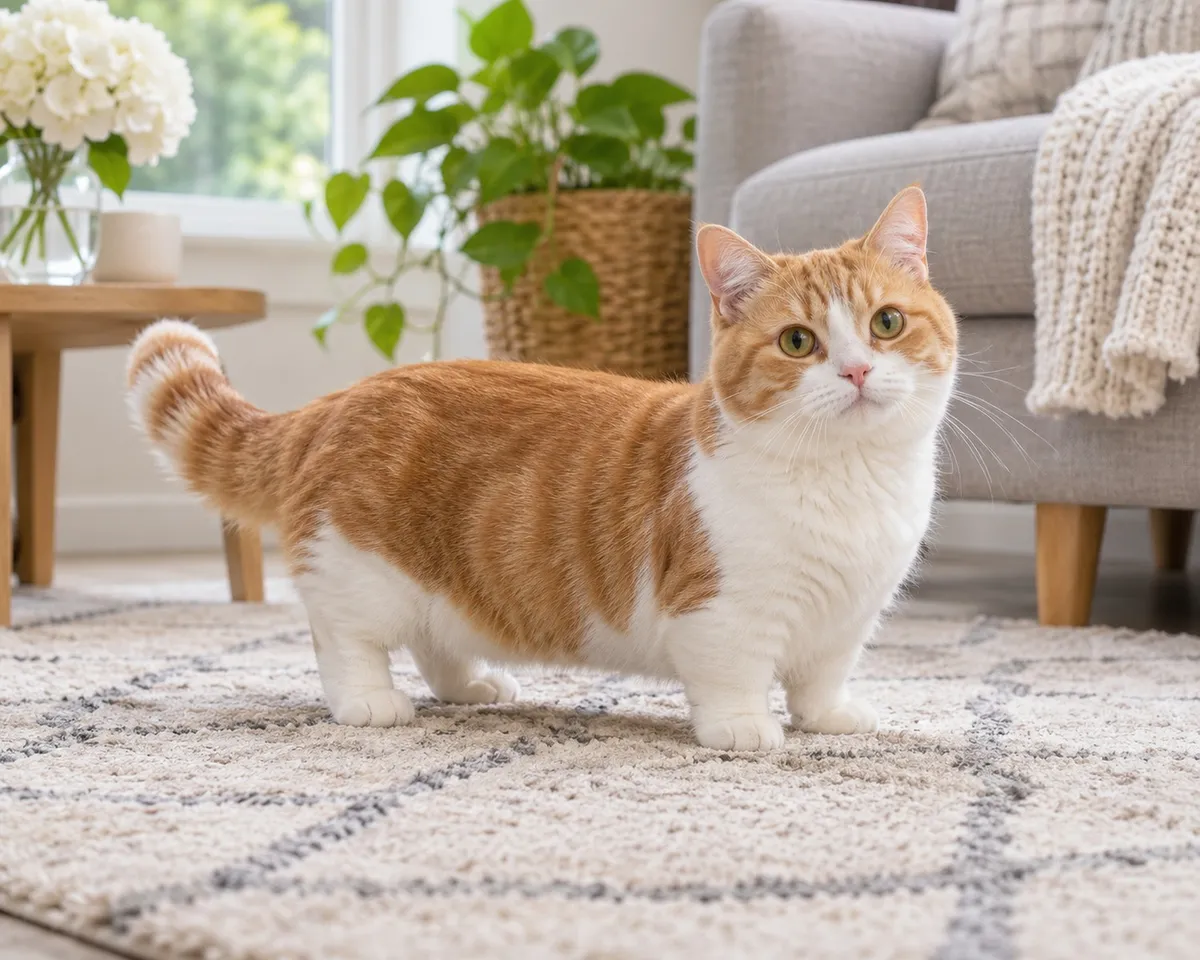
The munchkin cat is a small to medium breed with naturally short legs caused by one dominant gene mutation. Munchkins keep a normal-length body and a playful, people-focused personality. Their short legs matter most to future owners, because they raise real questions about joint health, jumping and ethical breeding.
This post may contain affiliate links. As an Amazon Associate I earn from qualifying purchases.
Table of Contents
Munchkin cat at a glance:
- Size and Weight: Adult Munchkins weigh about 5 to 9 pounds (2.3 to 4 kg), and males are usually heavier.
- Lifespan: Most Munchkins live 12 to 15 years, similar to the average domestic cat.
- Temperament: Munchkins are curious, social and playful, and many hoard small shiny objects.
- Grooming Needs: Shorthaired Munchkins need weekly brushing, while longhaired Munchkins need brushing 2 to 3 times a week.
- Breed Recognition: TICA has granted championship status since 2003, but the CFA, FIFe and GCCF do not accept the breed.
Where the Munchkin Cat Came From
The modern Munchkin breed began in 1983, when a music teacher in Rayville, Louisiana, rescued a pregnant short-legged stray named Blackberry. Many of today’s Munchkins descend from Blackberry’s son, Toulouse.
Fact 1: Short-legged cats existed long before 1983, with reports from Britain in the 1940s and Russia in the 1950s.
Fact 2: The munchkin cat remains controversial among cat registries. TICA started a new-breed program in 1994 and granted championship status in 2003. International Cat Care raises welfare concerns about breeding cats for dwarfism, and Munchkins still appear on lists of rare cat breeds.
Why Munchkins Have Short Legs
Munchkins have short legs because a dominant gene shortens the long bones of the legs, a form of dwarfism. The spine, skull and body size usually stay close to those of a typical domestic cat.
Fact 3: One copy of the gene produces short legs, and two copies are considered lethal before birth. For that reason, responsible breeders pair a Munchkin with a normal-legged cat.
Fact 4: Each litter from that pairing averages about half short-legged kittens. Breeders grade Munchkin leg length three ways:
- Standard: the longest short legs, giving the most mobility.
- Super-short: noticeably shorter legs with a lower stance.
- Rug-hugger: the shortest legs, with the body close to the floor.
Munchkin Cat Health Concerns and Lifespan
A healthy munchkin cat typically lives 12 to 15 years, but the breed carries a few skeletal risks worth watching. Good breeders screen for spine and chest problems before kittens go home at 12 to 16 weeks.
Fact 5: Lordosis, pectus excavatum and arthritis are the main health concerns linked to short-legged cats.
| Condition | What It Is | Signs to Watch |
|---|---|---|
| Lordosis | Spine dips too far behind the shoulders | Sunken back, labored breathing |
| Pectus excavatum | Sunken or flattened breastbone | Flat chest, fast breathing, low energy |
| Osteoarthritis | Gradual wear of joint cartilage | Stiffness after naps, fewer jumps |
| Obesity | Excess fat loading short limbs | No visible waist, ribs hard to feel |
The Cornell Feline Health Center explains arthritis signs that every Munchkin owner should learn early. Schedule a veterinary exam every 12 months, and see a veterinarian immediately if your cat breathes with effort or limps for over 24 hours.
Munchkin Cat Personality and Behavior
Munchkins are confident, social cats that stay kitten-like and playful well into adulthood. When I first met a friend’s Munchkin, she raced down the hallway faster than my long-legged tabby.
Fact 6: Munchkins run fast and corner tightly, but most cannot jump as high as long-legged cats. Many sit up on their hind legs like rabbits to survey a room.
Fact 7: The breed usually gets along with children, dogs and other cats, and dislikes long hours alone. Two daily play sessions of 10 to 15 minutes keep a Munchkin fit and calm.
Caring for a Short-Legged Cat at Home
Fact 8: Munchkin care is standard cat care with a few adjustments for short limbs. Follow these steps to protect joints and comfort:
- Place pet stairs beside beds and sofas, so your cat climbs instead of landing hard.
- Choose a low-entry litter box with a front edge about 3 to 4 inches high for easy stepping.
- Keep your cat lean with these guidelines on how much to feed a cat, since 1 extra pound exceeds 10 percent of a Munchkin’s weight.
- Trim claws every 2 to 3 weeks using these safe nail trimming steps.
- Add ramps as your Munchkin ages, and follow these senior cat care tips after age 10.
Frequently Asked Questions
How big do Munchkin cats get?
Munchkin cats weigh about 5 to 9 pounds (2.3 to 4 kg) as adults, with normal-sized bodies and shorter legs. Most Munchkins finish growing by 12 to 18 months of age.
How long does a munchkin cat live?
A munchkin cat usually lives 12 to 15 years with healthy weight, yearly vet exams and joint-friendly care. Spine or chest deformities can shorten that lifespan.
Can Munchkin cats jump?
Yes, Munchkin cats can jump onto low furniture such as beds and sofas, but most jump lower than long-legged cats. Tall cat trees and counters often require steps or ramps.
Why are Munchkin cats controversial?
Munchkin cats are controversial because their short legs come from a form of dwarfism that may raise joint and spine risks. FIFe and the GCCF refuse the breed on welfare grounds.
Are Munchkin kittens born with short legs?
Yes, Munchkin kittens show short legs from birth, and about half of each litter inherits the trait. Long-legged littermates are called non-standard Munchkins.
The munchkin cat is a lively, affectionate breed whose short legs come from a dominant dwarfism gene, so joint care matters for life. Keep your Munchkin lean, add steps around the home and book yearly vet exams. Before buying a kitten, ask the breeder for parent health records and spine and chest screening results.