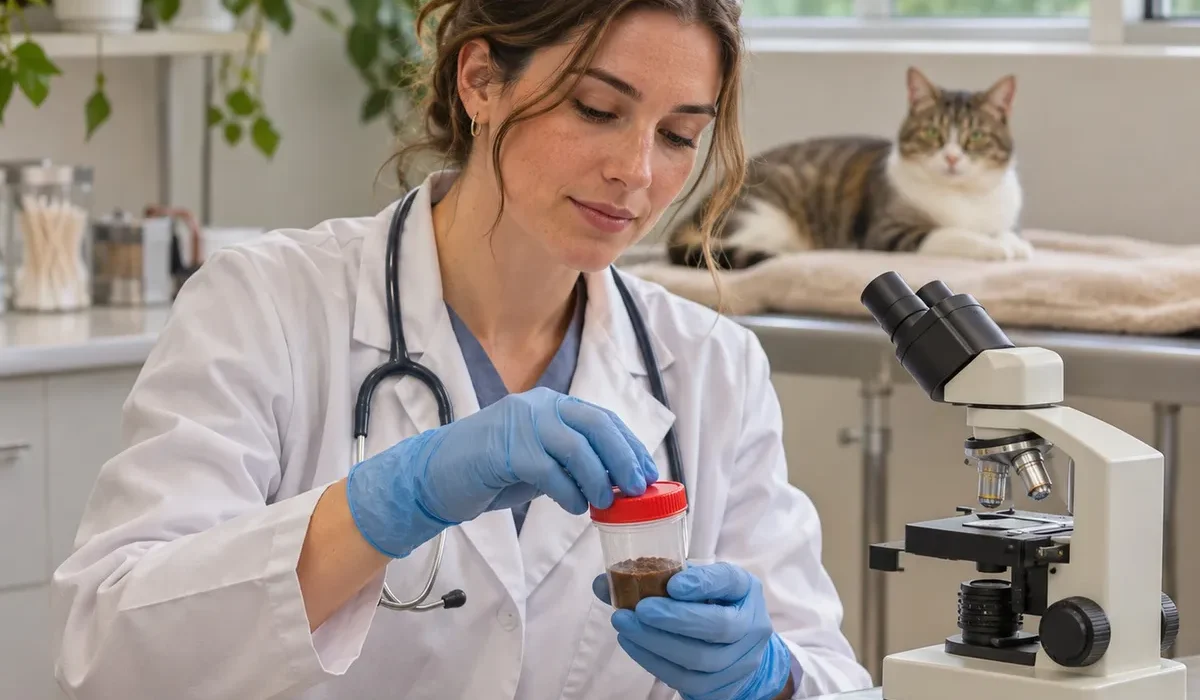
Worms in Cats: 7 Clear Signs and Proven Treatments That Work
Worms in cats are intestinal parasites, mainly roundworms, tapeworms and hookworms, that cause weight loss, diarrhea, vomiting and a swollen belly. Kittens, outdoor hunters and cats with fleas face the highest risk, and vets clear most infections with prescription dewormers.
This post may contain affiliate links. As an Amazon Associate I earn from qualifying purchases.
Table of Contents
Worms in cats at a glance:
- Short Answer: Most infections clear within 2 to 3 weeks with a dewormer and a repeat dose.
- Most Common Causes: Nursing from an infected mother, swallowing fleas, and eating mice or birds.
- Urgency: Rarely an emergency, but pale gums or bloody diarrhea in kittens need same-day care.
- What to Do at Home: Scoop litter daily, treat fleas on every pet, and bag a fresh stool sample.
- When to See a Vet: Book a visit when you see worms, rice-like segments or steady weight loss.
Common Types of Worms in Cats
Five parasites cause nearly all worm infections in pet cats, and each parasite spreads differently.
| Worm Type | How Cats Get It | Typical Sign |
|---|---|---|
| Roundworms | Mother’s milk, soil, rodents | Pot belly, spaghetti-like worms |
| Tapeworms | Infected fleas or rodents | Rice-like segments near the tail |
| Hookworms | Larvae through skin or swallowed eggs | Pale gums, dark stool |
| Lungworms | Eating snails, slugs or birds | Coughing, faster breathing |
| Heartworms | Infected mosquito bite | Coughing, sudden breathing trouble |
Roundworms are the most common intestinal worm in cats and grow 3 to 5 inches long. When my rescue kitten arrived with a drum-tight belly, roundworms were the cause, and two doses cleared her.
Tapeworms follow fleas closely, so the steps to get rid of cat fleas also cut tapeworm risk.
7 Clear Signs of Worms in Cats
Many infected adult cats show no signs, but these 7 signs point strongly to worms in cats.
- Visible worms: White, spaghetti-like roundworms appear in vomit or stool.
- Rice-like segments: Tapeworm pieces stick under the tail or to bedding.
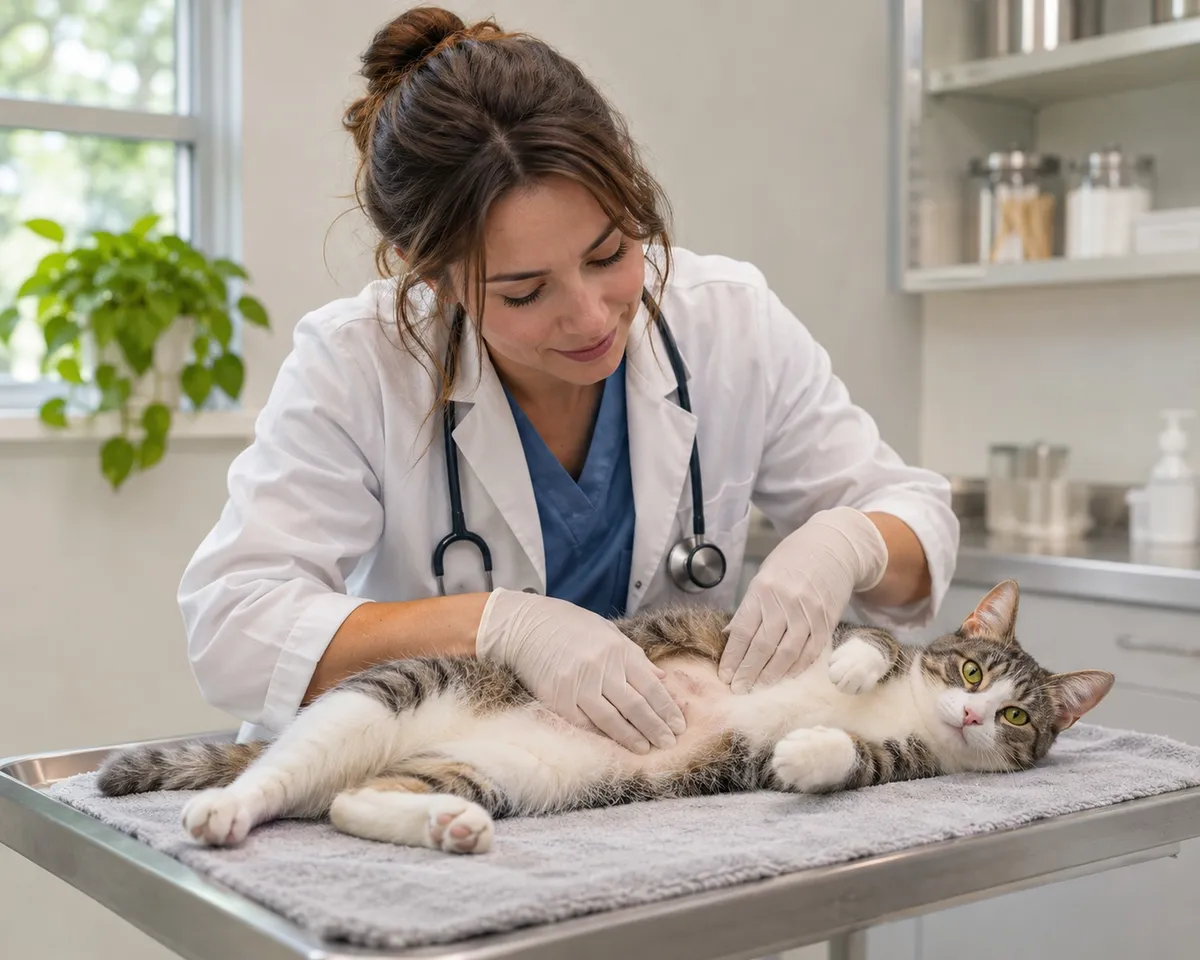
- Pot belly: A swollen abdomen appears, especially in kittens under 6 months.
- Diarrhea: Soft or mucus-coated stool, often with cat vomiting and diarrhea episodes.
- Vomiting: Occasional vomiting sometimes brings up whole worms.
- Weight loss with a normal appetite: Cats eat well yet lose condition over weeks.
- Dull coat and scooting: The coat turns rough, and cats drag their rear on the floor.
Pale gums signal hookworm blood loss, a serious sign in young kittens.
How Cats Get Worms
Cats get worms by swallowing eggs, larvae, fleas or infected prey, and indoor cats are not fully protected.
- Nursing: Roundworm larvae pass to kittens through the mother’s milk.
- Hunting: Mice, birds and insects carry roundworm and tapeworm larvae.
- Fleas: One infected flea swallowed during grooming can start a tapeworm infection.
- Soil: Roundworm eggs survive in soil for months to years.
- Mosquitoes: Indoor cats still get heartworm because mosquitoes come inside.
How to Treat Worms in Cats
Vets treat worms in cats with dewormers matched to the worm type, since no single product kills every parasite.
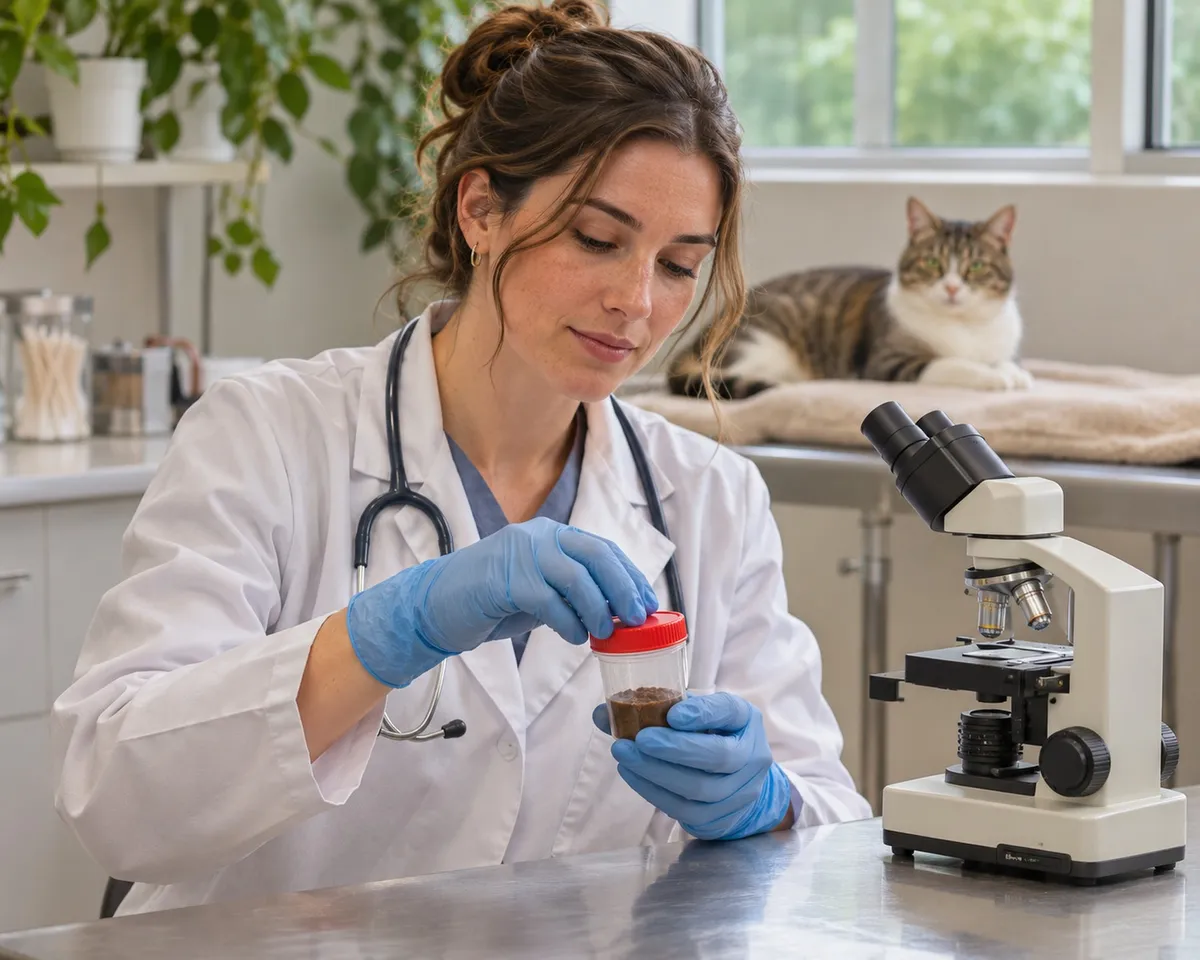
- Bring your vet a fresh stool sample collected within 12 hours.
- Let your vet confirm the parasite, since tapeworm eggs often hide from fecal tests.
- Give the prescribed dewormer exactly as directed, never dog dewormers or human medicine.
- Repeat treatment after 2 to 3 weeks to kill newly hatched worms.
- Treat fleas on every pet at once, or tapeworms return within weeks.
- Recheck the stool 2 to 4 weeks after treatment.
A flea comb run through the coat daily shows whether fleas remain. A vet-recommended monthly topical parasite preventive then guards against fleas and several worm types. VCA Animal Hospitals explains treatment options for each feline parasite.
Home Care Tips:
- Scoop daily, since roundworm eggs need days to weeks to become infective.
- Wash bedding in hot water to remove segments and flea eggs.
- Wash hands after scooping, because roundworms and hookworms can infect people.
When to See a Vet for Intestinal Parasites
See a veterinarian whenever you spot worms or segments, because only a vet can confirm the parasite and prescribe a safe dewormer. Seek same-day care for these signs:
- Pale white or gray gums
- Weakness or collapse in a kitten
- Black stool or blood in stool in cats lasting over 24 hours
- Rapid or labored breathing
- Repeated vomiting or refusing food for over 24 hours
The Cornell Feline Health Center offers owner guides on feline parasites.
Preventing Worms in Cats
Regular deworming plus year-round parasite prevention stops worms in cats from returning.
- Kittens: Deworm at 2, 4, 6 and 8 weeks, then monthly until 6 months, as part of kitten care essentials.
- Indoor adults: Run a fecal test once or twice yearly during regular veterinary check-ups.
- Hunting cats: Deworm every 1 to 3 months on your vet’s schedule.
- New arrivals: Test and deworm any new cat before it meets resident pets.
- Year-round: Keep flea and heartworm prevention going all 12 months.
Frequently Asked Questions
Are worms in cats contagious to other pets?
Yes, roundworms, hookworms and flea-borne tapeworms spread through shared litter, soil and fleas, so vets usually treat every pet together.
Can I get worms from my cat?
Yes, roundworms and hookworms can infect people through contaminated soil or litter, but daily scooping and handwashing keep risk low.
How long does it take to get rid of worms in a cat?
Most cats are worm-free within 2 to 3 weeks after two doses, and a fecal test 2 to 4 weeks later confirms success.
Can indoor cats get worms?
Yes, indoor cats get worms from fleas, insects, potting soil and mosquitoes, so a yearly fecal test is worthwhile.
What do worms in cat poop look like?
Roundworms look like white spaghetti strands 3 to 5 inches long, while tapeworm segments look like small rice grains.
Worms in cats are common, easy to spot once you know the 7 signs, and highly treatable with a vet-prescribed dewormer. Treat fleas and worms together, then keep prevention running year-round. Your next step: collect a fresh stool sample and book a fecal test this week.