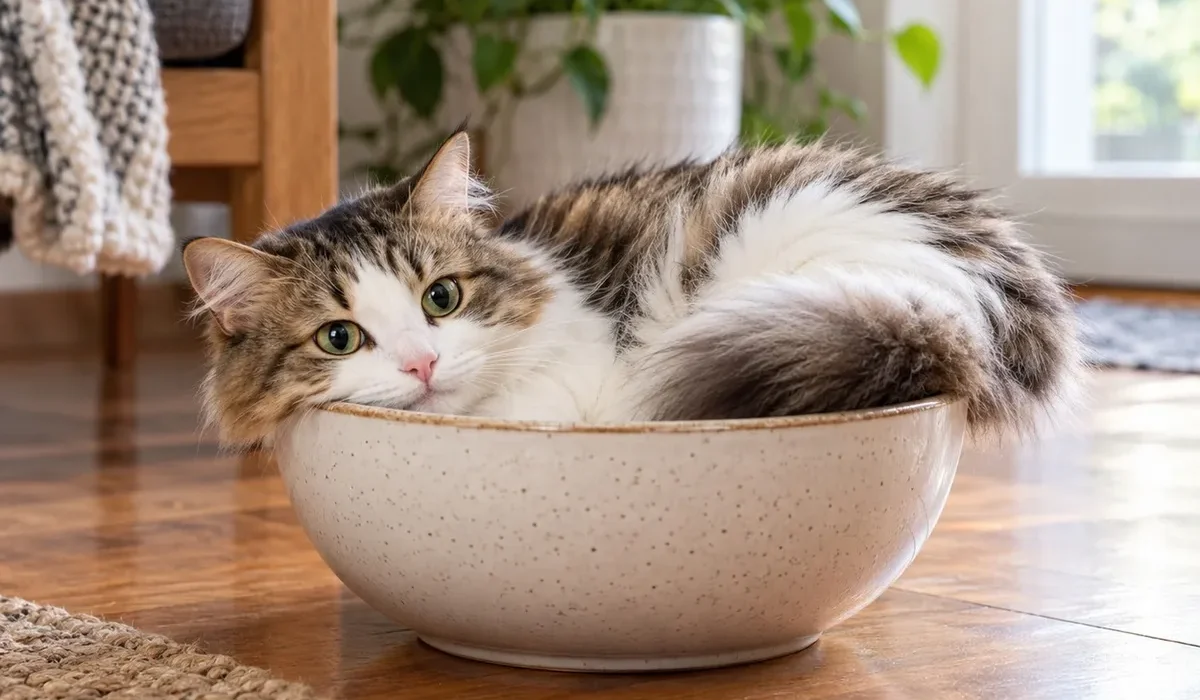
Cats Are Liquid: 7 Fun Science Facts Behind the Viral Meme
Cats are liquid in the playful, meme sense because they pour themselves into jars, sinks, and boxes, and a 2014 physics paper even tested the idea seriously. The joke works because a cat’s flexible spine and loose skin let it fit into spaces that look far too small for its body.
This post may contain affiliate links. As an Amazon Associate I earn from qualifying purchases.
Table of Contents
Cats are liquid at a glance:
- Short Answer: Cats are not literally liquid, but their anatomy lets them squeeze, flow, and settle into almost any container.
- Why Cats Do It: Flexible spines, floating collarbones, and a strong instinct to seek snug, safe hiding spots.
- Is It Normal: Yes, squeezing into tight spaces is normal, instinctive feline behavior.
- The Science: A researcher won an Ig Nobel Prize in Physics in 2017 for studying whether a cat can be both solid and liquid.
- How to Respond: Offer safe boxes and beds, and block off dangerous gaps such as dryer doors and recliner mechanisms.
Why the Cats Are Liquid Meme Took Over the Internet
The cats are liquid meme took off because everyone who has lived with a cat has watched one pour out of a laundry basket. Photos of cats filling vases, bowls, and glass jars spread across social media for years.
The idea is easy to understand and instantly funny. A cat sits in a container, takes on its exact shape, and looks perfectly comfortable doing it.
When my own cat first wedged herself into a shoebox that was clearly two sizes too small, I understood the joke immediately. She did not look squashed, only satisfied.
The Real Science Behind “Cats Are Liquid”
Cats are liquid in a surprisingly serious scientific paper. French physicist Marc-Antoine Fardin published “On the Rheology of Cats” in 2014, applying fluid-mechanics ideas to cat behavior.
Rheology is the study of how materials flow and deform. Fardin argued that a cat’s behavior depends on the container, the time it spends there, and the temperature of the room.
The work earned the Ig Nobel Prize in Physics in 2017. These awards honor research that first makes people laugh and then makes them think.
Key ideas from the paper:
- A material behaves like a solid or a liquid depending on how long you observe it.
- Cats take on the shape of their container, much like a fluid does.
- Cats also keep their own shape on a flat surface, much like a solid does.
- Younger cats tend to flow faster, while older cats settle more slowly.
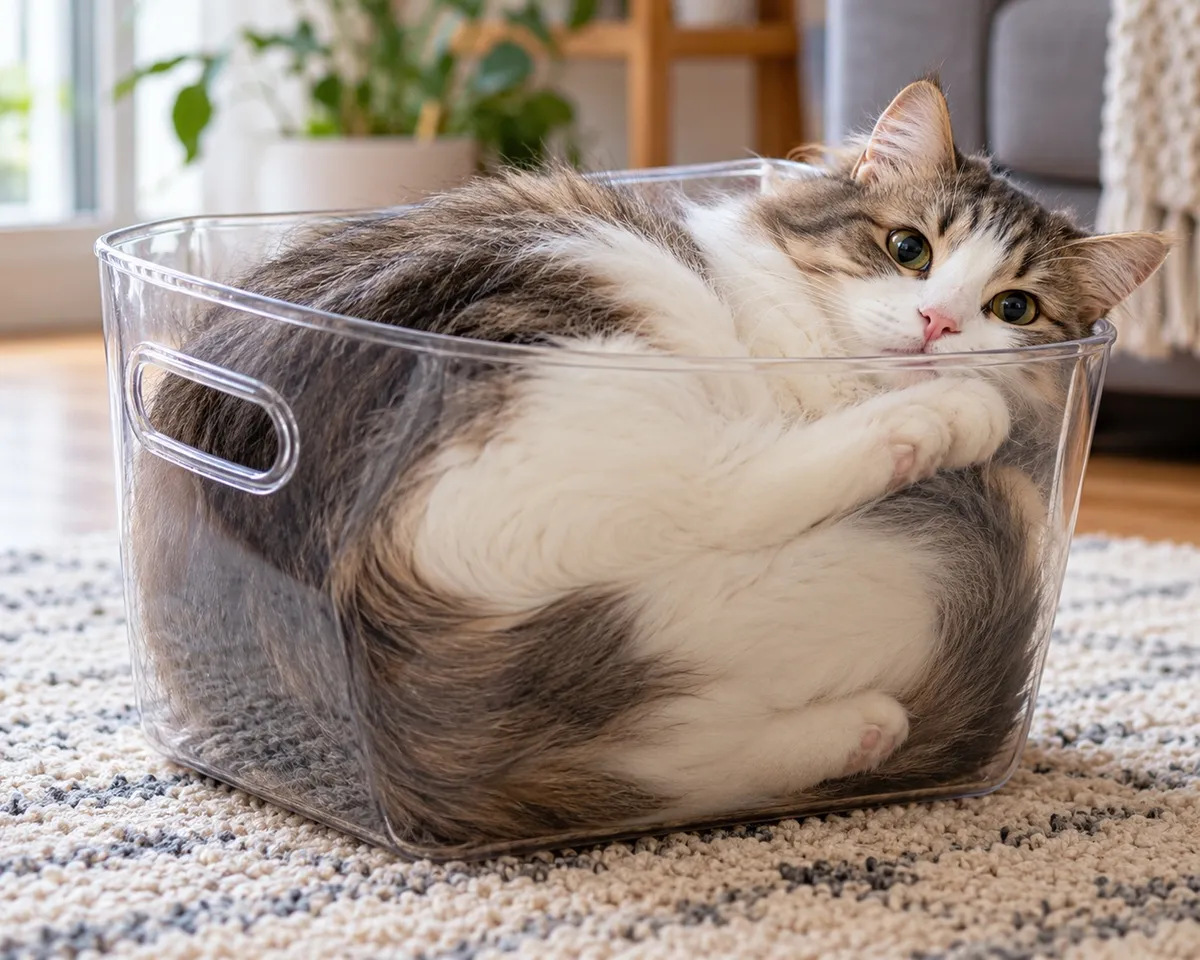
7 Fun Facts Behind Why Cats Are Liquid
1. Cats Have an Extremely Flexible Spine
A cat’s backbone contains about 53 vertebrae, while humans have 33. The extra bones sit in the spine and tail, and they are cushioned by elastic discs.
This structure lets a cat twist, curl, and fold itself into tight shapes. It is also why cats can turn in mid-air and land on their feet.
2. Cats Have Floating Collarbones
A cat’s collarbone is small and is not attached to the other bones of the shoulder. It floats inside the shoulder muscles instead.
Because of this design, a cat can pass its body through any gap that fits its head. This is one of the strongest reasons cats are liquid in the popular imagination.
3. Loose Skin Adds Extra Give
Cats have loose, elastic skin, especially along the belly and sides. The extra skin lets the body stretch and compress without restricting movement.
It also protects cats in fights, because they can twist around even when grabbed by the scruff. Owners often see this looseness when a cat flops over like a sack of flour.
4. Whiskers Measure the Gap Before the Squeeze
A cat’s whiskers are about as wide as its body. They help the cat judge whether a gap is big enough to enter.
That is why cats test an opening with their face first, then commit. You can read more about this in our guide to why cats need their whiskers.
5. Cats Love Snug, Enclosed Spaces
Cats are liquid partly because they actively seek tight spots. Small enclosed spaces feel safe, hide a cat from predators, and help it conserve body heat.
The ideal resting temperature for a cat is higher than most homes, roughly 86 to 97 degrees Fahrenheit. A snug box traps warmth and helps a cat reach that range.
This also explains the many hours spent curled up, which we cover in our post on why cats sleep so much.
6. Stress Can Push Cats Into Hiding
Not every squeeze into a small space is just for fun. Cats that feel scared or overstimulated often retreat into tight spots to feel safe.
If your cat suddenly starts hiding far more than usual, that is worth attention. Our guide on why a cat is suddenly hiding lists the common causes.
7. Cats Are Natural Ambush Hunters
Wild cats rely on stealth and compact movement to approach prey. Folding the body low and tight helps a cat stay hidden until the moment it pounces.
Your indoor cat still carries this instinct. A cat hunkered in a bowl may be a predator waiting for a toy to pass by.
Safe vs. Unsafe Spaces When Cats Are Liquid
Cats are liquid enough to enter places that are genuinely dangerous. A cat that fits through a gap can also get stuck, trapped, or injured there.
| Space | Risk Level | What to Do |
|---|---|---|
| Cardboard box | Low | Offer freely, remove staples and tape |
| Open cat bed or basket | Low | Place in a quiet, warm spot |
| Dryer or washing machine | High | Check inside before every use |
| Recliner or sofa bed | High | Check before folding or reclining |
| Narrow gap behind appliances | Medium | Block access with a barrier |
| Glass vase or jar | Medium | Remove breakable items from reach |
How to Keep a Cat Safe While Cats Are Liquid
The safest approach is to give a cat plenty of approved places to squeeze into, so it has fewer reasons to explore risky ones. A good hiding spot also lowers stress.
Safe options to provide:
- Plain cardboard boxes in several sizes.
- A covered cat cave bed placed in a warm, quiet corner.
- Shelves or tunnels that let a cat tuck in at different heights.
For a ready-made option, a cat cave bed gives the same enclosed feeling as a box. Choose one with soft sides that hold their shape so your cat can curl up easily. A cat tunnel toy is another good pick, because it lets a cat squeeze through a snug passage without any real risk.
Home checks to make daily:
- Look inside the dryer, washer, and dishwasher before closing the door.
- Check sofa beds and recliners before moving them.
- Close cabinet doors that hide cleaning products.
- Keep window screens secure, since a cat can slip through small gaps.
- Seal gaps behind large appliances where a cat could get wedged.
Holiday decorations add extra hiding spots and hazards, so see our tips on a cat proof Christmas tree.
When Squeezing Into Tight Spaces Signals a Problem
Cats are liquid by nature, but a sudden change in hiding habits can signal illness or stress. Cats instinctively hide pain, so extra withdrawal deserves attention.
Signs worth noting:
- Hiding for most of the day when your cat is normally social.
- Refusing food or water while hiding.
- Flinching, growling, or crying when touched.
- Changes in litter box habits.
If you notice these signs, contact a veterinarian. The International Cat Care organization explains how cat welfare and behavior connect to hiding. You can also review the warning signs in our guide to when a cat is in pain.
Seek emergency veterinary care right away if a cat is trapped, struggling to breathe, or unresponsive. Do not wait to see if the problem resolves.
Why Cats Fit Into Boxes They Should Not Fit Into
Cats are liquid in the eyes of owners largely because cats ignore size and chase comfort. A tiny box that is too small for the whole body still feels appealing to a cat.
Researchers have also shown that cats seek out squares drawn on the floor. A 2021 study on the “Kanizsa square” illusion found that cats sat in illusory squares, suggesting a strong pull toward defined spaces.
The takeaway for owners is simple. Boundaries, even imaginary ones, make cats feel secure, so a taped square on the floor can attract a curious cat.
Frequently Asked Questions
Are cats really liquid?
No, cats are not literally liquid, but they behave like fluids by taking on the shape of their container. The joke comes from a 2014 physics paper on the rheology of cats.
How do cats fit into small spaces?
Cats fit into small spaces thanks to a flexible spine with about 53 vertebrae, floating collarbones, and loose skin. Their whiskers also help them judge whether a gap is wide enough.
Who won an Ig Nobel Prize for the cats are liquid idea?
Marc-Antoine Fardin won the 2017 Ig Nobel Prize in Physics for his paper “On the Rheology of Cats.” The prize rewards research that makes people laugh and then think.
Why do cats love boxes so much?
Cats love boxes because enclosed spaces feel safe and hold in body heat. A snug box also lets a cat hide and watch its surroundings, which reduces stress.
Is it safe for a cat to squeeze into tight spaces?
Squeezing into a box or bed is safe, but tight gaps near appliances, recliners, and vents can trap or injure a cat. Check these spots daily and block access when needed.
Cats are liquid in spirit if not in physics, thanks to flexible spines, floating collarbones, and a deep love of snug spaces. Enjoy the meme, offer safe boxes and beds, and block off dangerous gaps. A quick daily check of the dryer and recliner is the simplest step you can take today.