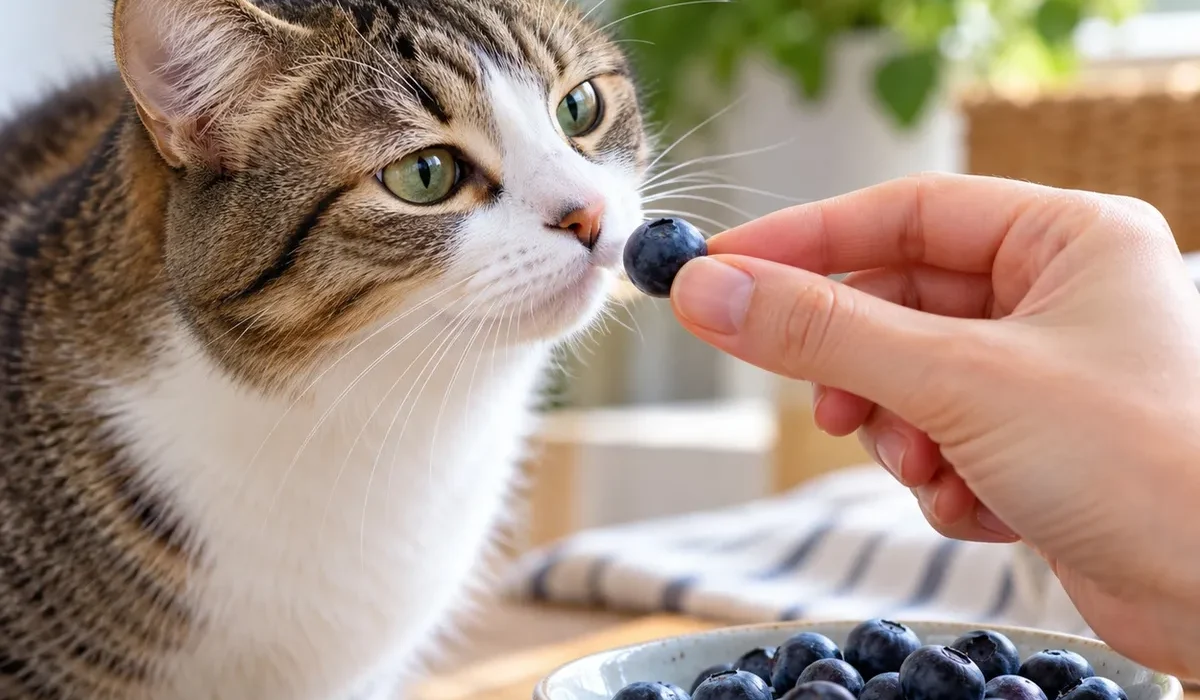
Can Cats Eat Blueberries? 5 Healthy Benefits and Risks
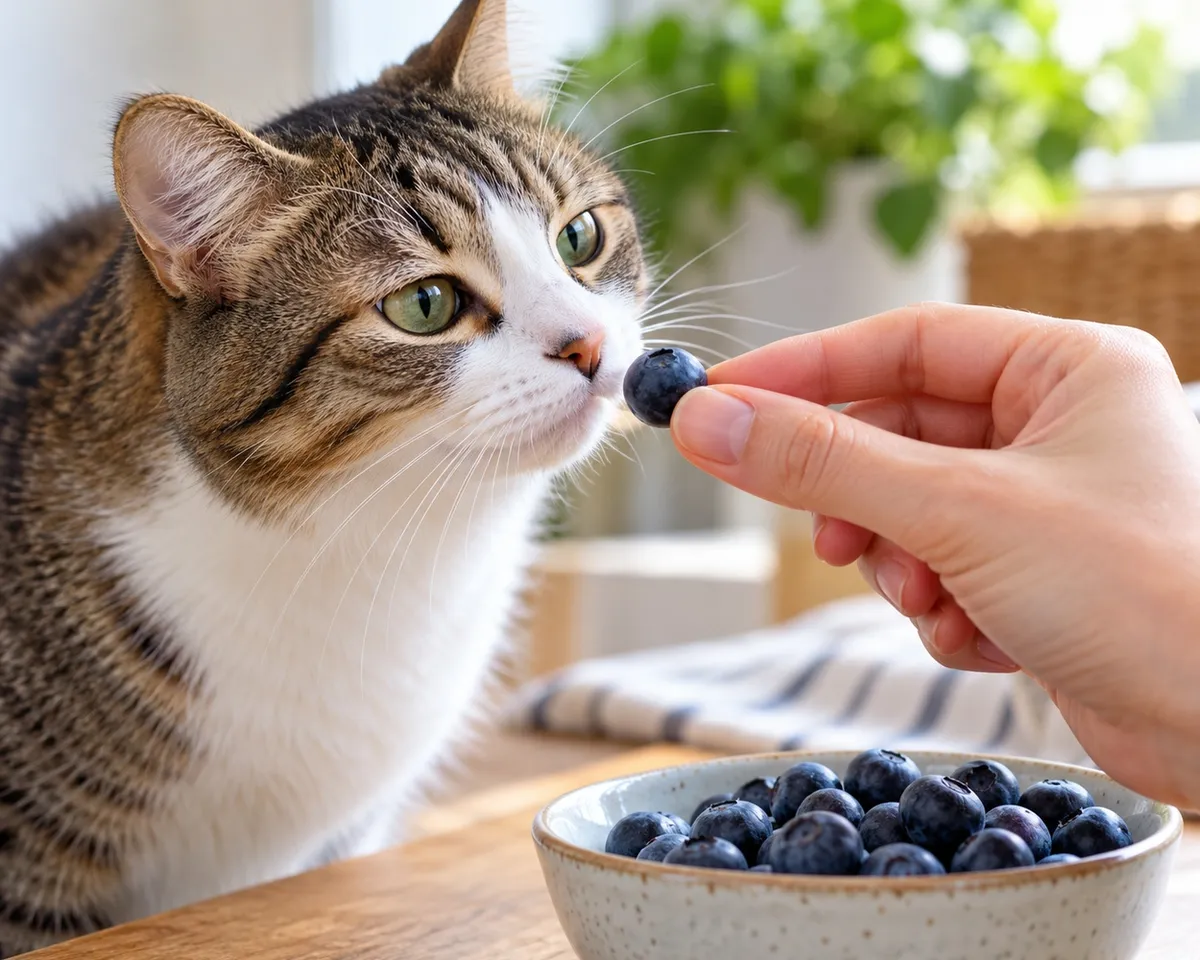
Yes, can cats eat blueberries is a common question, and the answer is that plain blueberries are non-toxic and safe for cats in tiny amounts. Cats are obligate carnivores, so berries are an occasional treat for curious cats and never a dietary need.
This post may contain affiliate links. As an Amazon Associate I earn from qualifying purchases.
Table of Contents
Can cats eat blueberries at a glance:
- Short Answer: Yes, fresh or frozen plain blueberries are safe as an occasional treat.
- Safe Amount: One to three berries, once or twice a week, for an average 10-pound cat.
- Main Benefit: Small amounts of antioxidants, vitamin C, vitamin K and fiber.
- Main Risk: Choking on whole berries, stomach upset, and sugar overload.
- Avoid: Sweetened, dried, or baked blueberry products, which often hide toxic ingredients.
Can Cats Eat Blueberries Safely?
Blueberries are not listed as toxic to cats by the ASPCA, so a cat that steals one off your counter is not in danger. Veterinary nutritionists still treat them as a snack, not a meal.
Cats need animal protein, taurine and arachidonic acid, nutrients that fruit simply does not provide. A balanced commercial diet should supply at least 90% of daily calories, with treats of every kind kept under 10%.
Most cats ignore blueberries because they cannot taste sweetness. Felines lack the sweet taste receptor, so any interest usually comes from the round shape, the rolling movement, or the smell of a food you are eating.
If your cat shows no interest, never force it. Other produce can be a better fit, and our guides on whether cats can eat strawberries and carrots for cats cover the safe options.
Why Cats Are Curious About Blueberries
Owners often ask can cats eat blueberries after watching a pet bat one across the floor. The curiosity has little to do with taste, so understanding it helps you decide whether to offer one at all.
- Movement: A rolling berry triggers the prey-chasing instinct, so many cats bat it across the floor like a toy.
- Smell: Cats have roughly 200 million scent receptors, so they investigate anything new in the kitchen.
- Attention: A cat often wants whatever you are holding, which makes your snack more interesting than the food itself.
- Texture: The soft skin and juicy center feel different from kibble, which some cats enjoy exploring.
Because the interest is usually playful, many cats lick a berry once and walk away. That is normal and no cause for concern.

5 Healthy Benefits When Cats Eat Blueberries
Blueberries contain nutrients that support general health, though a cat eating a few berries gets only a small boost. These are the benefits most often cited.
- Antioxidants: Blueberries are rich in anthocyanins, plant pigments that help neutralize free radicals in cells.
- Vitamin C: Cats make their own vitamin C in the liver, so this is a bonus, not a requirement.
- Vitamin K: This vitamin supports normal blood clotting, which cats also get from a complete diet.
- Fiber: One cup of blueberries has roughly 3.6 grams of fiber, which may help mild digestive regularity in tiny portions.
- Low calories: A single blueberry has only about 1 calorie, so it will not push a cat toward weight gain.
Researchers have studied antioxidants in senior pet diets, but a handful of berries will not change a cat’s long-term health. Think of these benefits as a small extra, not a reason to feed berries daily.
Risks If Your Cat Eats Blueberries
The risks are mostly about form and portion size, not about the berry itself. Knowing them helps you serve blueberries safely.
Common risks:
- Choking: A whole blueberry is round and about 0.5 inch wide, which can lodge in the throat of a small cat or kitten.
- Digestive upset: Too many berries can cause soft stool, diarrhea, gas or vomiting in cats with sensitive stomachs.
- Sugar: Blueberries hold around 10 grams of sugar per cup, which matters for overweight and diabetic cats.
- Pesticide residue: Unwashed berries can carry chemical residue, so rinse them thoroughly.
- Allergy: Rarely, a cat may react with itching, facial swelling or hives.
Cats with diabetes should skip blueberries unless a vet approves them. Our guide on diabetes in cats explains why even small sugar loads matter.
How Many Blueberries Can Cats Eat?
One to three blueberries per serving is the right amount for an average adult cat. Offer them no more than once or twice a week.
Kittens under 6 months should skip them, since their digestive systems are still developing and they need kitten food for fast growth. For a kitten’s nutrition basics, see our guide to wet cat food for kittens.
| Cat Type | Suggested Amount | How Often |
|---|---|---|
| Kitten (under 6 months) | None | Not recommended |
| Adult cat, 8-10 lb | 1-3 berries | 1-2 times per week |
| Large adult cat, 12+ lb | 3-4 berries | 1-2 times per week |
| Diabetic or overweight cat | Only with vet approval | Ask your vet |
| Senior cat with kidney disease | Ask your vet first | Ask your vet |
How to Serve Blueberries to Your Cat
Preparation matters more than the berry itself. Follow these steps to keep the treat safe.
- Choose plain fresh or frozen blueberries with no added sugar, syrup or flavoring.
- Rinse the berries under running water for at least 30 seconds to remove residue.
- Cut each berry into quarters or mash it to remove the choking risk.
- Offer one small piece first and wait 24 hours to watch for stomach upset.
- Increase to the usual 1-3 berries only if your cat tolerates the first taste well.
Frozen berries thawed for a few minutes work well and some cats enjoy the cool texture. Never serve them partly frozen and hard, since that adds a dental and choking hazard.
When my own cat first batted a rolling blueberry across the kitchen floor, she lost interest after one lick. That is typical: many cats play with the berry rather than eat it, so watch that they do not swallow a whole one.
Can Cats Eat Blueberries Compared With Other Fruits?
Blueberries rank among the safer fruits for cats, but each fruit carries its own risks and benefits. Comparing them helps you pick the lowest-risk treat.
| Fruit | Safe for Cats? | Main Concern |
|---|---|---|
| Blueberries | Yes, in small amounts | Choking and sugar |
| Strawberries | Yes, in small amounts | Sugar and stomach upset |
| Bananas | Yes, in small amounts | High sugar content |
| Watermelon | Yes, seedless flesh only | Seeds and rind |
| Apples | Yes, flesh only | Seeds contain cyanide compounds |
| Grapes and raisins | No | Can cause kidney failure |
For details on each safe option, read our guides on bananas for cats and apples for cats. Cranberries are another berry owners ask about, and our post on cranberries for cats covers them in depth.
Blueberry Products Cats Should Never Eat
The plain berry is safe, but many blueberry foods contain ingredients that are harmful to cats. Before deciding can cats eat blueberries in any prepared form, always check the label.
- Blueberry muffins and pastries: They are high in sugar, butter and fat, and may contain chocolate chips or raisins.
- Blueberry yogurt: Many cats are lactose intolerant, and flavored yogurt often has added sugar or sweetener.
- Dried blueberries: Drying concentrates the sugar and makes the fruit sticky and hard to swallow safely.
- Jams, syrups and pie filling: These are loaded with sugar and sometimes xylitol, a sweetener that is highly toxic to pets.
- Blueberry juice and smoothies: These often include grapes, raisins or artificial sweeteners.
Grapes and raisins are dangerous to cats, so check any fruit mix carefully. Our post on why grapes are dangerous for cats explains the risk, and our list of toxic foods for cats covers other items to avoid. The ASPCA Animal Poison Control Center lists substances that are poisonous to pets.
Signs Your Cat Ate Too Many Blueberries
A cat that overeats blueberries usually shows mild digestive signs within 12 to 24 hours. Most cases pass on their own.
Watch for these signs:
- Soft stool or diarrhea lasting more than one day
- Vomiting once or twice after eating
- Reduced appetite or unusual lethargy
- Gagging, pawing at the mouth or labored breathing, which may signal choking
- Facial swelling or hives, which may signal an allergic reaction
Call a veterinarian right away if your cat is choking, struggling to breathe, or vomits repeatedly. If symptoms persist for over 24 hours, see our guide on cat vomiting and diarrhea and book a vet visit. The Cornell Feline Health Center feeding guide also explains how treats fit into a balanced diet.
If you plan to share a plain frozen blueberry snack pack or a cat-safe fruit treat made for pets, check that the ingredient list contains only fruit. Treats made for cats keep portions controlled and avoid hidden sweeteners.
What Cats Should Eat Instead of Fruit
Cats thrive on animal-based nutrition, so the best everyday treats come from meat, not berries. Even when the answer to can cats eat blueberries is yes, healthy swaps give more useful nutrients than any fruit.
- Cooked plain chicken or turkey: Small unseasoned pieces supply the protein cats are built to digest.
- Freeze-dried meat treats: Single-ingredient chicken, fish or liver treats are low in carbohydrates.
- Cooked plain egg: A tiny portion offers protein and amino acids without added salt.
- Commercial cat treats: Products labeled complete and balanced are formulated for feline needs.
Our guides on turkey for cats and eggs for cats explain safe portions. For daily feeding amounts, see how much to feed a cat.
Keep every treat, fruit or meat, within 10% of daily calories. A 10-pound adult cat needs roughly 200 calories a day, so treats should total about 20 calories at most.
Frequently Asked Questions
Can cats eat blueberries every day?
No, cats should not eat blueberries every day. One to three berries once or twice a week keeps treats under the 10% calorie limit and protects against stomach upset.
Are frozen blueberries safe for cats?
Yes, plain frozen blueberries are safe for cats once thawed and cut into small pieces. Never give a hard frozen berry whole, since it can cause choking or dental injury.
Can kittens eat blueberries?
Kittens under 6 months should not eat blueberries because their digestive systems are still developing. They need kitten-formulated food for growth, and berries add no needed nutrition.
Are blueberries toxic to cats?
No, blueberries are not toxic to cats and the ASPCA does not list them as poisonous. The danger comes from added ingredients like xylitol, chocolate or raisins in blueberry foods.
Can cats eat blueberry yogurt or muffins?
No, cats should avoid blueberry yogurt and muffins because of added sugar, fat and possible toxic ingredients. Many adult cats are also lactose intolerant, which can cause diarrhea.
So, can cats eat blueberries? Yes, plain washed berries are a safe, low-calorie treat when served in small amounts. Offer one or two cut pieces, watch your cat for 24 hours, and ask your vet before feeding berries to cats with diabetes or kidney problems.