Can Cats Eat Carrots? 6 Healthy Facts Every Owner Needs
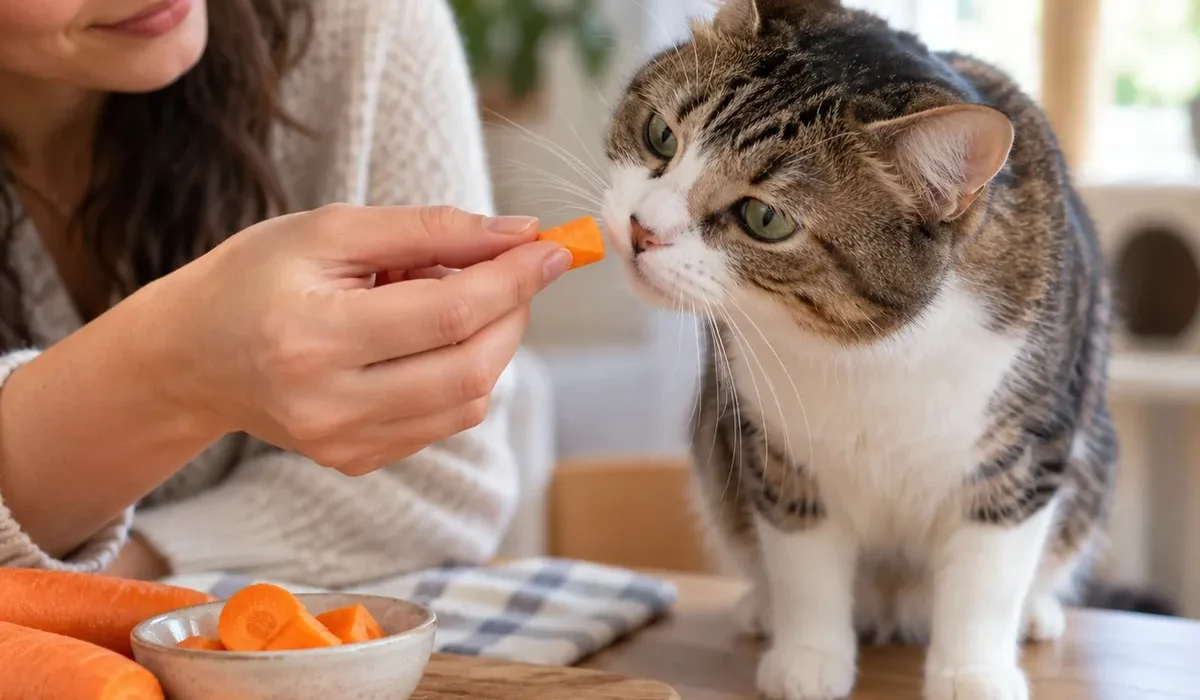
Yes, can cats eat carrots is a common worry, and the answer is yes: plain, cooked carrots are safe for cats in small amounts. Carrots are not toxic, but cats are obligate carnivores, so carrots should only be an occasional treat for healthy adult cats.
This post may contain affiliate links. As an Amazon Associate I earn from qualifying purchases.
Table of Contents
Can cats eat carrots at a glance:
- Short Answer: Yes, cooked and plain carrots are safe as an occasional treat.
- Safe Amount: One to three small pieces, about a teaspoon, once or twice a week.
- Main Benefit: A low-calorie source of fiber and beta-carotene.
- Main Risk: Raw chunks can cause choking, and extra veggies can upset the stomach.
- Best Preparation: Steamed or boiled until soft, cooled, with no salt, butter or seasoning.
Can Cats Eat Carrots Safely?
Cats can eat carrots safely when the carrots are plain, soft and cut very small. Carrots do not appear on the ASPCA list of toxic foods, and most healthy cats tolerate a few bites without trouble.
The key limit is biology. Cats need animal protein, and their bodies are built to get nutrients from meat, not vegetables. Treats of any kind, including carrots, should stay under 10 percent of daily calories.
For a full list of foods that can harm your cat, see our guide to dangerous foods for cats. You can also check the ASPCA Animal Poison Control Center for toxic plants and foods.
Why Cats Are Carnivores and What That Means for Vegetables
Cats are obligate carnivores, which means they must eat animal tissue to stay healthy. Their short digestive tract and limited ability to break down plant fiber explain why vegetables play only a small role in their diet.
What cats must get from meat:
- Taurine: An amino acid essential for heart, eye and reproductive health that cats cannot make in sufficient amounts.
- Arachidonic acid: A fatty acid found only in animal fat.
- Preformed vitamin A: Cats convert beta-carotene poorly, so they rely on animal sources.
- High-quality protein: Adult cats need far more protein per pound than dogs or people.
This is why a cat that eats carrots still needs its regular meals. When owners ask can cats eat carrots as part of a normal diet, the honest answer is that a small vegetable treat adds variety, not nutrition the cat truly needs.
Nutritional Benefits When Cats Eat Carrots
Carrots offer modest nutritional value for cats, mainly fiber and a few vitamins. A medium raw carrot has only about 25 calories, so a few small pieces add almost nothing to a cat’s daily intake.
What carrots contain:
- Fiber: Supports regular digestion and can help with mild constipation in some cats.
- Beta-carotene: Cats convert it to vitamin A, but most complete cat foods already supply enough.
- Potassium: A mineral that supports normal muscle and nerve function.
- Water: Cooked carrots are about 85 to 90 percent water, which adds a little moisture.
These benefits are small. A balanced commercial cat diet already covers every nutrient your cat needs, so carrots are a treat, not a supplement.
How to Prepare Carrots When Cats Eat Carrots
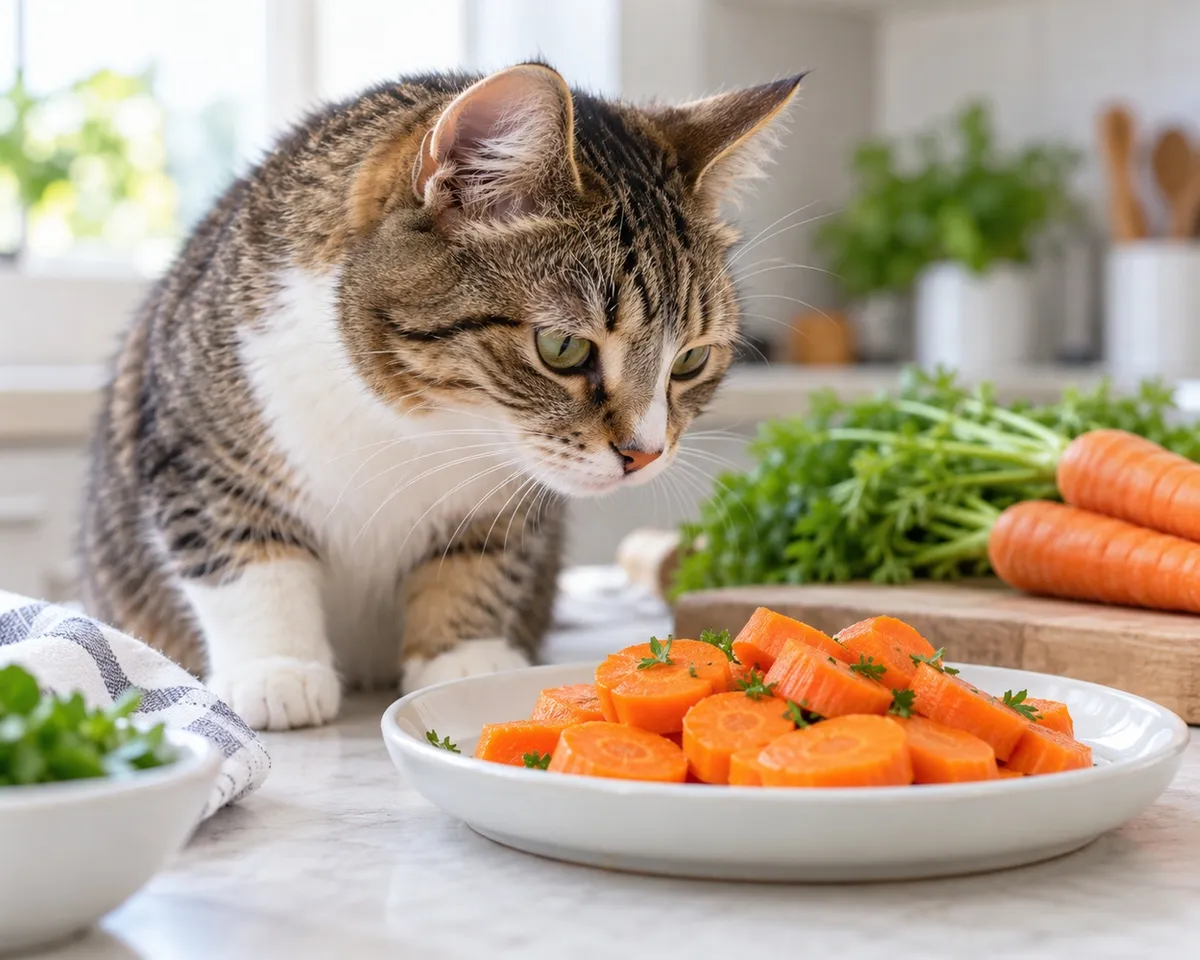
Steamed or boiled carrots are the best option because soft texture lowers the choking risk. Cooking also breaks down the tough plant fibers that cats digest poorly.
Follow these steps:
- Wash and peel the carrot to remove dirt and pesticide residue.
- Steam or boil it for 8 to 10 minutes until a fork pierces it easily.
- Let it cool completely, since hot food can burn a cat’s mouth.
- Mash it or cut it into pieces smaller than a pea.
- Offer one or two pieces and watch how your cat reacts.
Never add salt, butter, oil, garlic, onion or sauces. Onion and garlic are toxic to cats even in small amounts, and seasoned leftovers from your plate are never a safe shortcut.
Can Cats Eat Carrots Raw?
Raw carrots are not toxic, but they are a poor choice for most cats. Hard, round chunks can lodge in the throat, and raw plant material is harder for a carnivore’s short digestive tract to break down.
Some cats enjoy crunching a thin shaving or finely grated raw carrot. If you try it, grate it very fine and offer only a pinch. Kittens and senior cats with dental problems should only get cooked carrot.
Forms of carrot ranked from safest to riskiest:
- Mashed or pureed plain carrot is the safest choice.
- Soft steamed pieces the size of a pea come next.
- Finely grated raw carrot is acceptable in tiny amounts.
- Raw chunks or baby carrots are a choking hazard and should be avoided.
Can Cats Eat Carrots in Other Forms?
Cats can eat carrots in a few other forms, but each one comes with its own cautions. Plain is always safer than processed, and the ingredient label matters more than the vegetable itself.
Common forms and how safe they are:
- Carrot baby food: Acceptable only if the label lists carrots and water, with no onion or garlic powder.
- Carrot cake: Not safe, because of sugar, fat, spices and sometimes raisins or nuts.
- Carrot juice: Not recommended, since juice concentrates natural sugar and removes the fiber.
- Carrot tops (leaves): Best avoided, because the safety of the greens for cats is not well established.
- Cat food containing carrots: Safe, since the vegetable is cooked and balanced into the recipe.
Many wet and dry cat foods already list carrots as an ingredient. If your cat eats those formulas, extra carrots are rarely needed. Homemade diets need careful balancing, and our guide to homemade cat food recipes covers the vet-guided rules.
Can Cats Eat Carrots With Health Issues?
Carrots can help some cats, but a vet should guide any dietary change for a cat with a medical condition. Cats with chronic illness often need strict diets, and even healthy treats can interfere.
Common situations:
- Constipation: The fiber in a teaspoon of cooked carrot may help mildly, but ongoing constipation needs a vet visit.
- Overweight cats: Carrots are low in calories and can replace a fatty treat in tiny portions.
- Diabetic cats: Carrots contain natural sugar, so ask your vet before offering any. Read more in our guide to diabetes in cats.
- Sensitive stomachs: Introduce any new food slowly. See our tips for cats with sensitive stomachs.
If you want to add fiber regularly, a plain cat fiber supplement is a more controlled option than guessing portions of vegetables.
Risks and Signs of a Bad Reaction
Most cats handle carrots well, but too much can cause digestive upset. Stop feeding carrots if you notice any of these signs within 24 hours.
- Soft stool or diarrhea
- Vomiting or gagging
- Gas or a bloated belly
- Refusing regular meals
- Coughing or choking after eating
Choking, repeated vomiting or a cat that stops eating for more than 24 hours needs a veterinarian right away. Our guide to cat vomiting and diarrhea explains the common causes and when to worry.
True food allergies to carrots are rare in cats. Most reactions come from overfeeding, a sudden diet change or seasonings added during cooking.
Other Vegetables Besides Carrots for Cats
Carrots are one of several cat-safe vegetables. Variety is not required, but a few plain options work as occasional treats.
| Food | Safe for Cats? | Best Preparation |
|---|---|---|
| Carrots | Yes | Steamed, mashed, plain |
| Pumpkin | Yes | Plain puree, 1 teaspoon |
| Sweet potato | Yes | Cooked and mashed, no seasoning |
| Bananas | Yes, rarely | One small slice, due to sugar |
| Onion and garlic | No | Toxic, never feed |
| Grapes and raisins | No | Toxic, never feed |
You can read more about feeding pumpkin to cats and sweet potatoes for cats. Plain canned pumpkin puree is often easier to portion than fresh vegetables.
For guidance on how much your cat should eat overall, see our article on how much to feed a cat.
How Often Can Cats Eat Carrots?
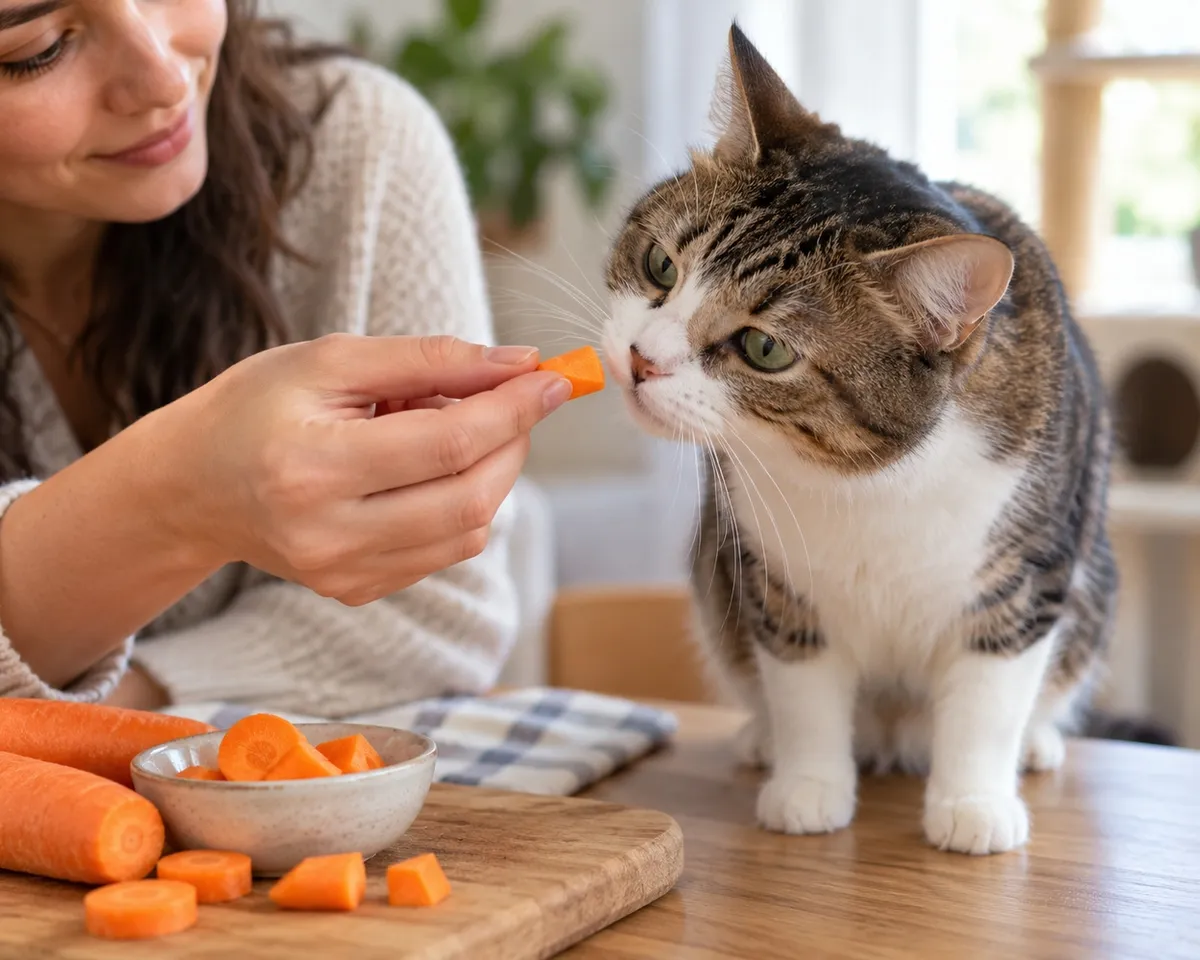
A cat should eat no more than one to three small pieces of carrot, roughly one teaspoon, once or twice a week. Treats should never replace the balanced meals your cat needs.
When my own cat first sniffed a steamed carrot, she took one lick and walked away. That is normal, and many cats simply show no interest. Never force a cat to eat vegetables.
Frequently Asked Questions
Can cats eat carrots every day?
No, cats should not eat carrots every day because they need meat-based nutrition. One to three small pieces once or twice a week is enough for a healthy adult cat.
Can kittens eat carrots?
Kittens can have a tiny taste of plain cooked carrot after weaning, usually at 8 to 12 weeks of age. Their stomachs are sensitive, so a pea-sized piece is plenty.
Are baby carrots safe for cats?
Baby carrots are safe only when cooked until soft and cut into tiny pieces. Whole raw baby carrots are firm enough to cause choking.
Can cats eat carrots and peas?
Yes, plain cooked carrots and peas are safe for cats in small amounts and appear in many commercial cat foods. Avoid canned versions with added salt.
Can cats eat carrots if they have diarrhea?
Plain cooked carrot can add gentle fiber, but diarrhea lasting more than 24 to 48 hours needs a vet visit. Dehydration develops quickly in cats, especially in kittens and seniors.
So, can cats eat carrots? Yes, as a rare, plain and well-cooked treat in tiny portions, never as a meal replacement. Start with one small piece, watch for stomach upset over the next day, and ask your vet before changing the diet of a cat with health problems.