


Can Cats Eat Eggs? 7 Safe Facts Every Owner Needs
This post may contain affiliate links. As an Amazon Associate I earn from qualifying purchases.
Can cats eat eggs? Yes, cats can safely eat fully cooked eggs in small amounts, because eggs are a rich source of protein, amino acids, and fat. Raw or undercooked eggs are risky, and eggs should only be a treat that makes up less than 10 percent of a cat’s daily calories.
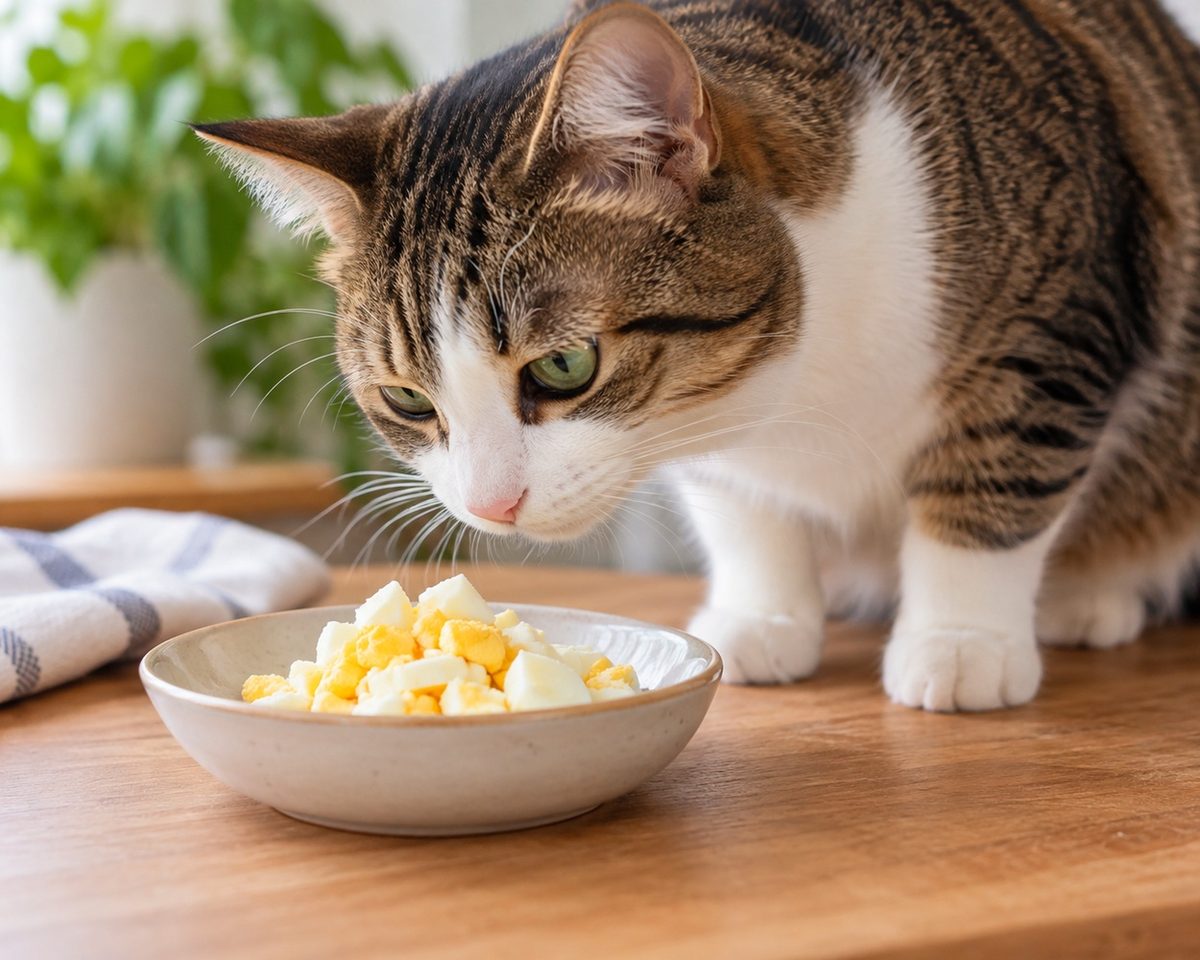
Table of Contents
Can cats eat eggs at a glance:
- Short Answer: Yes, if the egg is fully cooked, plain, and served in a small portion.
- Safe Amount: About one to two teaspoons of cooked egg, one or two times per week for an average 10-pound adult cat.
- Main Benefit: Eggs deliver high-quality protein, taurine, and B vitamins that cats can digest easily.
- Main Risk: Raw eggs can carry Salmonella and contain avidin, which blocks biotin absorption.
- When to Skip: Cats with egg allergies, pancreatitis, or kidney disease need a vet’s approval first.
Can Cats Eat Eggs Safely? What Vets Generally Say
Fully cooked eggs are safe for most healthy adult cats when served plain and in small portions. Cats are obligate carnivores, so animal protein suits their digestive system far better than most human foods do.
An egg is a complete protein source, which means it contains all the essential amino acids a cat needs. It also provides fat, vitamin A, vitamin B12, riboflavin, and selenium. These nutrients support muscle, skin, coat, and eye health.
Eggs are not a substitute for balanced cat food. A cat’s main meals must still be a complete and balanced diet that supplies taurine, arachidonic acid, and the right mineral ratios. Eggs work best as an occasional topper or reward.
If you are building a feeding routine, our guide on feeding your cat for a healthy life explains how treats fit into a daily calorie budget.
Can Cats Eat Eggs Raw? Why Vets Say No
Raw eggs are not recommended for cats, because they can carry harmful bacteria and interfere with nutrient absorption. Many owners hear that raw eggs make a coat shiny, but the risks outweigh that unproven benefit.
Why raw eggs cause problems:
- Salmonella and E. coli: Raw egg whites and yolks can carry bacteria that cause vomiting, diarrhea, and fever in cats and in the people who handle the food.
- Avidin in egg whites: This protein binds biotin (vitamin B7), and a long-term raw egg white habit can lead to a biotin deficiency that shows up as skin and coat problems.
- Cross-contamination: Raw egg residue on bowls and counters can spread bacteria to your family.
Cooking destroys Salmonella and deactivates avidin. That is why fully cooked eggs are the only version most veterinarians suggest. The ASPCA Animal Poison Control Center also lists raw egg as a food to avoid feeding pets.
Best Ways to Cook Eggs for Your Cat
Owners often ask whether cats can eat eggs once they are cooked, and the answer is yes when the method is plain. The best methods use no oil, butter, salt, or seasoning, which keeps the egg gentle on a cat’s stomach.
Safe cooking methods:
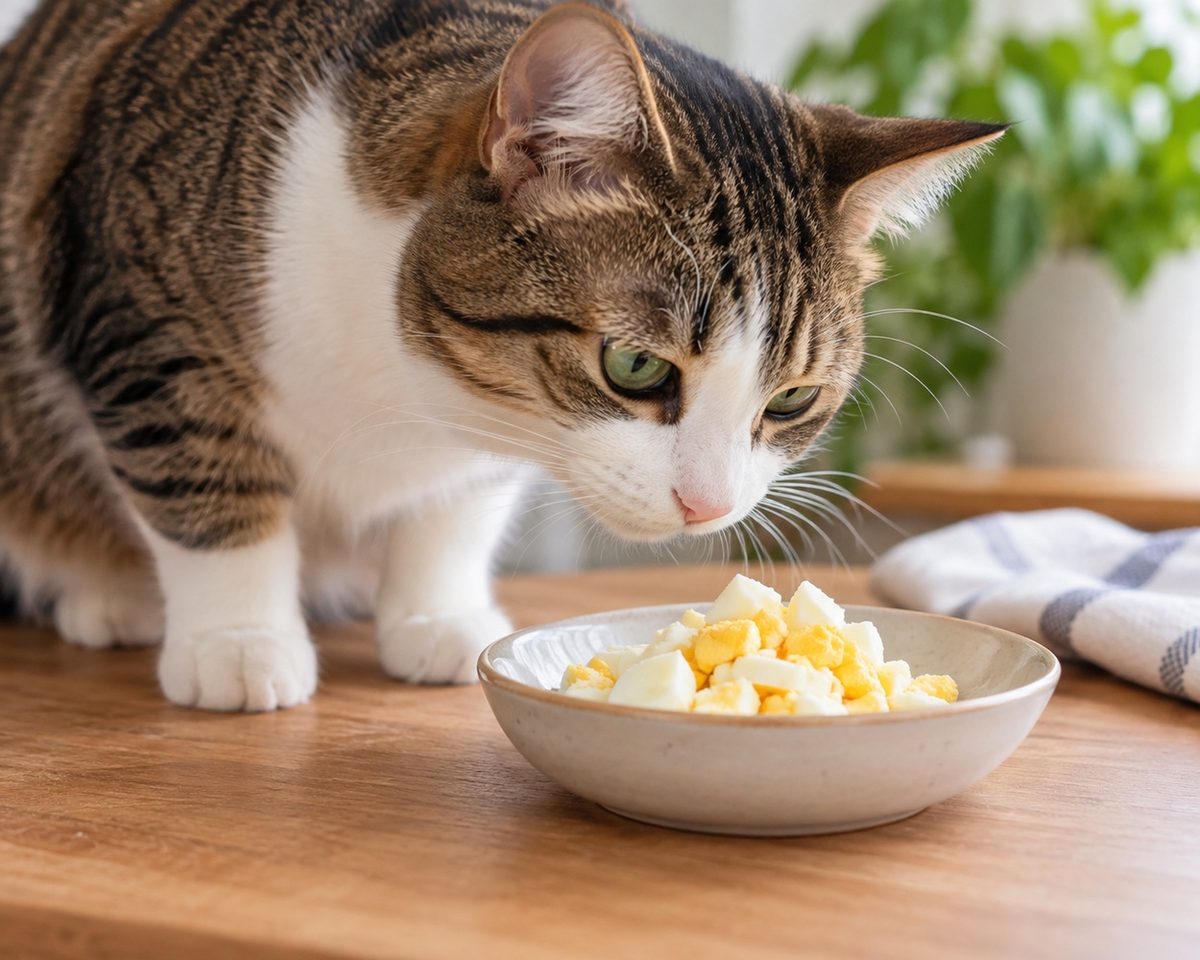
- Hard-boiled: Boil for about 10 minutes, cool completely, peel, and mash a small piece with a fork.
- Scrambled (plain): Cook in a dry non-stick pan with no butter, oil, milk, or salt until fully set.
- Poached: Cook in plain water until both white and yolk are firm, then let it cool.
Preparation to avoid:
- Fried in oil or butter: Extra fat can trigger stomach upset or pancreatitis.
- Seasoned eggs: Salt, pepper, garlic, onion, and chives are harmful to cats.
- Runny yolks: A soft yolk may still carry bacteria and should be cooked firm.
- Egg with cheese or sauces: Many cats are lactose intolerant, as we explain in our post on whether cats can eat cheese.
Always let the egg cool to room temperature before serving. Hot food can burn a cat’s mouth.
How Much Egg Is Safe? Portion Guide for Cats
When people ask can cats eat eggs every day, the honest answer is no. An average adult cat should eat no more than one to two teaspoons of cooked egg per serving, once or twice a week, and treats of every kind should stay under 10 percent of daily calories.
A large egg contains roughly 70 calories. A typical 10-pound indoor cat needs about 200 calories per day, so a whole egg would be around a third of its daily energy. That is far too much for one treat.
| Cat Size | Suggested Portion | Frequency |
|---|---|---|
| Kitten (over 12 weeks) | About 1/2 teaspoon | Once a week |
| Small adult (under 8 lb) | 1 teaspoon | 1 time per week |
| Average adult (8 to 12 lb) | 1 to 2 teaspoons | 1 to 2 times per week |
| Large adult (over 12 lb) | 2 teaspoons | 2 times per week |
Introduce eggs slowly. Offer a tiny amount first and wait 24 hours to watch for vomiting, diarrhea, or itching. For general portion guidance, see our post on how much to feed a cat.
Can Cats Eat Eggs Whites, Yolks, and Shells?
Cats can eat cooked egg whites and the cooked yolk, but eggshells are not a good idea for most cats. Each part of the egg carries slightly different benefits and risks.
Egg whites: Cooked egg whites are mostly protein and very low in fat. They are safe, but raw whites contain avidin, so always cook them.
Egg yolks: The yolk holds most of the fat, vitamins, and minerals. It is more calorie-dense, so keep the portion tiny for overweight cats.
Eggshells: Shells are rich in calcium, but sharp fragments can irritate the mouth and digestive tract. Raw shells may also carry Salmonella on the outside. A cat on a complete diet does not need extra calcium, and too much can upset mineral balance.
If your vet recommends a calcium source, use a product made for cats rather than homemade shell powder. Our overview of cat supplements covers what helps and what does not.
Can Kittens Eat Eggs? Age Rules to Follow
Kittens older than about 12 weeks can have a tiny portion of fully cooked egg, but their main nutrition must come from kitten food. Young kittens have sensitive digestive systems and grow quickly, so their diet needs precise nutrient levels.
Kittens under 8 weeks should only have mother’s milk or kitten milk replacer and, as they wean, kitten formula food. Eggs do not meet their needs. If you are raising a very young kitten, follow our guides on bottle feeding a kitten and the best care for six week old kittens.
When you do offer egg to an older kitten, give no more than half a teaspoon, keep it plain, and watch for diarrhea. Stop immediately if the stool turns loose.
Egg Allergies and Risks: When Cats Should Skip Eggs
Eggs are a known food allergen in some cats, and certain health conditions make them a poor choice. Food allergies in cats most often involve beef, dairy, and fish, but eggs can occasionally cause a reaction too.
Signs of an egg allergy or intolerance:
- Digestive upset: Vomiting, diarrhea, or gas within a few hours of eating egg.
- Skin reactions: Itching, redness, hair loss, or repeated ear scratching.
- Swelling: Facial swelling or hives, which need urgent veterinary care.
Cats that should avoid eggs unless a vet approves:
- Cats with pancreatitis: Egg yolk is high in fat and can trigger a flare-up.
- Cats with kidney disease: Extra protein and phosphorus may not suit their prescribed diet.
- Overweight or diabetic cats: Added calories and fat can worsen weight and blood sugar control.
- Cats with known food allergies: Eggs can be a hidden trigger, as described in our guide to allergies in cats.
If your cat vomits repeatedly, becomes lethargic, or has bloody stool after eating eggs, contact a veterinarian right away. Do not give human medicine to treat symptoms. Learn more about cat vomiting and diarrhea and when it signals a problem.
Can Cats Eat Eggs as Treats? Smart Serving Tips
The safest way to feed eggs is as a small, plain, cooked topper or a high-value training treat. Keep portions consistent so you can spot any reaction.
Two products can make egg feeding easier and safer. A small egg cooker or egg boiler gives consistent hard-boiled eggs with no oil, so each batch is plain and fully set. A slow feeder bowl helps cats that gulp treats, which reduces the chance of vomiting from eating too fast.
Never leave cooked egg out for hours. Cooked eggs spoil like any perishable food, so discard leftovers after about 30 minutes at room temperature and refrigerate the rest for no more than two days.
For cat owners who want to cook for their pets more broadly, our post on homemade cat food recipes explains the rules that keep homemade meals complete and balanced. You can also review the Cornell Feline Health Center feeding guide for a trusted overview of feline nutrition.
Frequently Asked Questions
Can cats eat eggs scrambled every day?
No, daily eggs are too many for most cats, because they add calories and fat beyond what a balanced diet needs. Limit plain scrambled egg to one or two small servings per week.
Is egg good for cats with a dull coat?
Cooked egg supplies protein and biotin that support skin and coat, but a dull coat more often points to diet imbalance, parasites, or illness. See a vet if the coat stays rough for more than two weeks.
Can cats eat boiled egg yolk?
Yes, a cooked yolk is safe in tiny amounts, but it is high in fat. Offer no more than half a yolk occasionally, and skip it entirely for overweight cats.
What should I do if my cat ate a raw egg?
Watch your cat closely for 24 to 72 hours for vomiting, diarrhea, lethargy, or fever, and call your veterinarian if any of these appear. A single raw egg often causes no harm, but Salmonella symptoms can take a few days to show.
Are eggs better than meat treats for cats?
Eggs are a fine occasional treat, but plain cooked chicken or turkey offers lean protein with less fat. Neither should exceed 10 percent of your cat’s daily calories.
So, can cats eat eggs? Yes, as long as they are plain, fully cooked, and limited to a teaspoon or two once or twice a week. Skip raw eggs, seasonings, and eggshells, and check with your vet if your cat has allergies or a chronic illness. Start with a tiny portion and watch your cat for a day before offering more.
