


Can Cats Eat Pumpkin? 7 Safe Facts Every Owner Needs
This post may contain affiliate links. As an Amazon Associate I earn from qualifying purchases.
Can cats eat pumpkin? Yes, plain, cooked pumpkin is safe for cats in small amounts. It matters most for owners dealing with mild constipation, loose stools, or a cat that gulps food too fast.
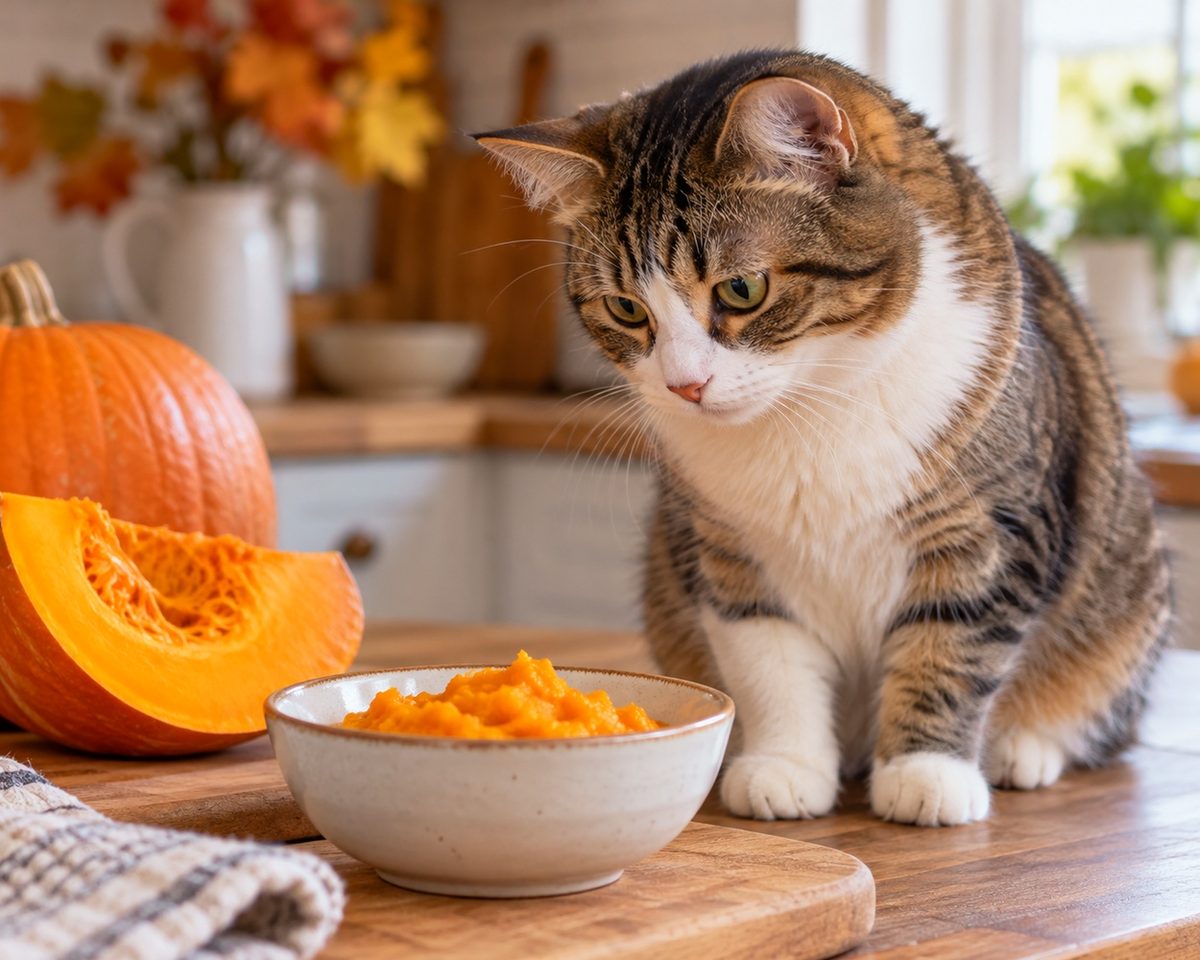
Table of Contents
Can cats eat pumpkin at a glance:
- Short Answer: Plain cooked or canned pumpkin with no added sugar or spices is safe as an occasional treat.
- Safe Amount: About 1 teaspoon per day for an average 10-pound cat, mixed into regular food.
- Main Benefit: Soluble fiber that can ease mild constipation and firm up soft stools.
- Main Risk: Pie filling, spices, and too much fiber can cause diarrhea or poisoning.
- When to See a Vet: Constipation or diarrhea lasting more than 24 to 48 hours, or any lethargy or vomiting.
Can Cats Eat Pumpkin Safely?
Plain pumpkin is non-toxic to cats, and the ASPCA does not list the pumpkin fruit as poisonous to them. Cats are obligate carnivores, so pumpkin is a supplement and never a meal replacement.
Pumpkin is roughly 90 percent water and contains fiber, vitamin A, potassium, and small amounts of vitamin C. None of these replace the animal protein and taurine your cat needs daily.
The safest choices are:
- Plain canned pumpkin puree labeled 100 percent pumpkin
- Fresh pumpkin that you cook without oil, salt, or butter
- Plain steamed or baked pumpkin flesh, cooled and mashed
Always check that the label says pumpkin puree, not pumpkin pie filling. Pie filling contains sugar and spices that do not belong in a cat’s bowl.
When I first asked whether can cats eat pumpkin, my vet told me to start with half a teaspoon of plain puree. That small test showed my cat tolerated it well.
Health Benefits of Pumpkin for Cats
Pumpkin’s main benefit for cats is its soluble fiber, which absorbs water in the intestines and helps regulate stool consistency. This is why vets sometimes suggest it for mild digestive upset.
Possible benefits:
- Mild constipation relief: Fiber and moisture soften dry stools and help them pass.
- Firmer stools: Soluble fiber absorbs excess water in loose stools.
- Hairball support: Extra fiber helps move swallowed hair through the digestive tract.
- Weight management: Pumpkin is low in calories and adds bulk, so a cat feels fuller.
- Extra hydration: Its high water content adds a little moisture to dry-food diets.
These benefits are modest. Pumpkin is a gentle helper, not a treatment for illness. If your cat has repeated stomach trouble, read our guide on cats with sensitive stomachs for food and care options.
How Much Pumpkin Can Cats Eat?
Most cats do well with 1 teaspoon of plain pumpkin once a day, mixed into their normal food. Start with half a teaspoon to see how your cat’s stomach reacts.
| Cat Size | Starting Amount | Maximum Daily Amount |
|---|---|---|
| Kitten (under 6 months) | Ask your vet first | Ask your vet first |
| Small adult (under 8 lb) | 1/2 teaspoon | 1 teaspoon |
| Average adult (8 to 12 lb) | 1/2 teaspoon | 1 to 2 teaspoons |
| Large adult (over 12 lb) | 1 teaspoon | 1 tablespoon |
Treats, including pumpkin, should stay under 10 percent of daily calories. Our guide on how much to feed a cat explains how to balance meals and extras.
How to serve it:
- Choose plain canned puree or cook fresh pumpkin without any seasoning.
- Let it cool to room temperature.
- Measure out half a teaspoon with a stainless steel measuring spoon set for the first feeding.
- Stir it into your cat’s wet food so the texture feels familiar.
- Watch stool and appetite for 24 hours before increasing the amount.
Serve the mix in a shallow ceramic cat food dish, which is easier on whiskers and simple to wash between meals.
Can Cats Eat Pumpkin for Constipation and Diarrhea?
Pumpkin can help with both constipation and diarrhea because its fiber regulates water in the gut. Many owners are surprised that one food works for opposite problems.
For constipation: Add 1 teaspoon of puree to wet food once or twice a day, and make sure fresh water is always available. A stainless steel cat water fountain encourages many cats to drink more, which supports softer stools. See our pick of the best cat water fountain for easy cleaning.
For diarrhea: The same small dose can firm up mild, short-lived loose stool. If your cat also vomits, read about cat vomiting and diarrhea to understand the common causes.
Pumpkin only suits mild, brief issues. A cat that strains in the litter box without producing stool for more than 24 hours needs veterinary care. Constipation can signal dehydration, kidney disease, or a blockage, and a straining male cat may have a urinary emergency.
Dehydration worsens constipation, so learn the signs of dehydration in cats and check your cat’s gums and skin elasticity when stools are dry.
Which Types of Pumpkin Are Safe and Which Are Not?
Only plain pumpkin is safe, and every added ingredient raises the risk. Many seasonal pumpkin products contain ingredients that are harmful to cats.
| Pumpkin Product | Safe for Cats? | Reason |
|---|---|---|
| Plain canned pumpkin puree | Yes | No additives, easy to portion |
| Fresh cooked pumpkin flesh | Yes | Cook without oil, salt, or spices |
| Pumpkin pie filling | No | Contains sugar and spices |
| Pumpkin pie or baked goods | No | Sugar, fat, and sometimes nutmeg |
| Raw pumpkin chunks | Not recommended | Hard to digest, choking risk |
| Pumpkin spice products | No | Nutmeg is toxic to cats in larger amounts |
| Pumpkin seeds (whole, salted) | No | Salt and choking hazard |
Nutmeg, a core pumpkin spice ingredient, can cause serious illness in pets. The ASPCA Animal Poison Control Center lists many common holiday foods that are unsafe for pets.
Also keep the decorative pumpkin away from your cat. A carved jack-o’-lantern left outside can grow mold, and a lit candle inside is a burn and fire hazard.
Can Cats Eat Pumpkin Every Day? Risks and Side Effects
Too much pumpkin causes the same problems it can fix. Excess fiber leads to loose stools, gas, and an upset stomach.
Watch for these warning signs:
- Watery diarrhea after eating pumpkin
- Vomiting or repeated gagging
- Refusing regular food because of a full stomach
- Bloating or visible stomach discomfort
- Lethargy or hiding
If your cat suddenly withdraws, our article on why a cat is suddenly hiding lists causes worth checking. Stop feeding pumpkin right away if any of these signs appear.
Some cats are simply not interested in pumpkin, and that is fine. Never force-feed it, because a food aversion can spread to their regular diet.
Cats with diabetes need extra caution because pumpkin contains natural sugars and carbohydrates. Ask your veterinarian before adding it if your cat has diabetes, kidney disease, or a prescription diet. Our guide on diabetes in cats covers symptoms and care.
Loose stools can also leave the litter box messier, so a unscented clumping cat litter helps you spot changes in stool consistency quickly.
When to See a Vet Instead of Using Pumpkin
Pumpkin is a home remedy for mild issues only, and any serious or lasting symptom needs a veterinarian. Cats hide illness well, so early action protects their health.
Call your vet if you notice:
- No stool for more than 48 hours, or straining with nothing produced
- Diarrhea lasting more than 24 to 48 hours
- Blood in the stool or black, tarry stool
- Repeated vomiting or refusal to eat for more than a day
- Crying in the litter box or frequent trips with little urine
Bloody stools in particular call for a professional exam, so see our article on blood in stool in cats for causes and urgency. The Cornell Feline Health Center feeding guide also explains how a balanced diet supports digestion.
Never give human laxatives or medications to a cat without veterinary guidance, because many are dangerous. Your vet can recommend the right treatment and the correct fiber level for your cat’s condition.
Frequently Asked Questions
Can cats eat pumpkin every day?
Yes, most healthy cats can eat about 1 teaspoon of plain pumpkin daily, but it should stay a small addition to a complete cat food diet. Check with your vet before daily use if your cat has a medical condition.
Can kittens eat pumpkin?
Kittens can have a tiny taste of plain pumpkin, but ask a vet first because their digestive systems are sensitive. Diarrhea in a kitten can cause dehydration within hours.
Is canned pumpkin or fresh pumpkin better for cats?
Both are fine if they are plain, though canned puree is easier to measure and has a consistent texture. Always pick a can that lists pumpkin as the only ingredient.
Can cats eat pumpkin seeds?
Plain, unsalted seeds are not toxic, but whole seeds can cause choking or stomach upset, so skipping them is safest. Salted or seasoned seeds should never be offered.
How fast does pumpkin work for cat constipation?
Pumpkin usually shows results within 24 to 48 hours in mild cases. If your cat still has not passed stool after 48 hours, contact a veterinarian.
So, can cats eat pumpkin? Yes, as long as it is plain, cooked, and served in teaspoon-sized portions. Start with half a teaspoon mixed into wet food, watch your cat’s stool for a day, and call your vet if digestive trouble lasts more than 48 hours.

