


Why Is My Cat Suddenly Hiding? 6 Common Causes
Sudden hiding in cats signals stress, illness, or fear and demands your attention. A cat retreating to dark spaces under furniture, closets, or cabinets is telling you something is wrong. Understanding why your cat hides helps you respond quickly.
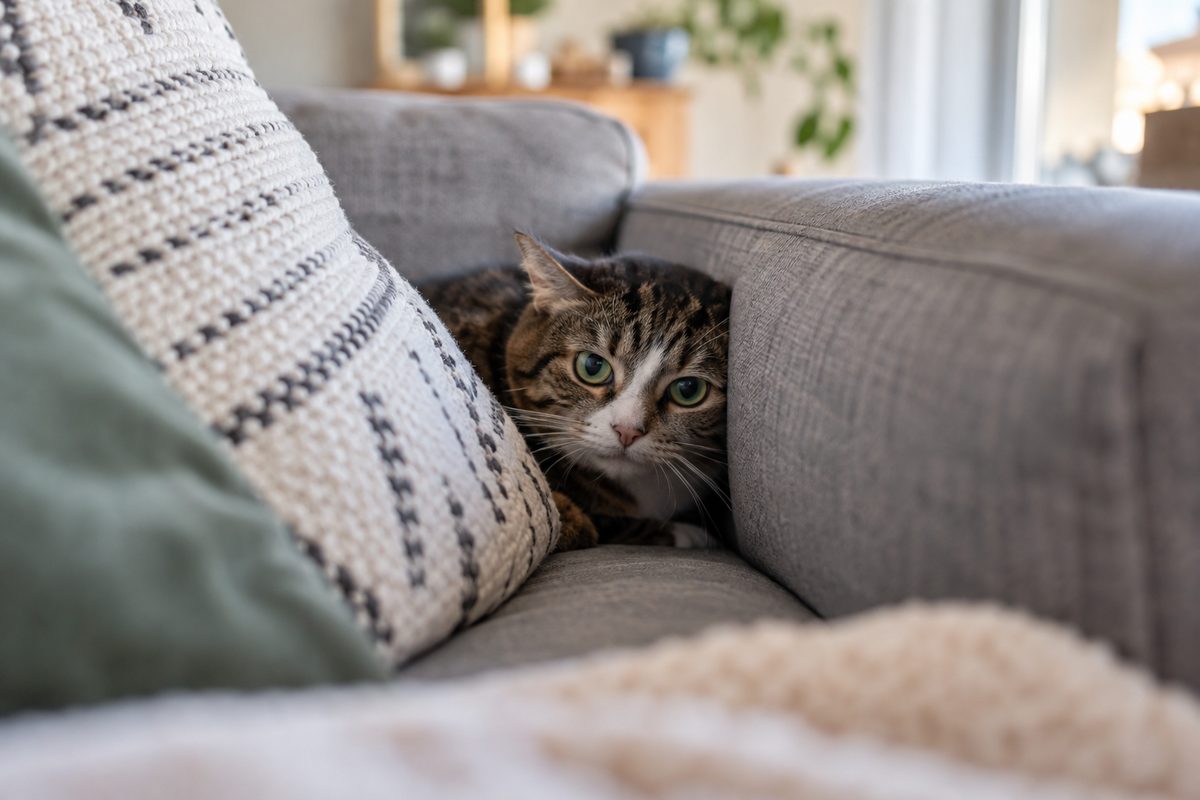
Table of Contents
Key Takeaways:
- Hiding often indicates medical issues, stress, or environmental changes.
- Medical emergencies like pain or injury require immediate veterinary care.
- Anxiety from loud noises or new pets can trigger hiding behavior.
- Provide a safe space with food, water, and a litter box during recovery.
Common Medical Reasons for Hiding
Illness and pain are the most common causes of sudden hiding. Cats instinctively hide when they feel vulnerable or unwell.
- Infection, fever, or respiratory illness makes cats lethargic and withdrawn.
- Hyperthyroidism, diabetes, or kidney disease cause mood and energy changes.
- Parasites or digestive upset prompt hiding as the cat feels unwell.
- Urinary issues or dental pain create acute distress.
If hiding started suddenly, schedule a vet exam within 24 hours. If your cat stops eating, drinks excessively, has difficulty breathing, or appears in acute pain, seek emergency care immediately.
Stress and Environmental Changes Triggering Hiding
Cats are sensitive to change and hide when their environment feels unsafe. A sudden shift in routine or surroundings creates anxiety.
- New pets or family members disrupt your cat’s sense of control.
- Loud noises from construction or fireworks frighten cats.
- Moving furniture, renovations, or schedule changes alter familiar territory.
- Vet visits or travel create lasting anxiety.
Create a quiet refuge with cat hideaway boxes where your cat can retreat safely. Include food, water, and a litter box in the space so your cat doesn’t need to leave while stressed.
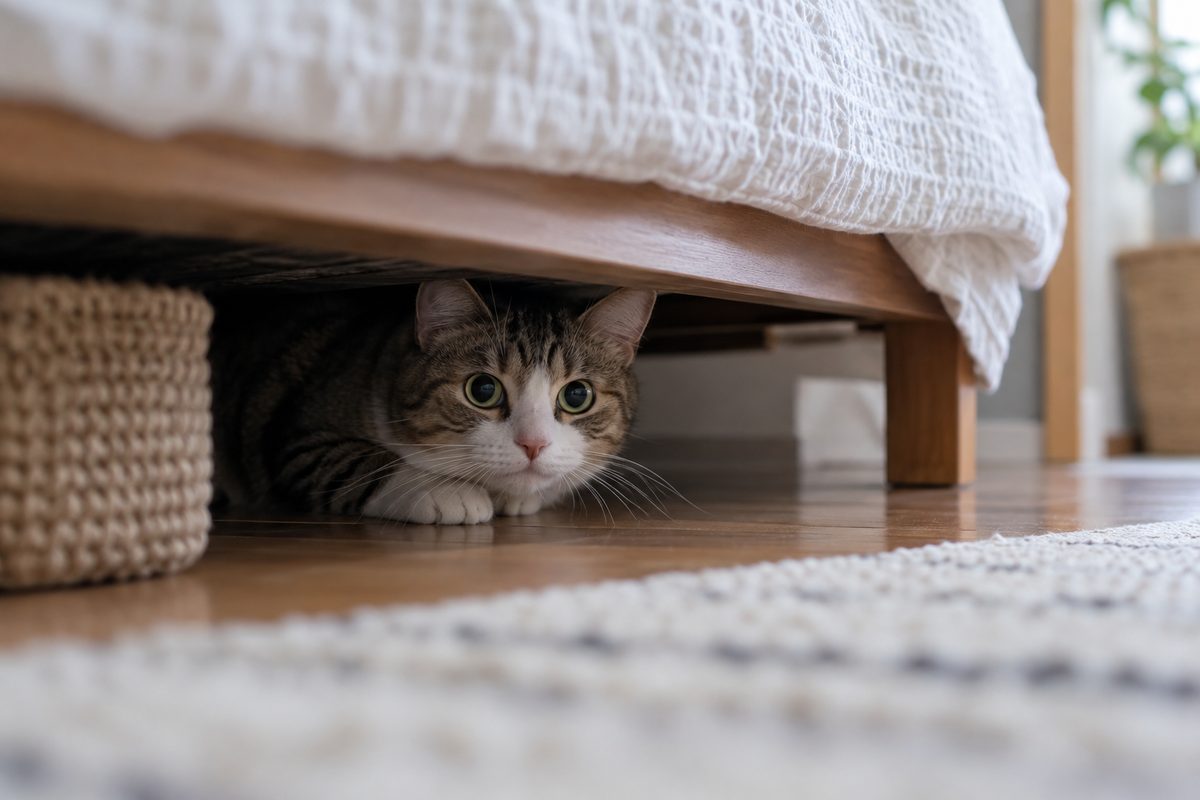
Fear and Anxiety as Causes of Sudden Hiding
Fear from external threats or learned anxiety drives cats to hide suddenly. Some cats are naturally more anxious than others.
- Aggressive behavior from other pets creates lasting fear.
- Rough handling or punishment teaches cats to avoid their handler.
- Loud household environments overwhelm sensitive cats.
- Previous trauma makes rescue cats prone to hiding.
Use cat calming diffusers containing synthetic pheromones to ease anxiety. Speak softly around your hiding cat and allow it to emerge at its own pace. Respect your cat’s fear without forcing interaction.
Multi-Cat Household Conflicts
Introducing a new cat or escalating tension between existing cats causes hiding. Cats establish territorial boundaries, and disruption creates stress.
- A new kitten triggers fear in the established cat.
- Fighting or hissing forces one cat to hide to avoid conflict.
- Competition for litter boxes or food bowls causes avoidance.
- Changes in social hierarchy after illness shift group dynamics.
Separate cats temporarily and reintroduce them gradually. Ensure each cat has its own litter box, food bowl, and resting area. Read about how long it takes cats to get along for a reintroduction guide.
Underlying Health Conditions Linked to Hiding
Some cats hide as a symptom of serious illnesses. Chronic conditions develop slowly, and your cat withdraws before other signs appear.
- Diabetes in cats causes lethargy and behavior changes.
- Hyperthyroidism makes cats anxious and withdrawn.
- Kidney disease and urinary blockages are life-threatening emergencies.
- Cancer causes pain and fatigue that drive hiding behavior.
Older cats are at higher risk. Schedule routine exams once yearly, and twice yearly for cats over age 10.
When to Separate Hiding from Normal Cat Behavior
Not all hiding is abnormal. Cats naturally rest 12 to 16 hours daily and seek quiet spots for sleep. The key is sudden change and accompanying signs.
- Normal hiding: Cat naps in favorite spots, emerges for meals, appears alert.
- Concerning hiding: Sudden change, avoidance of food, lethargy lasting hours, reluctance to use the litter box.
- Watch for: Loss of appetite, excessive thirst, vomiting, diarrhea, labored breathing, or discharge from eyes or nose.
Trust your instinct. If your cat’s behavior feels different, contact your veterinarian. Early diagnosis improves outcomes and reduces suffering.
For more veterinary guidance, see the Cornell Feline Health Center.
Frequently Asked Questions
- How long should I wait before taking my hiding cat to the vet? If hiding is sudden and accompanied by loss of appetite, visit the vet within 24 hours; seek emergency care if your cat cannot urinate, has difficulty breathing, or shows extreme pain.
- Can a hiding cat experience depression? Yes, cats experience depression after loss of a companion or major environmental change, though medical illness is a more common cause of sudden hiding.
- Should I force my hiding cat out to eat? No; forcing interaction increases stress, so provide food, water, and a litter box near your cat’s hiding spot and allow it to emerge at its own pace.
Sudden hiding in your cat should never be ignored. Most cases are treatable with prompt veterinary care or environmental adjustment. Monitor your cat and contact your vet if concerned.

