
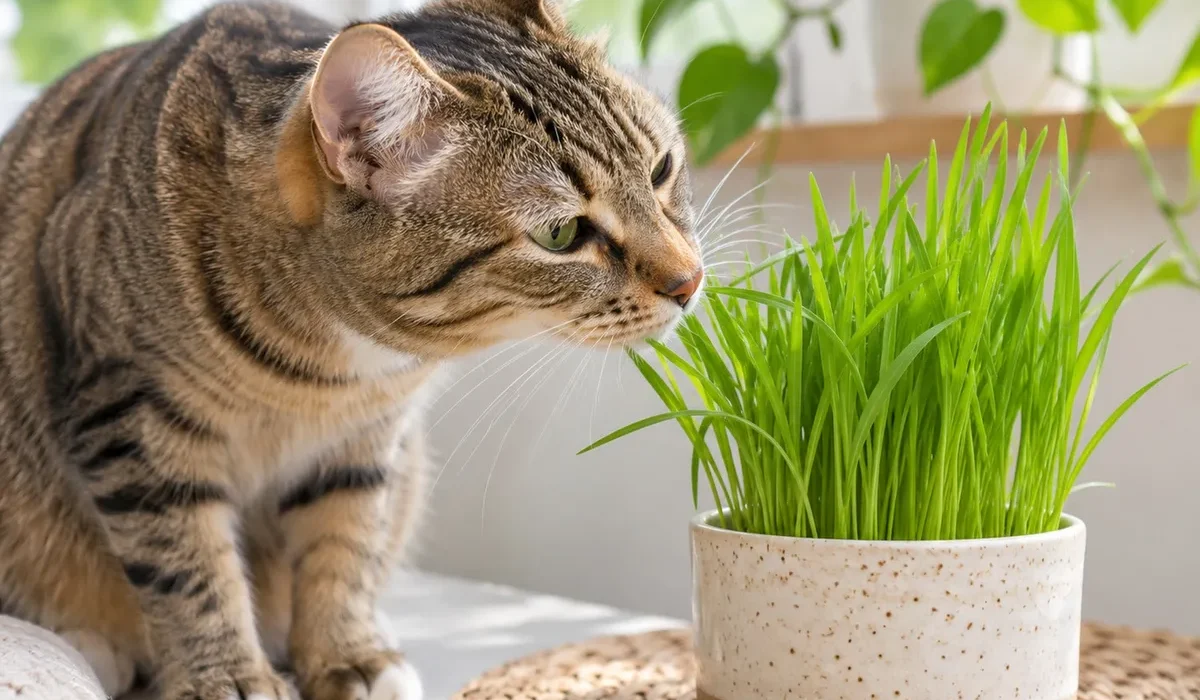
Why Do Cats Eat Grass? 6 Common Reasons and When to Worry
The short answer to why do cats eat grass is instinct: wild ancestors swallowed plant fiber that helped move fur and parasites through the gut. This matters most for indoor cats, longhaired cats prone to hairballs, and any cat that vomits after grazing.
This post may contain affiliate links. As an Amazon Associate I earn from qualifying purchases.
Table of Contents
Why do cats eat grass at a glance:
- Short Answer: Grass eating is a normal instinct, and most grazing cats are not sick.
- Why Cats Do It: Hairball relief, fiber, folic acid, parasite clearing, and texture.
- Is It Normal: Yes, grazing a few times a week is typical for healthy adult cats.
- When to Worry: Vomiting more than once weekly, weight loss, diarrhea, or lethargy needs a vet.
- How to Respond: Offer indoor cat grass and remove toxic plants.
Why Do Cats Eat Grass: 6 Common Reasons
Vets explain why do cats eat grass with instinctive, digestive, and sensory reasons, and no single cause fits every cat.
1. Ancestral Instinct
Domestic cats keep the grazing instinct of their wild ancestors even on complete diets. Vets treat occasional grazing as normal behavior, not proof of illness.
2. Hairball Relief
Grass helps push swallowed fur through the gut or bring it back up. Longhaired cats graze more during spring and autumn shedding, so try these remedies for a cat with hairballs.
3. Fiber and Digestion
Cats lack the enzymes to digest cellulose, so grass passes through as roughage that acts as a mild natural laxative.
4. Folic Acid
Grass juice contains folic acid, a B vitamin cats need for red blood cell production. This theory remains unproven, since complete cat foods already supply folic acid.
5. Clearing Intestinal Parasites
Wild ancestors may have eaten grass to wrap and expel intestinal worms. Grazing never replaces deworming, so watch for signs of worms in cats.
6. Texture, Taste and Boredom
Many cats simply enjoy the crisp texture of young grass blades. Under-stimulated indoor cats chew plants more, so daily play helps keep an indoor cat entertained.
Is It Normal When Cats Eat Grass?
Grass eating is normal for most healthy cats, often a few times each week. When my tabby Milo started grazing our balcony planter, his appetite, weight, and energy stayed unchanged.
Signs of normal grazing:
- Sessions lasting 1 to 2 minutes
- Normal appetite, stool, and energy
- Rare vomiting, followed by normal behavior
Grass Eating and Vomiting: What to Expect
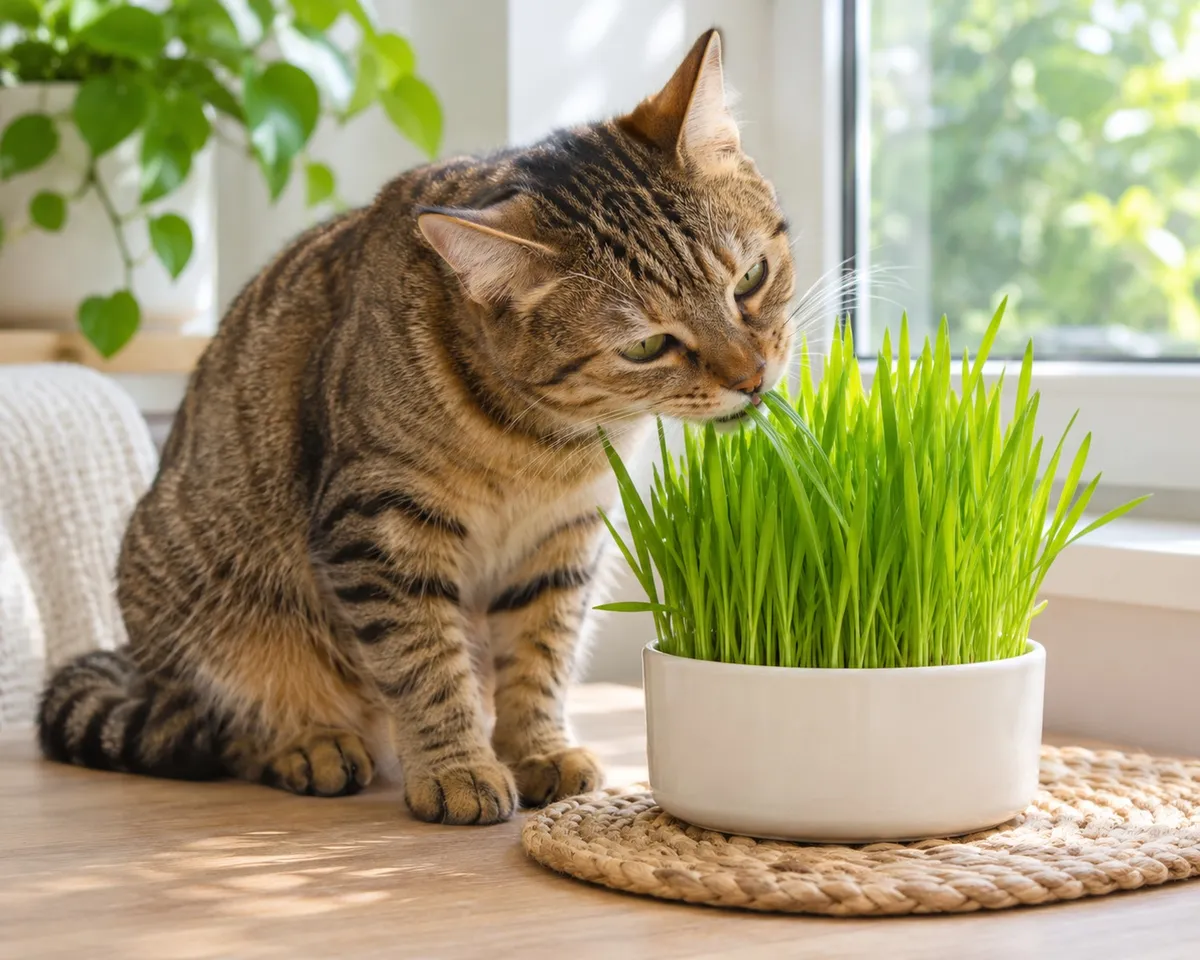
Vomiting is the side effect most owners notice when asking why do cats eat grass. Undigested blades irritate the stomach lining, so some cats vomit green blades, fur, or clear fluid within minutes, while many keep grass down.
The Cornell Feline Health Center advises a veterinary exam for frequent vomiting. These causes of cat vomiting after eating cover other common triggers.
Why Do Cats Eat Grass So Much? When to Worry
Frantic or constant grazing can signal nausea, gastrointestinal disease, or a diet problem.
| Sign | What It May Mean | Urgency |
|---|---|---|
| Occasional nibbling, no symptoms | Normal instinct | No action needed |
| Vomiting once a week or less | Grass or hairball reflex | Monitor at home |
| Vomiting more than once a week | Hairballs, food intolerance, bowel inflammation | Vet within days |
| Heavy grazing with weight loss or diarrhea | Parasites, gut disease, hyperthyroidism | Vet within 24 to 48 hours |
| Repeated retching with nothing coming up | Blockage or gastric problem | Emergency |
| Drooling or tremors after chewing plants | Plant or chemical poisoning | Emergency |
Call your veterinarian whenever grazing comes with symptoms beyond an occasional vomit. Treat unproductive retching, collapse, seizures, or a swollen belly as emergencies needing an emergency clinic immediately.
Safe Grass vs Toxic Plants for Cats
Safe cat grass grows from wheat, oat, barley, or rye seeds, not from ornamental or treated lawn grass.
Keep these away from cats:
- True lilies and daylilies, which cause kidney failure even from small amounts of pollen
- Lawn grass treated with herbicides, pesticides, or fertilizer
- Pothos, philodendron, and sago palm
Check new plants with the ASPCA Animal Poison Control Center, or choose these cat-friendly houseplants for safer greenery.
How to Grow Cat Grass Safely at Home
A cat grass growing kit gives cats a safe, chemical-free outlet for grazing indoors.
- Soak the seeds for 4 to 8 hours, then spread them over moist soil.
- Keep the tray in indirect light and mist daily until sprouts appear in 3 to 5 days.
- Offer blades at about 4 inches, usually 7 to 10 days after planting.
- Replace the pot every 2 to 3 weeks to prevent mold and yellowing.
For cats that graze mainly to pass fur, a hairball control cat food adds fiber that moves swallowed hair through the gut. Brushing several times a week also reduces swallowed fur.
Frequently Asked Questions
Why do cats eat grass and then throw up?
Undigested blades irritate the stomach lining and trigger vomiting within minutes. This reflex is harmless unless vomiting happens more than once a week.
Is it safe for cats to eat lawn grass?
Untreated lawn grass is generally safe, but grass sprayed with herbicides, pesticides, or fertilizer can poison cats.
How long does cat grass take to grow?
Cat grass sprouts in 3 to 5 days, is ready to eat in about 7 to 10 days, and stays fresh for 2 to 3 weeks.
Why does my cat eat grass every day?
Daily grazing is usually harmless in a cat with normal appetite, weight, and energy. Daily grazing with vomiting, diarrhea, or weight loss needs a vet exam within a few days.
Can kittens eat cat grass?
Kittens can nibble cat grass once they eat solid food, usually around 8 weeks old, starting with small amounts.
The answer to why do cats eat grass is usually simple: instinct, fiber, hairball relief, and enjoyment of fresh greens. Occasional grazing is healthy, while frequent vomiting, weight loss, or diarrhea calls for a veterinarian. Plant a fresh tray of wheat or oat grass this week and move lilies and treated plants out of reach.