Why Do Cats Get the Zoomies? 6 Fun Reasons for Crazy Energy
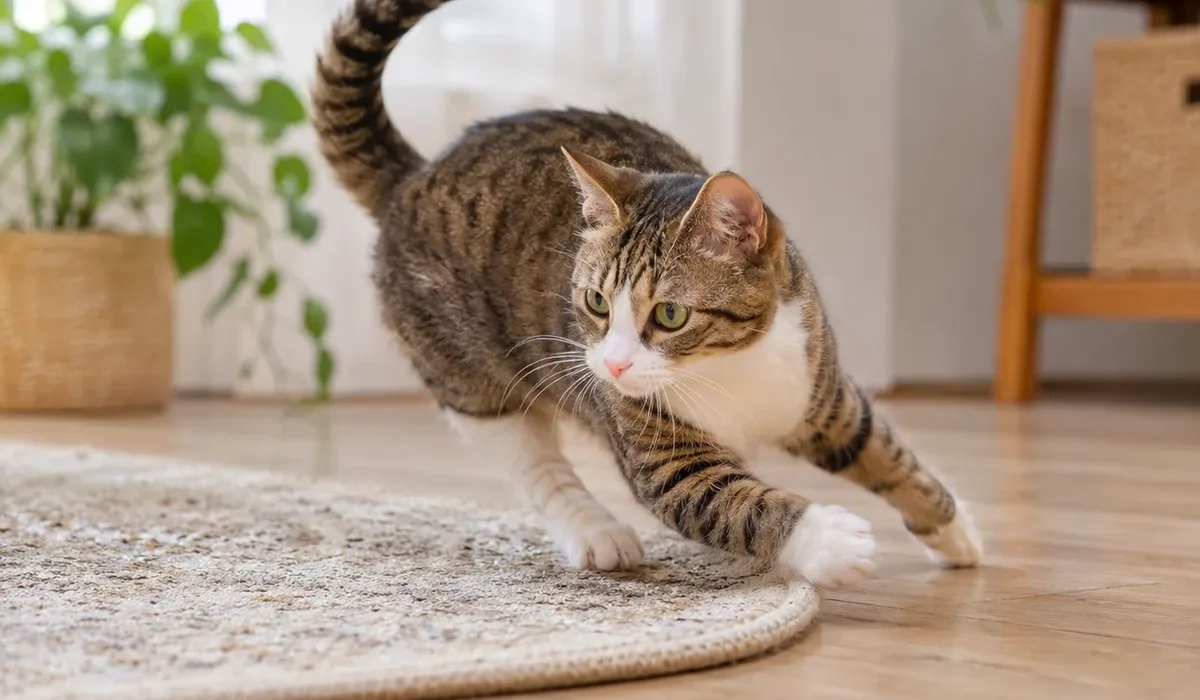
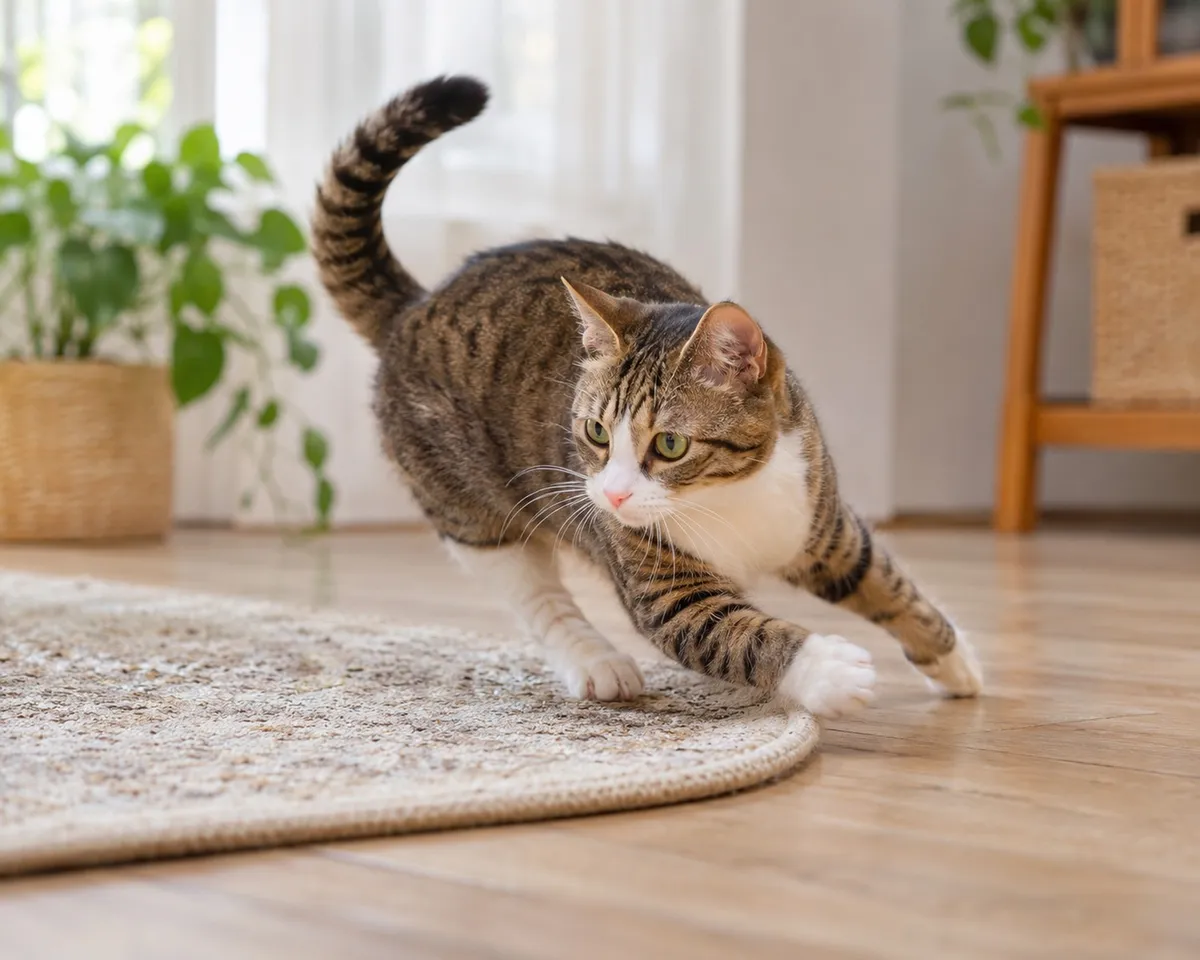
The answer to why do cats get the zoomies is pent-up energy: cats release unused hunting drive in bursts called frenetic random activity periods (FRAPs). These bursts are most common in indoor cats under 2 years old, which sprint and leap for 1 to 5 minutes at dawn or late at night.
This post may contain affiliate links. As an Amazon Associate I earn from qualifying purchases.
Table of Contents
Why do cats get the zoomies at a glance:
- Short Answer: Zoomies are short bursts of running that release stored energy and predatory drive.
- Why Cats Do It: Long naps, unused hunting instinct, dawn and dusk activity peaks, and post-litter box relief.
- Is It Normal: Yes, healthy cats of every age get zoomies, especially kittens and cats under 2.
- How to Respond: Schedule two or three 10 to 15 minute play sessions daily and clear breakables from running paths.
Why Do Cats Get the Zoomies? 6 Main Reasons
Cats get the zoomies because their bodies are built for short, explosive hunts that indoor life rarely uses. International Cat Care notes that play lets indoor cats express natural hunting behavior safely.
1. Stored Energy After Long Naps
Adult cats sleep 12 to 16 hours a day and wake with a full tank of energy. A quick sprint burns that energy off, which links directly to why cats sleep so much.
2. An Unused Hunting Instinct
Wild cats make many stalk-and-pounce attempts daily, and each chase lasts only seconds. Indoor cats with no prey replay that chase across the hallway.
3. The Dawn and Dusk Body Clock
Cats are crepuscular, so their activity peaks at dawn and dusk when prey moves. This rhythm explains why many zoomies start around 5 a.m. or after sunset.
4. Relief After Using the Litter Box
Many cats sprint after pooping, likely from relief or an instinct to leave the scent area. Frequent sprints paired with straining can point to cat constipation.
5. Releasing Stress or Excitement
A bath, a vet visit or a new visitor can leave cats wired with adrenaline. A few minutes of running helps cats shake off that tension.
6. Youth and Development
Kittens between 8 weeks and 2 years old get the zoomies most because play builds coordination and muscle. Even 10-year-old cats still have occasional bursts.
Why Do Cats Get the Zoomies at Night?
Night zoomies happen because cats sleep through quiet daytime hours and wake charged when the household winds down. When my cat Milo was 1 year old, he raced across our bed at 3 a.m. until I moved his play session to bedtime.
Play followed by a meal 30 minutes before bed copies the natural hunt, eat, groom, sleep cycle. Less daytime boredom also helps, so try ways to keep an indoor cat entertained.
What Normal Cat Zoomies Look Like
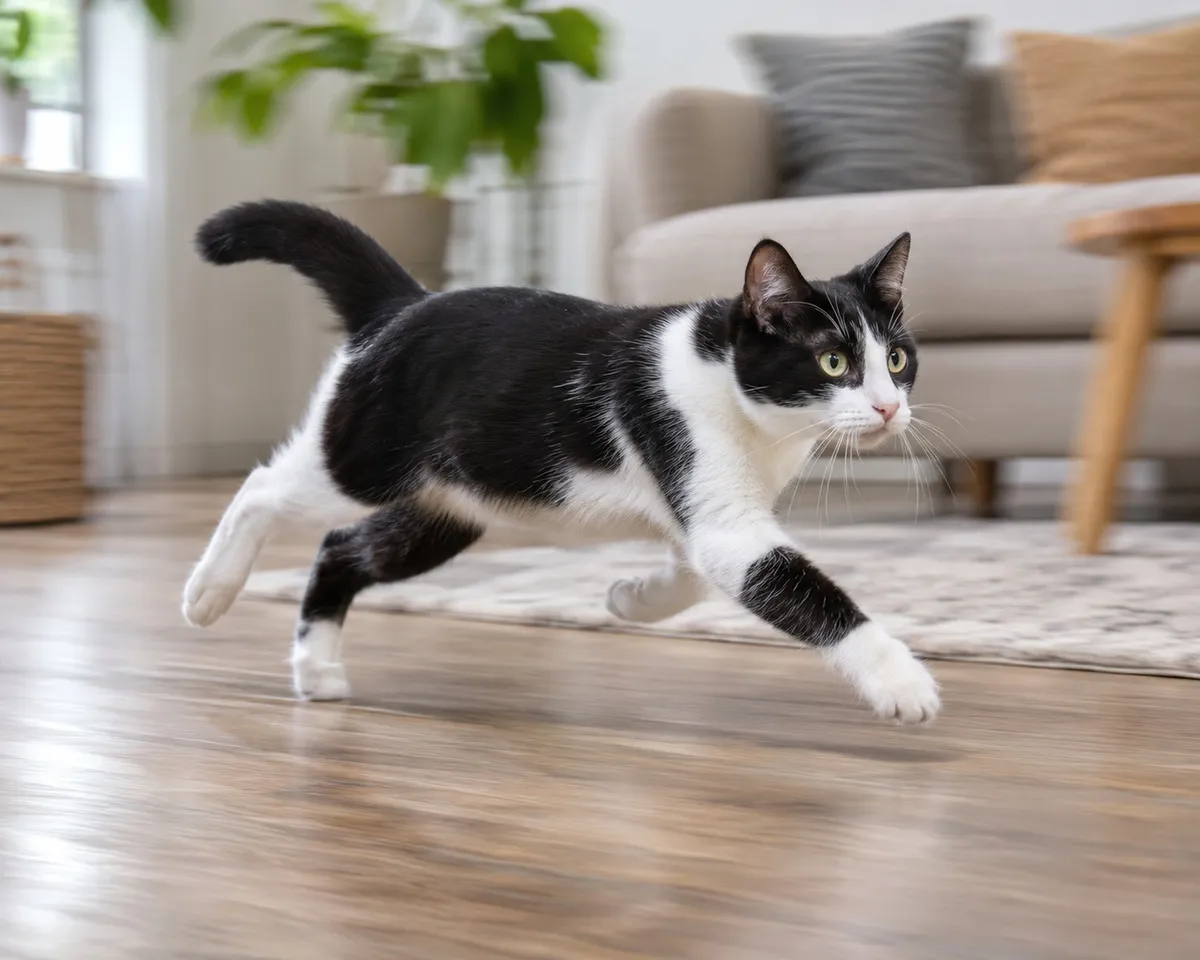
Normal zoomies look playful, brief and controlled, even when the running seems chaotic.
Typical signs:
- Sudden sprinting between rooms with a puffed or arched tail
- Dilated pupils and flattened ears during the run
- Leaping onto furniture or skidding on hard floors
- Chirping, trilling or short yowls
- A quick stop after 1 to 5 minutes, then grooming or a nap
Normal Cat Zoomies vs Warning Signs
Most zoomies are harmless, but some patterns signal a health problem rather than play.
| Sign | Normal Zoomies | See a Vet If |
|---|---|---|
| Duration | 1 to 5 minutes | Running repeats nonstop |
| Frequency | Once or twice a day | New restlessness in a cat over 10 |
| Breathing | Normal within 1 to 2 minutes | Open-mouth panting that continues |
| Skin and tail | Relaxed fur after the run | Rippling skin or self-biting |
| Litter box | Brief sprint after pooping | Straining or blood in stool |
| Appetite and weight | Unchanged | Increased hunger with weight loss |
Sudden hyperactivity with weight loss in a senior cat can signal hyperthyroidism, so book a veterinarian visit for any older cat with new restlessness. Rippling skin with frantic running can point to feline hyperesthesia syndrome, described by VCA Animal Hospitals.
Treat panting that does not settle, collapse or blue-tinged gums as an emergency. Hiding or limping after a run can be signs your cat is in pain.
How to Manage Cat Zoomies at Home
The best way to manage zoomies is scheduled play, the core of playing with your cat.
- Play two or three times daily for 10 to 15 minutes with a wand teaser toy that mimics darting prey.
- End each session with a final “catch” and a small meal to complete the hunt.
- Add vertical space with a cat tree so cats leap safely instead of using shelves.
- Move fragile objects off running paths and add rugs on slippery floors.
- Never punish zoomies, because scolding raises stress and can increase night activity.
Frequently Asked Questions
Is it normal for cats to get the zoomies every day?
Yes, daily zoomies are normal for healthy cats, with one or two 1 to 5 minute bursts being typical.
Why do cats get the zoomies after pooping?
Cats often sprint after pooping from relief or an instinct to leave the scent. Straining or crying in the litter box needs a vet check.
How long do cat zoomies last?
Most cat zoomies last 1 to 5 minutes, then the cat stops suddenly to groom or nap.
Do cats grow out of the zoomies?
Most cats get fewer zoomies after age 2, though healthy seniors still have occasional short bursts.
Should I stop my cat from getting the zoomies?
No, zoomies are healthy, so redirect them with two or three daily 10 to 15 minute play sessions.
Why do cats get the zoomies comes down to stored energy, hunting instinct and a dawn-and-dusk body clock. Short bursts signal a healthy cat, while sudden restlessness in seniors deserves a vet check. Tonight, try one 15-minute play session followed by a meal before bed.