Ragdoll Cat Personality: 8 Charming Traits Owners Adore
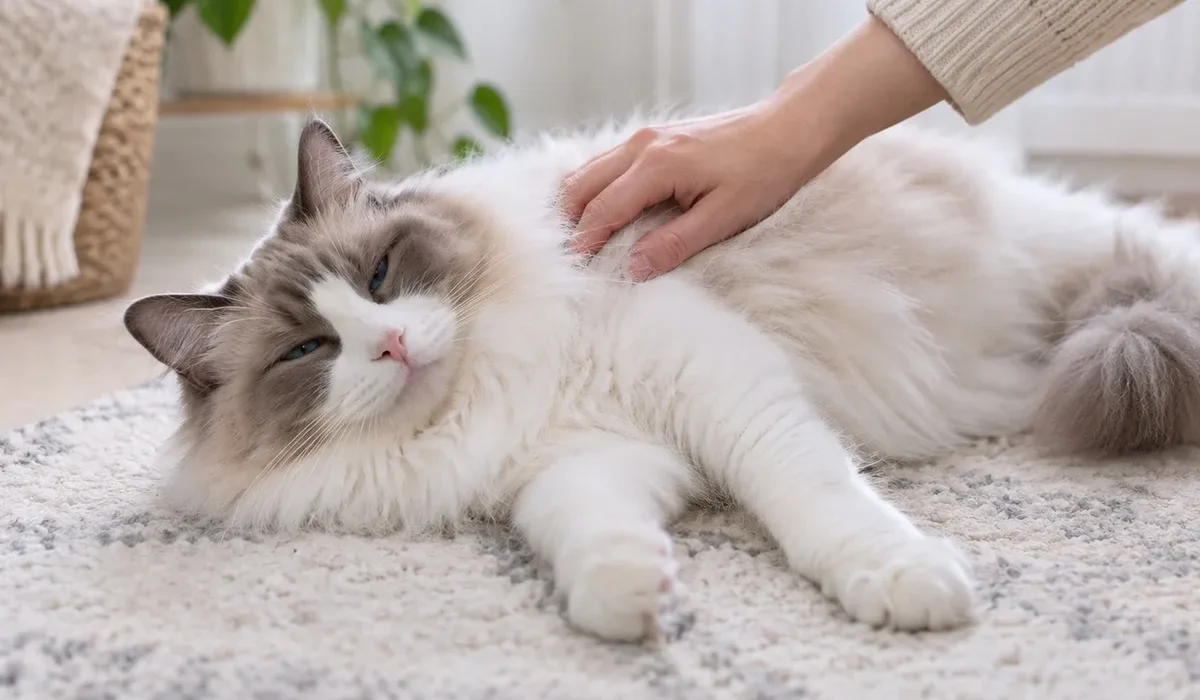
Ragdoll cat personality is famously gentle, affectionate and calm, with most Ragdolls going limp in your arms and following owners from room to room. These traits matter most for families with children, first-time owners and apartment dwellers who want a relaxed indoor cat.
This post may contain affiliate links. As an Amazon Associate I earn from qualifying purchases.
Table of Contents
Ragdoll cat personality at a glance:
- Size and Weight: Males weigh 15 to 20 pounds and females 10 to 15 pounds.
- Lifespan: Most Ragdolls live 12 to 15 years, and many indoor Ragdolls reach their late teens.
- Temperament: Ragdolls are docile, quiet and loyal, which earns them the nickname “puppy cats.”
- Grooming Needs: The silky semi-long Ragdoll coat has little undercoat and needs brushing twice a week.
- Best Home: Ragdolls thrive indoors with someone at home most of the day.
The 8 Key Ragdoll Cat Personality Traits
The ragdoll cat personality rests on eight consistent traits that breeders have selected for since the 1960s.
- Floppy when held: Many Ragdolls fully relax their muscles when picked up, which inspired the breed name.
- Dog-like loyalty: Ragdolls greet owners at the door and follow you everywhere around the house.
- Gentle play: Ragdolls usually keep their claws sheathed and rarely bite or swat at hands.
- Quiet voice: A Ragdoll meows softly and rarely, which suits apartments with shared walls.
- Calm energy: Adult Ragdolls prefer lounging to climbing and favor floor-level resting spots.
- Highly social: Ragdolls dislike long stretches alone and need company most of the day.
- Easy to train: Food-motivated Ragdolls learn fetch and harness walking with easy cat training tricks.
- Trusting nature: Ragdolls approach strangers calmly, which makes outdoor life risky for the breed.
When my Ragdoll, Pearl, came home at 14 weeks, she slept on my feet the first night. By week three, Pearl was fetching hair ties and dropping them in my lap.
Where the Ragdoll Temperament Comes From
The Ragdoll temperament comes from deliberate breeding that began in Riverside, California, in the 1960s under breeder Ann Baker, who kept the calmest, most cuddly kittens.
Ragdolls mature slowly, reaching full size and final coat color at 3 to 4 years, so the playful kitten phase lasts longer than in most breeds.
Gentle handling between 2 and 7 weeks of age shapes each kitten’s confidence, and International Cat Care stresses early socialization for every cat, regardless of breed.
Ragdoll Cat Personality With Kids and Other Pets
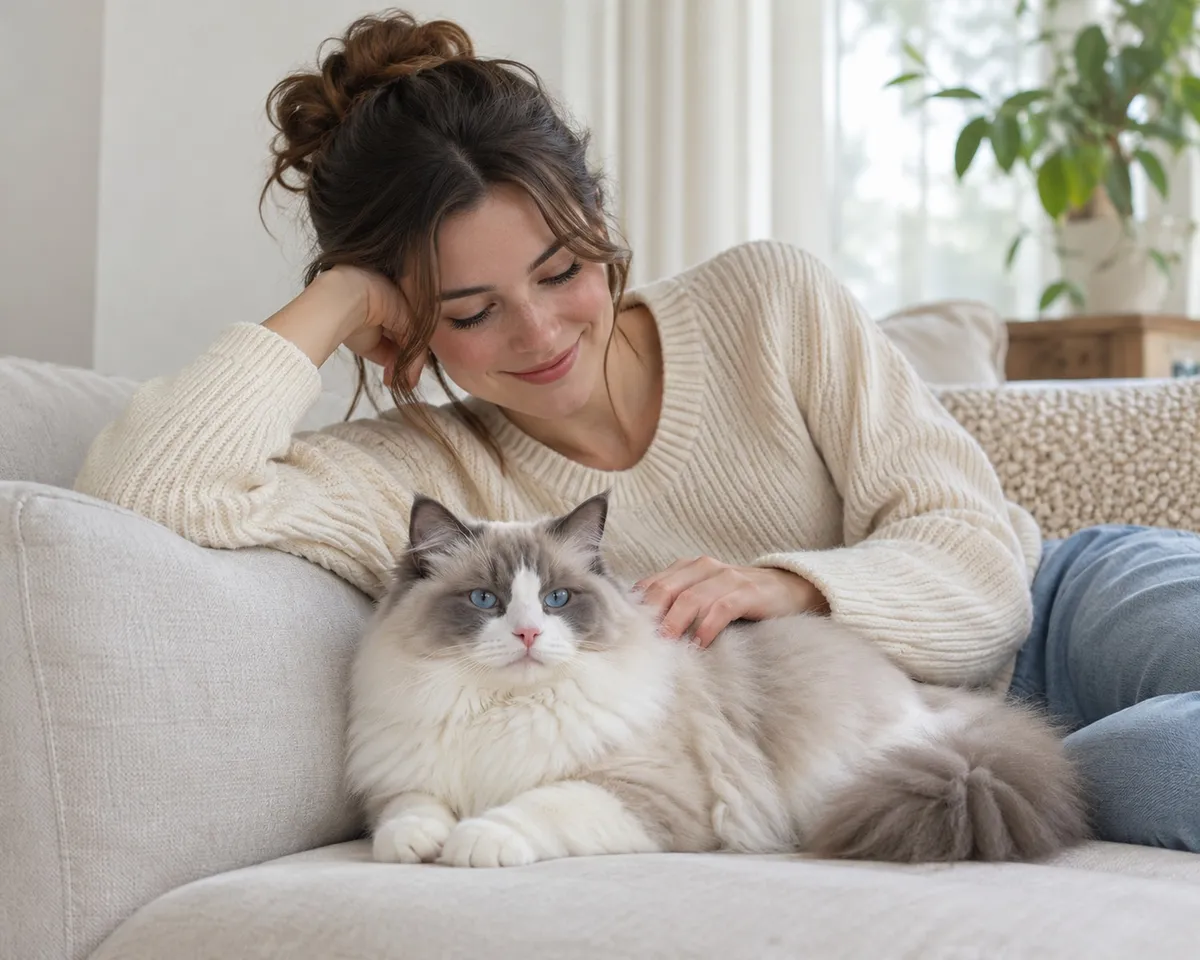
The ragdoll cat personality makes this breed one of the best choices for busy family homes.
- Children: Kids under 6 should hold a Ragdoll only while seated, because adult males weigh up to 20 pounds.
- Dogs: Calm, cat-friendly dogs usually accept a Ragdoll within 2 to 4 weeks of gradual introduction.
- Other cats: Ragdolls rarely compete for dominance and often groom their feline housemates.
- Visitors: Most Ragdolls greet guests at the door instead of hiding under the bed.
Because Ragdolls rarely defend themselves, keep them indoors or in a secure catio, away from traffic, loose dogs and theft.
Ragdoll Traits Compared to Other Breeds
The Ragdoll ranks among the calmest and quietest of all popular cat breeds.
| Breed | Energy | Vocal Level | Affection Style |
|---|---|---|---|
| Ragdoll | Low | Quiet | Lap cat, follows owners |
| Maine Coon | Moderate | Chirps and trills | Social but independent |
| Siamese | High | Very loud | Demanding and talkative |
| Bengal | Very high | Moderate | Needs constant activity |
| British Shorthair | Low | Quiet | Calm, dislikes being carried |
For a large, gentle alternative, read about the Maine Coon personality, or browse other fluffy cat breeds with soft, flowing coats.
How to Care for a Ragdoll’s Gentle Nature
A Ragdoll stays happy with daily play, regular grooming and steady company.
- Play 15 to 20 minutes daily: An interactive wand toy keeps a low-energy Ragdoll moving and helps prevent weight gain.
- Brush twice weekly: A stainless steel grooming comb lifts loose fur behind the ears and under the legs, where mats form first. Our cat grooming guide covers the full routine.
- Offer low perches: Wide, sturdy shelves under 4 feet suit Ragdolls, who prefer staying near the floor.
- Measure meals: Calm Ragdolls burn fewer calories, so portion control keeps them at a healthy weight.
- Ask about heart screening: A DNA test detects the MYBPC3 mutation behind hypertrophic cardiomyopathy, the main inherited heart disease in Ragdolls.
A sudden change in ragdoll cat personality, such as hiding or hissing for more than 2 days, often signals pain or illness. Book a veterinarian visit promptly, and treat labored breathing or collapse as an emergency.
Frequently Asked Questions
Are Ragdoll cats cuddly?
Yes, most Ragdolls love being held, many go limp in their owner’s arms, and most sleep beside their owners every night.
Can Ragdoll cats be left alone all day?
Ragdolls cope poorly with 8 to 10 hours alone every day, and a second cat or a midday visitor greatly reduces loneliness.
Does ragdoll cat personality change with age?
Ragdoll cat personality usually mellows between ages 3 and 4, when the breed reaches full maturity. Senior Ragdolls over 10 years sleep more but stay just as affectionate.
Are male or female Ragdolls more affectionate?
Many owners find male Ragdolls slightly more laid-back and clingy than females, though individual upbringing shapes affection more than sex does.
Are Ragdoll cats good for first-time owners?
Yes, Ragdolls suit first-time owners because they are calm, quiet and easy to handle, needing mainly company and brushing twice a week.
Ragdoll cat personality blends dog-like loyalty, a quiet voice and a famously relaxed body, making the breed ideal for families and indoor homes. The key takeaway is simple: Ragdolls need company more than space. As a next step, plan 15 minutes of daily wand play and two weekly brushing sessions before bringing a Ragdoll home.