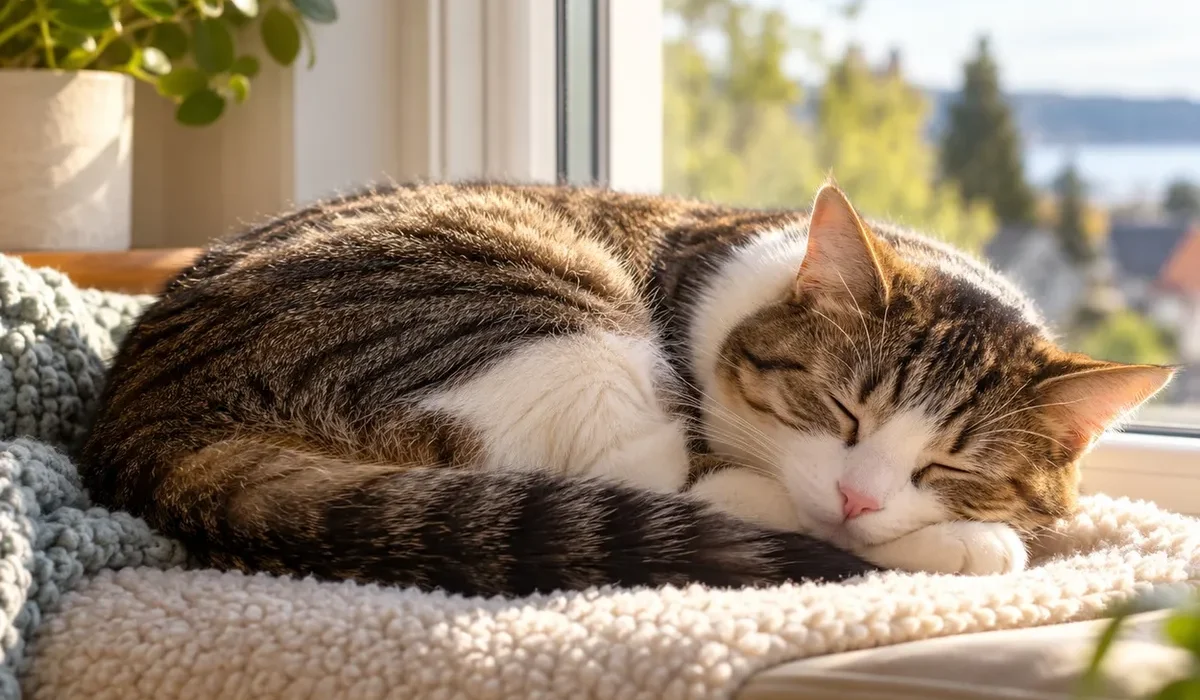
Why Do Cats Sleep So Much? 7 Surprising Reasons
Why do cats sleep so much? Cats are predators built to hunt in short, intense bursts, so they conserve energy by sleeping 12 to 16 hours a day. This matters most for owners of kittens, seniors, and indoor cats, because sleep needs shift with age and lifestyle.
This post may contain affiliate links. As an Amazon Associate I earn from qualifying purchases.
Table of Contents
Why do cats sleep so much at a glance:
- Short Answer: Adult cats sleep 12 to 16 hours daily because hunting burns large amounts of energy in short bursts.
- Why Cats Do It: Predator instincts, energy conservation, growth, digestion, and a crepuscular body clock.
- Is It Normal: Yes. Kittens and seniors often sleep 18 to 20 hours, which is also healthy.
- How to Respond: Offer play at dawn and dusk, keep a calm resting spot, and track sudden changes.
- When to See a Vet: Call a vet if sleep changes abruptly or comes with appetite loss or hiding.
How Many Hours Do Cats Normally Sleep?
Healthy adult cats sleep between 12 and 16 hours in every 24-hour period. That means a typical cat spends well over half of its life asleep.
Sleep needs change with age, and the numbers below are common ranges seen in healthy cats.
| Life Stage | Typical Sleep per Day | Main Reason |
|---|---|---|
| Newborn kitten (0-4 weeks) | 20-22 hours | Rapid growth, nursing |
| Kitten (1-6 months) | 16-20 hours | Growth and brain development |
| Young adult (1-3 years) | 12-16 hours | Energy conservation |
| Adult (3-10 years) | 12-16 hours | Predator rest cycle |
| Senior (10+ years) | 16-20 hours | Slower metabolism, joint stiffness |
Most of that time is light dozing rather than deep sleep. Cats often keep one ear tuned to sounds so they can wake instantly if something moves.
7 Reasons Why Do Cats Sleep So Much
1. Cats Are Predators That Save Energy
Wild cats hunt in explosive sprints that burn a great deal of energy. Sleeping between hunts lets a cat rebuild the reserves it needs for the next chase.
Your house cat inherited this design. Even a well-fed indoor cat keeps the same energy-saving rhythm, because evolution has not changed it.
2. Cats Are Crepuscular, Not Nocturnal
Cats are most active at dawn and dusk, which are the times their prey animals move around. This pattern is called crepuscular behavior.
That is why many owners see a burst of zoomies at sunrise and again in the evening. The long stretches between those peaks are filled with naps. If your cat is loud overnight, our guide on why cats meow at night covers the common causes.
3. Sleep Fuels Growth in Kittens
Kittens release growth hormone during deep sleep, so rest directly supports bone, muscle, and brain development. A kitten that sleeps 18 to 20 hours a day is usually on track.
Kittens also play hard in short bursts and then crash suddenly. If you are raising a young one, our kitten care essentials explain what a healthy routine looks like.
4. Digestion Is Demanding for a Carnivore
Cats are obligate carnivores, and processing a protein-rich meal takes real effort. Many cats nap right after eating while their bodies break down food.
Feeding two to four smaller meals can spread that energy demand more evenly. Good nutrition also supports steady energy, as covered in our essential feeding tips.
5. Warmth and Comfort Trigger Sleep
Cats prefer an ambient temperature of roughly 86 to 97 degrees Fahrenheit, which is warmer than most homes. That is why they chase sunbeams, heating vents, and laptops.
A warm, safe spot lowers stress and invites deep rest. A soft heated cat bed can make a cold corner far more appealing, especially for older cats with stiff joints.
6. Boredom Can Look Like Laziness
Indoor cats with little stimulation often sleep more simply because nothing else is happening. In that case sleep is a way of filling empty time.
Daily play breaks up the long naps and keeps cats fit. Try the ideas in how to keep an indoor cat entertained and add a few wand toys to your rotation.
7. Age and Slower Metabolism
Senior cats sleep more because their metabolism slows and their joints often ache. Arthritis can make moving feel like work, so resting becomes the easier choice.
Extra sleep is normal in older cats, but a sudden jump is not. Our guide to adopting a senior cat explains how to keep older cats comfortable.
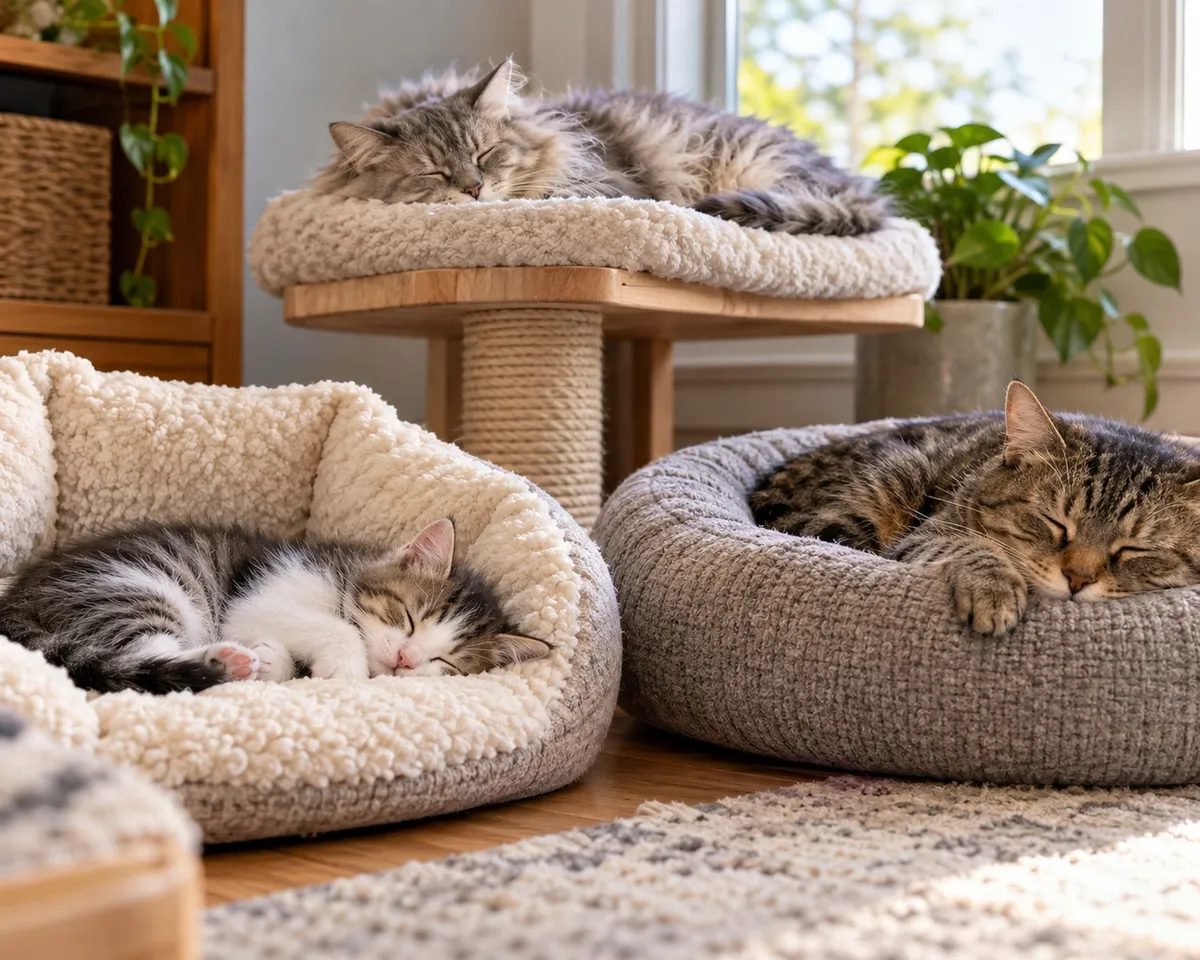
Why Do Cats Sleep So Much During the Day?
Cats sleep so much during the day because their natural peak activity comes at dawn and dusk, not at midday. Daytime is the quiet gap between those two hunting windows.
Indoor cats also follow their owners’ schedules. If you are away at work, your cat has no reason to be active, so it sleeps until you return.
You can shift this pattern gently with a few habits:
- Play with your cat for 10 to 15 minutes in the early evening.
- Feed the largest meal after play to mimic the hunt, catch, eat, sleep cycle.
- Offer window perches so your cat can watch birds and stay mentally engaged.
- Rotate toys weekly so they stay interesting.
Understanding Cat Sleep Stages
Cats cycle between light sleep and deep sleep, and each stage serves a different purpose. Knowing the difference explains why a cat can seem asleep one second and alert the next.
Light sleep (catnapping):
- Makes up roughly 75 percent of a cat’s total sleep time.
- Eyes may stay partly open, and ears swivel toward sounds.
- Cats can wake and spring into action within a second.
Deep sleep (REM):
- Lasts only a few minutes at a time, roughly every 25 minutes.
- Brings twitching whiskers, paws, and tail, and sometimes soft sounds.
- Is when dreaming is thought to occur.
Twitching during deep sleep is normal. If you want to know when it is a concern, see our article on cat twitching in sleep.
Cat Sleeping Positions and What They Mean
Where and how your cat sleeps can reveal how safe and relaxed it feels. A cat on its back with its belly exposed trusts its surroundings completely.
- Curled in a ball: Conserves body heat and protects the belly.
- Loaf position: Paws tucked under the body, ready to move quickly.
- Belly up: Deep trust and comfort, though not always an invitation to pet.
- Sleeping on you: Seeks warmth and bonding, as explained in why your cat sleeps on you.
Why Do Cats Sleep So Much More as They Age, and When Is It Too Much?
A cat that sleeps more than usual is not always sick, but a sudden change deserves attention. The key signal is a shift from your own cat’s normal pattern, not a single number.
Signs that sleep may signal a problem:
- Sleeping noticeably more than usual over several days.
- Reduced appetite or refusing food.
- Hiding in unusual places, as in why a cat is suddenly hiding.
- Lethargy, meaning the cat will not respond to play or your voice.
- Weight loss, increased thirst, or changes in litter box habits.
Several conditions can cause excess sleepiness, including pain, infection, hyperthyroidism, diabetes, and depression. See our guides on signs a cat is in pain and depression in cats for more detail.
Contact a veterinarian promptly if your cat is lethargic and also refusing food or water, breathing with difficulty, or unable to rise. These are emergency signs. According to guidance from Cornell Feline Health Center, a sudden behavior change is often the first clue that a cat is unwell.
How to Help Your Cat Get Healthy Sleep
Healthy sleep comes from a calm environment, regular activity, and good care. A few simple adjustments make a big difference.
- Provide two or three quiet resting spots in different rooms, including one elevated perch.
- Keep sleeping areas warm, dry, and away from loud appliances.
- Schedule play sessions of 10 to 15 minutes, twice a day.
- Feed on a consistent schedule so your cat’s body clock stays steady.
- Schedule regular vet visits, as outlined in veterinary check-ups for cats.
A cozy covered cat bed can also help shy cats feel secure enough to sleep deeply. Place it in a low-traffic corner and let your cat choose when to use it.
Frequently Asked Questions
How many hours a day should an adult cat sleep?
A healthy adult cat typically sleeps 12 to 16 hours a day. Some cats reach 18 hours, especially in cold weather or when bored.
Why do cats sleep so much more as kittens than adult cats?
Kittens sleep 16 to 20 hours daily because growth hormone is released during deep sleep. Their rapid physical and brain development demands extra rest.
Why do cats sleep so much more as they get older?
Senior cats often sleep 16 to 20 hours a day because their metabolism slows and joints may ache. A sudden increase still warrants a vet visit.
Do indoor cats sleep more than outdoor cats?
Indoor cats often sleep more because they have fewer chances to hunt and explore. Added play and enrichment can reduce boredom-driven napping.
When is a cat sleeping too much a sign of illness?
Call a vet if sleep increases suddenly for more than two days or comes with appetite loss, hiding, or lethargy. These combinations can point to pain or disease.
Understanding why do cats sleep so much shows that long naps are a natural part of feline life, shaped by hunting instincts, growth, and age. Learn your cat’s normal rhythm, add daily play, and talk to your vet if its sleep pattern changes suddenly.