
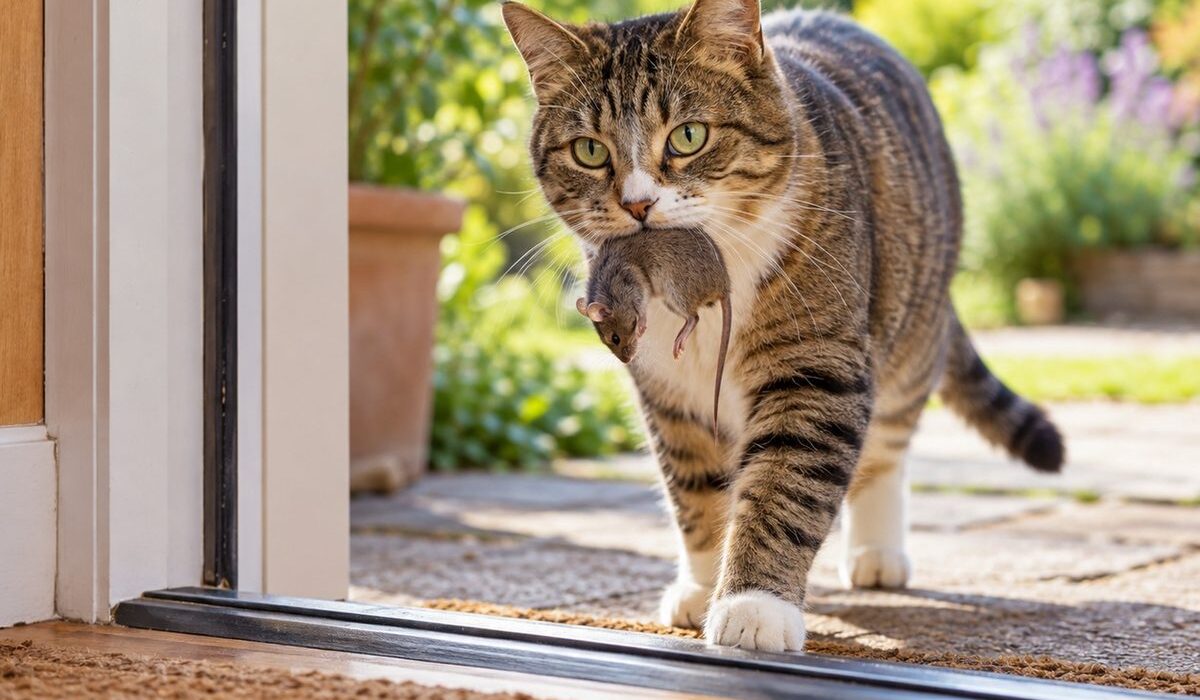
Why Does My Cat Bring Me Dead Animals? 7 Proven Reasons
This post may contain affiliate links. As an Amazon Associate I earn from qualifying purchases.
Why does my cat bring me dead animals? Cats leave prey at your feet because of ancient hunting instinct, a drive to share food with their family, and a habit of showing off skills. The behavior is normal, and it matters most to owners of outdoor cats and indoor cats who catch the occasional mouse or insect.
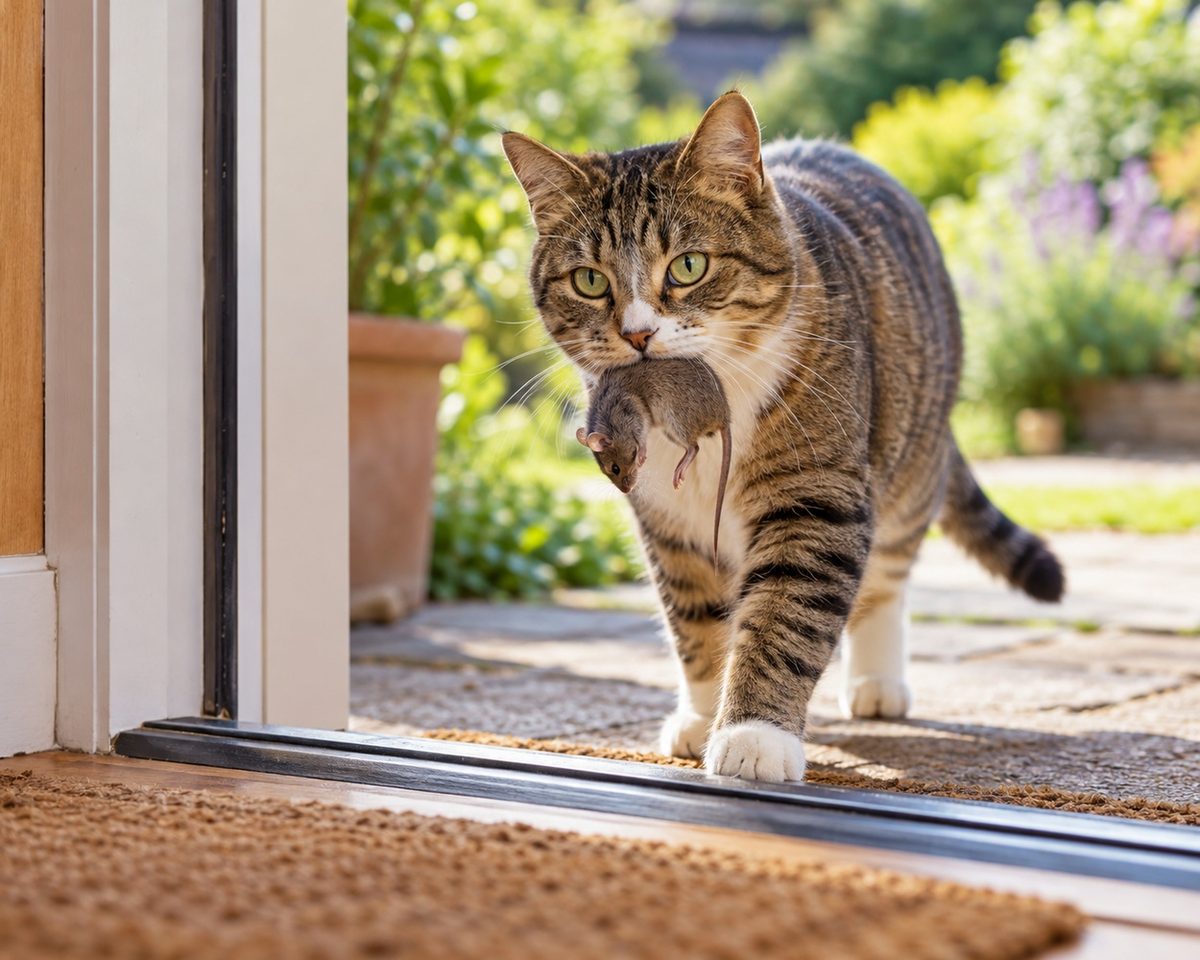
Table of Contents
Why does my cat bring me dead animals at a glance:
- Short Answer: Cats treat you as family, so they share their catch or bring it home to a safe place to eat.
- Why Cats Do It: Hunting instinct, teaching behavior, food caching, and a wish to show a “gift” to a trusted person.
- Is It Normal: Yes, even well-fed cats hunt, because hunting is driven by instinct rather than hunger.
- How to Respond: Stay calm, never punish, remove the animal with gloves, and reduce hunting opportunities.
- Health Note: Wild prey can carry parasites and disease, so wash your hands and call a vet if your cat eats it.
Why Does My Cat Bring Me Dead Animals? The Instinct Behind It
The short answer is that your cat is acting on a hunting drive that domestication never removed. Cats evolved as solitary predators that catch small prey, and that skill set is still fully intact in a pet who eats from a bowl twice a day.
Research on free-roaming cats shows that hunting motivation is separate from hunger. A cat can be completely full and still stalk, pounce, and kill. The prey drive switches on when a small moving target appears.
When my own cat first left a mouse beside my bed, I assumed something was wrong with her feeding routine. It was not. She was simply doing what her ancestors did for thousands of years.
Bringing the catch home is the final step of that instinct. Wild cats carry food to a den or a quiet spot where they feel safe while eating. Your home is that safe spot, and you are part of the group.
7 Reasons Cats Bring Home Prey
Several motivations can overlap, and the exact reason often depends on your cat’s age, sex, and living situation. Here are the seven explanations most cat behavior experts point to.
- Sharing food with family: Mother cats bring prey to their kittens. Your cat may see you as a group member to feed.
- Teaching you to hunt: Mothers bring injured prey to kittens so they can practice. Some cats treat their owners as clumsy kittens who need lessons.
- Moving food to a safe place: Eating outdoors leaves a cat vulnerable. Carrying the catch home lets her eat or store it in comfort.
- Showing off a skill: Some cats bring prey to get attention and praise from their person.
- Trust and bonding: Leaving prey with you is a sign your cat feels secure around you.
- Practicing the hunt: Carrying a half-alive animal indoors lets a cat keep playing with it in a protected space.
- Caching food for later: Cats sometimes stash a kill to eat after resting, much like wild felines do.
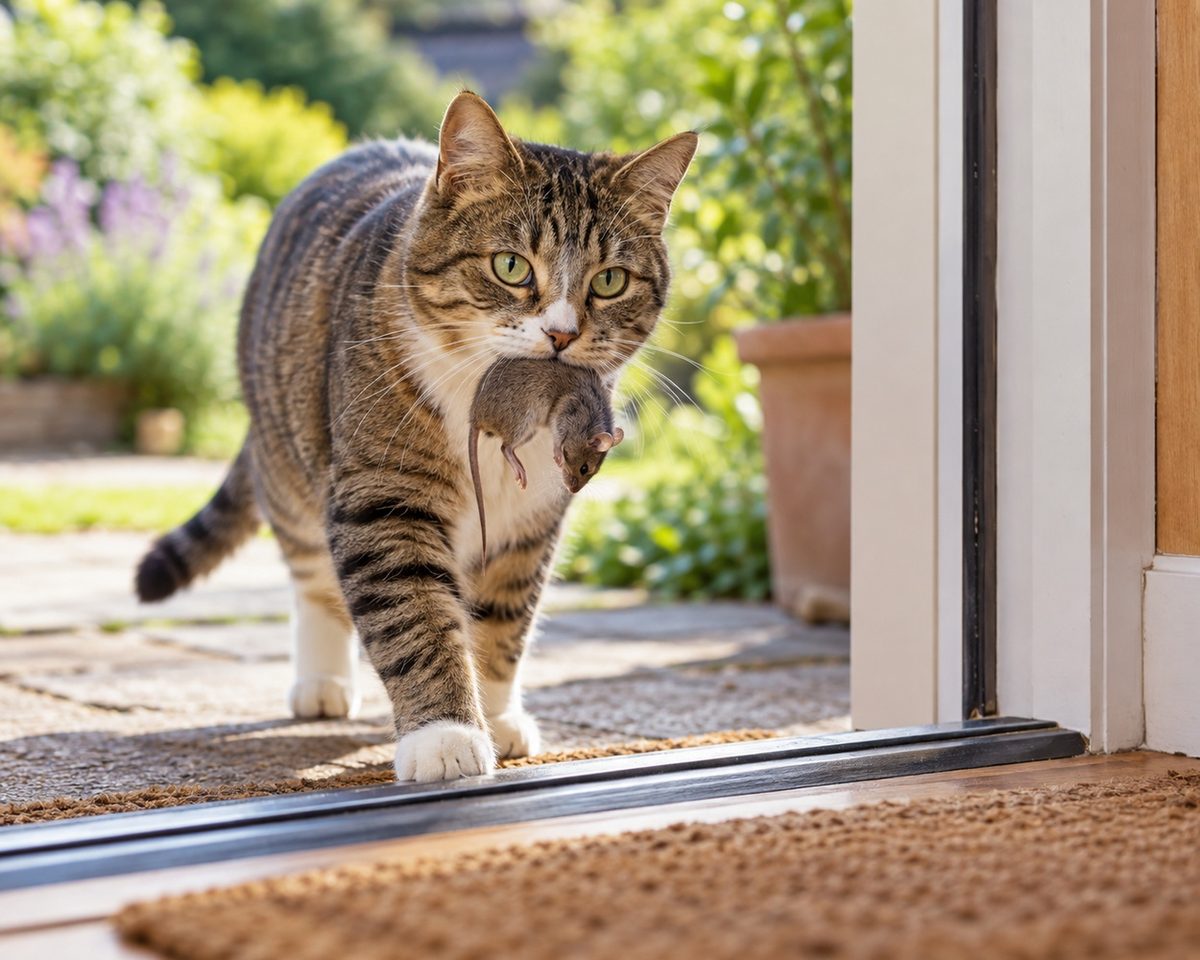
Is It Normal for Cats to Bring Dead Animals Home?
Yes, this is normal and healthy cat behavior. It does not mean your cat is hungry, unhappy, or neglected.
Most cats that hunt are outdoor or indoor-outdoor cats, but indoor cats also catch mice, moths, spiders, and lizards that wander in. The common prey list includes:
- Mice, voles, and rats
- Small birds and fledglings
- Lizards, frogs, and snakes
- Insects such as grasshoppers and moths
- Occasionally rabbits or squirrels
Female cats, including spayed females, often hunt and deliver prey more than males. This fits the maternal pattern of feeding young. Neutering does not remove the instinct, so a fixed cat will still hunt.
Many owners worry and ask why does my cat bring me dead animals when she has a full bowl of food. The answer is that hunting and eating run on separate drives, so a gift of prey says nothing about how well you feed her.
Why Does My Cat Bring Me Dead Animals Even When Well Fed?
A full stomach does not turn off the prey drive. Hunting and eating are controlled by separate systems in a cat’s brain, which is why a pampered house cat can still bring you a bird.
In fact, feeding a cat fewer or smaller meals does not stop hunting either. Studies of owned cats show that extra food has little effect on how often they kill. If you are unsure about portions, our guide on how much to feed a cat explains healthy daily amounts.
The key factor is opportunity. A cat with access to a yard, garden, or open window will hunt more than a cat kept strictly inside.
How to Respond When Your Cat Brings You a Gift
Your reaction matters, because the wrong one can confuse your cat or damage trust. Cats do not understand that you dislike the gift.
What to do:
- Stay calm and speak softly so your cat does not feel scolded.
- Move your cat away gently, using a treat or toy as a distraction.
- Put on disposable gloves and pick up the animal with a bag or paper towel.
- Dispose of it in a sealed bag in the outdoor trash, or bury it.
- Disinfect the floor and wash your hands thoroughly with soap.
What not to do:
- Do not yell, spray, or punish your cat, since she believes she did something good.
- Do not throw the prey away while she watches and looks proud.
- Do not reward the behavior with excited praise that encourages repeat deliveries.
If the animal is still alive, wear thick gloves, place it in a box, and take it to a local wildlife rehabilitator. Injured birds and small mammals often survive with prompt care.
How to Reduce Hunting When Your Cat Keeps Bringing You Dead Animals
You cannot remove the instinct, but you can lower the number of kills. Cats are among the biggest human-linked threats to small wildlife, so prevention helps your local ecosystem too.
Practical ways to cut down on prey:
- Keep your cat inside at dawn and dusk: These are peak hunting hours for both cats and wildlife.
- Add daily play sessions: Two sessions of 10-15 minutes with a wand toy with feathers burns off prey drive. Our tips on playing with your cat show how to run a good session.
- Use a bell or colorful collar: A breakaway bird-safe cat collar warns birds and reduces catches.
- Provide enrichment indoors: Puzzle feeders, window perches, and interactive toys for indoor cats satisfy hunting urges.
- Consider a catio or supervised outdoor time: This lets your cat enjoy fresh air without access to wildlife.
Indoor cats who are bored may also hunt household pests, so mental stimulation helps everyone. For more ideas, see how to keep an indoor cat entertained.
Health Risks of Dead Prey
Dead animals can carry parasites and bacteria that affect both cats and people. This is the main reason to handle the situation carefully rather than simply ignoring it.
Common risks include:
- Roundworms and tapeworms: Cats often pick these up from rodents and birds.
- Toxoplasmosis: A parasite that can affect cats and, rarely, people, especially pregnant women.
- Salmonella: Birds and rodents can carry this bacteria, which causes stomach illness.
- Poisoning: A cat that eats a rodent killed by poison can be harmed secondarily.
- Fleas and ticks: Prey often carries parasites that jump to your cat or home.
Pregnant people should avoid handling prey or litter, and everyone should wash hands after contact. Regular deworming and flea control, as advised by your vet, lower the risk. You can read more about parasites in our guide on getting rid of cat fleas. For general pet health guidance, the American Veterinary Medical Association offers reliable resources.
Call your veterinarian if your cat ate the prey and then shows vomiting, diarrhea, lethargy, or loss of appetite. A rodent that was poisoned is an emergency, so seek help right away.
Frequently Asked Questions
Why do cats leave dead animals on the doorstep?
Cats leave prey at the door because it marks the border of their safe territory and the point where they hand food to their family. The doorstep is also the first spot you will see it.
Does a cat bringing me a dead animal mean she loves me?
Yes, it is generally a sign of trust and bonding. Your cat treats you as part of her family group and wants to share or teach.
Why does my cat bring me dead animals but not eat them?
Many cats hunt for the thrill rather than hunger, so they often leave the kill uneaten. Others are saving it for later or presenting it purely as a gift.
Should I punish my cat for bringing home dead animals?
No, punishment does not work because cats cannot link the scolding to the hunt. It can damage trust and make your cat hide future catches instead.
How can I stop my cat from killing birds?
Keep your cat indoors at dawn and dusk, add daily play sessions, and use a bell or bird-safe collar. A catio gives outdoor access with no wildlife contact.
Why does my cat bring me dead animals? It is a natural mix of instinct, family care, and trust, not a sign of misbehavior. Stay calm, clean up safely, wash your hands, and add daily play and indoor enrichment to cut down on future gifts.