


Can Cats Eat Peanut Butter? 7 Essential Safety Facts
This post may contain affiliate links. As an Amazon Associate I earn from qualifying purchases.
Can cats eat peanut butter? A tiny lick of plain peanut butter will not poison most healthy cats, but cats are obligate carnivores and gain no real nutritional benefit from it. It matters most for owners who use peanut butter to hide pills or who share snacks from the kitchen counter.
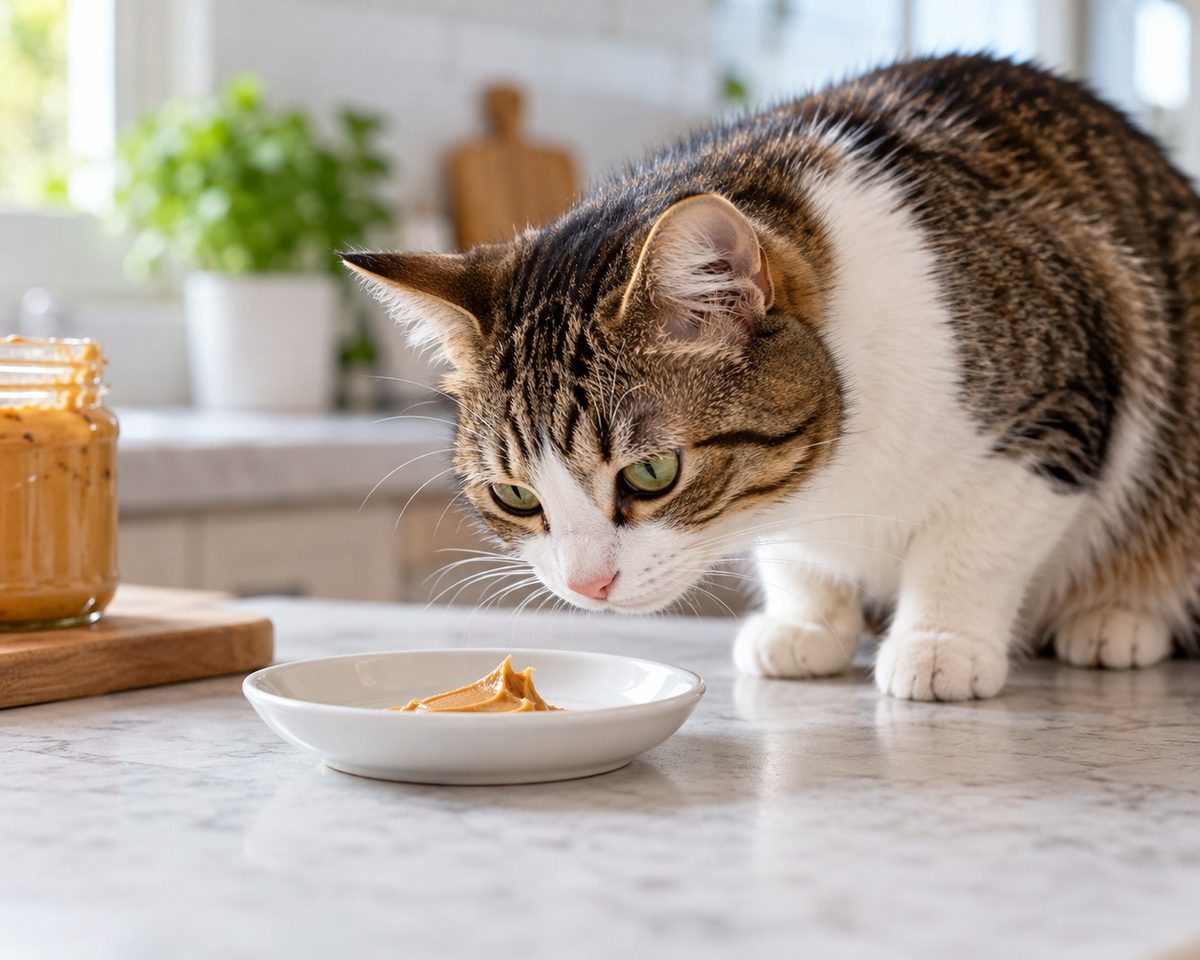
Can cats eat peanut butter at a glance:
- Short Answer: Not toxic in a tiny amount, but not recommended as a treat.
- Main Danger: Xylitol, a sweetener found in some brands, is extremely toxic to pets and can be a medical emergency.
- Other Risks: High fat, added salt and sugar, choking from sticky texture, and peanut allergy in rare cases.
- Safe Amount: No more than a pea-sized dab, once in a while, of plain unsalted peanut butter.
- When to See a Vet: Right away if the jar lists xylitol, or if your cat vomits, becomes weak or has trouble breathing.
Table of Contents
Can Cats Eat Peanut Butter Safely?
Plain peanut butter made only from ground peanuts and maybe a pinch of salt is not poisonous to cats. The problem is that it offers almost nothing a cat’s body needs.
Cats are obligate carnivores, which means they must get nutrients like taurine, arachidonic acid and vitamin A from animal tissue. Peanut butter is a plant-based, high-fat, high-calorie food that does not supply any of these.
When my cat first tried to lick a spoon I had left on the counter, I realized how tempting the smell is. Many cats are attracted to the fat and aroma, not because their bodies need it.
A tablespoon of peanut butter holds roughly 90 to 100 calories. An average 10-pound indoor cat needs only about 200 to 250 calories per day, so one spoonful could be nearly half of a day’s energy. If you want to know what a balanced day of meals looks like, our guide on how much to feed a cat breaks down portions by weight.
The Hidden Danger: Xylitol in Peanut Butter
Xylitol is the single biggest reason to read the label before sharing any peanut butter with a pet. This sugar substitute is added to some “sugar-free” or “low-sugar” brands and is dangerous to dogs, and the ASPCA lists it among toxic substances for pets.
Dogs are the species most clearly harmed, with xylitol causing a sudden drop in blood sugar and liver damage. Data on cats is far more limited, but vets treat any xylitol exposure in a cat as a possible emergency because the safe dose is unknown.
Ingredients to check for on the label:
- Xylitol, sometimes written as “birch sugar”
- Chocolate or cocoa, which are toxic to cats
- Raisins or other dried fruit mixed into the spread
- Artificial flavors and large amounts of added sugar
If you suspect your cat ate a product containing xylitol, call your veterinarian or the ASPCA Animal Poison Control Center immediately. Do not wait for symptoms to appear, and do not try to induce vomiting at home unless a professional tells you to.
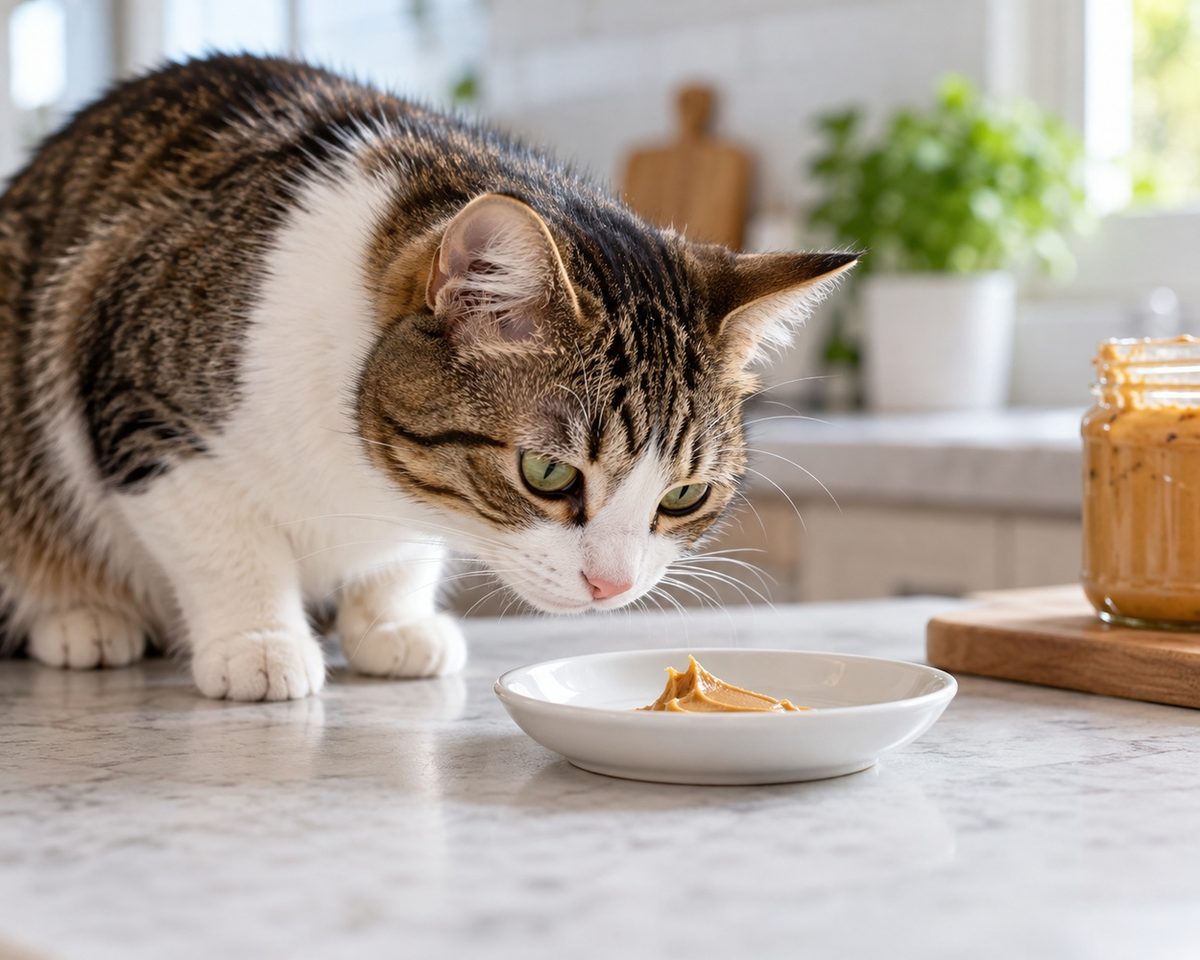
Why Peanut Butter Is Not a Good Treat for Cats
Even safe peanut butter has several drawbacks that make it a poor choice for regular feeding. Knowing them helps you decide whether a lick is worth it.
The main problems:
- High fat: Roughly 8 grams of fat per tablespoon can trigger stomach upset or, over time, contribute to weight gain.
- Pancreatitis risk: Sudden fatty meals can inflame the pancreas in some cats, causing vomiting and loss of appetite.
- Added salt: Many brands contain sodium that cats do not need.
- Sticky texture: Thick peanut butter can stick to the roof of the mouth and make swallowing difficult.
- Digestive trouble: Cats have short digestive tracts built for meat, so plant fats can cause loose stool.
Obesity is already one of the most common nutrition problems in indoor cats, and extra calories from snacks add up fast. Our overview of dangerous foods for cats covers more everyday items that look harmless but are not.
Can Cats Eat Peanut Butter Without an Allergic Reaction?
Peanut allergies in cats are considered rare, but any new food can trigger a reaction in a sensitive animal. Food allergies in cats usually show up as skin and digestive problems rather than the dramatic reactions people experience.
Signs of a possible food reaction:
- Itchy skin, especially around the head and neck
- Vomiting or diarrhea within a few hours
- Swelling of the face, lips or paws
- Excessive licking or over-grooming
- Wheezing or labored breathing, which is an emergency
If your cat shows swelling or breathing trouble, go to an emergency vet at once. For milder itching and stomach issues after trying a new food, read our guide to allergies in cats and speak with your veterinarian about an elimination diet.
Using Peanut Butter to Give a Cat Medication
Many owners ask whether peanut butter can hide a pill. A very small smear can work, but it is not the best method for most cats, and it should only be used if your vet agrees.
The fat and sticky texture can pull a pill into a ball that the cat spits out, and some medications must be given on an empty stomach or without fat. Always ask your vet before mixing any drug with food.
Better pill-giving options:
- Ask the vet whether the medication can be given with a small amount of food.
- Use a soft pill pocket treat made for cats, which is designed to hide tablets safely.
- Try a pinch of wet food or a dab of tuna water if the vet approves.
- Learn the proper hand-pilling technique from your veterinarian or vet nurse.
- Ask about liquid or flavored versions of the medication.
Never give human medicine to a cat, and never guess at a dose. Even common pain relievers can be fatal to cats.
Safer Treats If Cats Can Eat Peanut Butter Only Rarely
If your cat loves the taste of peanut butter, you can swap it for treats that fit a carnivore’s needs. Good treats should be small, protein-based and make up no more than 10 percent of daily calories.
Safer alternatives:
- Small pieces of plain cooked chicken or turkey, with no seasoning
- A few freeze-dried meat treats with a single ingredient
- A tiny bit of plain cooked egg, as discussed in our post on whether cats can eat eggs
- Lickable wet treats made for cats with no added sweeteners
If you do decide to offer peanut butter, follow a few simple rules to keep the risk low.
- Choose a natural brand with only peanuts, or peanuts and a little salt, on the label.
- Confirm that the jar contains no xylitol, chocolate or sweeteners.
- Offer no more than a pea-sized amount on your finger or a spoon.
- Watch your cat for the next 24 hours for vomiting, diarrhea or itching.
- Stop completely if you see any reaction.
Cats with diabetes, kidney disease, pancreatitis or a sensitive stomach should skip peanut butter altogether. For cats that react to new foods easily, see our guide on cats with sensitive stomachs for gentler feeding tips.
Peanut Butter Safety Quick Reference
This chart summarizes whether common peanut butter products are acceptable for cats, so you can check a label quickly in the kitchen.
| Type of Peanut Butter | Safe for Cats? | Notes |
|---|---|---|
| Plain, unsalted, peanuts only | Tiny amount only | Pea-sized dab, rarely |
| Regular with salt and sugar | Not recommended | Extra sodium and sugar |
| Sugar-free with xylitol | No | Possible emergency, call a vet |
| Chocolate peanut spread | No | Chocolate is toxic to cats |
| Peanut butter with raisins | No | Dried fruit can harm pets |
Frequently Asked Questions
Can cats eat peanut butter every day?
No, cats should not eat peanut butter every day because the high fat and calorie content can cause weight gain, stomach upset and, in some cats, pancreatitis.
How much peanut butter can a cat eat?
A pea-sized dab, about a quarter teaspoon, is the most a healthy adult cat should have, and only once in a while.
Can kittens eat peanut butter?
Kittens should not eat peanut butter because their stomachs are delicate and they need nutrient-dense kitten food for growth, not high-fat human snacks.
Why does my cat love peanut butter?
Cats are drawn to the strong smell and fatty taste of peanut butter, though they cannot taste sweetness and do not need it nutritionally.
Can cats eat peanut butter cookies or peanuts?
Peanut butter cookies are not safe because of sugar, butter and sometimes chocolate, and whole salted peanuts add sodium and are a choking risk for cats.
So, can cats eat peanut butter? A pea-sized dab of plain, xylitol-free peanut butter is unlikely to hurt a healthy cat, but it is never needed and carries real risks. Check every label, keep portions tiny, and choose meat-based treats instead. If your cat eats something unsafe, call your veterinarian right away.
