


Can Cats Eat Bananas? 7 Safe Facts Every Owner Needs
This post may contain affiliate links. As an Amazon Associate I earn from qualifying purchases.
Yes, cats can eat bananas in very small amounts, because ripe banana flesh is not toxic to cats. It matters most for owners who catch their cat licking a banana or who want a rare low-risk treat, since cats are obligate carnivores and gain little from fruit.
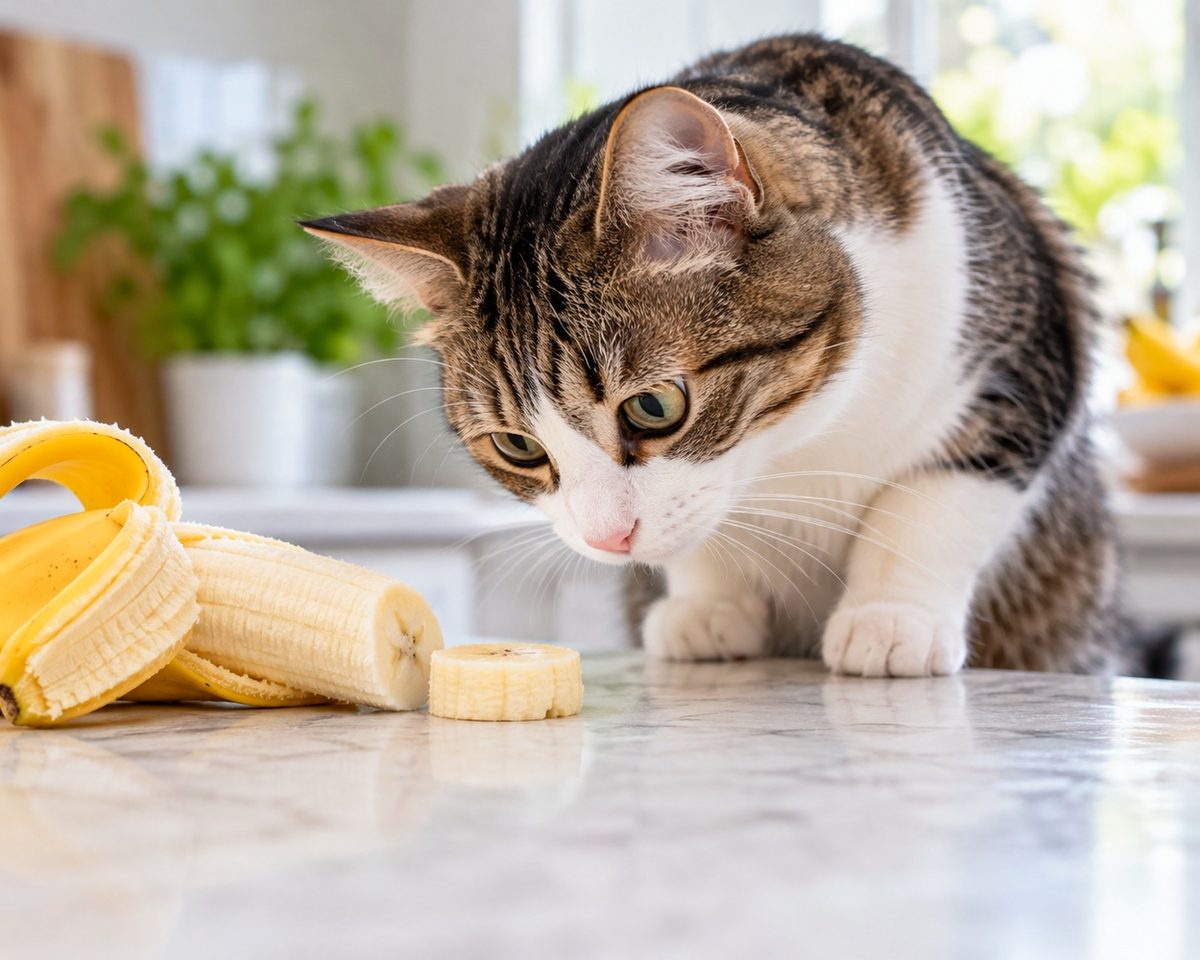
Can cats eat bananas at a glance:
- Short Answer: Yes, a thin slice or a pea-sized piece of ripe banana is safe for most healthy adult cats.
- Safe Amount: No more than 1 to 2 small bites (about 1 teaspoon) once or twice a week.
- Main Benefit: A small dose of potassium, vitamin B6 and fiber, though cats do not need any of it from fruit.
- Main Risk: Sugar, digestive upset, and choking on peels or large chunks.
- When to See a Vet: Vomiting, diarrhea lasting more than 24 hours, or a diabetic or overweight cat.
Table of Contents
Can Cats Eat Bananas Safely?
Cats can eat bananas safely when the fruit is ripe, peeled and served in tiny portions. Banana flesh contains no ingredient on the standard list of foods that poison cats, so a small taste will not harm a healthy adult.
That said, safe does not mean useful. Cats are obligate carnivores, which means their bodies are built to get energy and nutrients from animal protein and fat. A banana is roughly 90 percent carbohydrate by calories, a poor fit for a species with no dietary requirement for carbs.
Think of banana as an occasional novelty, never a meal. Treats of any kind, including fruit, should stay under 10 percent of your cat’s daily calories. For a typical 10-pound cat eating about 200 calories a day, that limit is only about 20 calories, and one thin banana slice already uses a good share of it.
What Nutrients Do Bananas Offer Cats?
Bananas contain potassium, vitamin B6, vitamin C, magnesium and dietary fiber, but cats eating a complete commercial diet already receive all the nutrients they need. A medium banana has roughly 105 calories and 14 grams of sugar, which is far too much for a small animal.
Owners who ask can cats eat bananas for health reasons should know the nutritional payoff is small. Here are the possible benefits:
- Potassium: Supports muscle and nerve function, though balanced cat food already supplies it.
- Fiber: A tiny amount may help firm up stool in a few cats, but too much causes gas and loose stools.
- Vitamin B6: Helps with metabolism, and cats get plenty from meat.
- Low fat and low sodium: The fruit is not greasy or salty, unlike many human snacks.
No veterinary guidance recommends banana as a supplement for cats. If your cat has a real nutritional need, such as constipation or low potassium, a veterinarian can suggest a targeted solution. Our guide to cat supplements explains what actually helps and what does not.
Are Bananas Bad for Cats? Risks to Know
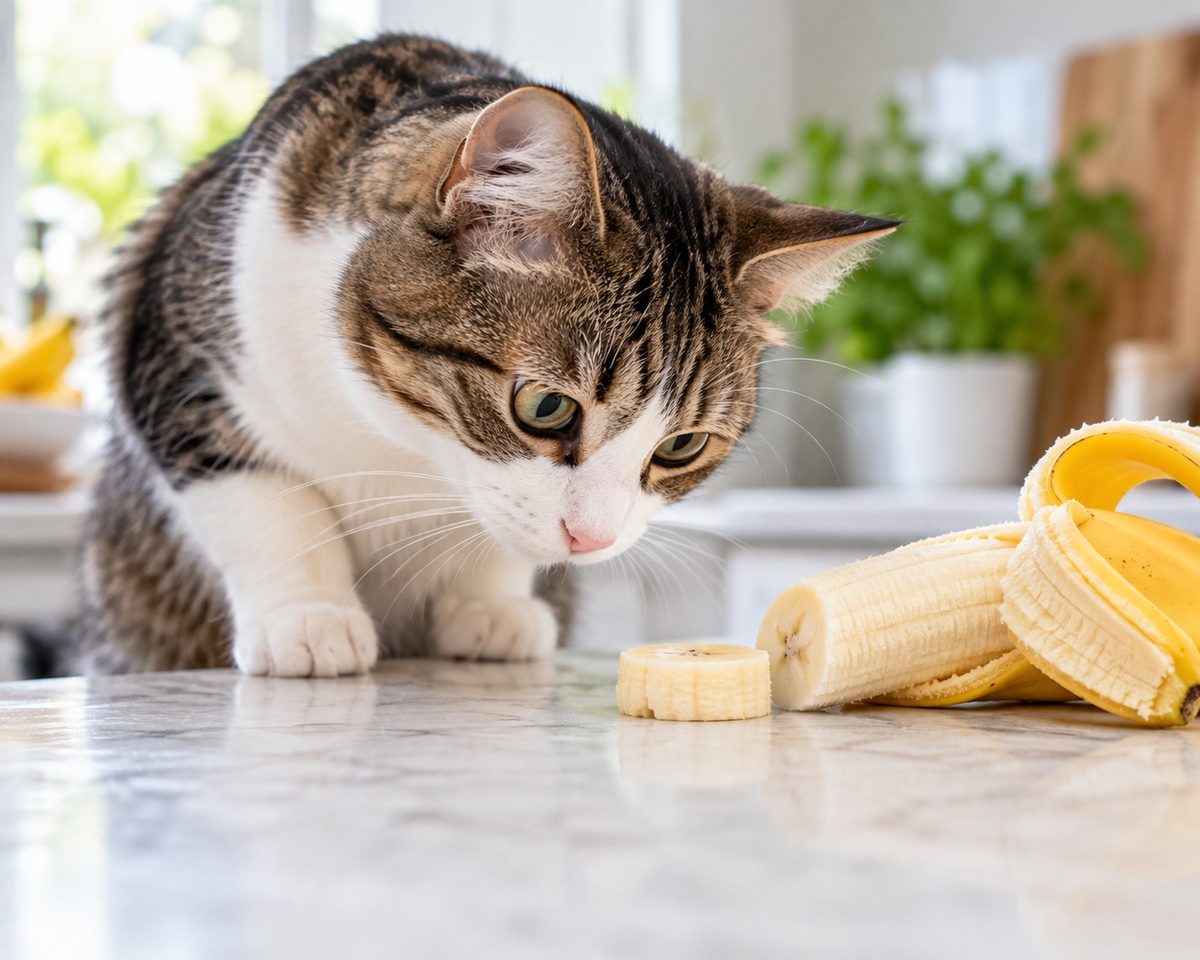
Bananas are not toxic, but they can still cause problems when cats eat too much, eat the peel, or have an existing health condition. Most trouble comes from sugar, fiber overload and physical hazards rather than from poison.
Before you decide whether can cats eat bananas applies to your own pet, weigh these main risks:
- Digestive upset: Too much fruit fiber and sugar can cause vomiting, gas or diarrhea within hours.
- Weight gain: Extra sugar calories add up quickly in a small, often indoor cat.
- Diabetes concerns: The sugar in banana can raise blood glucose, so diabetic cats should avoid it entirely.
- Choking and blockage: Peels and large chunks are tough to digest and can obstruct a cat’s intestine.
- Food refusal: A cat that fills up on sweet treats may skip its balanced meals.
Cats also cannot taste sweetness, because they lack the sweet taste receptor. When a cat shows interest in banana, it is usually reacting to the texture, the smell, or your attention rather than the flavor. If you are worried about a cat with a sensitive digestive tract, read our advice on cats with sensitive stomachs before offering any new food.
Can Cats Eat Bananas With the Peel On?
Cats should not eat banana peels, because the peel is tough, fibrous and hard to digest. A swallowed piece can cause stomach upset or, rarely, an intestinal blockage that needs emergency surgery.
Peels may also carry pesticide residue from farming or shipping. Even if your cat nibbles a peel out of curiosity, remove it and watch for vomiting, a swollen belly or loss of appetite over the next 24 hours.
Always peel the banana completely and discard the peel where your cat cannot reach it. Cats that chew on plants and fruit scraps may also be at risk from other household hazards, so it helps to know about cat-friendly houseplants.
How to Feed Your Cat a Banana the Right Way
The safest way to offer banana is one tiny, ripe, peeled piece given once as a test. Introduce it slowly, because any new food can upset a cat’s stomach.
Step-by-step:
- Choose a ripe banana with yellow skin and no black rot or mold.
- Peel it fully and cut off a piece about the size of a pea.
- Mash it slightly or slice it thin so it cannot cause choking.
- Offer it by hand or on a clean plate, alongside normal food.
- Wait 24 hours and watch for vomiting, soft stool or lethargy.
- If your cat tolerates it, limit banana to once or twice a week.
Serving ideas that work:
- A small mashed dab on a spoon as a rare reward.
- One thin slice mixed into your cat’s usual wet food.
- A pea-sized piece frozen for a cool summer treat.
Plain ripe banana slices are the only form worth offering, since dried chips and sweetened banana products contain added sugar. If you want a more useful fruit or vegetable option, pumpkin is a better fit for many cats.
Can Cats Eat Bananas in Bread, Chips or Pudding?
Cats should avoid any banana product that contains added sugar, sweeteners, nuts or dairy. These extras turn a mostly harmless fruit into a real health risk.
| Banana Food | Safe for Cats? | Reason |
|---|---|---|
| Fresh ripe banana (small piece) | Yes, in moderation | Plain fruit, low risk |
| Banana peel | No | Choking and blockage risk |
| Banana bread | No | Sugar, butter, possible raisins or nuts |
| Banana chips | No | High sugar and often fried |
| Banana pudding or ice cream | No | Dairy and sugar can upset the stomach |
| Sugar-free banana products | No | May contain xylitol, which is toxic |
Many cats are lactose intolerant, so banana-and-milk treats are a poor idea. Our posts on whether cats can drink milk and cheese for cats explain why dairy often causes diarrhea.
When Should You Call a Veterinarian?
Call your veterinarian if your cat eats a large amount of banana, swallows peel, or develops symptoms after a taste. Mild soft stool can pass within a day, but repeated vomiting, a bloated belly or refusal to eat for over 24 hours needs professional advice.
Emergency signs:
- Repeated vomiting or gagging after eating banana or peel.
- Straining without producing stool, or a painful, swollen abdomen.
- Extreme lethargy or hiding.
- Diarrhea lasting longer than 24 hours or containing blood.
Cats with diabetes, kidney disease or a history of pancreatitis should only get new foods after a vet approves them. The ASPCA Animal Poison Control Center lists which human foods are toxic to cats, and it is a reliable place to check any new snack. For general feeding questions, see feeding your cat and the Cornell Feline Health Center feeding guide.
Better Treat Options Than Banana
The best treats for cats are meat-based, because they match a cat’s biology. If you want an occasional fruit or vegetable, plain cooked pumpkin and small bits of cooked egg are more commonly recommended than banana.
Anyone still wondering can cats eat bananas as a regular snack can choose from these safer treat ideas:
- Freeze-dried meat treats: Single-ingredient chicken, turkey or fish.
- Plain cooked egg: A small piece offers protein without sugar, as covered in our egg guide.
- Plain cooked chicken: Unseasoned and boneless, in tiny pieces.
- Cat-safe fiber: Plain pumpkin puree for constipation or loose stool.
If your cat is a picky eater or loses interest in meals, banana is not the fix. Check our guide on a cat not eating for causes and next steps. A dedicated freeze-dried cat treat gives better value than fruit for training and rewards.
Frequently Asked Questions
Can cats eat bananas every day?
No, cats should not eat bananas every day, because daily sugar and fiber can cause weight gain and loose stools. Limit it to a pea-sized piece once or twice a week at most.
Can kittens eat bananas?
Kittens should not eat bananas, because they need nutrient-dense kitten food and have delicate digestive systems. Wait until a kitten is at least 12 weeks old and talk to your vet first.
Are bananas toxic to cats?
No, ripe banana flesh is not toxic to cats and does not appear on the ASPCA list of poisonous foods. The real risks are digestive upset, sugar and the peel, not poison.
Why does my cat like bananas?
Most cats are drawn to the soft texture, the strong smell or your attention, since cats cannot taste sweetness. Some cats also simply enjoy licking creamy foods.
Can cats eat bananas if they have diabetes?
No, cats with diabetes should avoid bananas, because the natural sugar can raise blood glucose. Ask your veterinarian for treat options that fit your cat’s insulin plan.
Can cats eat bananas? Yes, but only as a tiny, rare treat of ripe, peeled fruit that never replaces balanced cat food. Offer a pea-sized piece once, watch your cat for 24 hours, and call your veterinarian if vomiting or diarrhea appears.
