


Why Does My Cat Bite Me While Purring?
Your cat bites you while purring because overstimulation, affection overload, or playfulness triggers a sudden shift in mood. Cats purr to express contentment, but this behavior can quickly flip to biting when they reach their sensory limit or feel threatened.
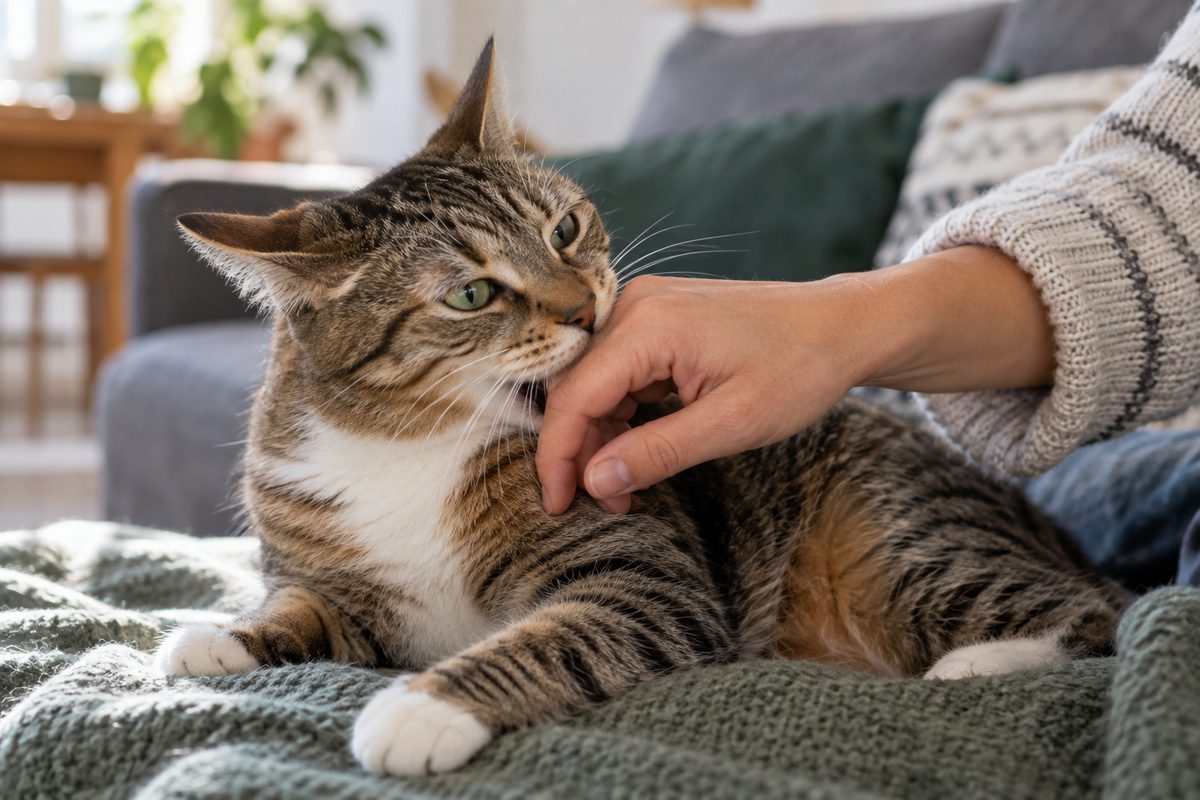
Table of Contents
Key Takeaways:
- Love bites during purring signal overstimulation or a sudden mood change, not aggression.
- Cats have a finite tolerance for petting; stopping before they bite prevents the behavior.
- Learn your cat’s body language cues to recognize when a bite is coming.
- Redirect playfulness with interactive toys instead of using your hands as toys.
Why Cats Bite While Purring
Purring does not always mean your cat is calm and wants more affection. When a cat purrs and bites simultaneously, it often signals overstimulation.
- Overstimulation: Extended petting can overwhelm a cat’s nervous system, triggering an automatic bite response as a warning to stop.
- Playfulness: Kittens and younger cats bite during purring as part of mock hunting and bonding behavior.
- Affection Overload: Some cats purr intensely and bite gently to show they are reaching their maximum comfort threshold.
- Territorial or Possessive Behavior: A cat may bite and purr to claim you or an object as theirs.
Body Language Signs Before Your Cat Bites
Cats send clear signals before they bite. Learning to read these cues helps you stop the behavior before it happens.
Warning signs to watch:
- Tail twitching or thrashing side to side.
- Ears flattening backward or rotating to the sides.
- Skin twitching along the back or rump.
- Dilated pupils or intense staring.
- Quick head turns toward your hand.
- Sudden tensing of muscles.
If you notice any of these signals during petting, stop immediately and give your cat space. This prevents the bite altogether and teaches your cat that biting ends the interaction.
How to Respond and Prevent Biting
The best approach is to prevent overstimulation rather than punish biting after it happens.
- Limit petting sessions: Pet your cat for short intervals (30 seconds to 2 minutes) and stop before signs of irritation appear.
- Pet sensitive areas less: Most cats prefer gentle touches on the head, cheeks, and chin over belly, paws, and base of tail.
- Redirect to toys: Use interactive wand toys or feather chasers to channel playful biting energy away from your hands and feet.
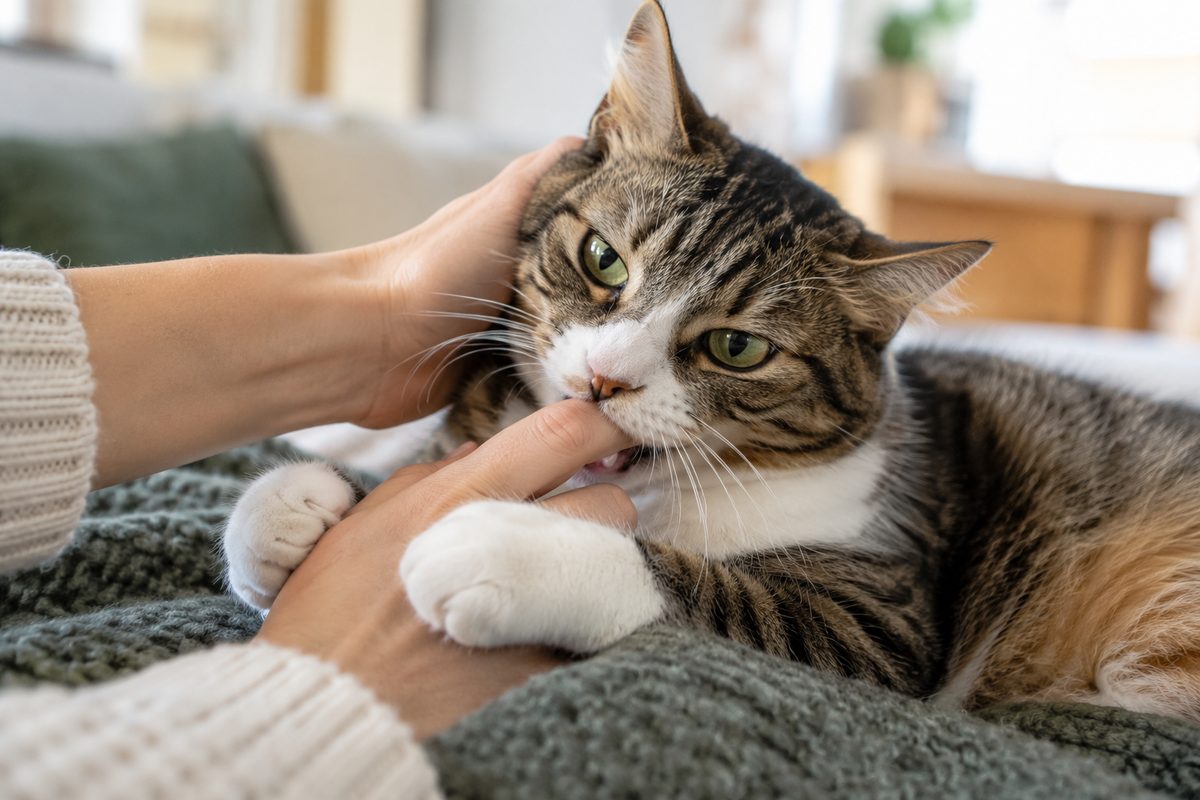
- Never use hands as toys: Playing rough with your bare hands encourages your cat to bite as part of bonding.
- Stay calm: Do not yell, hit, or punish your cat; simply remove your hand and withdraw attention.
If your cat bites during a purring session, say “no” calmly and end the petting. Consistency teaches your cat that biting interrupts the pleasant interaction.
When Biting While Purring Signals a Problem
Occasional love bites during purring are normal, but escalating or aggressive biting may indicate pain, stress, or a behavioral issue requiring attention.
- Pain or illness: A cat in discomfort may purr (self-soothing) while biting defensively. Check if your cat is in pain by observing changes in eating, litter box habits, or movement.
- Chronic overstimulation: If your cat cannot tolerate any petting without biting, consult your veterinarian to rule out neurological or sensory sensitivities.
- Fear or aggression: Bites paired with hissing, growling, or flattened ears signal fear-based aggression, not affection play. Learn the difference between playing and fighting to keep interactions safe.
- Excessive play aggression: Young or undersocialized cats may bite too hard during play. Introduce puzzle feeders and motion-activated toys to channel energy constructively.
If biting becomes unprovoked, frequent, or painful, contact your veterinarian to rule out medical causes before assuming behavioral problems.
For more veterinary guidance, see the Cornell Feline Health Center.
Frequently Asked Questions
- Is it normal for cats to bite while purring? Yes, gentle love bites during purring are normal cat behavior when overstimulated, but hard bites may signal pain or aggression and warrant a vet check.
- How do I know if my cat’s bite is playful or aggressive? Playful bites are gentle, occur during positive interactions, and stop when you withdraw; aggressive bites are hard, paired with hissing or growling, and come without warning.
- What toys help reduce biting behavior? Feather wands, laser pointers, and crinkle balls redirect hunting instincts away from hands and encourage appropriate play.
Understanding your cat’s purring and biting signals strengthens your bond and creates safer, happier interactions. Stop petting when warning signs appear, and redirect play to appropriate toys to keep both of you content.

