


How to Tell If Cats Are Playing or Fighting: Signs and Solutions
Cats play rougher than most animals, making it hard to know when playtime crosses into real conflict. The key difference lies in body language, sounds, and whether both cats walk away relaxed. Understanding these signals helps you intervene safely and lets your cats enjoy healthy, normal interaction without unnecessary stress.
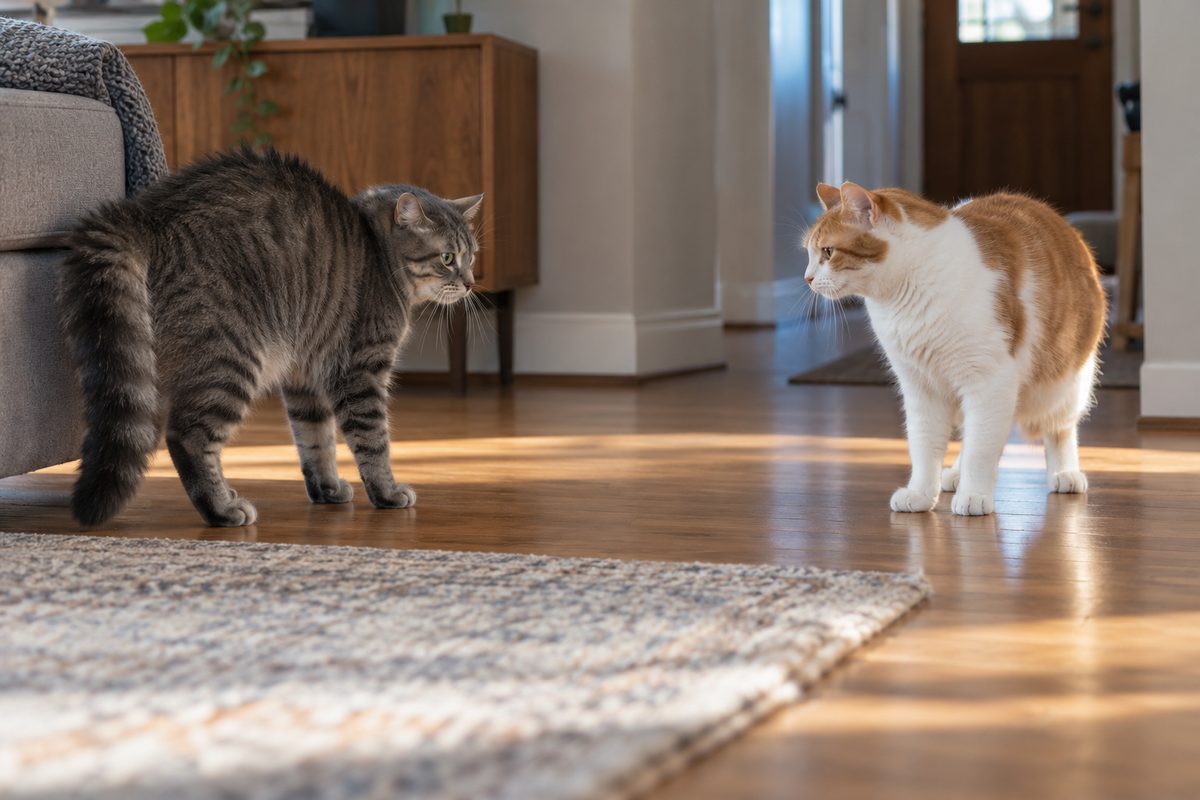
Table of Contents
Key Takeaways:
- Playing cats use soft meows, play bows, and take turns chasing; fighting cats hiss, growl, and show stiff body posture.
- Watch for mutual respect: playing cats initiate and pause together; fighting cats show fear or aggression consistently.
- Safe play leaves no injuries; real fights cause bleeding, missing fur, or obvious bite wounds.
- Separate cats only if one shows genuine distress or injury; letting them work things out builds natural boundaries.
Body Language: The Most Reliable Clue
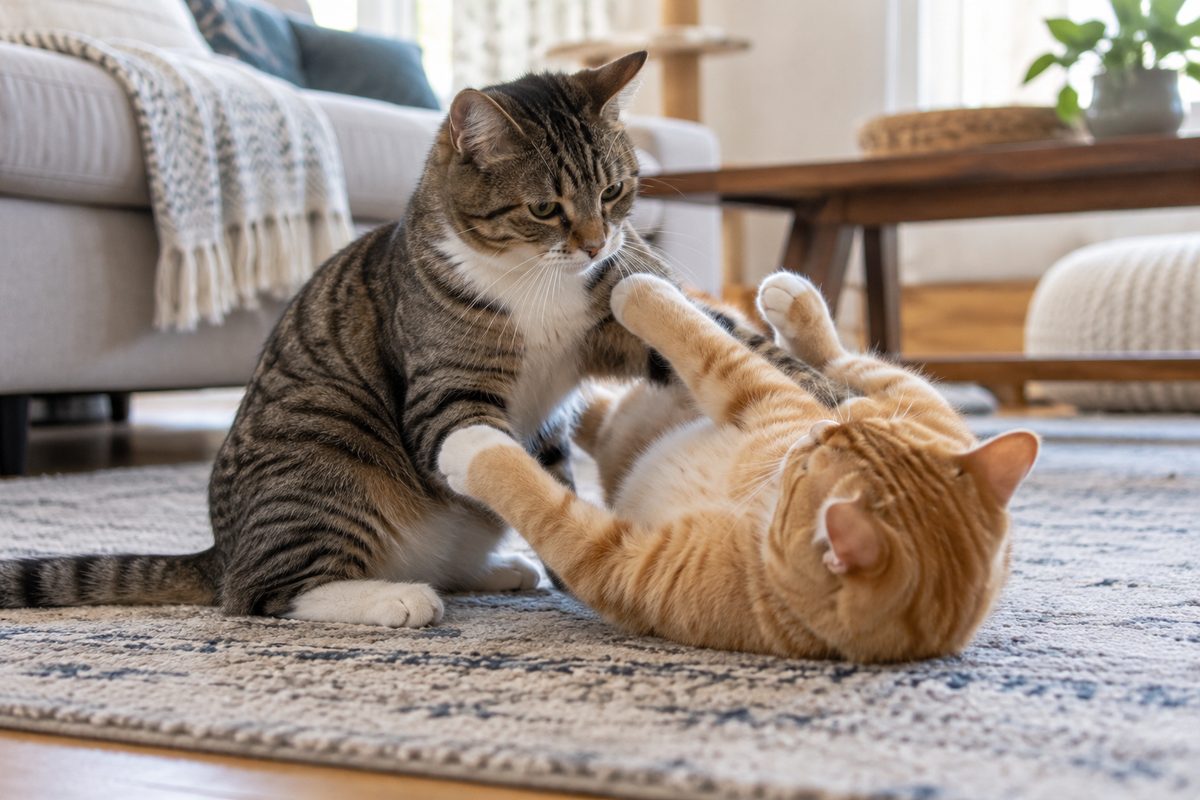
Body posture tells you almost everything about cat interaction intent. Playing cats have relaxed, wiggly bodies and often perform a “play bow” where the front end lowers and the rear stays high. Their tails are up or gently curved, ears are forward, and they frequently switch roles so the chaser becomes the chased.
- Playing: loose limbs, ears forward or neutral, tail held high or curved, frequent role reversals, soft facial expressions
- Fighting: stiff rigid posture, ears flattened back, tail puffed or tucked, one cat consistently dominant, crouched defensive stance
A cat being chased in play will often pause and turn to chase back. In a real fight, one cat consistently avoids and hides. Watch their overall energy: playing cats look engaged and happy; fighting cats look stressed or scared.
Sounds and Vocalizations During Play vs. Fighting
Cats make very different sounds depending on their intent. Soft chirps, quiet meows, and playful pouncing noises signal enjoyment. Serious conflict produces unmistakable warnings.
- Playing: soft meows, chirps, purring, occasional playful hisses, quiet squeaks
- Fighting: sustained hissing, loud growling, yowling, shrieking, constant loud vocalizations
A brief hiss during play is normal and means “that’s too rough, ease up.” Continuous hissing and growling paired with stiff posture signals genuine aggression. Trust your instinct: if it sounds violent and angry, it probably is.
Physical Contact and Injury Signs
The outcome of an interaction tells you what actually happened. Playing cats may grab each other but rarely cause harm. Check for real injury after rough sessions to confirm it was safe play.
- Safe play: no blood, no fur loss, no limping, both cats return to normal behavior within minutes
- Real fighting: visible scratches or bites, bleeding, missing fur patches, one cat limping or hiding, reluctance to return to normal activity
If you see blood, open wounds, or torn claws, separate the cats immediately and check for serious injuries. Minor scratches heal fast, but deep puncture bites can abscess and need veterinary attention.
The Pause Test and Mutual Respect
The clearest sign of healthy play is that both cats voluntarily pause and reset. A cat in true distress will not willingly re-engage; a cat enjoying rough play returns for more.
- Both cats walk away, groom, or rest without tension
- One cat initiates play again and the other agrees by play-bowing or pouncing back
- Neither cat seems afraid or avoids the other after the session ends
- They tolerate being near each other and may nap close by
If one cat hides, refuses to engage, or shows avoidance later, that cat may have felt bullied. Watch for repeat patterns: occasional rough play is normal; constant fleeing or hiding suggests a real problem. Introducing cats properly and managing play dynamics helps prevent escalation.
When to Separate and When to Let Them Work It Out
Intervening too much can actually disrupt healthy bonding. Most cat play-fighting is self-regulating. Only step in if safety is at risk or one cat is clearly distressed.
Separate immediately if:
- One cat is screaming or in visible pain
- There is active bleeding or serious injury
- One cat is trapped and cannot escape (cornered with no exit route)
- The pattern repeats and one cat consistently shows fear afterward
Let them work it out if:
- Both cats initiated and are actively engaging
- The session is brief and ends naturally with both cats walking away
- No blood is present and vocalizations are not extreme
- Both cats seem comfortable being near each other later
If aggression becomes a pattern, provide separate spaces and resources (litter boxes, food bowls, vertical perches or cat trees) so one cat can retreat. Playing with your cat regularly also burns energy and reduces boredom-driven conflicts.
For more veterinary guidance, see the Cornell Feline Health Center.
Frequently Asked Questions
- Is it normal for cats to bite and scratch while playing? Yes, light biting and scratching are normal cat play, especially for kittens and young cats; the key is that they cause no injury and both cats seem willing.
- How do I stop my two cats from fighting if it keeps happening? Separate them into different rooms, provide multiple resources, and use a cat calming diffuser to reduce stress; reintroduce them slowly and monitor closely.
- Can cats seriously injure each other during play? Serious injury during actual play is rare; if puncture wounds or deep scratches appear, it was likely a real fight and you should see a vet to check for infection risk.
Learning to read your cats’ cues keeps everyone safe while letting them enjoy normal social interaction. Most cat play looks scarier than it is, but trust visible injury and persistent avoidance as signs of real conflict.

