Bathe a Cat Safely: 6-Step Guide for Calm Bath Time
To bathe a cat safely, use lukewarm water, cat-specific shampoo, a non-slip surface, and a calm, quick routine of about 5 to 10 minutes. Most healthy cats clean themselves well, so a bath matters mainly for oil, dirt, fleas, or a vet-recommended skin treatment.
This post may contain affiliate links. As an Amazon Associate I earn from qualifying purchases.
Table of Contents
Bathe a cat at a glance:
- Short Answer: Fill a sink with 3 to 4 inches of lukewarm water, lather with cat shampoo, rinse completely, then towel dry.
- When It Is Needed: Sticky or toxic substances, flea infestations, medicated skin treatment, or a coat the cat cannot groom.
- Best Prep: Trim nails, brush out tangles, and gather every supply before the cat is wet.
- Biggest Mistake: Using human shampoo or leaving shampoo residue that the cat later licks off.
- When to See a Vet: Skin sores, heavy scratching, or a coat contaminated with an unknown chemical.
Why You Might Need to Bathe a Cat
Most adult cats spend a large part of the day licking their coats clean, so routine baths are usually unnecessary. Specific situations are the exception.
- Sticky or oily messes: Motor oil, grease, paint, or food on the coat can be swallowed during grooming, so wash it off promptly.
- Fleas: A bath can ease the itch of a flea infestation, though it does not replace proper flea control from your vet.
- Skin conditions: Cats with allergies or skin disease sometimes need a medicated shampoo, but only the type your vet recommends.
- Mobility problems: Senior, overweight, or arthritic cats often cannot reach their back end and may get soiled fur.
- Outdoor dirt and odor: Cats who roam outside can bring in grime or smells that brushing will not remove.
If your cat only looks a little dusty, a thorough brushing with a gentle brush or comb often does the job without any water. Our guide to cat grooming covers routine coat care between baths.
How to Prepare Before You Bathe a Cat
Preparation decides whether bath time takes five calm minutes or twenty stressful ones. Cats become more anxious the longer they stand wet and waiting.
Gather everything first:
- A Cat-specific shampoo, since human products can irritate feline skin. A cat-friendly shampoo that is unscented or lightly scented is the gentlest choice.
- Two or three absorbent towels, with one laid out ready to wrap your cat.
- A soft brush or comb for pre-bath detangling and post-bath finishing.
- A non-slip mat for the sink or tub floor, plus a plastic cup or handheld sprayer for rinsing.
- A few treats to reward your cat afterward.
Prepare your cat and the room:
- Trim the claws a day or two earlier. Our guide to trimming your cat’s nails shows how to avoid the quick.
- Brush out every mat before the bath, because water tightens tangles into dense clumps.
- Close the bathroom door and warm the room, since a wet cat chills quickly.
- Choose a time when your cat is relaxed, such as after a meal or play session.
Step-by-Step: How to Bathe a Cat
A steady, gentle routine works best, and most baths should finish within 5 to 10 minutes. Stay calm and speak softly throughout, because cats read your tension.
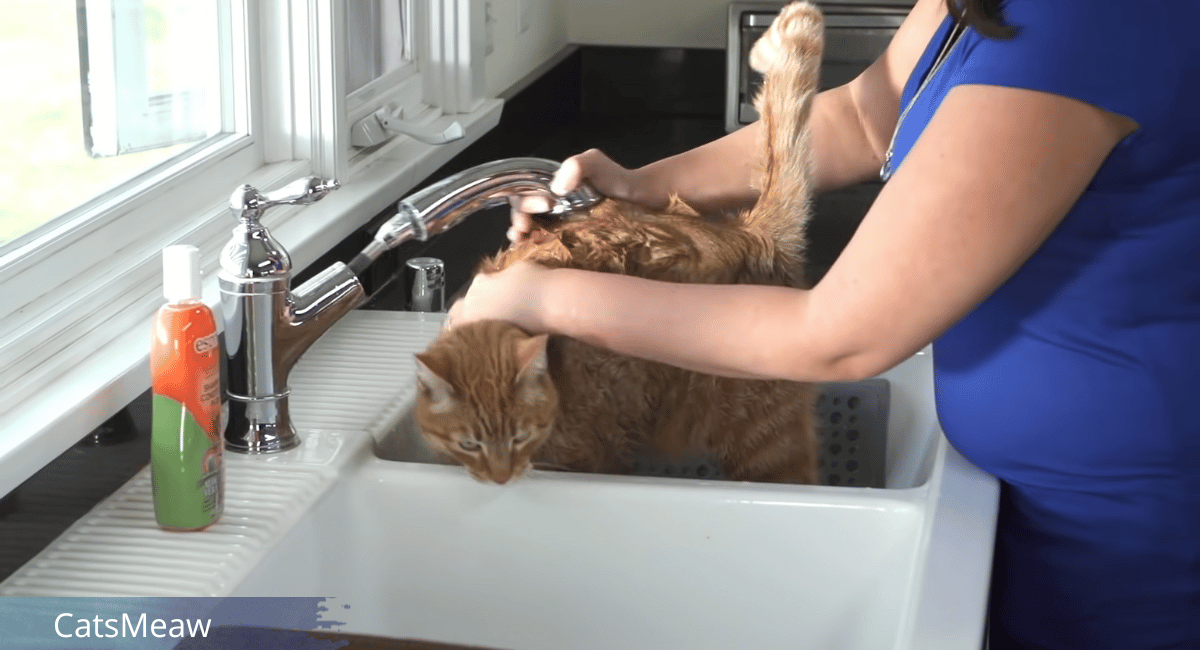
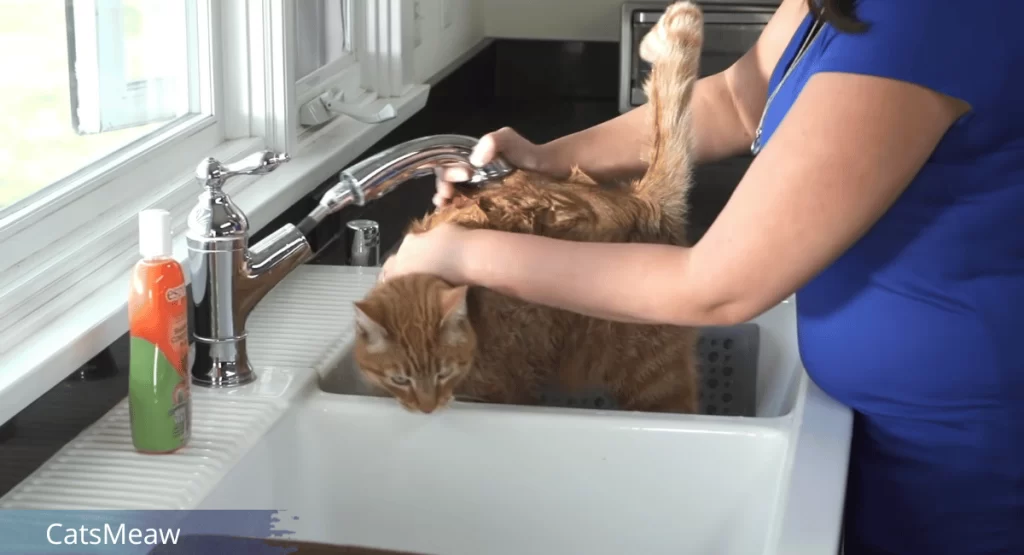
- Fill the basin: Add 3 to 4 inches of lukewarm water, roughly body temperature, and set the non-slip mat on the bottom.
- Wet the coat gradually: Use a cup or sprayer on low pressure, starting at the neck and moving toward the tail. Keep water away from the face.
- Apply shampoo: Dilute it as the label directs and massage it in the direction of hair growth. Avoid the eyes, ears, nose, and mouth.
- Rinse thoroughly: Pour or spray until the water runs clear, including the belly, armpits, and paws. Leftover shampoo irritates skin and gets licked off.
- Wipe the face separately: Use a damp, soft cloth with plain water, never shampoo.
- Wrap and dry: Lift your cat into a warm towel and pat, never rub vigorously, which can create tangles.
If your cat panics, stop and try again another day. Forcing a frantic cat through a bath risks scratches for you and lasting fear for them.
How to Keep Your Cat Calm During Bath Time
Cats dislike baths partly because wet fur feels heavy and cold, and partly because water disrupts the sensitive hairs they use to sense their surroundings. A few small changes reduce that stress.
- Watch for stress signals: Flattened ears, dilated pupils, trembling, drooling, and fast breathing mean your cat needs a pause.
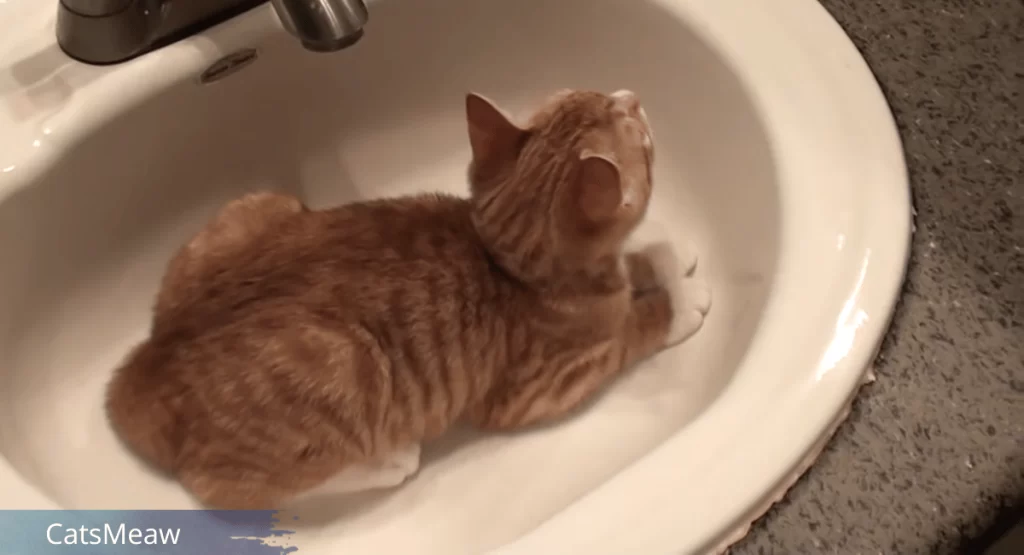
- Introduce the space early: Let your cat explore the dry tub or sink, and offer a treat there on a few earlier days.
- Use a gentle flow: A cup or low-pressure sprayer is far less alarming than a loud, strong stream.
- Be quick: Shorter baths build tolerance, so aim for efficiency over perfection.
- Get a helper: A second person can steady the cat while you wash.
Cats differ widely, and some tolerate warm water far better than others. If your cat never settles, consider a professional groomer instead. Our overview of cat grooming services explains what to expect.
Drying, Brushing, and Alternatives to a Full Bath
Dry your cat completely in a warm room, because a damp coat can chill a cat and leave skin irritated. Towel drying is usually enough for short coats.
- Towel first: Press the coat gently to absorb water rather than rubbing.
- Hair dryer only if tolerated: Use the lowest heat and quietest setting at a safe distance, or skip it entirely.
- Brush when nearly dry: Work out small tangles gently, which is especially important for long-haired cats.
- Reward calm behavior: Offer treats, praise, or a play session so bath time ends on a positive note.
For cats who truly cannot handle water, you can spot-clean a small mess with a damp cloth or use a waterless cat wipe made for felines. For stubborn mats on a bath-hating cat, see our guide to shaving a cat before attempting anything at home. If a bath is being considered for fleas, review ways to get rid of cat fleas and confirm the plan with your vet.
Never bathe a cat that has an open wound, a fresh surgical incision, or a suspected chemical exposure without veterinary advice. Poisoning, toxic substances, and skin lesions need a veterinarian, and the ASPCA Animal Poison Control Center can guide you if your cat contacted something harmful. Our general ASPCA cat care guide is also a solid reference for everyday grooming.
Recommended products:
Frequently Asked Questions
How often should you bathe a cat?
Most healthy cats rarely need a bath, often only a few times in their lives. Cats with skin conditions, mobility problems, or specific coat issues may need one every 4 to 6 weeks if your vet advises it.
Can you bathe a cat with dish soap?
Dish soap is not recommended for routine cat baths because it can dry the skin and strip natural oils. Use it only briefly for heavy grease emergencies, then rinse thoroughly and follow with a proper cat shampoo.
How do you bathe a cat that hates water?
Keep the bath short, use lukewarm water at a gentle flow, and wash only the dirty areas if possible. Waterless wipes or a damp cloth work well for cats who panic at running water.
Is it safe to bathe a kitten?
Kittens under about 8 weeks old chill easily and should only be spot-cleaned with a warm, damp cloth unless a vet says otherwise. Older kittens can have short, warm baths with kitten-safe shampoo.
To bathe a cat safely, prepare your supplies, keep the water lukewarm, rinse completely, and stay calm throughout. Start by brushing your cat and laying out towels before you ever run the water, so bath time stays quick and low-stress.