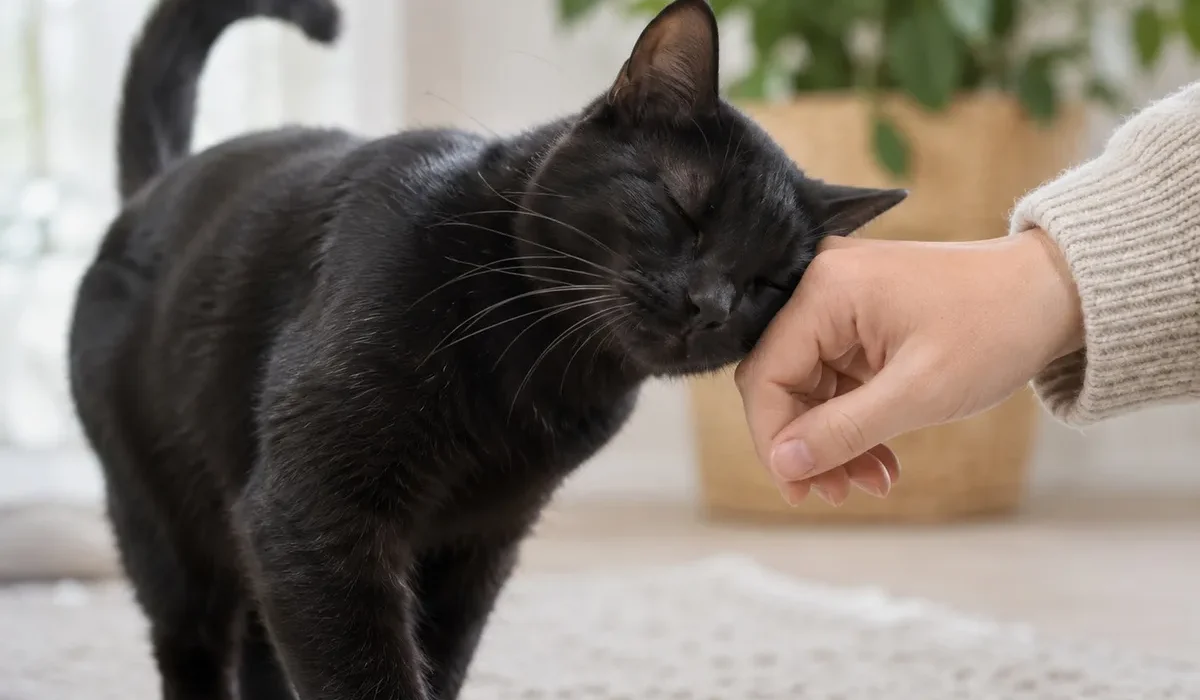
Why Does My Cat Headbutt Me? 7 Loving Reasons Behind Bunting
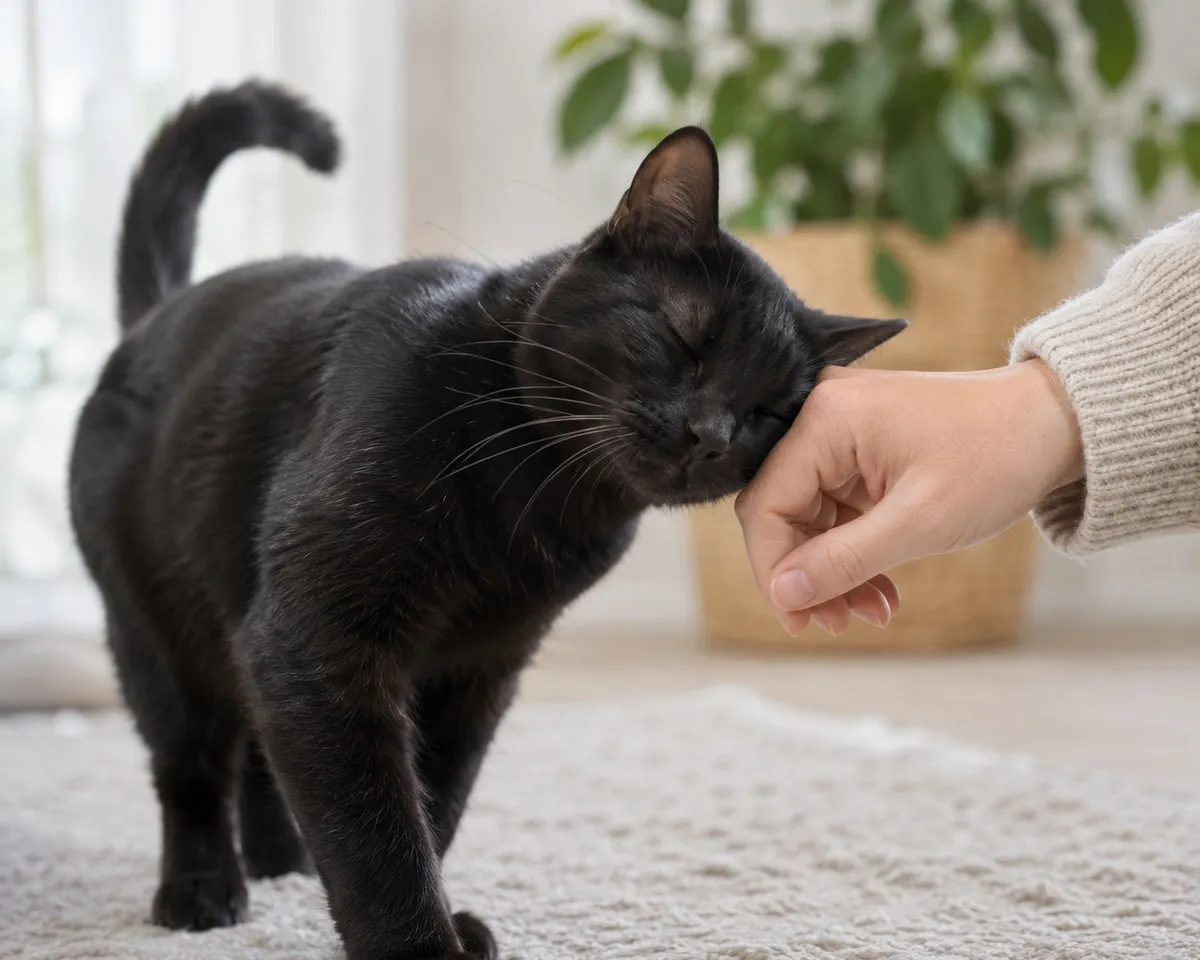
The answer to why does my cat headbutt me is simple: cats rub scent from glands on their forehead and cheeks onto you, marking you as trusted family. Bunting matters for owners who want to read feline affection and spot the rare head contact that signals illness.
This post may contain affiliate links. As an Amazon Associate I earn from qualifying purchases.
Table of Contents
Why does my cat headbutt me at a glance:
- Short Answer: Bunting spreads facial pheromones and marks you as part of your cat’s social group.
- Why Cats Do It: Scent marking, affection, greetings, and requests for food or petting.
- Is It Normal: Yes, healthy cats of every age bunt, starting as kittens.
- How to Respond: Offer a slow blink, a chin scratch, or an open hand.
- When to Worry: Head pressing against a wall for minutes needs a vet the same day.
What Is Bunting in Cats?
Bunting is the behavioral term for headbutting, when a cat pushes its forehead or cheeks against a person, animal, or object. Glands on the forehead, cheeks, chin, lips, and ear bases release pheromones that humans cannot smell.
Cats identify friends by scent more than sight, and International Cat Care explains that friendly cats rub each other to build a shared colony scent.
Why Does My Cat Headbutt Me? 7 Loving Reasons
When my cat Miso started bunting my chin every morning, she was treating me like family. Most headbutts fit one of seven reasons.
- Scent marking: Your cat deposits facial pheromones on you, just as cats rub door frames to claim territory.
- Affection and trust: Cats expose their faces only to people they trust, so bunting shows a strong bond.
- Greeting: Many cats bunt owners within a minute of arrival, refreshing scent that faded during the separation.
- Asking for attention: A firm headbutt often means “pet me now,” especially when your hands are busy.
- Food requests: Hungry cats bunt shins near mealtimes, targeting whoever fills the bowl.
- Self-soothing: Familiar scent lowers stress, so bunting increases after a move, vet visit, or new pet.
- Social bonding: Kittens bunt their mother from a few weeks old and keep the habit into adulthood.
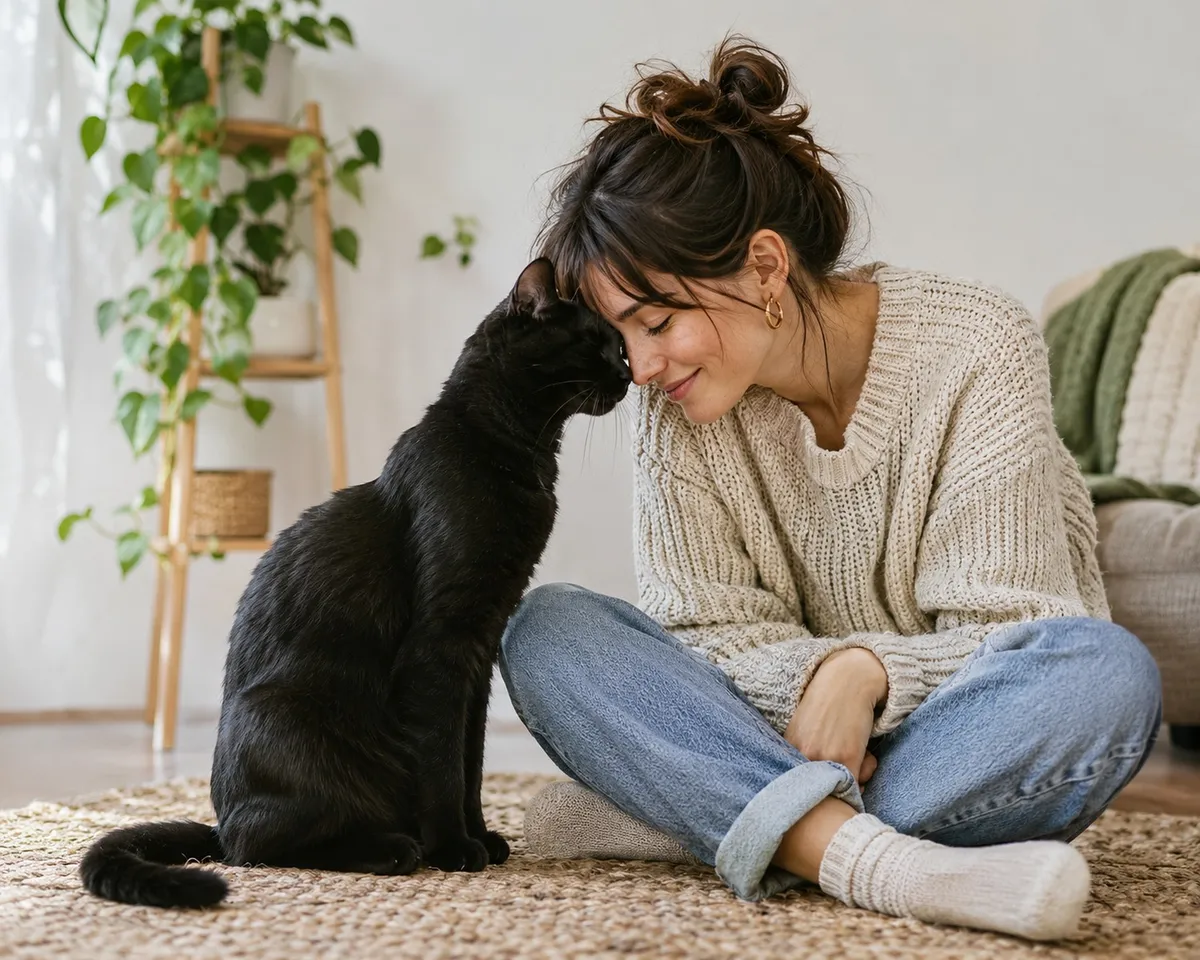
What a Cat Headbutt Means in Context
The part of the face your cat uses reveals the message behind each bunt.
| Behavior | What It Looks Like | Usual Meaning |
|---|---|---|
| Forehead headbutt | Firm push with the top of the head | Trust and affection |
| Cheek rub | Face slides along you | Scent marking and greeting |
| Chin rub | Chin drags across a hand | Claiming territory |
| Leg weaving | Cat winds around your ankles | Greeting or food request |
| Head pressing | Head held against a wall for minutes | Possible neurological illness |
An upright tail, purring, and soft eyes confirm a relaxed mood. Compare these cues with why cats slow blink and why do cats purr.
How to Respond When Your Cat Headbutts You
Accept a cat headbutt calmly and return gentle, familiar contact.
- Hold still and let your cat finish the rub.
- Offer a knuckle at nose height to bunt.
- Scratch under the chin and along the cheeks, where scent glands sit.
- Answer with a slow blink, which cats read as friendly.
- Stop if the tail lashes or ears flatten, since overstimulation explains why a cat bites while purring.
A cat self-groomer wall brush mounted at cheek height gives constant bunters an approved marking spot. For stress-related bunting, a synthetic feline facial pheromone diffuser releases calming facial scent near resting areas.
Why Does My Cat Headbutt Me So Much?
Frequent headbutting is normal in people-oriented cats and reflects strong attachment.
- Breed and personality: Siamese, Ragdolls, and cats with a classic Maine Coon personality bunt often.
- Fading scent: Showers, fresh laundry, and perfume remove your cat’s scent, so bunting increases afterward.
- Household changes: Moving or a new pet triggers extra marking until the home smells familiar.
- Intact cats: Unspayed and unneutered cats scent mark more, especially females in heat.
- Sudden stop: A cat that abruptly stops bunting may be unwell, so check the signs a cat is in pain.
Headbutting vs Head Pressing: When to See a Vet
Head pressing is not affection: it is a compulsive push of the head against a wall or corner, often for several minutes. Head pressing can signal liver disease, brain tumors, stroke, head trauma, or toxins, and the Cornell Feline Health Center covers these conditions.
Emergency signs:
- Head pressed into a wall or corner
- Circling, stumbling, or unsteady walking
- Blank staring or not recognizing family
- Seizures or sudden vision loss
Take a cat showing any of these signs to a veterinarian the same day, because head pressing is a medical emergency.
Frequently Asked Questions
Is it good if my cat headbutts me?
Yes, headbutting is one of the clearest signs of feline trust, because cats bunt only people they consider safe.
Why does my cat headbutt me and then bite?
A gentle nip after bunting usually signals overstimulation, and most cats warn with a twitching tail a few seconds before biting.
Do cats headbutt to show dominance?
No, bunting is a friendly behavior that cats direct at trusted companions, not rivals.
Why does my cat headbutt my face?
Human faces carry strong personal scent, and face bunting mirrors how bonded cats greet each other nose to nose.
At what age do kittens start headbutting?
Kittens rub against their mother in the first weeks of life, and most begin bunting people during the socialization window of 2 to 7 weeks.
The answer to why does my cat headbutt me comes down to scent and trust: your cat is marking you as family. Return each bunt with a slow blink or chin scratch, and treat sustained head pressing as a vet emergency. Tonight, offer a relaxed knuckle at nose height and watch the bunting begin.