
Why Does My Cat Lick Me? 8 Sweet Reasons Explained
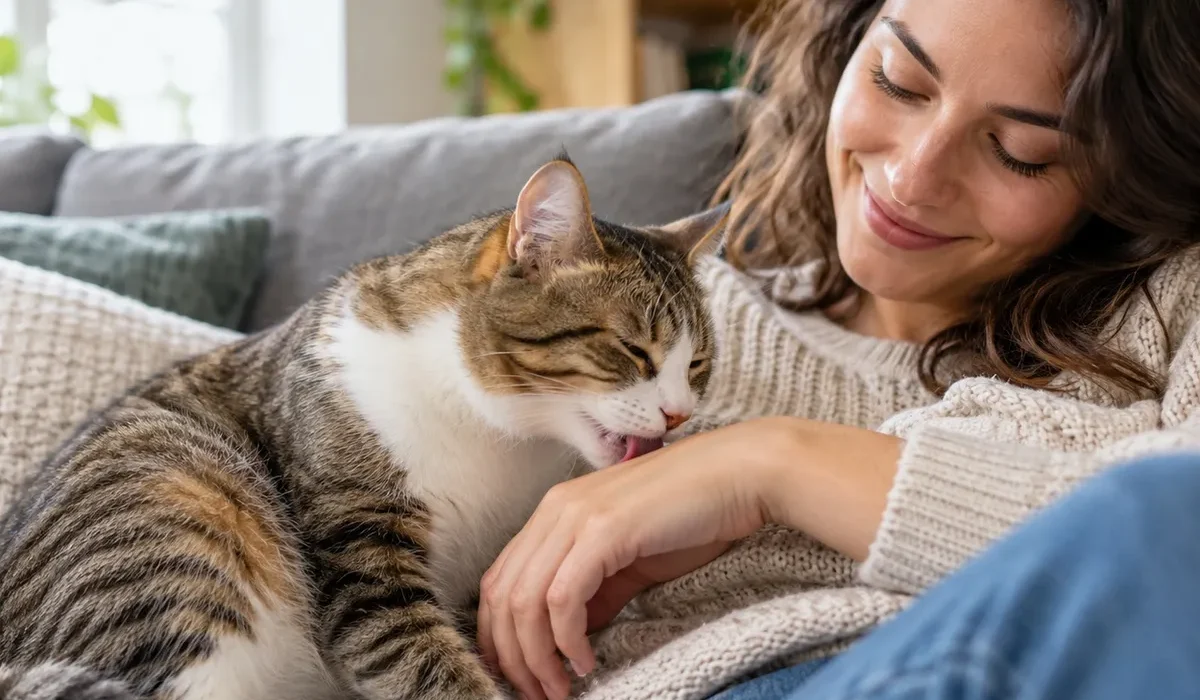
Why does my cat lick me? Cats lick people mainly to show affection, to groom a member of their social group, and to mark you with their scent. It matters most for new owners and for anyone whose cat suddenly licks far more than usual.
This post may contain affiliate links. As an Amazon Associate I earn from qualifying purchases.
Table of Contents
Why does my cat lick me at a glance:
- Short Answer: Licking is a social behavior that cats learned as kittens, when their mother licked them to clean and comfort them.
- Why Cats Do It: Affection, grooming, scent marking, attention seeking, comfort, taste, stress relief, and sometimes a medical issue.
- Is It Normal: Yes, a few gentle licks per day are normal and a sign of trust.
- How to Respond: Enjoy mild licking, redirect pushy or constant licking, and see a vet if licking becomes compulsive.
- When to Worry: Licking that is frantic, non-stop, or paired with hair loss, sores, or sudden behavior changes.
Why Does My Cat Lick Me? The Short Answer
Cats lick people because licking is their main way of bonding. Kittens are licked by their mother from the first hour of life, and that early contact teaches them that licking means warmth, safety, and closeness.
Adult cats carry this habit into their adult relationships. When a cat licks your hand, arm, or face, it often treats you as part of its family group.
The behavior has several layers, and more than one reason can apply at the same moment. A cat may lick you because it loves you, because you taste salty, and because it wants breakfast.
8 Reasons Your Cat Licks You
1. Affection and Bonding
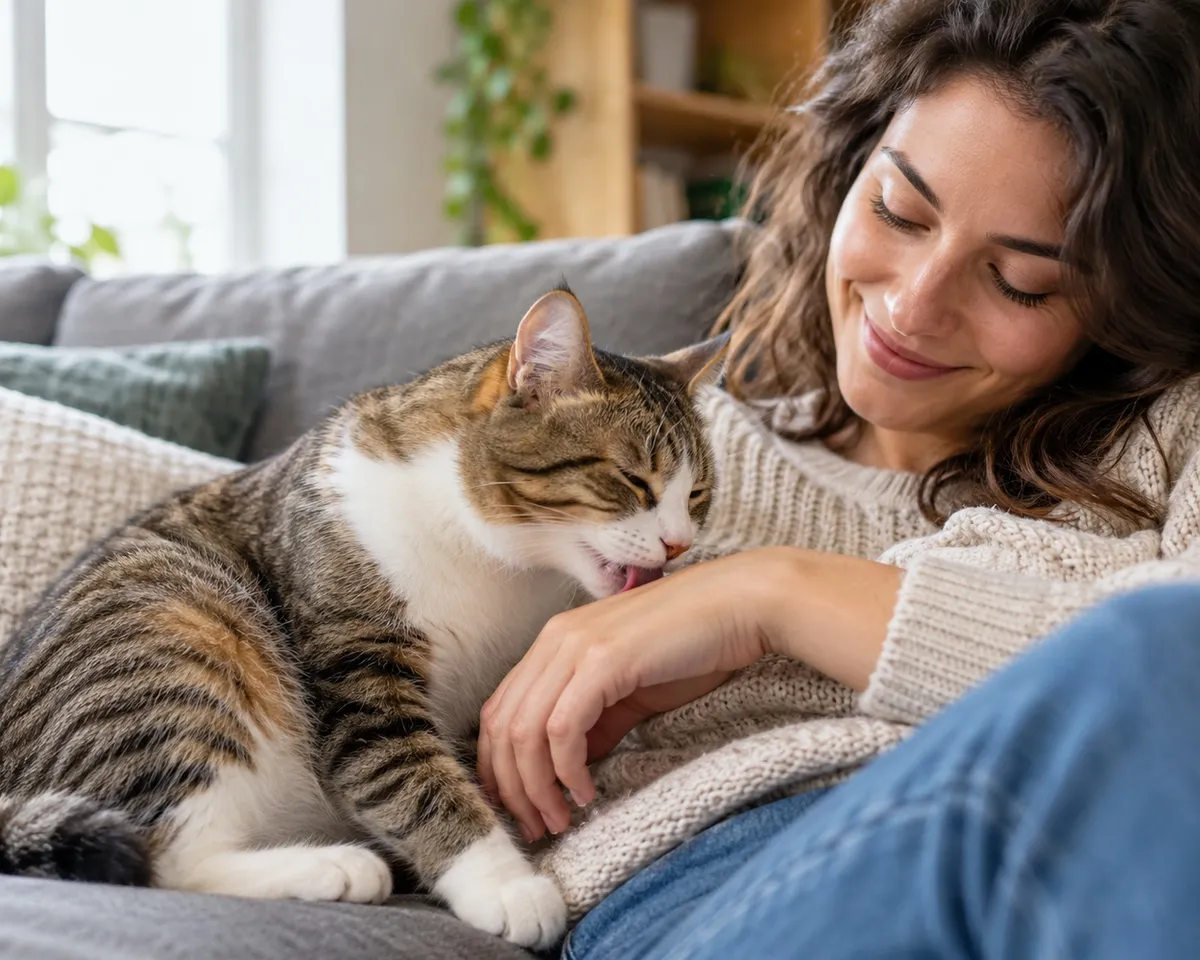
The most common reason for licking is affection. Cats that are closely bonded groom each other, a behavior called allogrooming, and they usually do it only with cats they trust.
When your cat licks you, it is offering you the same treatment. You can read more about this social behavior in our guide to cats grooming each other.
2. Grooming You as Part of the Family
Cats spend 30 to 50 percent of their waking hours grooming themselves. A cat that considers you family may include you in that routine.
This is often why a cat licks your hair, eyebrows, or beard. It sees those spots as areas that need tidying.
3. Scent Marking and Sharing Smell
Cats live in a world of smell. Licking you transfers saliva, which carries the cat’s personal scent, and it helps blend your smell with theirs.
This creates a shared family scent. It is a quiet way of saying that you belong to them, much like head bunting and kneading.
4. Your Skin Tastes Interesting
Sweat contains salt, and many cats like the taste. Lotion, soap, sunscreen, and food residue on your hands can also attract a curious tongue.
If your cat licks you most right after a workout, a shower, or a meal, taste is probably part of the reason. Avoid letting your cat lick skin that carries medicated creams, essential oils, or sunscreen, since some of these are harmful to cats.
5. Attention Seeking
Cats learn quickly what gets a reaction. If licking makes you talk, pet, or feed them, they will repeat it.
This kind of licking often happens at predictable times, such as early morning, near mealtime, or when you are busy on a laptop. Cats that stare at you or follow you everywhere often use licking in the same way.
6. Comfort and Self-Soothing
Licking releases calming chemicals in a cat’s brain. Some cats lick you the way a child sucks a thumb, especially when relaxed on your lap.
Cats that were weaned early or raised without a mother may lick, suck, or nibble on people more than others. This is generally harmless as long as it stays gentle.
7. Stress or Anxiety
A cat that licks you more after a move, a new pet, or a change in routine may be coping with stress. Licking calms them down and gives them a sense of control.
Stress licking usually looks tense. The cat may lick fast, stare, or seem unable to settle afterward. Our guide to why cats suddenly hide covers other signs of a stressed cat.
8. A Habit You Accidentally Taught
Many owners reward licking without realizing it. Laughing, petting back, or saying “kisses” teaches your cat that licking pays off.
Over time, this turns a few gentle licks into a daily routine. This is not a problem unless the licking becomes demanding or rough.
Why Does My Cat Lick Me Then Bite Me?
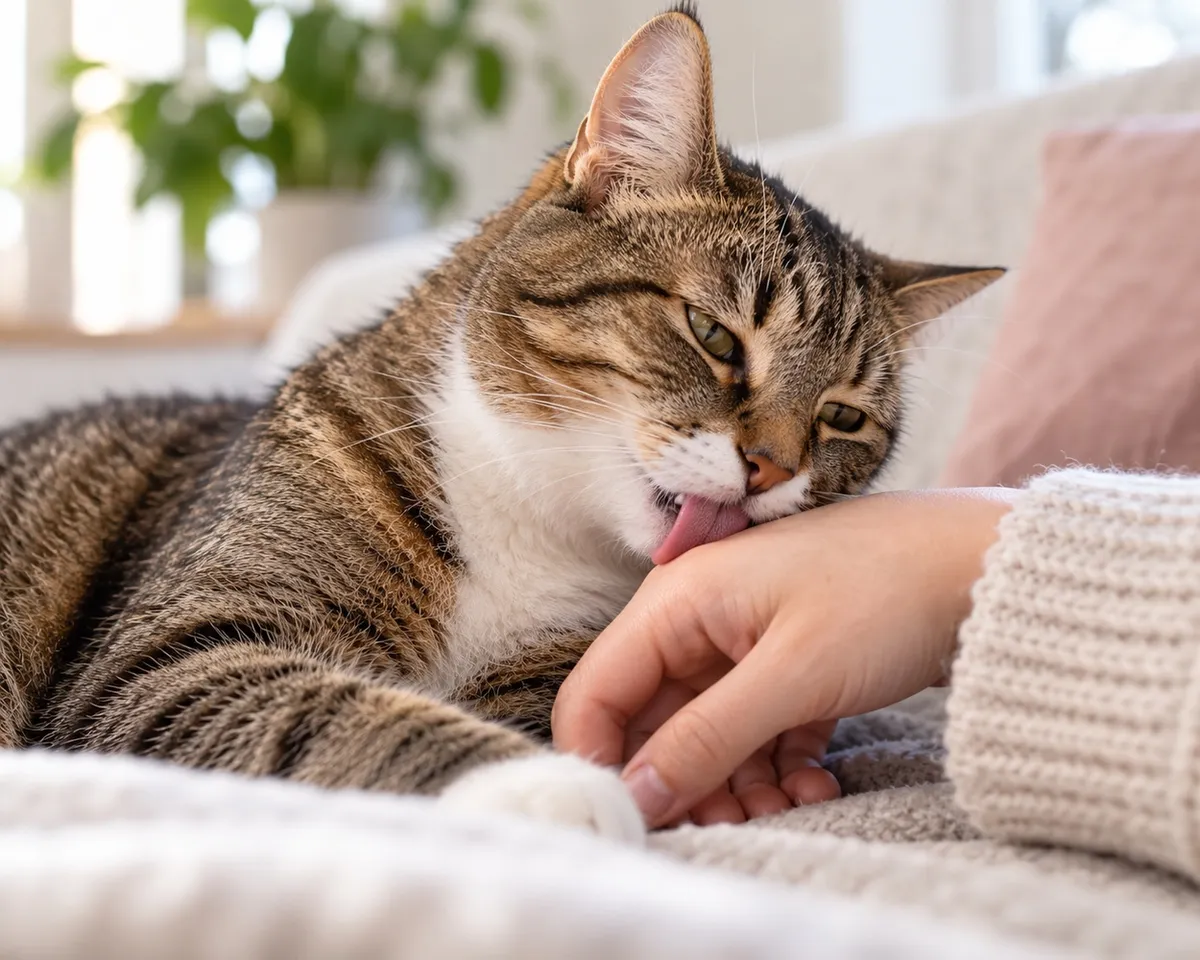
Some cats lick for a while and then give a gentle nip. This is often called a love bite, and it usually means the cat is overstimulated or has had enough petting.
Watch for warning signs before the nip: twitching tail, flattened ears, skin rippling along the back, or a sudden stillness. When you see these, stop petting and let your cat walk away.
If your cat bites while relaxed or purring, our article on why cats bite while purring explains the cause in more detail.
Is Licking Normal? Quick Reference Chart
| Type of Licking | What It Looks Like | Usual Meaning |
|---|---|---|
| Gentle, short licks | Relaxed cat, a few licks on hand or arm | Affection and bonding |
| Licking hair or face | Cat sits close and grooms you slowly | Allogrooming, family behavior |
| Licking near mealtime | Licks plus meowing or following you | Attention seeking, hunger |
| Fast, tense licking | Stiff body, dilated pupils, hard to stop | Stress or anxiety |
| Licking then biting | Sudden nip, twitching tail | Overstimulation |
| Constant, obsessive licking | Cannot be redirected, may also overgroom | Compulsion or medical issue |
Signs the Licking Is a Problem
Most licking is harmless, but certain patterns deserve attention. Contact a veterinarian if you notice any of these signs:
- Licking that is constant, frantic, or hard to interrupt
- Bald patches, red skin, or sores on the cat’s own body from overgrooming
- Sudden new licking in an adult cat that never licked before
- Licking paired with appetite loss, vomiting, or hiding
- Licking of fabric, plastic, or wool along with chewing or swallowing
Pain, skin allergies, parasites, and thyroid problems can all increase licking. Our pages on hair loss in cats and allergies in cats explain two common medical causes. If you suspect fleas, see our tips to get rid of cat fleas.
A vet can rule out medical problems and, if needed, help with anxiety-related licking. Never give your cat human medicine to calm it down, as many common drugs are toxic to cats.
How to Respond When Your Cat Licks You
Your response depends on the reason and the intensity. Use these steps to guide the behavior in a healthy direction:
- Allow gentle licking if you enjoy it, because it strengthens your bond.
- Calmly move your hand away if the licking becomes rough or sandpaper-like on sensitive skin.
- Redirect demanding licking by offering a toy, a treat puzzle, or a scheduled play session.
- Avoid scolding, because punishment increases stress and can make licking worse.
- Keep a daily routine with set meal times and two play sessions of 10 to 15 minutes.
Regular play burns energy and reduces attention-seeking behavior. Try the ideas in playing with your cat or a wand toy with feathers to give your cat a better outlet.
For cats that lick out of boredom, a puzzle feeder can keep the mind busy and slow down fast eaters. Environmental enrichment works best when combined with consistent attention from you.
Why Does My Cat Lick Me So Much All of a Sudden?
A sudden increase in licking usually has a trigger. Common triggers include a new pet, a move, a change in your work schedule, or a new product on your skin.
Check what changed in the past two weeks. Even small changes, such as new furniture or a different litter, can raise a cat’s stress level.
If you cannot find a trigger and the licking continues for more than a few days, book a veterinary check-up. Learn what a healthy routine involves in our guide to regular veterinary check-ups for cats. For general information on cat behavior, the ASPCA guide to common cat behavior issues is a reliable resource.
Frequently Asked Questions
Why does my cat lick me and then bite me?
A lick followed by a bite is usually a sign of overstimulation, not aggression. Most cats give this love bite after 1 to 3 minutes of petting when they have had enough.
Is it safe to let my cat lick my face?
Occasional licks are generally low risk for healthy adults, but cat saliva can carry bacteria such as Pasteurella. Avoid licks on broken skin or near your mouth, and wash your face afterward, especially if you are pregnant or have a weakened immune system.
Why does my cat lick my hair?
Cats lick hair because they treat you as part of their group and because hair holds scent from shampoo, skin oils, and food. Gentle hair grooming usually signals trust and relaxation.
Why does my cat lick me when I pet her?
Licking while being petted is a common way for cats to return affection. It is an exchange of grooming, and it often happens when a cat feels calm and secure.
Should I stop my cat from licking me?
You only need to stop licking that is rough, constant, or driven by anxiety. Redirect your cat with play or a toy, and consult a vet if the habit seems compulsive.
Why does my cat lick me? In most homes the answer is simple: affection, grooming, and scent sharing that show your cat trusts you. Enjoy gentle licks as a compliment, redirect pushy licking with play, and schedule a vet visit if the licking turns constant, frantic, or comes with hair loss or other changes.