Why Do Cats Knead? 7 Adorable Reasons Explained
Why do cats knead? Cats push their paws rhythmically against soft surfaces because the habit starts in kittenhood, when kneading the mother’s belly stimulates milk flow, and adult cats repeat it as a sign of comfort, contentment and ownership. It matters for every cat owner, because kneading is normal, harmless behavior in almost every cat, though a few patterns deserve attention.
This post may contain affiliate links. As an Amazon Associate I earn from qualifying purchases.
Table of Contents
Why do cats knead at a glance:
- Short Answer: Kneading is a leftover nursing instinct that adult cats use to self-soothe, mark territory and show affection.
- Why Cats Do It: Comfort, scent marking from paw glands, stretching, nest making and, in females, heat signaling.
- Is It Normal: Yes, kneading is normal in cats of every age, sex and breed, including spayed and neutered adults.
- How to Respond: Protect your lap with a thick blanket, keep claws trimmed and never punish a kneading cat.
- When to Worry: Sudden, frantic or painful kneading, or kneading with other behavior changes, deserves a vet check.
What Is Kneading, and Why Do Cats Knead at All?
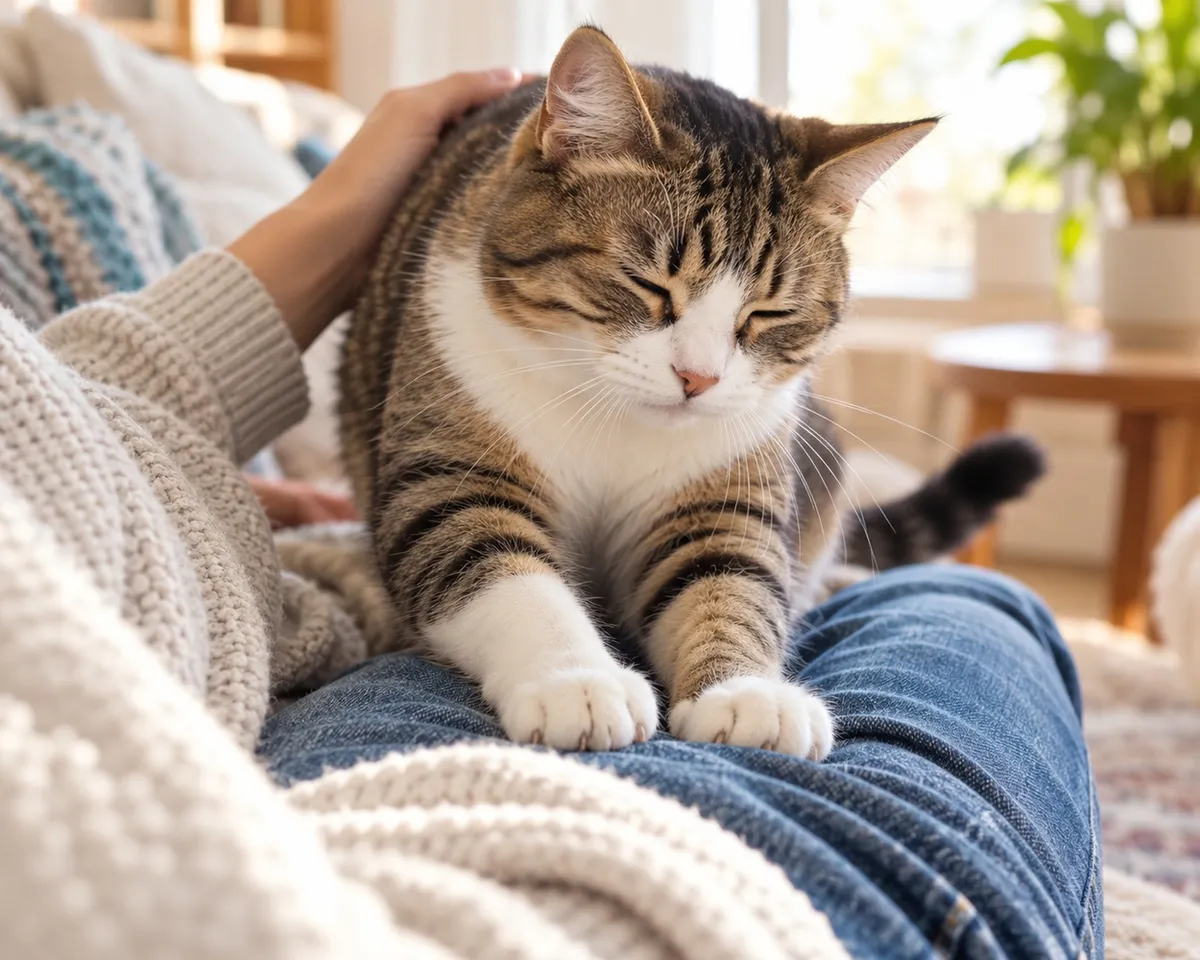
Kneading is the rhythmic pushing of alternating front paws against a soft surface, often described as “making biscuits.” Cats may extend and retract their claws while they do it, and many purr, drool slightly or half close their eyes.
The motion looks like a baker working dough, which is where the nickname comes from. A session can last a few seconds or several minutes. Some cats knead only blankets, while others pick favorite humans, pillows or even a sleeping dog.
Owners often ask why do cats knead when no one taught them the motion. The answer is that kneading is instinctive, since it shows up in domestic cats and in many wild felines. You can often see it on a quiet evening, when a relaxed cat settles in and starts pressing its paws in a slow, steady beat.
Why Do Cats Knead? 7 Reasons Behind the Behavior
Most cats knead for several overlapping reasons at once. Here are the seven most widely accepted explanations from cat behavior experts.
1. A Nursing Instinct From Kittenhood
Newborn kittens knead their mother’s belly while nursing, and the pressure helps stimulate milk flow. Kittens begin this motion within the first days of life. Because nursing means warmth, food and safety, the movement becomes linked with pure comfort, and many cats carry it into adulthood.
2. Comfort and Self-Soothing
Cats often knead when they feel relaxed and sleepy, much like a person sinking into a favorite chair. The repetitive motion appears to calm them. Many cats knead right before settling down for a nap, which is also why cats that sleep on you so often knead first.
3. Scent Marking With Paw Glands
Cats have scent glands in the pads of their paws. Each press releases a small amount of scent onto the surface, marking it as familiar and safe. When your cat kneads you, it is blending its scent with yours, a way of saying you belong to its group.
4. Making a Comfortable Bed
Wild cats flatten grass and leaves before resting, and kneading is thought to echo that habit. Pressing a surface softens it and checks that it is safe to lie on. Your cat may be “preparing” a blanket the same way its ancestors prepared a patch of ground.
5. Stretching the Muscles
Kneading works the muscles of the shoulders, legs and paws. Cats often stretch and knead together after waking up. It is a gentle bit of exercise that keeps the claws and toe joints flexible.
6. Showing Affection and Trust
A cat that kneads you is treating you like its mother, which is a high compliment. Kneading usually happens only when a cat feels completely safe. If your cat also stares softly and purrs, it is showing the same bond described in our guide to why cats stare at you.
7. Signaling Heat in Unspayed Females
Unspayed females may knead more intensely when they are in heat, often combined with loud calling and rolling. This is one reason kneading is sometimes linked to the reproductive cycle. If you suspect this, read about a cat in heat and how long it lasts.
Why Do Cats Knead People and Blankets?
Cats knead whatever feels soft, warm and associated with comfort. Your lap, a fleece throw and a fluffy bed all qualify because they resemble the warm belly of a mother cat.
Here is why your cat may choose certain targets:
- Your lap or chest: It carries your scent, your warmth and your heartbeat, which together signal safety.
- Blankets and sweaters: Soft, loose fabric is easy to push and holds scent well.
- Other pets: Cats sometimes knead a sleeping dog or another cat, treating them as part of the family.
- Pillows and beds: These are prime resting spots that your cat wants to claim and soften.
When my own cat first started kneading my sweater, I noticed it only happened in the evening after she had eaten and settled down. That timing is typical, since kneading is tied to relaxation more than hunger.
People who ask why do cats knead their owners more than other family members usually find the answer in scent and bonding. The person who feeds, pets and talks to the cat most often becomes the favorite soft target.
Why Do Cats Knead and Drool or Suck?
Some cats drool, suck on fabric or purr loudly while kneading. These signs usually mean the cat has slipped into a deeply relaxed, kitten-like state. The drooling mirrors the nursing reflex that kneading once triggered.
Cats that were weaned early, orphaned or bottle raised tend to knead and suck more often as adults. The habit comforts them in the same way a pacifier comforts a baby. If you raised a kitten by hand, our guide on bottle feeding a kitten explains how that early bond forms.
Gentle fabric sucking is generally harmless. Wool eating or swallowing fabric, however, can cause a dangerous intestinal blockage and should be stopped and discussed with a vet.
Is Kneading Normal at Every Age?
Kneading is normal in kittens, adults and senior cats. The table below shows what to expect at each stage.
| Life Stage | Typical Kneading | What It Usually Means |
|---|---|---|
| Newborn to 4 weeks | Constant, during nursing | Stimulating milk flow |
| Kittens, 1 to 12 months | Frequent, playful | Comfort and learning |
| Adults, 1 to 10 years | Occasional, relaxed | Contentment and marking |
| Seniors, 10+ years | Less frequent | Comfort, sometimes joint stiffness |
Most cats never outgrow kneading, and it is not a sign of immaturity. A cat that kneads at age 12 is simply a cat that feels secure. If you are bringing home a young cat, our kitten care essentials cover what normal early behavior looks like.
Why Do Cats Knead Too Much? When It Becomes a Problem
Kneading is rarely a medical concern, but certain changes are worth noting. A cat that suddenly kneads far more than usual, or seems distressed while doing it, may be reacting to stress, pain or hormones.
Signs to watch for:
- Kneading that looks frantic, compulsive or hard to interrupt.
- Vocalizing in pain, limping or flinching while kneading.
- Kneading paired with hiding, appetite loss or litter box changes.
- Sudden kneading in an adult cat with no history of it.
- Obsessive fabric sucking or chewing that damages items.
Compulsive kneading can be linked to anxiety or boredom, and a vet can rule out medical causes. If your cat also seems withdrawn, check our guide to why a cat is suddenly hiding and book a visit. A cat showing several signs of discomfort may also be hurting, so see signs a cat is in pain. Stiff, painful kneading in an older cat can reflect arthritis, and the Cornell Feline Health Center explains how joint disease shows up in cats.
Contact a veterinarian promptly if kneading comes with sudden behavior changes, and treat any signs of severe pain as urgent.
How to Handle Kneading Comfortably
You never need to stop a cat from kneading, but you can make it more comfortable for both of you. The goal is to protect your skin and furniture while keeping the behavior safe and happy.
Practical steps:
- Place a thick folded kneading blanket on your lap before your cat jumps up.
- Trim your cat’s claws every 2 to 3 weeks, and follow our steps for trimming your cat’s nails.
- Offer a dedicated soft spot, such as a fleece bed, so your cat has an approved place to knead.
- Stay calm and gently lift or slide your cat’s paws away if claws become painful.
- Reward relaxed kneading with a soft voice or a slow stroke rather than reacting sharply.
Never punish, spray or yell at a kneading cat. Cats do not connect the punishment to the action, and it can damage trust. Because the behavior comes from comfort, scolding often creates stress and may increase anxious habits.
If kneading damages furniture, protect surfaces with throws and review ideas to stop cats from scratching furniture. Regular claw care also reduces snagged fabric and sore skin.
Why Do Cats Knead in Other Situations?
Cats knead in a few extra situations that confuse owners. Understanding them helps you read your cat’s mood correctly.
- Before sleep: Many cats knead for 30 seconds to a few minutes, then curl up.
- During petting: Kneading while you stroke the cat shows deep contentment.
- On hard surfaces: Some cats mime the motion on a floor, which is usually just a habit.
- With purring: Pairing the two is a strong sign of happiness, as explained in why cats purr.
Kneading with a flicking tail, dilated pupils or flattened ears is a different story, since those signs point to overstimulation. Pay attention to the full body language, not just the paws. A relaxed cat has soft eyes and a loose body.
Anyone wondering why do cats knead and then suddenly bite should read that body language closely. Overstimulation, not anger, is the usual cause, and stopping the petting early prevents most nips.
Frequently Asked Questions
Why do cats knead and then bite?
Some cats knead and then nip because they become overstimulated by petting or over-excited by the soft sensation. Watch for a twitching tail and stop touching your cat at the first sign, usually within a few seconds.
Why do cats knead their owners specifically?
Cats knead owners because they feel safe and bonded, treating you like a parent. Your scent, warmth and gentle voice all signal comfort, so your cat repeats the same instinct it used as a kitten.
Is it bad if my cat never kneads?
No, many healthy cats never knead at all. Kneading varies by personality, early experience and breed, and a cat that skips it can still be perfectly happy and bonded to you.
Why do cats knead more in spring or when in heat?
Unspayed females may knead more intensely during heat, often alongside loud calling and rolling. Spayed and neutered cats keep the habit for life, driven mainly by comfort rather than hormones.
How can I stop my cat from kneading me painfully?
Trim the claws every 2 to 3 weeks and place a thick blanket between your cat and your skin. Never punish the cat, because kneading is a natural comfort behavior rather than misbehavior.
Now you know why do cats knead: it is a warm, instinctive habit rooted in kittenhood that signals trust, comfort and love. Keep your cat’s claws trimmed, offer a soft blanket for your lap, and see a vet if the kneading ever turns frantic or painful.