
Can Cats Eat Rice? 6 Helpful Facts for Upset Stomachs
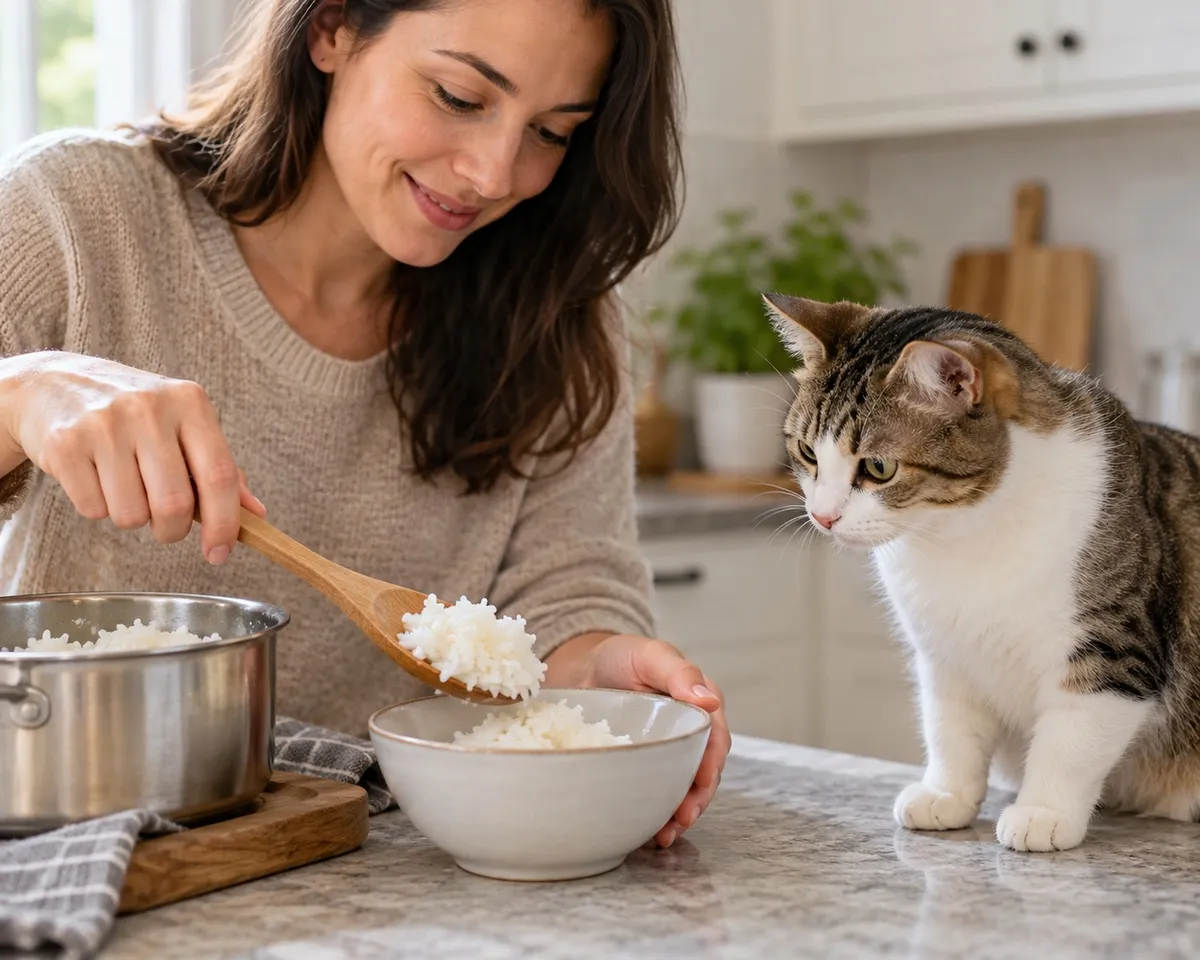
Yes, can cats eat rice is a question with a safe answer: plain cooked rice is non-toxic and easy to digest in small amounts. It matters most for owners of cats with mild diarrhea or an upset stomach, since a spoonful of bland rice is a common short-term vet suggestion.
This post may contain affiliate links. As an Amazon Associate I earn from qualifying purchases.
Table of Contents
Can cats eat rice at a glance:
- Short Answer: Yes, plain cooked white or brown rice is safe for most healthy cats in small amounts.
- Safe Amount: About 1 to 2 teaspoons mixed into regular food, no more than a few times a week.
- Main Benefit: Rice is bland and low in fat, so it can help settle a mildly upset stomach.
- Main Risk: Cats are obligate carnivores, so rice adds carbohydrates but no complete nutrition.
- When to See a Vet: Diarrhea or vomiting lasting more than 24 to 48 hours needs a veterinary exam.
Can Cats Eat Rice Safely?
Plain cooked rice is safe for cats because it contains no ingredients known to be toxic to them. Rice is a starchy grain made mostly of carbohydrate, with very little fat and only small amounts of protein.
That said, cats do not need grains to survive. Their bodies are built to get energy from animal protein and fat, so rice is a side extra and never a meal replacement.
Many commercial cat foods already include rice, rice flour or rice bran as a binder or carbohydrate source. This means a bit of cooked rice is not a foreign ingredient to most feline digestive systems.
The key word is plain. Rice cooked with butter, garlic, onion, salt or spices can make a cat sick, and onion and garlic in particular are dangerous. For more on risky ingredients, see our guide to dangerous foods for cats.
Can Cats Eat Rice for Diarrhea and Upset Stomachs?
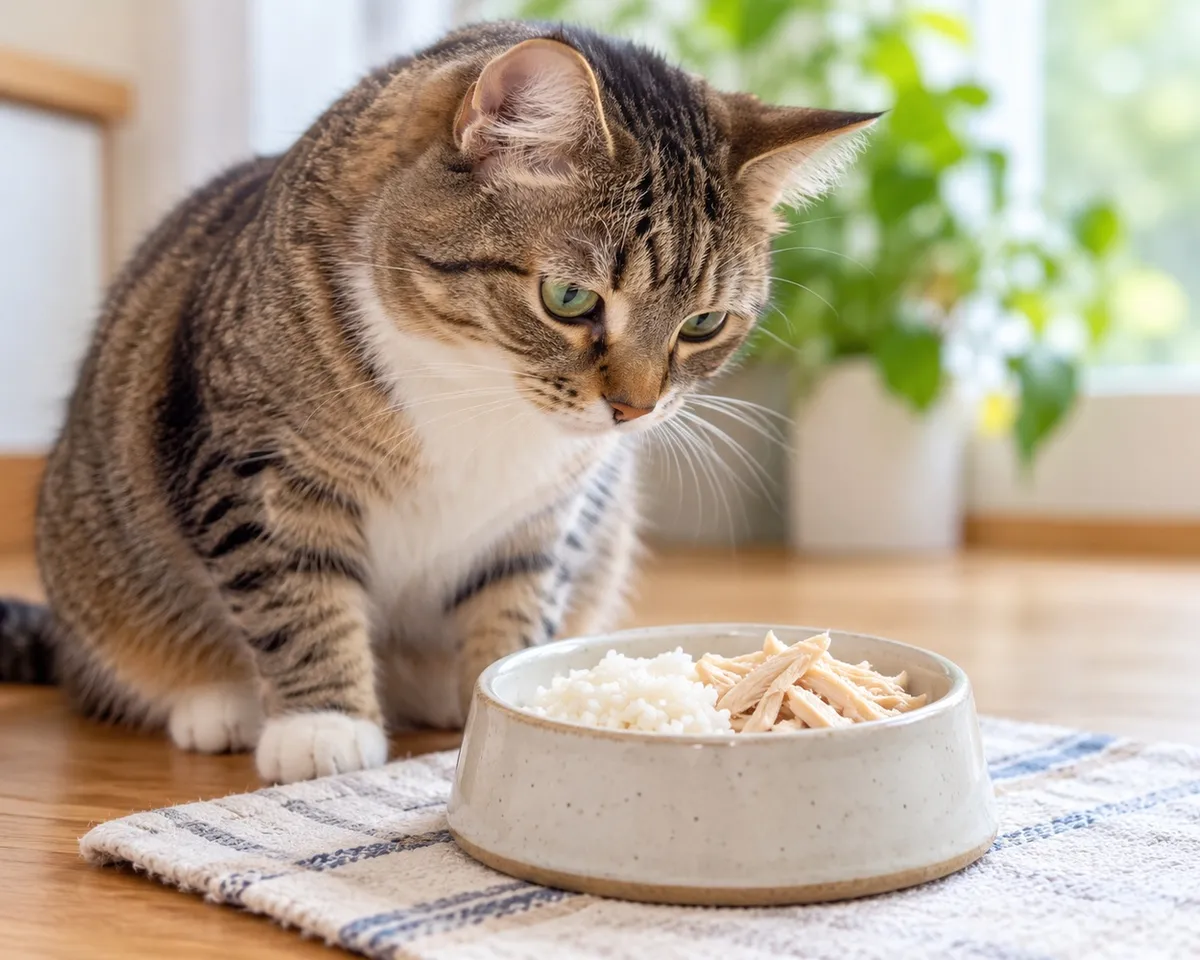
Yes, vets sometimes suggest a small amount of plain boiled rice mixed with boiled chicken for a cat with mild diarrhea. The rice is gentle on the gut and can add a little bulk to loose stool.
This bland diet is a short-term tool, not a cure. It is meant for one to three days while the digestive tract calms down, after which the cat returns to a complete and balanced food.
How a bland rice meal is usually prepared:
- Boil white rice in plain water until very soft, with no salt, oil or seasoning.
- Boil skinless, boneless chicken breast in plain water and shred it finely.
- Mix roughly one part chicken to two parts rice, or follow the ratio your vet gives you.
- Cool the meal to room temperature before serving.
- Offer small portions several times a day instead of one big meal.
Always call your veterinarian before starting a bland diet, especially for kittens, seniors or cats with diabetes or kidney disease. If your cat has repeated stomach trouble, read about cat vomiting and diarrhea and the causes behind it.
Can Cats Eat Rice Every Day?
Cats should not eat rice every day, because a regular habit crowds out the animal protein they need. Rice is best treated as an occasional extra or a temporary stomach aid.
Veterinary nutrition guidelines generally say treats and extras should make up no more than about 10 percent of a cat’s daily calories. A typical 10-pound cat eats roughly 200 calories a day, so 10 percent is only about 20 calories.
One tablespoon of cooked white rice has around 25 to 30 calories. That means even a small portion uses up most of a cat’s treat allowance for the day.
Overfeeding rice can also add weight over time. If you are unsure how much your cat should eat in total, our guide on how much to feed a cat explains daily portions.
White Rice vs Brown Rice for Cats
When owners ask whether cats can eat rice of every type, white rice is the better choice for a cat with an upset stomach. Brown rice is acceptable for a healthy cat in tiny amounts, but it keeps more fiber and is harder on a sensitive gut.
| Type | Fiber | Best Use | Notes |
|---|---|---|---|
| White rice | Low | Upset stomach, mild diarrhea | Easiest to digest, bland |
| Brown rice | Higher | Occasional extra for healthy cats | Can be harder on a sensitive gut |
| Rice cooked with seasoning | Varies | Never | Onion, garlic and salt are harmful |
| Raw rice | High | Never | Hard to digest and a choking risk |
Wild rice and rice mixes with added flavor packets are not recommended. Stick to plain, fully cooked, unsalted grains.
Risks If Cats Eat Rice Regularly
The main risk is nutritional imbalance, because rice is mostly carbohydrate and cats need high protein. A cat filling up on rice may eat less of the complete food that supplies taurine, arachidonic acid and vitamin A.
Other risks to know:
- Blood sugar: Starchy foods can raise blood glucose, so cats with diabetes should only get rice under vet guidance. Our guide to diabetes in cats covers diet in more detail.
- Weight gain: Extra carbohydrate calories add up fast in indoor cats.
- Seasonings: Garlic, onion, salt and butter on cooked rice can upset the stomach or damage red blood cells.
- Uncooked rice: Hard grains are difficult to digest and can irritate the gut.
- Allergies: Grain sensitivities are uncommon in cats but possible, so watch for itching or soft stool after a new food.
Rice should also never be a substitute for medical care. If a cat has persistent digestive upset, the underlying cause needs to be found and treated.
How to Serve Rice: Can Cats Eat Rice Plain Only?
Yes, plain is the only safe way to serve it. Offer rice fully cooked, cooled and in very small portions, starting with half a teaspoon the first time and watching your cat for 24 hours before giving more.
Safe serving tips:
- Cook rice in plain water with no salt, oil, butter or spices.
- Let it cool to room temperature so it does not burn your cat’s mouth.
- Mash or stir it into your cat’s usual wet food to mix flavors and textures.
- Limit portions to 1 to 2 teaspoons for an average adult cat.
- Store leftovers in the fridge and discard any rice older than 24 hours.
Some owners buy ready-made bland diets. A prescription-style sensitive stomach wet cat food is often a safer long-term choice than home cooking, since it is formulated to be complete. A veterinary-approved probiotic for cats may also support gut recovery, but ask your vet which type suits your cat.
If your cat regularly struggles with digestion, our article on cats with sensitive stomachs covers food choices in depth. According to the Cornell Feline Health Center feeding guide, a complete and balanced commercial diet should provide nearly all of a cat’s nutrition.
When to See a Vet If Your Cat Ate Rice
See a veterinarian if diarrhea or vomiting lasts longer than 24 to 48 hours, or sooner for kittens and seniors. A cat that refuses food for more than a day is also a reason to call, since cats can develop serious liver problems when they stop eating.
Emergency signs that need immediate care:
- Blood in vomit or stool
- Lethargy or weakness
- Signs of dehydration such as sunken eyes or dry gums
- Repeated vomiting more than two or three times in a day
- Swollen or painful belly
Dehydration can progress quickly in a sick cat, so learn the signs of dehydration in cats. Rice is a gentle helper for mild cases only, and a vet should guide any diet change that goes beyond a day or two.
Frequently Asked Questions
Can cats eat rice every day?
No, cats should not eat rice every day, because they need animal protein more than carbohydrates. A teaspoon or two a few times a week is the most most healthy cats should get.
Is rice good for a cat with diarrhea?
Plain boiled white rice can help a cat with mild diarrhea for one to three days, usually mixed with boiled chicken. If loose stool lasts beyond 48 hours, a vet visit is needed.
Can kittens eat rice?
Kittens can have a tiny amount of plain rice, but they need calorie-dense, protein-rich food for growth. Ask a vet before giving rice to a kitten under 12 weeks.
Can cats eat rice cooked with chicken broth?
Only if the broth contains no onion, garlic or added salt, which many store-bought broths do. Plain water is the safest way to cook rice for a cat.
Is brown rice or white rice better for cats?
White rice is better for upset stomachs because it has less fiber and digests more easily. Brown rice is fine in tiny amounts for healthy cats but can be harder on sensitive digestion.
So, can cats eat rice? Yes, in small, plain, cooked portions, and mostly as a short-term aid for mild stomach upset. Keep it to a teaspoon or two, never replace a complete cat food with it, and call your vet if symptoms last more than two days.