Can Cats Eat Sweet Potatoes? 6 Safe Facts Owners Love
This post may contain affiliate links. As an Amazon Associate I earn from qualifying purchases.
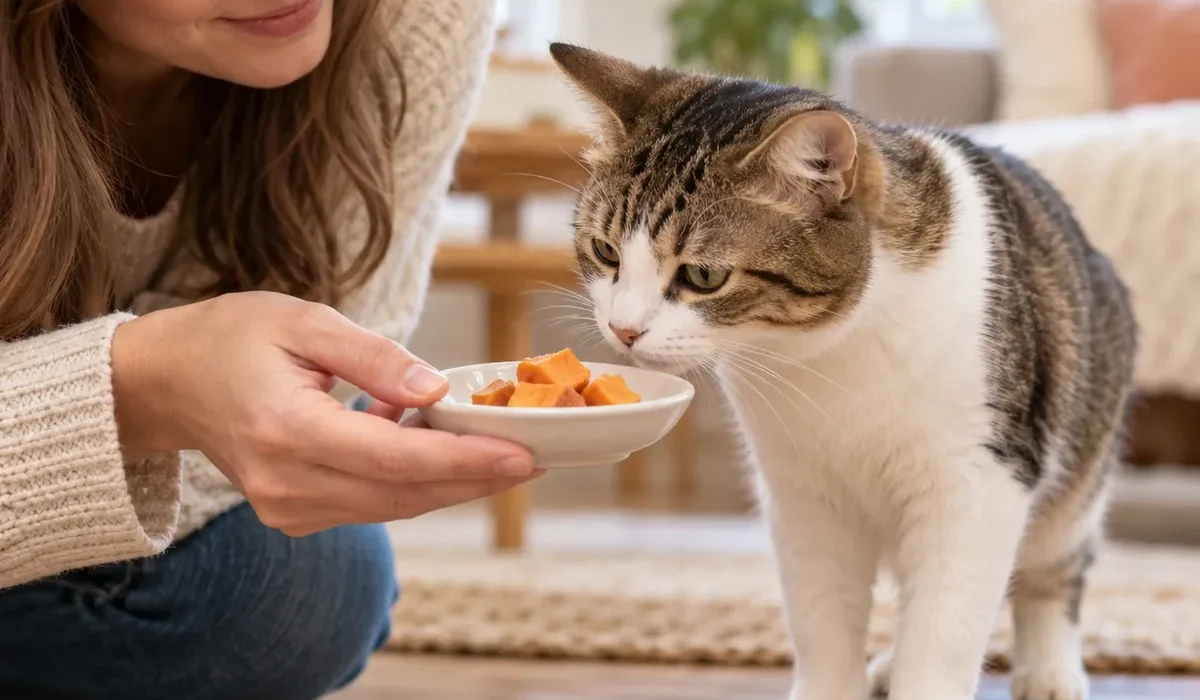
Can cats eat sweet potatoes? Yes, plain, fully cooked sweet potato is non-toxic to cats and safe in small amounts as an occasional treat. It matters most for owners of cats with mild constipation, picky appetites, or a curiosity about whatever is on the dinner plate.
Table of Contents
Can cats eat sweet potatoes at a glance:
- Short Answer: Yes, cooked, plain, peeled sweet potato is safe in small amounts.
- Safe Amount: About 1 to 2 teaspoons, no more than once or twice a week.
- Main Benefit: Fiber and beta-carotene, with a mild boost to digestion.
- Main Risk: Raw sweet potato, added seasoning, and too much starch for a carnivore.
- When to See a Vet: Vomiting, diarrhea, or lethargy lasting more than 24 hours after eating it.
Can Cats Eat Sweet Potatoes Safely? The Short Answer
Cooked sweet potato is not poisonous to cats, and the ASPCA does not list the sweet potato root as toxic. The key word is cooked, because raw sweet potato is hard to digest and can upset the stomach.
Cats are obligate carnivores, which means their bodies are built to get most of their energy from animal protein and fat. A sweet potato will never replace meat in a cat’s bowl. Think of it as a tiny extra, not a meal.
When my own cat first stole a bite of mashed sweet potato from my plate, I assumed the worst. A quick check of the facts showed me that a small taste is harmless, but the preparation matters a great deal.
Treats of any kind, including vegetables, should stay under 10 percent of a cat’s daily calories. The other 90 percent should come from a complete and balanced cat food.
Nutrition: What Sweet Potatoes Offer Cats
Sweet potatoes are rich in fiber, beta-carotene, potassium, and vitamin C, but cats need very little of any of these from plants. Cats convert beta-carotene to vitamin A poorly, so they rely on animal sources for that vitamin.
Possible benefits of a small serving:
- Fiber: Soluble fiber can add bulk to stool and may ease mild constipation or loose stools.
- Potassium: Supports normal muscle and nerve function in small amounts.
- Antioxidants: Plant compounds in the orange flesh may support general cell health.
- Low fat: Plain sweet potato contains almost no fat, so it does not add much to the daily calorie count.
These benefits are modest. A balanced commercial diet already supplies every nutrient your cat needs, so sweet potato is a bonus rather than a necessity.
Many cats ignore it completely. The flavor is sweet, and cats lack the taste receptors to detect sweetness, so any interest usually comes from the soft texture or the smell of the warm food.
How to Prepare Sweet Potatoes for Your Cat
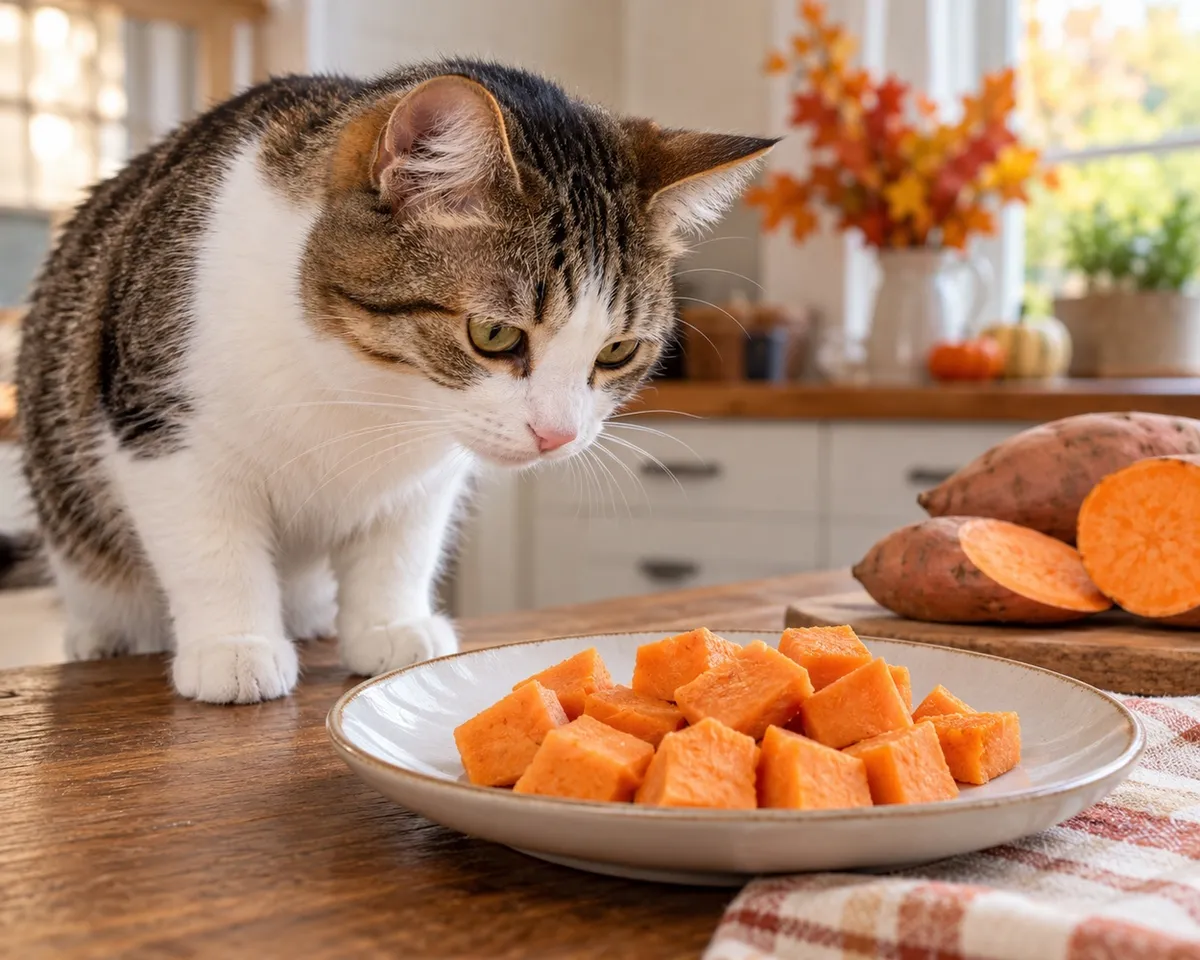
Plain, boiled, steamed, or baked sweet potato with the skin removed is the safest way to serve it. Proper preparation removes the biggest risks, which are indigestion and hidden toxic ingredients.
Follow these steps:
- Wash the sweet potato and peel off the skin, which is tough and hard to digest.
- Cut it into small chunks and cook until completely soft, about 15 to 20 minutes of boiling or steaming.
- Let it cool fully, since hot food can burn a cat’s mouth.
- Mash it with a fork into a smooth texture with no added butter, salt, sugar, or spices.
- Offer 1 to 2 teaspoons and watch how your cat reacts over the next 24 hours.
Canned sweet potato can work if the label lists only sweet potato and water. Avoid canned versions packed in syrup or seasoned for pies.
Leftover holiday dishes are the most common trap. Candied yams, sweet potato casserole, and anything made with marshmallows, nutmeg, onion, or garlic should never go in a cat’s bowl.
Risks to Know Before Asking Can Cats Eat Sweet Potatoes
The main dangers are raw sweet potato, unsafe seasonings, and overfeeding. Each of these is easy to prevent once you know what to look for.
Common problems:
- Raw sweet potato: It is hard to chew and digest and can cause stomach upset or, rarely, an intestinal blockage in a cat that swallows large pieces.
- Seasonings: Onion, garlic, and chives are toxic to cats and can damage red blood cells.
- Sugar and butter: Added sugar, syrup, and fat can trigger vomiting or pancreatitis.
- Sweet potato vines and leaves: The ornamental vine can be mildly irritating, so keep houseplants out of reach.
- Too much starch: Large portions add carbohydrates that a carnivore does not need and can contribute to weight gain.
Cats with diabetes need extra care. Sweet potato is a starchy, higher-carbohydrate food that can raise blood sugar, so ask your veterinarian before offering any.
Cats with kidney disease may also need potassium and phosphorus limits. A vet can tell you whether even a small taste fits your cat’s diet plan.
How Much Sweet Potato Can Cats Eat?
Most healthy adult cats can have 1 to 2 teaspoons of cooked sweet potato once or twice a week. Kittens, seniors, and cats with medical conditions should only try it after checking with a vet.
| Cat Type | Suggested Amount | Frequency |
|---|---|---|
| Healthy adult cat | 1 to 2 teaspoons | 1 to 2 times per week |
| Small or senior cat | About 1 teaspoon | Once per week |
| Kitten | Not recommended | Ask your vet first |
| Diabetic or kidney cat | Only with vet approval | Vet decides |
Introduce it slowly. Offer a tiny taste first and wait a full day to see whether stools stay normal and your cat keeps a healthy appetite.
If you want to add it to a meal, mix the mashed portion into a spoonful of wet food. A plain canned sweet potato puree with no additives can save prep time, as long as the ingredient list is short.
Can Cats Eat Sweet Potatoes Like Other Vegetables?
Sweet potato is one of several cooked vegetables cats can nibble in tiny amounts. Pumpkin is usually the better first choice for digestive support because it is higher in soluble fiber and lower in starch.
If you are curious about similar treats, see our guide on whether cats can eat pumpkin for a close comparison. Other fruit and vegetable snacks follow the same rule of small portions and no seasoning, as we explain in our bananas guide.
Whichever vegetable you choose, the pattern stays the same: cooked, plain, bite-sized, and rare. Treat it as enrichment, not nutrition.
For a full list of foods that can harm your cat, read dangerous foods for cats before you share anything from your plate. The ASPCA also keeps a searchable database of toxic and safe items at the ASPCA Animal Poison Control Center.
Signs Your Cat Reacted Badly
Most cats tolerate a small taste of plain sweet potato without any trouble. Still, any new food can cause a reaction, so watch your cat for the first 24 hours.
Warning signs to watch for:
- Vomiting or repeated gagging
- Diarrhea or very soft stool
- Bloating or a tender belly
- Loss of appetite or unusual tiredness
- Straining in the litter box
Mild stomach upset often passes within a day once the food is stopped. If symptoms continue, call your veterinarian, because dehydration can develop quickly in cats.
If your cat is vomiting, our guide to cat vomiting and diarrhea explains the common causes and when to seek care. Persistent symptoms deserve a professional exam, not guesswork at home.
Better Ways to Support Your Cat’s Digestion
If you are considering sweet potato for constipation, other options may work better and are safer. Hydration, meal type, and a vet-approved fiber source usually matter more than any vegetable treat.
- Switch to more wet food to raise daily water intake.
- Encourage drinking with a fresh, flowing bowl or fountain.
- Ask your vet about a feline-safe cat fiber supplement for ongoing stool issues.
- Keep portions consistent to avoid sudden diet changes.
Chronic constipation can signal dehydration, kidney trouble, or other health issues. A cat that strains repeatedly or goes more than two days without a stool needs a veterinarian, not a home remedy.
Frequently Asked Questions
Is sweet potato good for cats with constipation?
A teaspoon of plain cooked sweet potato can add fiber that helps mild constipation in some cats. If your cat has not passed stool in 48 hours, see a vet instead of relying on food.
Can kittens eat sweet potatoes?
Kittens should not be given sweet potato unless a vet approves it, because their digestive systems are sensitive and need balanced kitten food. Most kittens get all their nutrition from kitten formula or growth-stage wet and dry food.
Can cats eat sweet potatoes raw?
No, raw sweet potato is tough, hard to digest, and can cause stomach upset or a blockage if swallowed in chunks. Always cook it until soft and mash it before serving.
Can cats eat sweet potato skin?
The skin is best removed because it is fibrous, harder to digest, and may carry dirt or pesticide residue. Peeled flesh is a safer choice for any cat.
Can cats eat sweet potatoes in commercial cat food?
Yes, many commercial cat foods use sweet potato as a binder or carbohydrate source and are safe when the recipe is complete and balanced. Check that meat is the first ingredient, since cats need animal protein as their main nutrition.
So, can cats eat sweet potatoes? Yes, as long as the portion is tiny, the preparation is plain, and the treat stays occasional. Start with one teaspoon of cooked, peeled, unseasoned sweet potato, watch your cat for 24 hours, and check with your vet if your cat has diabetes, kidney disease, or a sensitive stomach.