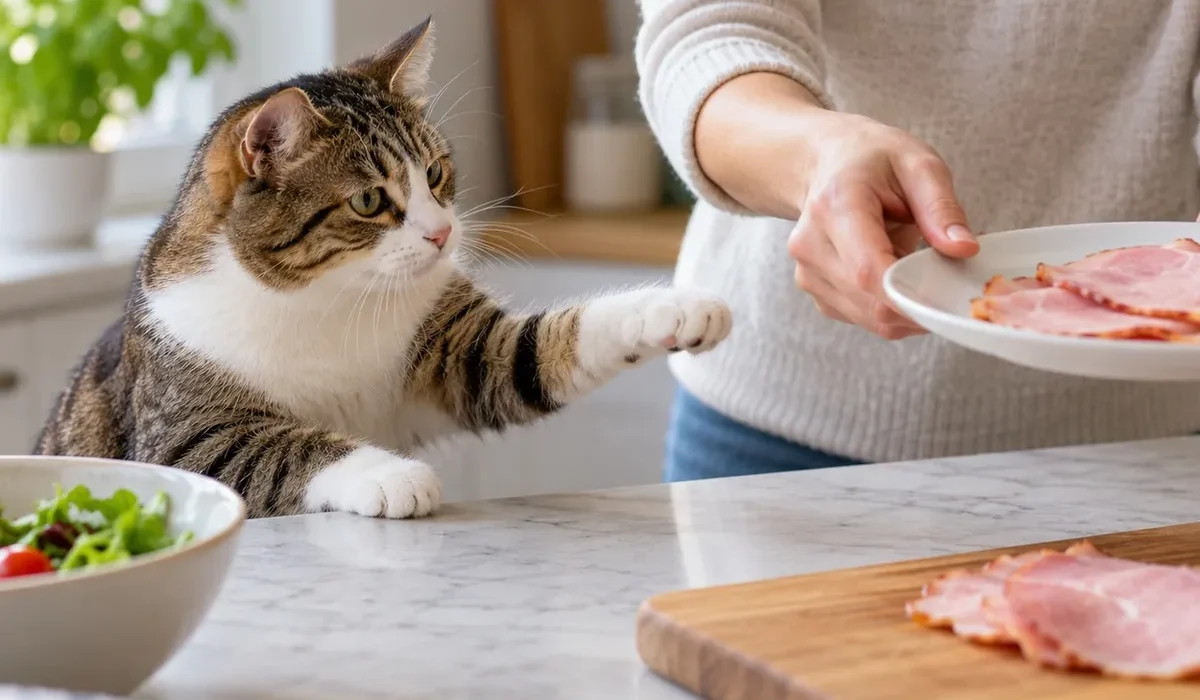
Can Cats Eat Ham? 5 Surprising Risks Every Owner Must Know
Can cats eat ham? Yes, in a tiny plain piece as an occasional treat, but ham is not a healthy food for them. It contains far more salt, fat and preservatives than a cat’s body is built to handle. This matters most for kittens, seniors and cats with kidney, heart or digestive problems.

This post may contain affiliate links. As an Amazon Associate I earn from qualifying purchases.
Table of Contents
Can cats eat ham at a glance:
- Short Answer: Yes in a very small, plain piece, but it is never a recommended food.
- Main Risk: High sodium, which can cause salt poisoning, thirst and kidney strain.
- Safe Amount: No more than one pea-sized piece, once in a while, with treats under 10% of daily calories.
- Foods to Avoid: Glazed, honey-baked, smoked, spiced or deli ham with garlic or onion.
- When to See a Vet: Vomiting, diarrhea, extreme thirst or lethargy after eating ham.
Can Cats Eat Ham Safely?
Plain, cooked ham is not toxic to cats, so a single small bite will not poison a healthy adult. The problem is the way ham is made. Curing adds a large amount of salt, and most commercial ham also contains sugar, nitrites and flavorings.
Cats are obligate carnivores, which means they need animal protein, but they get it best from fresh, unprocessed meat. A cat that steals a corner of your sandwich is usually fine. A cat that eats ham regularly is taking in far more sodium than its kidneys and heart should have to manage.
When my cat first jumped onto the counter and snagged a slice of holiday ham, I had to work out how much she had actually eaten. That is the key question for any owner: the amount, the type of ham and your cat’s health all matter more than the fact that it was ham.
Why Ham Is Risky for Cats
Ham is a processed meat, and processing is what makes it a poor choice for cats. The five main risks below explain why veterinarians suggest skipping it.
1. Very High Sodium
A single ounce of cured ham can contain several hundred milligrams of sodium. An average 10-pound adult cat needs only about 21 milligrams of sodium per day according to AAFCO guidelines. One slice can therefore supply many times a cat’s daily need.
2. Salt Poisoning
Too much salt in a short time can cause sodium ion poisoning. Small cats are the most vulnerable because a little salt is a large share of their body weight. Signs include heavy thirst, vomiting, wobbliness and, in severe cases, seizures.
3. Added Fat and Pancreatitis
Fatty trimmings and glazes can trigger pancreatitis, a painful inflammation of the pancreas. Cats with pancreatitis often stop eating, hide and vomit. Fat from ham rind or drippings is a common trigger after holiday meals.
4. Preservatives and Toxic Seasonings
Many hams contain nitrites, nitrates and smoke flavorings. Spiced or deli hams may also include garlic or onion powder, which damage a cat’s red blood cells. The ASPCA Animal Poison Control Center lists onions and garlic as toxic to cats in every form, including powders.
5. Digestive Upset and Weight Gain
Rich, salty meat often causes vomiting or loose stools in cats that are not used to it. Ham is also calorie-dense. A small 8-pound cat needs roughly 200 calories a day, so even a few slices can push it toward obesity.

Can Cats Eat Ham in Small Amounts? How Much Is Safe
If you choose to share ham at all, the amount must stay tiny. Veterinary nutrition guidance says treats should make up no more than 10% of a cat’s daily calories. For ham, that means a piece about the size of a pea.
Safe serving rules:
- Offer only plain, fully cooked ham with no glaze, sauce or seasoning.
- Cut off all visible fat and any rind or skin.
- Give no more than one pea-sized piece, no more than once or twice a month.
- Serve it at room temperature, never straight from a hot oven.
- Never give raw or undercooked ham, which can carry bacteria such as salmonella.
Kittens under 12 months and cats with kidney disease, heart disease, high blood pressure or diabetes should not get ham at all. Their bodies cannot process extra sodium and fat safely. If your cat has a medical condition, ask your veterinarian before sharing any human food.
Which Types of Ham Are Safe or Unsafe for Cats?
Owners asking can cats eat ham often forget that the type of ham changes the risk a lot. The table below compares the most common types.
| Type of ham | Risk level | Reason |
|---|---|---|
| Plain boiled ham, trimmed | Lowest | Still salty, but no added sugar or spices |
| Deli sliced ham | High | Very high sodium and preservatives |
| Honey-glazed ham | High | Sugar, sodium and sticky additives |
| Smoked ham | High | Heavy salt and smoke compounds |
| Spiced or herb ham | Dangerous | May contain garlic or onion powder |
| Raw or uncooked ham | Dangerous | Bacterial and parasite risk |
| Ham bones | Dangerous | Splinters can cause choking or gut injury |
Even the lowest-risk option is a once-in-a-while bite, not a regular snack. Always check the label for garlic, onion, xylitol or heavy sauces before sharing anything.
Can Cats Eat Ham Bones and Ham Fat?
Cats should never eat ham bones, because cooked bones splinter easily. Splinters can lodge in the throat, puncture the stomach or intestines, or cause painful constipation. This is an emergency situation, not something to wait out at home.
Fat trimmings and rind are also best avoided. They are rich enough to set off pancreatitis, especially in older or overweight cats. If your cat grabs a fatty scrap, watch for vomiting, belly tenderness or refusal to eat over the next 24 to 48 hours.
What to Do If Your Cat Ate Too Much Ham
Stay calm, then work out how much your cat ate and what kind of ham it was. A lick of plain ham rarely causes harm, but a large amount of salty or seasoned ham needs a veterinarian’s input.
Steps to take:
- Remove any remaining ham and bones so your cat cannot eat more.
- Check the packaging for garlic, onion, xylitol or other seasonings.
- Offer fresh water, but do not force your cat to drink.
- Watch closely for the next 24 hours.
- Call your veterinarian or a pet poison hotline if your cat ate a large amount or shows any symptoms.
Never try to make your cat vomit at home and never give human medicine. A small cat that has swallowed a lot of salty ham can become seriously ill within hours.
Signs of Salt Poisoning After Ham
Watch for these signs after your cat eats ham. Symptoms of salt toxicity usually appear within a few hours.
- Excessive thirst or urination
- Vomiting or diarrhea
- Lethargy or weakness
- Stumbling, tremors or seizures
- Loss of appetite or belly pain
Seizures, collapse or repeated vomiting are emergencies, so go to a vet immediately. Mild stomach upset often passes within a day, but a cat that refuses food for more than 24 hours needs a checkup. For more on this, see our guide to cat vomiting and diarrhea and our list of dangerous foods for cats.
Can Cats Eat Ham Instead of Other Meats? Safer Options
If your cat loves meat, there are far better choices than ham. Plain, cooked, unseasoned meats give cats protein without the salt load. Skinless chicken or a little turkey for cats is a much better option, as long as nothing is added.
Other human foods can be treats in tiny amounts, such as cooked eggs. Always compare risks first, because some popular snacks, like cheese, cause problems for lactose-sensitive cats.
The simplest option is a complete cat treat made for feline needs. A freeze-dried single-ingredient meat treat gives your cat the meaty taste it craves with no added salt or seasoning. For regular nutrition, a balanced high-protein wet cat food covers your cat’s needs better than any table scraps. You can learn more about balanced meals in our guide to feeding your cat.
For feeding amounts and nutrition basics, the Cornell Feline Health Center feeding guide is a reliable reference.
Frequently Asked Questions
Can cats eat ham every day?
No, cats should not eat ham every day because its sodium and fat levels are far above what a cat needs. Even small daily portions add up and can strain the kidneys and heart over time.
Is deli ham safe for cats?
Deli ham is one of the least safe types because it is loaded with sodium and preservatives. One thin slice can hold several hundred milligrams of salt, many times a cat’s daily requirement.
Can cats eat ham as kittens?
No, kittens should not eat ham because their small bodies cannot handle the salt and their digestion is still developing. Stick to kitten food made for growth, which provides the right balance of protein and fat.
What happens if a cat eats a lot of ham?
A cat that eats a lot of ham may develop vomiting, diarrhea, intense thirst and lethargy within a few hours. Severe cases can lead to salt poisoning, so call your vet right away.
Can cats eat ham sandwiches or pizza with ham?
No, ham sandwiches and pizza add bread, cheese, sauces and often onion or garlic, which makes them riskier than plain ham. Keep these foods out of reach and offer a cat-safe treat instead.
So, can cats eat ham? A pea-sized bite of plain, cooked ham now and then will not harm most healthy cats, but its salt, fat and additives make it a poor treat. Choose a safer protein or a proper cat treat instead. If your cat ate more than a nibble and shows any symptoms, call your veterinarian for advice.