


Best Cat Carrier for Nervous Cats: 5 Top Features
This post may contain affiliate links. As an Amazon Associate I earn from qualifying purchases.
A well-designed cat carrier reduces stress and keeps anxious cats safe during travel. Nervous cats need carriers with proper ventilation, secure latches, and calming interior features to feel secure during vet visits and trips. Choosing the right carrier makes a real difference in your cat’s comfort and your peace of mind.
Key Takeaways:
- Look for carriers with excellent airflow, dark interiors, and escape-proof locks.
- Top-loading and modular carriers work best for nervous cats reluctant to enter.
- Soft-sided carriers reduce visual stimulation and feel safer to anxious felines.
- Add familiar scents and covers to create a den-like environment inside.
Why Nervous Cats Need Special Carrier Features
Nervous cats experience heightened stress during transport, especially if confined in uncomfortable or chaotic environments. A standard carrier may trigger panic if it’s cramped, hot, or exposes your cat to too much sensory input. The right design minimizes these triggers and creates a secure space where your cat can relax.
Essential comfort factors:
- Adequate ventilation prevents overheating and air stagnation that triggers anxiety.
- Interior darkness mimics a den, naturally calming nervous temperaments.
- Secure latches prevent accidental escapes that happen when cats panic.
- Smooth interior surfaces reduce injury risk if your cat moves frantically.
Top-Loading vs. Front-Loading Carriers for Anxious Cats
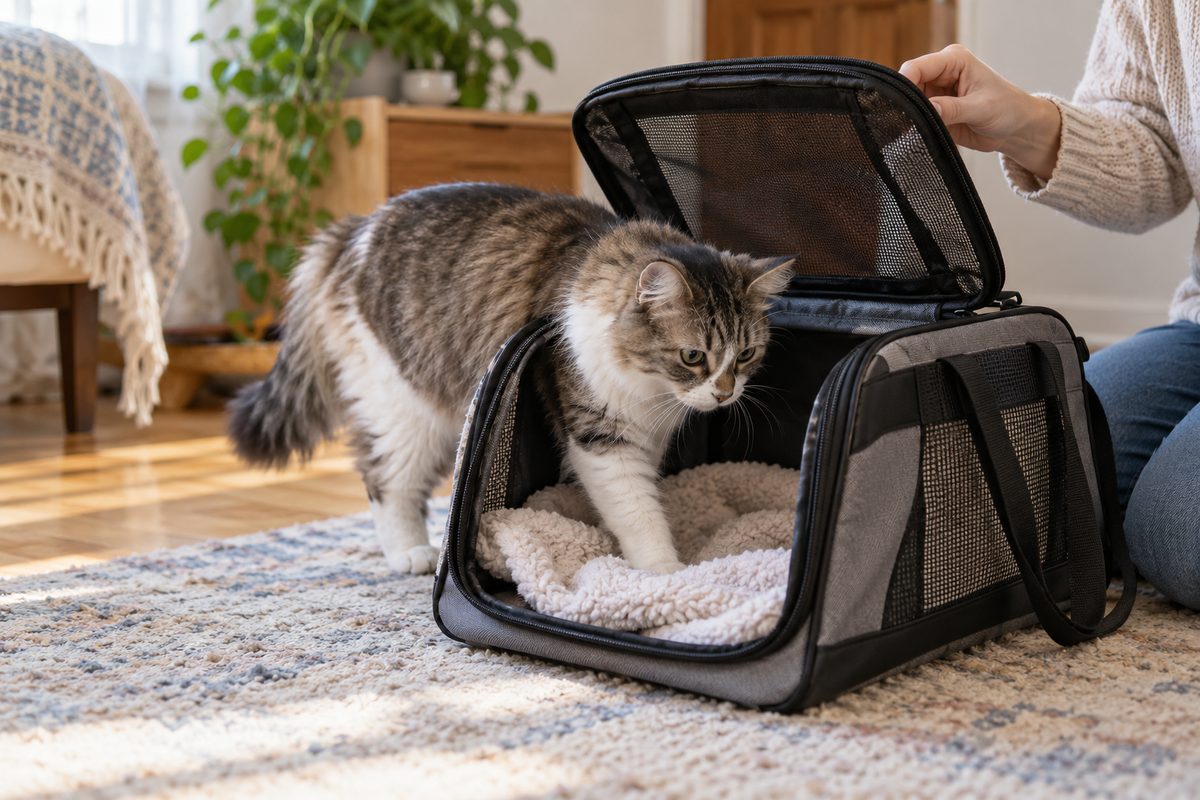
Top-loading carriers work better for nervous cats because they eliminate the stressful struggle of pushing a resistant cat through a front door. Your cat can step or be gently lowered into the carrier, making entry less traumatic and more predictable.
Top-loading advantages:
- Faster, easier loading without wrestling your cat horizontally into the carrier.
- Less likely to trigger defensive swatting or biting during the boarding process.
- Calmer cats mean quieter travel and reduced stress hormones.
Front-loading carriers:
- Better for cats already familiar with carriers and routine vet visits.
- Offer easier access for removing cats during examinations.
- Not ideal for first-time or highly anxious cats who resist entry.
Best Materials and Design for Nervous Cats
Soft-sided carriers made from breathable fabric reduce visual stimulation and feel less institutional than hard plastic. Modular or convertible designs allow you to remove dividers and create extra space, giving anxious cats room to shift position without feeling trapped.
Material benefits:
- Soft-sided fabric carriers with mesh panels provide airflow while blocking harsh lighting.
- Hard-sided plastic carriers with removable tops allow easier access without forcing your cat through an opening.
- Modular or expandable carriers let nervous cats stand, turn, or stretch inside without feeling claustrophobic.
- Padded interiors cushion sensitive cats and reduce rattling sounds during transport.
Calming Accessories and Setup Tips
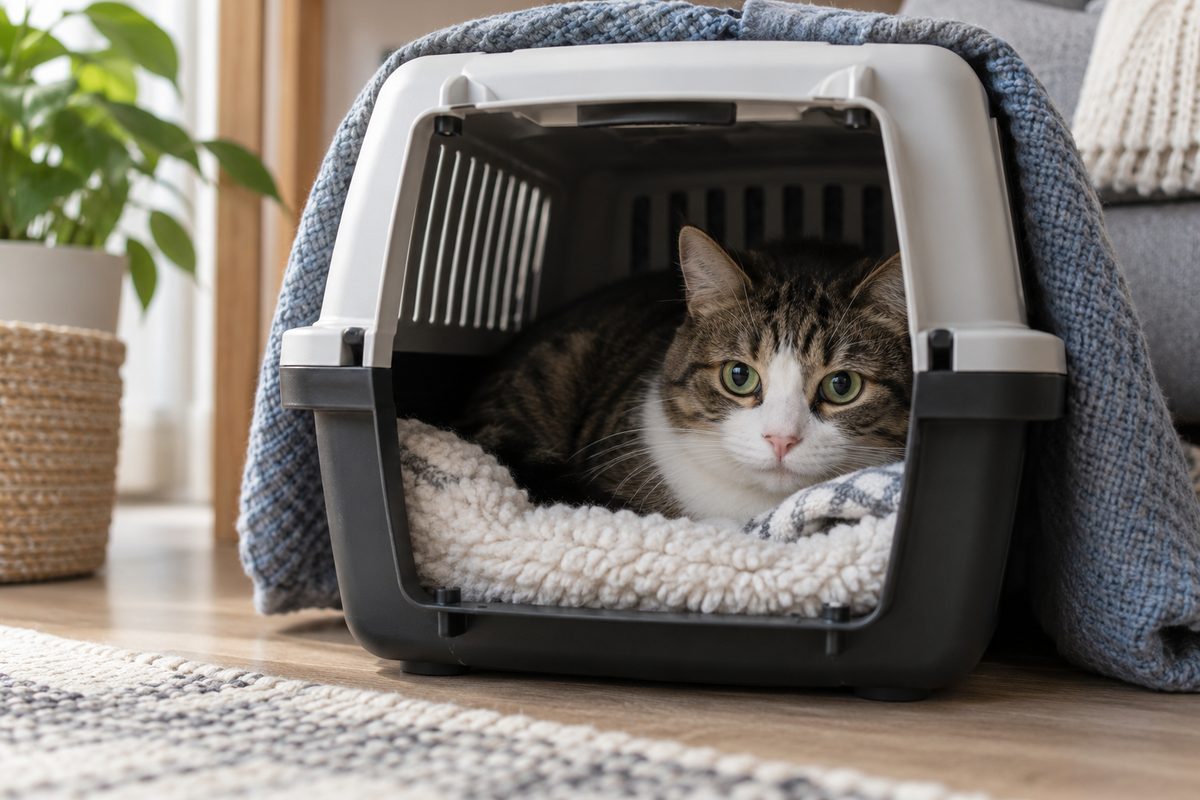
The carrier environment matters as much as its design. Layer familiar scents, reduce noise, and block visual chaos to help your nervous cat stay grounded during trips. Hiding is a natural response to stress, so embrace this instinct by creating a den-like space inside.
Calming setup essentials:
- Place a familiar blanket or worn clothing inside to add your scent.
- Use an opaque carrier cover or drape to block stressful visual stimuli.
- Add a cat calming spray on the blanket (not directly on your cat) 15 minutes before transport.
- Keep the carrier in your home regularly so it becomes a safe, neutral object rather than a threat.
- Never force or punish your cat to enter; use treats and positive association instead.
Consider an orthopedic mat or padded bed insert if your nervous cat takes long car trips. Extra cushioning reduces physical stress and prevents joint discomfort that compounds anxiety. Leave the carrier door open at home for a few weeks so your cat can explore and build positive associations.
For more veterinary guidance, see the Cornell Feline Health Center.
Frequently Asked Questions
- Can I give my nervous cat calming medication before using a carrier? Consult your veterinarian before any sedatives or calming supplements; they can recommend safe, cat-appropriate options and proper timing for your specific situation.
- How do I make my anxious cat comfortable entering a carrier? Place treats, toys, and a familiar blanket inside the open carrier for several days, never forcing entry, so your cat associates it with positive experiences rather than stress.
- What size carrier is safest for a nervous cat during travel? Choose a carrier large enough for your cat to stand, turn, and lie down comfortably; cramped spaces intensify anxiety and increase injury risk if your cat panics.
Investing time to find the right carrier and familiarizing your nervous cat with it pays dividends every time you need to travel. A calm cat makes vet visits, travel, and emergencies far less stressful for everyone involved.
