


How to Keep an Indoor Cat Entertained: 7 Proven Strategies
Indoor cats need mental stimulation and physical activity to stay healthy and happy. Without proper enrichment, boredom leads to destructive behavior, obesity, and stress-related illness. The good news: keeping your indoor cat entertained is straightforward with the right mix of toys, games, and environmental changes.
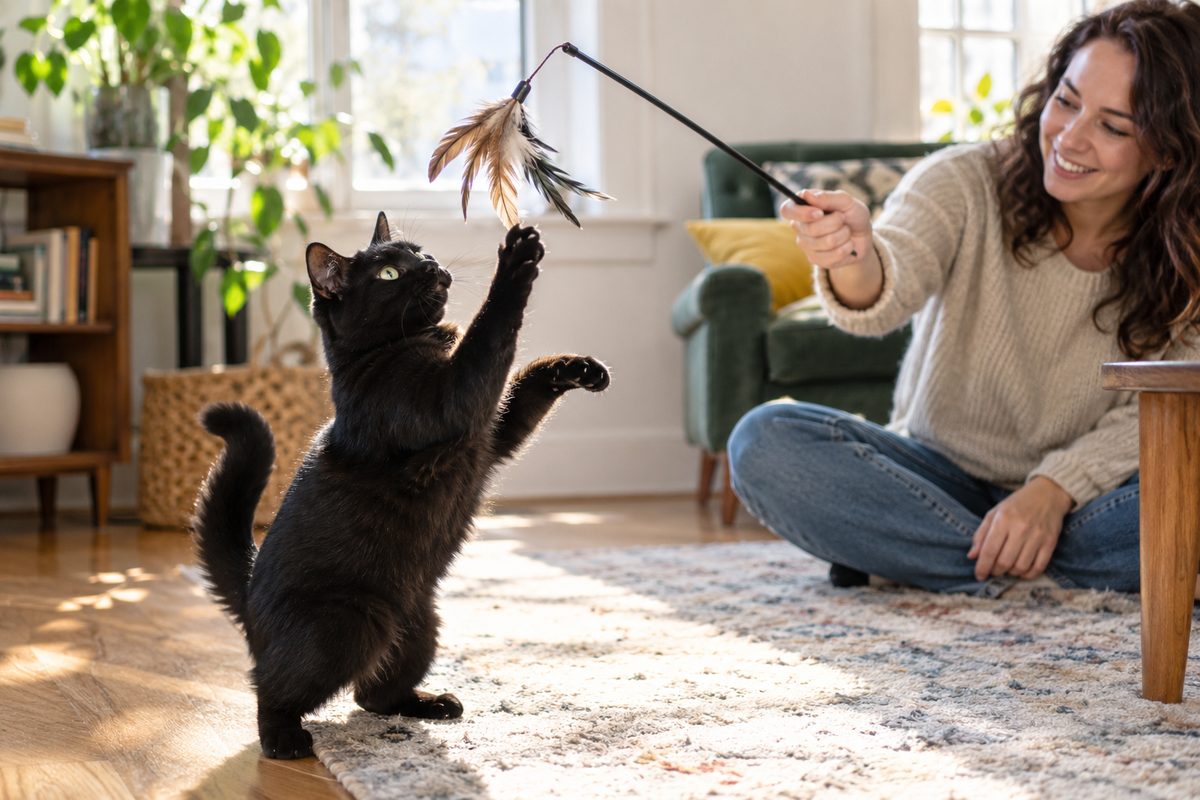
Table of Contents
Key Takeaways:
- Interactive toys and puzzle feeders combat boredom and provide mental stimulation.
- Window perches, bird feeders, and vertical spaces encourage natural climbing and hunting instincts.
- Rotating toys and creating a varied environment keeps cats engaged long-term.
- Scheduled play sessions with your cat strengthen your bond and tire them out.
Why Indoor Cats Need Entertainment
Indoor cats don’t have access to the hunting, exploring, and climbing opportunities their outdoor cousins enjoy. Without enrichment, they become bored, anxious, and prone to behavioral problems like excessive meowing, scratching furniture, or inappropriate elimination. Mental and physical stimulation keeps indoor cats mentally sharp, physically fit, and emotionally balanced.
A well-entertained cat is less likely to develop destructive habits and sleep issues. Regular play also helps prevent weight gain and related health conditions like diabetes.
Best Interactive Toys for Indoor Cats
Interactive toys force your cat to think, pounce, and problem-solve, mimicking natural hunting behavior. Rotate toys every few days to keep novelty high and maintain interest.
Top toy types:
- Feather wands and string toys: engage your cat’s prey drive during active play sessions you control.
- Laser pointers: fast-moving light triggers pouncing instincts, though pair with physical toys so your cat “catches” something.
- Automated toy mice and balls: move unpredictably and entertain your cat when you’re busy.
- Puzzle feeders and treat-dispensing toys: slow eating, stimulate problem-solving, and reward your cat with food.
Dedicate 10-15 minutes twice daily to active play with wand toys or interactive games. This mimics natural hunting cycles and tires your cat out for afternoon naps.
Create Vertical Space and Window Perches
Cats love climbing and perching high where they can survey their territory. Vertical space reduces stress, provides exercise, and prevents boredom.
- Install cat wall shelves and climbing trees near windows or in main living areas.
- Place a window perch facing outside; watching birds and outdoor activity is free entertainment for hours.
- Position a bird feeder outside your cat’s favorite window to create “cat TV.”
- Use shelves and furniture to create pathways across room corners for climbing and jumping.
Multi-level cat trees satisfy climbing instincts and offer hiding spots for security. Rotating perches near different windows keeps the view fresh.
Use Puzzle Feeders and Food Games
Feeding time should be an activity, not just a quick meal. Puzzle feeders and slow feeders extend mealtime, engage your cat’s brain, and prevent overeating.
- Replace one daily meal with a puzzle feeder your cat must manipulate to access food.
- Hide small portions of wet or dry food around your home for your cat to “hunt” and find.
- Use treat-dispensing toys to make snacking an interactive challenge.
- Alternate between regular bowls and puzzle versions to maintain novelty.
This approach taps into natural foraging behavior, slows consumption, and keeps your cat mentally active throughout the day.
Rotate Toys and Refresh the Environment
A static environment breeds boredom. Rotating and refreshing toys and spaces keeps your cat engaged and prevents habituation.
- Keep toys in a storage box and rotate 3-4 different ones weekly.
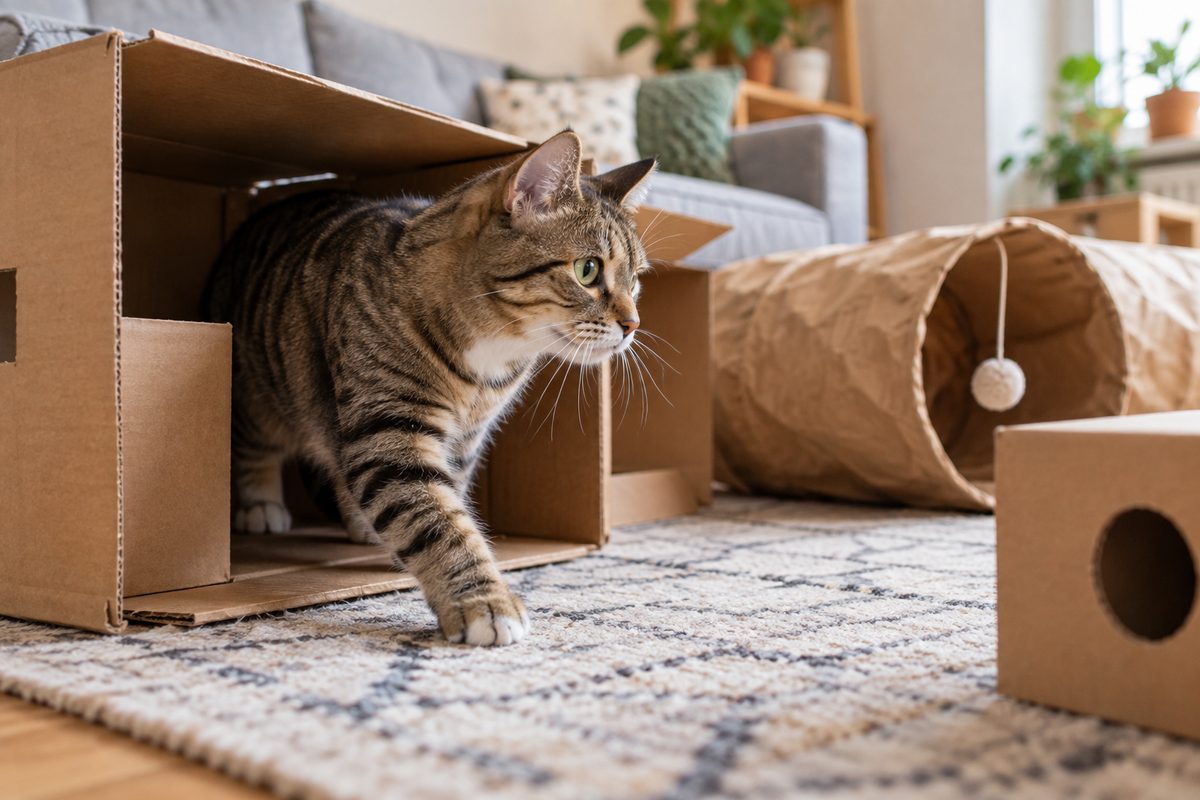
- Move furniture, add new cardboard boxes, or introduce safe cat tunnels monthly.
- Place items on shelves to encourage climbing and exploration.
- Refresh window perches with different bird feeders or views.
- Add catnip or silvervine to older toys for renewed interest.
Even familiar toys feel new after a few weeks away. This low-cost strategy keeps boredom at bay long-term.
Establish Playtime Routines and Bonding Sessions
Scheduled, consistent play strengthens your relationship while tiring your cat out. Most cats thrive on predictable playtime routines.
- Play for 10-15 minutes in the morning before you leave home.
- Engage in 10-15 minutes of interactive play in the evening.
- Use feather wands, laser pointers, or chase games to mimic hunting.
- Watch for signs of fatigue (slowed responses, heavy breathing) and stop before your cat is exhausted.
Consistent play sessions reduce destructive behavior, ease nighttime activity, and deepen your bond with your cat. Playing with your cat regularly builds trust and provides essential exercise.
For more veterinary guidance, see the Cornell Feline Health Center.
Frequently Asked Questions
- How many hours a day should an indoor cat be entertained? Most indoor cats need 30-60 minutes of active or interactive play spread across the day, broken into shorter 10-15 minute sessions that match their natural energy cycles.
- Are laser pointers safe for indoor cats? Laser pointers are safe for short bursts, but always end play by letting your cat “catch” a physical toy or treat so they experience a satisfying conclusion to the hunt.
- What’s the best way to introduce new toys to keep cats interested? Introduce one or two new toys every 1-2 weeks and rotate older toys back in after 3-4 weeks away; this prevents boredom and maintains novelty without overwhelming your cat.
Keeping an indoor cat entertained requires a combination of interactive toys, vertical spaces, puzzle feeders, and consistent play routines. Rotate resources, refresh your environment, and dedicate time to daily play to ensure your cat stays mentally stimulated, physically active, and emotionally content.
