
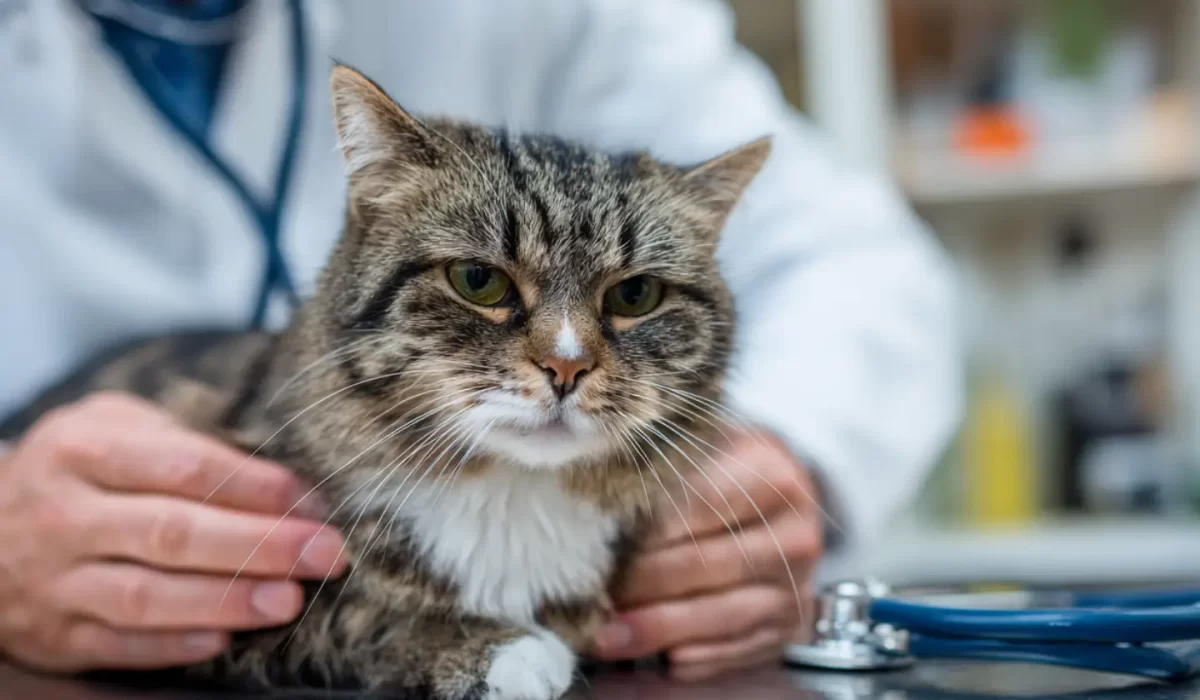
Coughing Cat: 6 Causes and When to See a Vet
A coughing cat is usually trying to clear irritants from the airway, but a cough that repeats over several days points to asthma, infection, or parasites. Cats cough far less often than dogs, so any repeated cough deserves attention, especially when it comes with wheezing or labored breathing.
This post may contain affiliate links. As an Amazon Associate I earn from qualifying purchases.
Table of Contents
Coughing cat at a glance:
- Short Answer: Most coughing cats have feline asthma, a viral respiratory infection, or a hairball reflex.
- Most Common Causes: Asthma, rhinotracheitis (feline herpesvirus), lungworms, allergens, heartworm disease, and heart disease.
- Urgency: One-off coughs are usually mild; coughing with open-mouth breathing is an emergency.
- What to Do at Home: Film the episode, remove dust and smoke, and switch to low-dust litter.
- When to See a Vet: Any cough lasting more than 2-3 days or recurring several times a day.
Why Is My Cat Coughing? Common Causes
Cats cough to expel irritants or foreign material from the throat or lungs, and the sound reveals a lot about the source. The most frequent causes seen in practice are listed below.
Feline Asthma
Feline asthma is one of the most common reasons for a chronic coughing cat. Inflamed, narrowed airways cause dry coughing fits, wheezing, and rapid breathing, often after play, stress, or exposure to dust. Many asthmatic cats crouch low with the neck stretched forward while they cough.
Rhinotracheitis and Other Infections
Feline rhinotracheitis, caused by feline herpesvirus, inflames the nose, throat, and upper airways. Cats usually also sneeze and show nasal discharge and watery eyes. Calicivirus causes similar signs, and untreated infections can progress to pneumonia. You can read more in our guide to the most common cat diseases.
Lungworms and Heartworm
Lungworms (often called strongyles in older sources) infect cats that eat infected prey such as slugs, birds, or rodents, causing a persistent cough. Heartworm is less common in cats than dogs, yet even a single worm can trigger heartworm-associated respiratory disease. Outdoor and hunting cats carry the highest risk.
Allergens and Irritants
Cigarette smoke, aerosol sprays, scented candles, pollen, mold, and dusty litter can all trigger coughing. Cats with sensitive airways react quickly to these irritants. Our guide to allergies in cats explains the typical triggers and treatments.
Hairballs, Heart Disease, and Tumors
A hairball cough sounds like rhythmic hacking followed by gagging and usually a clump of fur. Heart disease can cause fluid in the lungs, though cats with heart problems cough less often than dogs do. Airway tumors are rare but possible in older cats, and our overview of signs of tumors in cats covers what to watch for.
Signs to Watch For in a Coughing Cat
The type of cough and the signs around it help your vet narrow down the cause. Note these details before the appointment:
- Dry, hacking cough: Often linked to asthma, irritants, or hairballs.
- Wet, gurgling cough: Suggests a respiratory infection or fluid in the airways.
- Coughing with sneezing and eye discharge: Points to a viral upper respiratory infection.
- Coughing after exercise or at night: Common with asthma and heart disease.
- Cough with weight loss or low appetite: Suggests a chronic or systemic illness that needs a full workup.
Cats are skilled at hiding illness, so a mild cough may be the only early warning. A cough can also be mistaken for retching, and vomiting linked to other conditions can look similar. If your cat also vomits, compare the signs with our guide to cat vomiting and diarrhea.
What to Do If Your Cat Is Coughing at Home
Start by observing, then reduce irritants while you arrange a vet visit. These steps help in mild cases and give your vet better information:
- Film a coughing episode on your phone, because cats rarely cough in the clinic.
- Count breaths while your cat rests; more than 30 breaths per minute is worth reporting.
- Keep a log of when coughing happens: after meals, play, sleep, or litter changes.
- Remove smoke, sprays, and strong scents from the home.
- Switch to a dust-free litter to reduce airborne particles around the face.
- Run a HEPA air purifier in the room where your cat spends most of the day.
Never give human cough medicine or allergy tablets without veterinary direction, because many are toxic to cats. Keeping essentials on hand, such as Cat Health Supplies, helps you respond quickly, and this product is one option to consider alongside your vet’s advice. For more on keeping your cat well, see essential feeding tips for a healthy cat.
Treatment and Prevention for a Coughing Cat
Treatment depends entirely on the diagnosis, which is why a vet exam matters. Your vet may recommend chest X-rays, blood work, or a tracheal wash to find the cause. Typical approaches include:
- Asthma: Inhaled or oral anti-inflammatory therapy prescribed by a vet.
- Bacterial infections: A prescribed antibiotic course.
- Viral infections: Supportive care, hydration, and rest.
- Lungworms: Targeted deworming medication from the vet.
- Heart disease: Cardiac medication and regular monitoring.
Prevention focuses on routine care. Keep vaccinations current, since our guide to cat vaccinations explains how they protect against respiratory viruses. Schedule regular veterinary check-ups for cats and use year-round parasite prevention, especially for outdoor cats. Avoid smoking indoors and choose low-dust products. Trusted references such as the Cornell Feline Health Center offer further reading on respiratory disease.
When to See a Vet for a Coughing Cat
Call your veterinarian if your cat coughs repeatedly for more than 2-3 days or several times daily. Go to an emergency clinic immediately for any of these signs:
- Open-mouth breathing or panting while at rest.
- Blue or pale gums.
- Stretched neck with constant gagging and no relief.
- Lethargy, hiding, or refusing food.
- Coughing that follows swallowing a foreign object or string.
Respiratory distress in cats can worsen within hours, so do not wait it out. The VCA Animal Hospitals pet health library provides helpful background on diagnosis and treatment.
Frequently Asked Questions
Is it normal for a cat to cough once in a while?
Yes, an occasional single cough is usually harmless and often follows a hairball or inhaled dust. A cough that repeats several times a day or lasts more than 2-3 days needs a vet visit.
How do I tell a cough from a hairball?
A hairball episode is rhythmic hacking followed by gagging and often a clump of fur. A true cough is a sharp, explosive sound with the cat crouched and neck extended, and no fur is produced.
Can cat litter make a cat cough?
Yes, dusty or heavily scented litter can irritate the airways and trigger coughing, especially in cats with asthma. Switching to unscented, low-dust litter often reduces mild irritant coughing within days.
Is a coughing cat an emergency?
It is an emergency when coughing comes with open-mouth breathing, blue gums, or severe lethargy. Without those signs, book a vet appointment within a day or two.
A coughing cat should never be ignored once the cough becomes repeated or is paired with other symptoms. Record a video of the episode, remove household irritants, and book a veterinary exam so the real cause is treated early.